
 Worksheets
Nature of Science
Total questions: 61
Worksheet time: 58mins
What is the 3rd step of the Scientific Method?
What is the formula for density?
(a)
What's the word for scientific expression?
(a)
What is a qualitative observation?
What are the three states of matter?
Which step in the Scientific Method helps develop a question?
A (a) change in matter are often reversible; an ice cube can melt into (b) water, and then the liquid water can be (c) into a (d) . A (e) change are not reversible. A log burned in a fire turns to ash and so breaks chemical bonds.
How many elements in the periodic table are man-made?
188
94
What is a controlled variable?
What is an independent variable?
A variable that is changed or controlled in a scientific experiment.
What is a dependent variable?
What is the SI unit used to measure a soccer field?
feet
meters
grams
celsius
What words describes the variable that you change in your experiment?
Is this a testable question?
Will an ice cube melt faster in room temperature or in water?
Yes
No
Is this a testable question?
Does the amount of sunlight affect plant growth?
Yes
No
Which state of matter describes particles moving highly and are more spaced apart?
Which are gaseous elements?
Oxygen
Hydrogen
Nitrogen
Boron
Carbon
A student wanted to test how the mass of a paper airplane affected the distance it would fly. Paper clips were added before each test flight. As each paper clip was added, the plane was tested to determine how far it would fly.
Match the following.
control variable
amount of paper clips used
control variable
amount of paper clips used
independent variable
mass of the paper airplane
dependent variable
distance flown by the airplane
Kevin put 50ml of water into a beaker. He then added his pencil. The water increased to 60ml. What is the volume of the pencil?
Read the paragraph below and fill in the blanks with the correct science vocabulary words. When sand is mixed with water, it forms a (a) mixture because you can still see the separate parts. However, when sugar is mixed with water, it forms a (b) mixture that looks the same all the way through. In this sugar-water solution, the sugar is the (c) and the water is the (d) .
During a lab, a student records notes about an unknown mineral sample. Which of the following observations made by the student is qualitative?
The mineral's volume, measured by water displacement, is 20 cubic centimeters.
Scratches ranging from 1.5 to 5.5 millimeters long.
The mineral has a mass of 54.3 grams.
The mineral has a cubic crystal structure and a metallic, silver-gray luster.
A large ship is made of extremely dense materials like steel, yet it floats on the ocean. This is because:
Atomic Number 1
Hydrogen
Boron
Germanium
Iron
H
(a)
What is the chart called that organizes all of the elements found on Earth?
Element Chart
Table of Elements
Periodic Table of Elements
The first letter of the chemical symbol is always a capital letter and the second is always lowercase
True
False


What is the atomic mass of the element shown?
14
28
42
How many elements are there on the Periodic table?
101
99
118
125
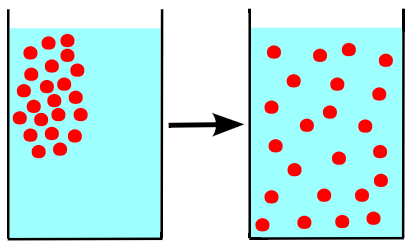
What is the effect of agitation on the rate of dissolving?
It decreases the rate of dissolving
It has no effect on the rate of dissolving
It increases the rate of dissolving
It changes the color of the solute

What is the difference in dissolving time between a sugar cube and a teaspoon of granular sugar?
The sugar cube dissolves faster
The teaspoon of granular sugar dissolves faster
Both dissolve at the same rate
The dissolving time depends on the temperature of the solvent
What can increase the rate of dissolving even further?
Using a solute with a larger particle size
Using a solute with a smaller particle size
Decreasing the temperature of the solvent
Decreasing the agitation of the mixture

The water displacement theory, also known asArchimedes' Principle, states thata body immersed in a fluid experiences an upward buoyant force equal to the weight of the fluid displaced by the body. This principle explains why objects float or sink: if the object's weight is less than the buoyant force (meaning it displaces a fluid whose weight is greater than the object's weight), it floats; otherwise, it sinks. A related concept is that an object fully submerged in a fluid displaces a volume of fluid equal to its own volume.
What does Archimedes' Principle state?
A body immersed in a fluid experiences an upward buoyant force equal to the weight of the fluid displaced by the body.
A body immersed in a fluid experiences a downward force equal to its own weight.
A body immersed in a fluid experiences no force.
A body immersed in a fluid experiences a force equal to the volume of the fluid displaced.
According to Archimedes' Principle, when does an object float?
When the object's weight is less than the buoyant force.
When the object's weight is more than the buoyant force.
When the object's weight is equal to the buoyant force.
When the object's weight is equal to the volume of the fluid displaced.
What is the related concept to Archimedes' Principle regarding a fully submerged object?
An object fully submerged in a fluid displaces a volume of fluid equal to its own volume.
An object fully submerged in a fluid displaces a weight of fluid equal to its own weight.
An object fully submerged in a fluid experiences no buoyant force.
An object fully submerged in a fluid displaces a volume of fluid less than its own volume.
The water displacement theory is also known as (a) Principle.
What force does a body immersed in a fluid experience according to Archimedes' Principle?
An upward buoyant force equal to the weight of the fluid displaced.
A downward force equal to its own weight.
No force at all.
A force equal to the volume of the fluid displaced.
A neutron is found in the (a) and has a (b) charge.
Which arrow points to the protons?
Which arrow points to the neutrons?
Which arrow points to the electrons?
What is the effect of agitation on the rate of dissolving?
It decreases the rate of dissolving
It has no effect on the rate of dissolving
It increases the rate of dissolving
It changes the color of the solute
How does cold water affect the speed of dissolving?
Cold water slows down dissolving.
Cold water speeds up dissolving.
Cold water has no effect on dissolving.
Cold water has no effect on dissolving.

From this element key of Nitrogen, determine the atomic mass of nitrogen
7
7.01
14.01
21.01
When a physical change occurs, you begin and end with
different substances
the same substance
a colorful substance
no substance
Which of the following show that a chemical change has occurred? Choose 3 answers
burning
bubbles
folding
odor
Rust is an example of a _________________________
physical change
chemical change
Baking a cake is an example of a _____________
physical change
chemical change

This picture is an example of a
physical change
chemical change

Is this a physical or chemical change?
This is a chemical change.
This is a molecule change.
This is a physical change.
This is a house change.
What is an example of a chemical change?
A marshmallow melting
You squish a marshmallow
You break a cracker in half
Does a chemical change occur on a molecular level?
Yes
No
Absolutely not
Quantitative is a research that based on ....
measurements
words
opinions
expressions

There were 5 children on the playground.
quantitative
qualitative
both
neither
What is an example of chemical change?
Water boiling into steam.
Evaporating a puddle.
Dissolving sugar in water.
Food Digesting.
Which of the following is used to measure the mass of an object?
Scale
Metric ruler
Graduated cylinder
Beaker
In an atom, the (a) (positive charge) and the (b) (neutral charge) are together in the nucleus.
What is the name of a single type of atom?
Cell
Element
Proton
Atom
A group of students want to design an experiment to answer the question: "Does the brand of paper towel affect how much water it can absorb?" They decide to test three different brands. What should be the independent variable in their experiment?
The size of the paper towel sheet.
The amount of water absorbed.
The brand of the paper towel.
The amount of water used.
In the layered density lab, you need to carefully measure the mass and volume of different liquids so you can compare their densities and see how they layer. Which three tools would be most useful for making these measurements accurately?
Ruler, stopwatch, balance
Beaker, graduated cylinder, balance
Thermometer, ruler, timer
Scale, graduated cylinder, funnel

