
 Worksheets
E2 E3 Review 25-26
Total questions: 53
Worksheet time: 27mins
A cart is moving on a flat surface with negligible friction. Infer what will happen to its speed.
The cart’s speed will increase.
The cart’s speed will decrease.
The cart’s speed will remain constant.
The cart’s speed will initially increase, and then decrease.
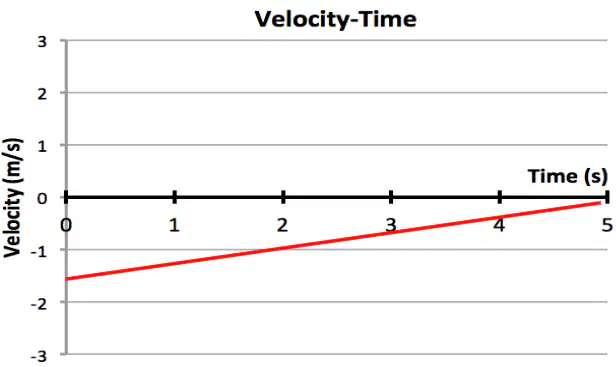
This graph represents an object
Slowing down, but since it's velocity is negative, the KE is increasing
Slowing down, which means its kinetic energy is decreasing
Speeding up, which means its kinetic energy is increasing
Slowing down, which means its kinetic energy is increasing
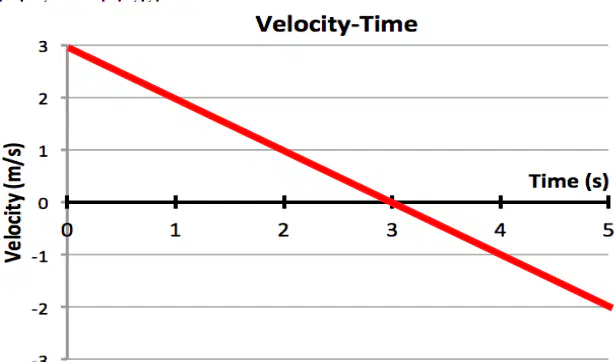
What is true about the kinetic energy of the object
It decreases, then increases
In increases, then decreases
It stays constant
It decreases, then stays the same
Kinetic energy is a ...
scalar quantity because it only has magnitude.
scalar quantity because it has both magnitude and direction.
vector quantity because it only has magnitude.
vector quantity because it has both magnitude and direction.
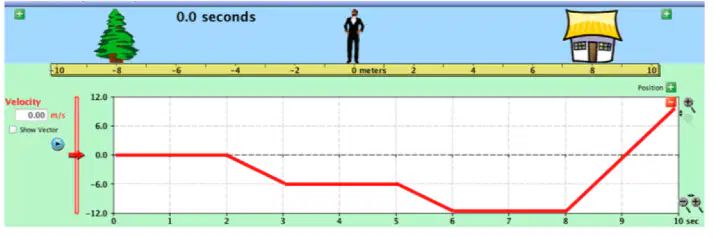
During which timer interval(s) is the man slowing down?
2-3, 5-6
3-5
8-9
9-10
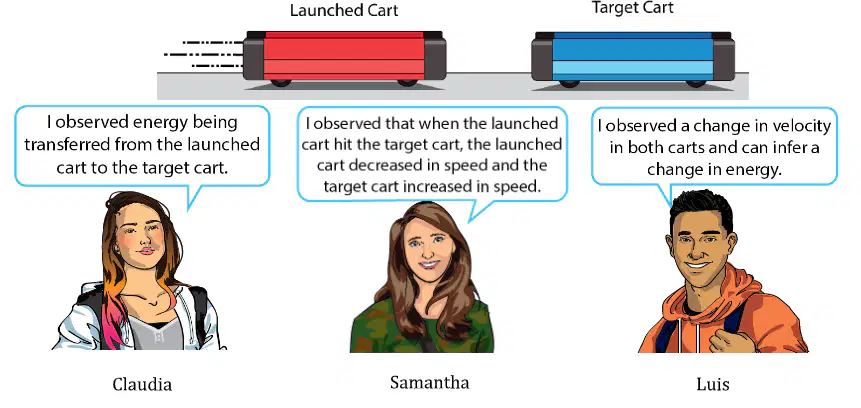
Which student's statement contains more than just an observation?
Claudia
Samantha
Luis
--
While walking I observe some flowers. Select the inference:
The flowers are on stalks that have green leaves
There are five flowers
The flowers are pink
Someone planted and waters the flowers
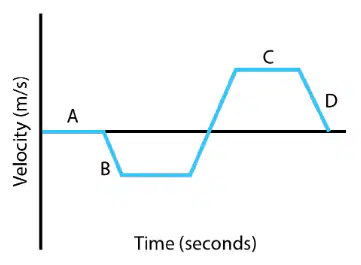
What is happening to the object’s KE in region C?
Increasing KE
Decreasing KE
Constant KE
Zero KE
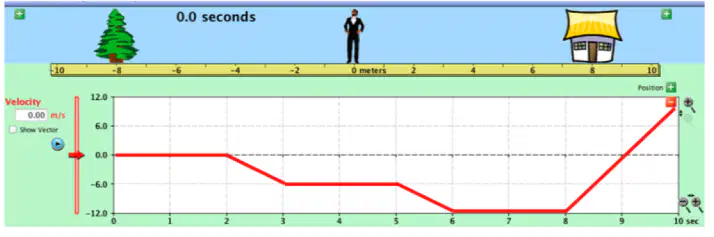
During which timer interval(s) is the man losing kinetic energy?
2-3, 5-6
3-5
8-9
9-10
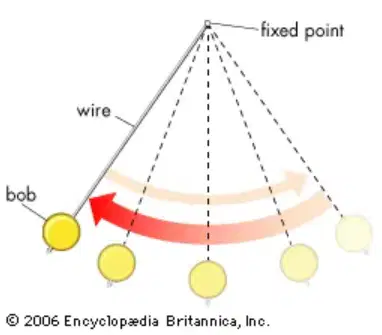
A pendulum is swinging back and forth. As it swings it trades having kinetic energy for gravitational potential energy, and vice versa. This is an example of...
Energy diagram
Energy trade
Energy transfer
Energy conversion
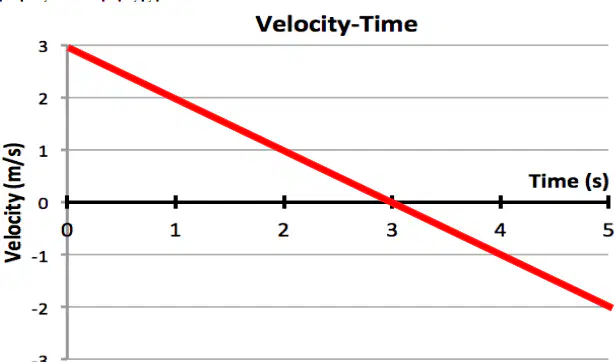
At 3 seconds,
The sign of the kinetic energy changes from + to -
The sign of the kinetic energy changes from - to +
The object has zero kinetic energy
The object has zero potential energy
Speed is a ...
scalar quantity because it only has the magnitude of the motion.
scalar quantity because it has both the magnitude and direction of the motion.
vector quantity because it only has the magnitude of the motion.
vector quantity because it has both the magnitude and direction of the motion.
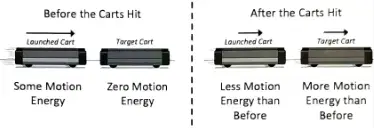
Cart A is moving and collides with Cart B. As a result, Cart A stops and Cart B moves. This is an example of:
Energy diagram
Energy trade
Energy transfer
Energy conversion
Potential energy
Energy stored in chemical bonds
Energy of motion
A broad category meaning "stored energy"
Energy stored based on height above ground
A cart is traveling along a track and slows down due to friction. Which of the statements below best explains why the cart slows down, in terms of energy?
Kinetic energy from the cart is converted to chemical energy in the track
Kinetic energy from the cart is converted to thermal energy in the cart and track
Kinetic energy from the cart is converted to potential energy in the cart and track
Kinetic energy from the cart is converted to thermal energy in the air
We are measuring the velocity of a cart as it moves down a track, and between 2 seconds and 4 seconds, the cart is speeding up. This statement would be an _______________ about the cart.
Observation
Inference
--
--
Kinetic energy
Energy stored in chemical bonds
Energy of motion
A broad category meaning "stored energy"
Energy stored based on height above ground
Energy is a ...
scalar quantity because it only has magnitude.
scalar quantity because it has both magnitude and direction.
vector quantity because it only has magnitude.
vector quantity because it has both magnitude and direction.
If one object gives energy to another we say energy was...
transferred
converted
transformed
-
A cart is speeding up along a track. What can we say about the cart’s kinetic energy in this situation?
We can infer that the cart’s kinetic energy is increasing.
We can observe that the cart’s kinetic energy is increasing.
We can infer that the cart’s kinetic energy is decreasing.
We cannot say anything about the cart’s kinetic energy.
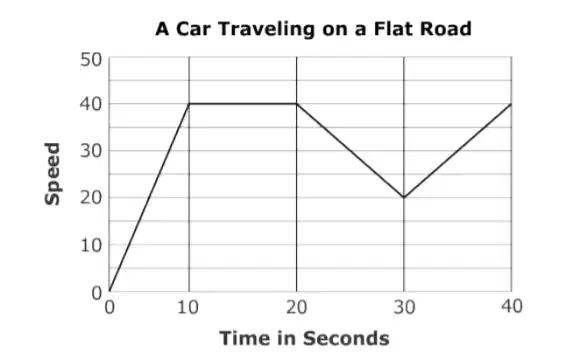
Look at the graph. At what time did the driver have zero kinetic energy?
at 0 seconds
at 10 seconds
at 20 seconds
at 30 seconds
A wagon is pushed across a, level surface and released. After the push, the wagon is observed to move at constant speed. Identify the statement that best explains the wagon’s motion.
The wagon is moving at constant speed because the hand’s force is acting from a distance.
The wagon is moving at a constant speed because the surface has negligible friction.
The wagon is moving at a constant speed because the wagon is constantly transferring energy to the surface through friction.
The wagon is moving at a constant speed because its kinetic energy is decreasing.
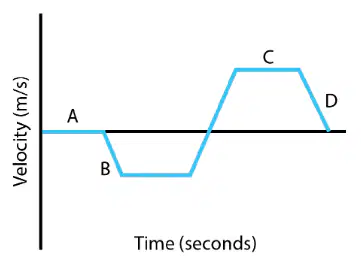
What is happening to the object’s KE in region A?
Increasing KE
Decreasing KE
Constant KE
Zero KE
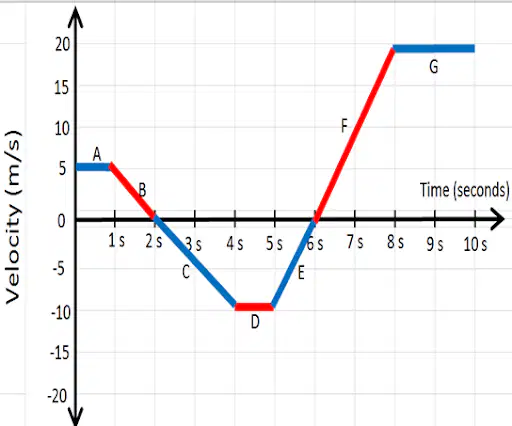
Which sections are moving in a negative direction?
D
C,D,E
A,B,F,G
B,E
Potential energy is a ...
scalar quantity because it only has magnitude.
scalar quantity because it has both magnitude and direction.
vector quantity because it only has magnitude.
vector quantity because it has both magnitude and direction.
Which of the following is NOT a form of potential energy
ThE
CPE
GPE
EPE
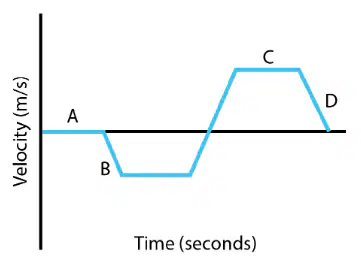
What is happening to the object’s KE in region B?
Increasing KE
Decreasing KE
Constant KE
Zero KE
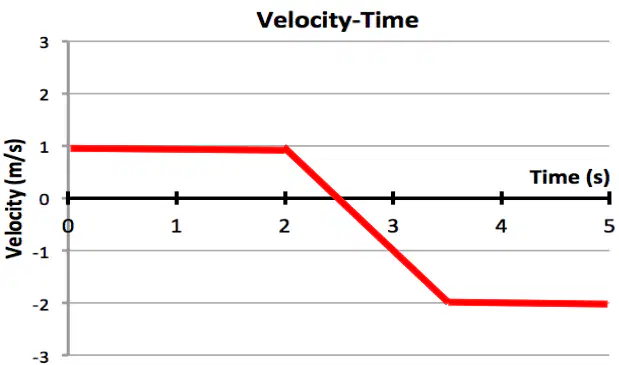
The graph represents the motion of an object. Based on the graph, which statement is true?
The object is losing kinetic energy between 2.5 and 3.5 seconds
The object is gaining kinetic energy between 2.5 and 3.5 seconds
Between 0 and 2 seconds the object is gaining kinetic energy
Between 0 and 2 second the object is losing kinetic energy
If an object is barely moving it has_______kinetic energy
No
a little
medium
a lot
What is potential energy?
stored energy
energy of heat
energy of motion
energy of stopping
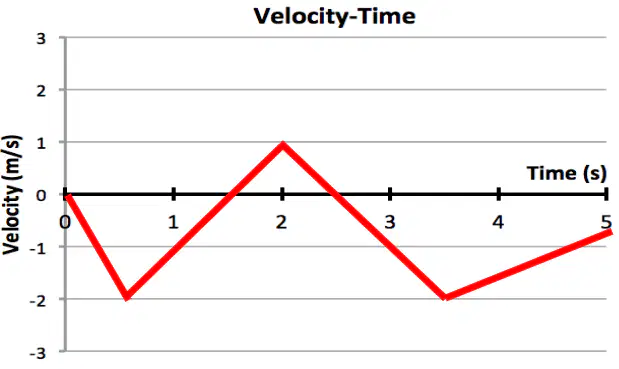
Based on the Velocity vs. Time graph, how many times did the object turn around?
1
2
3
4
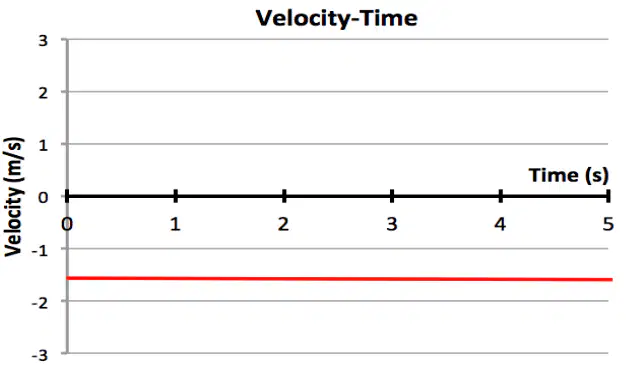
This graph represents an object
Constant, positive kinetic energy
Zero kinetic energy
Constant, negative kinetic energy
Increasing kinetic energy
The more friction you encounter when coming to a stop...
The greater the thermal energy.
The smaller the thermal energy.
The greater the kinetic energy.
The smaller the kinetic energy.
An object is speeding up in the negative direction. Its kinetic energy is...
Staying the same
Increasing
Decreasing
Impossible to tell
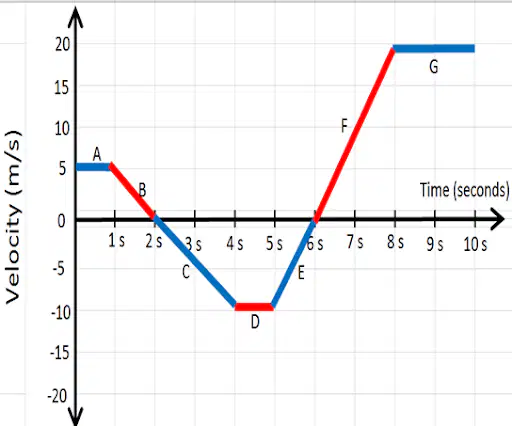
Which sections are moving in a positive direction?
A,G
C,D,E
A,B,F,G
C, F
Gravitational potential energy
Energy stored in chemical bonds
Energy of motion
A broad category meaning "stored energy"
Energy stored based on height above ground
If an object is NOT moving it has _______kinetic energy
No
a little
medium
a lot
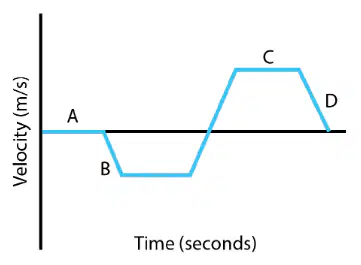
What is happening to the object’s KE in region D?
Increasing KE
Decreasing KE
Constant KE
Zero KE
Ball A rolls across the table and hits ball B. As a result of the collision, ball A stops and ball B begins to move. The reason why ball B moves is...
friction caused ball B to move
Thermal energy was transferred from ball A to ball B
Kinetic energy was transferred from ball A to ball B
Chemical potential energy was converted to ball B
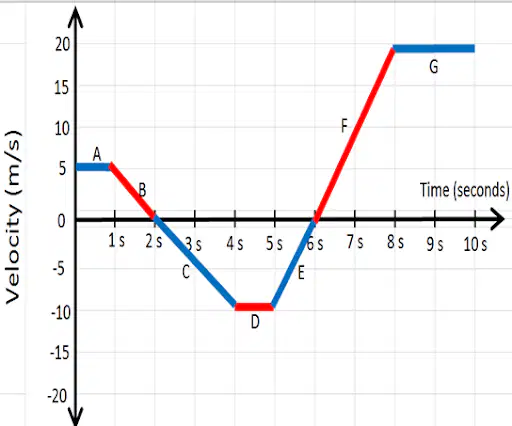
Which sections are speeding up?
B,F
E,F
A,B,F,G
C,F
Velocity is a ...
scalar quantity because it only has the magnitude of the motion.
scalar quantity because it has both the magnitude and direction of the motion.
vector quantity because it only has the magnitude of the motion.
vector quantity because it has both the magnitude and direction of the motion.
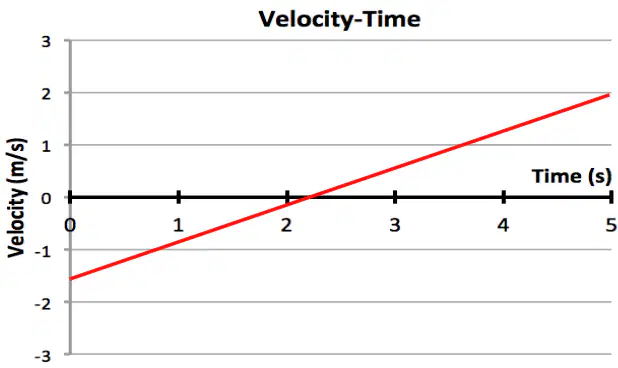
This graph represents an object with
Negative potential energy, then positive potential energy
Negative kinetic energy, then positive kinetic energy
Increasing kinetic energy
Decreasing kinetic energy, then increasing kinetic energy
Chemical potential energy
Energy stored in molecular bonds
Energy of motion
A broad category meaning "stored energy"
Energy stored based on height above ground
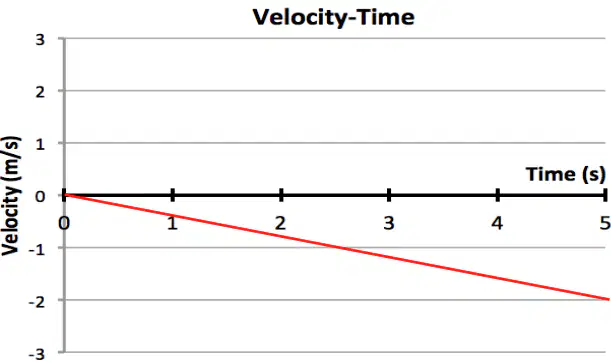
This graph represents an object with
Decreasing kinetic energy
Increasing kinetic energy
Decreasing potential energy
Increasing potential energy
What is kinetic energy?
energy of movement
energy of heat
energy of gravity
energy of stopping
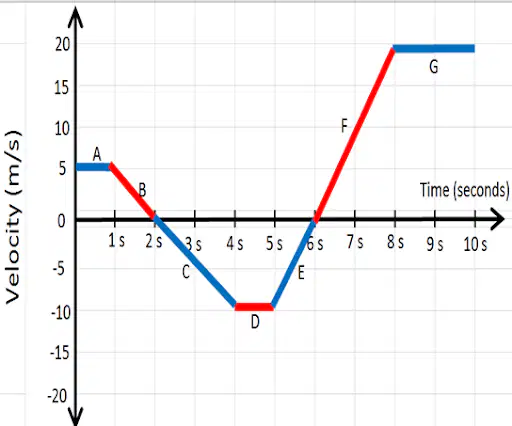
Which sections are slowing down?
E,F
B,C
C,D,E
B,E
If an object is moving fast it has_______kinetic energy
No
a little
medium
a lot
A wooden block slides to a stop along a table. The thermal energy increases in...
The block
Neither the block nor the table
The block and the table
The table
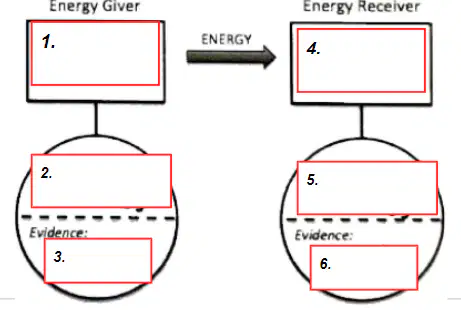
"Energy was transferred from the energy giver" is good evidence for box 6.
True, this is evidence.
Unclear, depends on the situation
False, this is not observable evidence.
False, this should have said what type of energy was transferred.
What is thermal energy?
energy of movement
energy of heat
energy of gravity
energy of stopping
Energy stored in our bodies to be used by our muscles is called...
Chemical potential energy
Thermal energy
Kinetic energy
Friction
If you throw an object in outer space in an area with negligible friction, what will the object do after leaving your hand?
It will come back to you
It will keep going at a constant speed forever unless it hits something
It will slow down and come to a stop
It will speed up until it reaches the speed of light
If one kind of energy is changed into another type of energy, we say the energy was...
transferred
converted
created
destroyed

