
 Worksheets
Goniometry
Total questions: 64
Worksheet time: 32mins
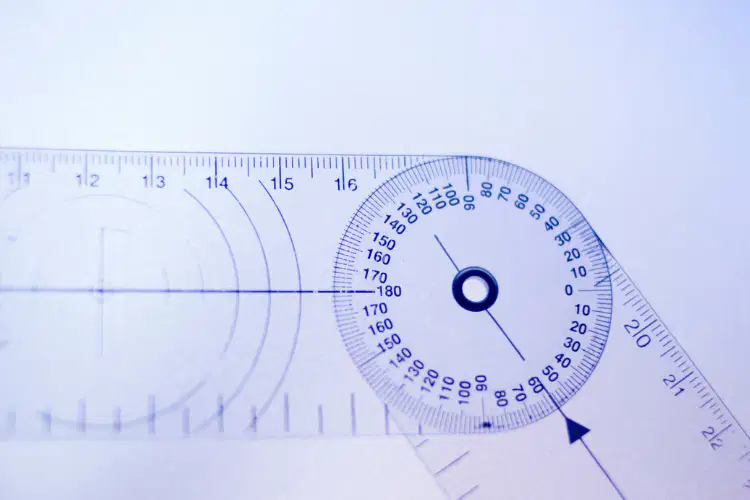
What is a goniometer most similar to?
Ruler
Specialized protractor
Compass
Thermometer
Goniometers come in several different ______ and sizes to fit all joint measurements needs.
shapes
colors
weights
temperatures
Which main part of a goniometer is not pictured in the diagram?
Body
Moving Arm
Stationary Arm
Fulcrum
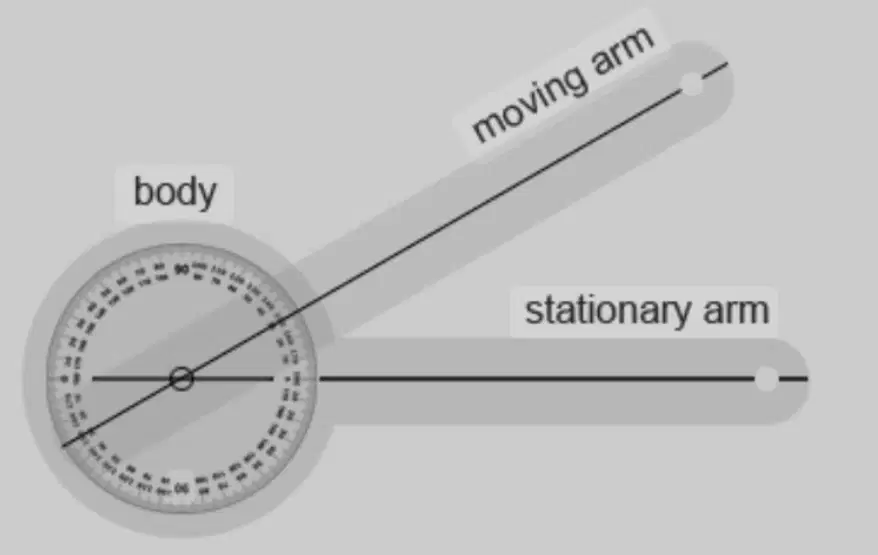
What is the fulcrum in the context of the diagram shown?
The moving arm
The stationary arm
The brad in the center of the body
The outer edge of the protractor
Fill in the blank: The fulcrum is centered in the middle of the _____?
joint
bone
muscle
tendon
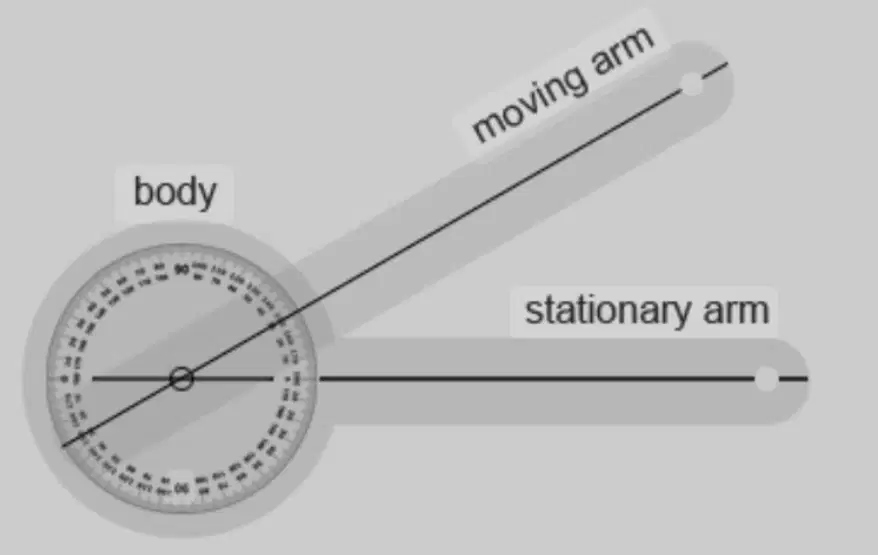
What is the stationary arm in the context of the diagram shown?
The arm that moves with the joint
The arm that is on the same piece of plastic as the body
The arm that is not attached to the body
The arm that measures temperature
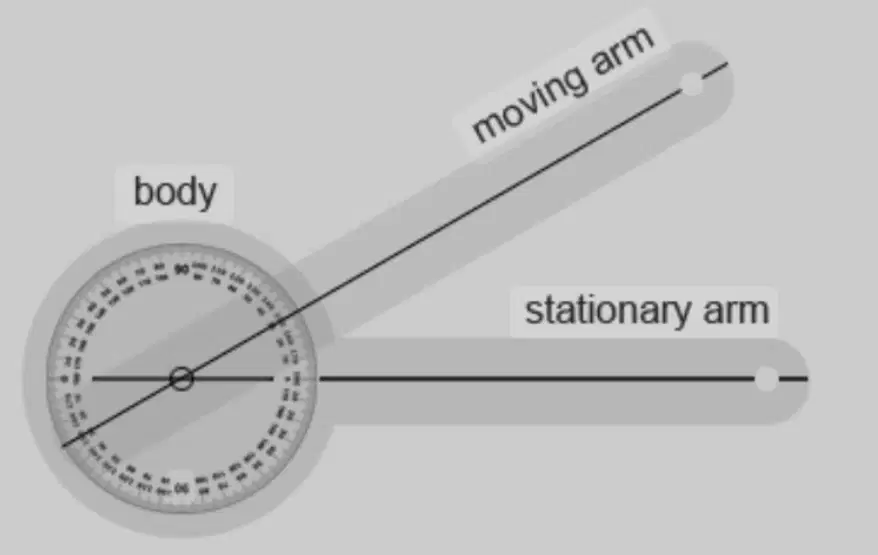
Where is the stationary arm placed according to the information provided?
On the distal bone
On the proximal bone
On the moving bone
On the joint
Fill in the blank: The stationary arm is placed on the bone that doesn’t _______.
move
grow
bend
rotate
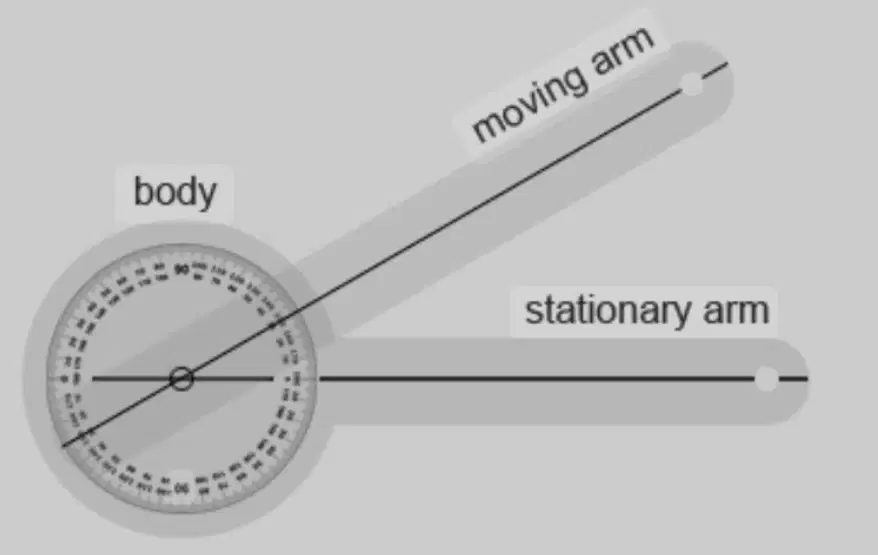
What is the arm that is attached to the body through the fulcrum called?
Moving Arm
Fixed Arm
Rotating Arm
Support Arm

Where is the moving arm placed?
On the distal bone
On the proximal bone
On the joint line
On the muscle belly
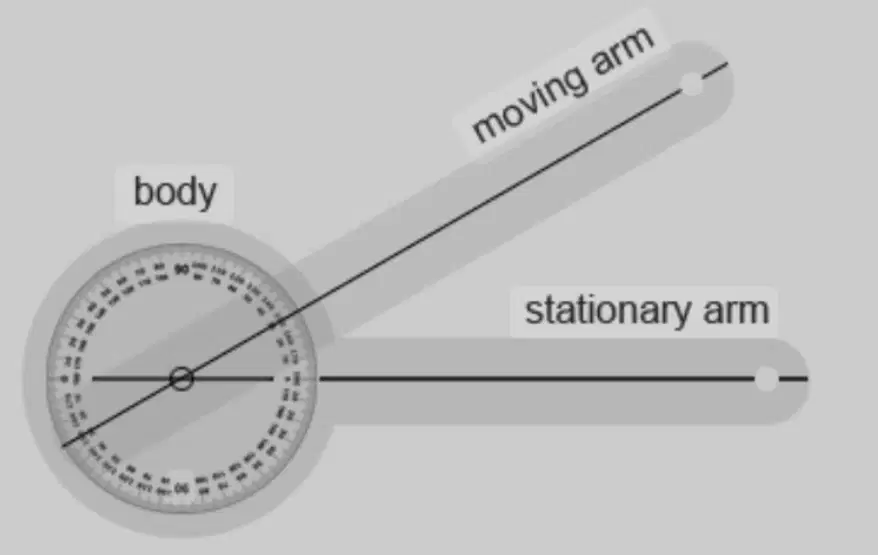
Which bone does move?
Moving arm
Stationary arm
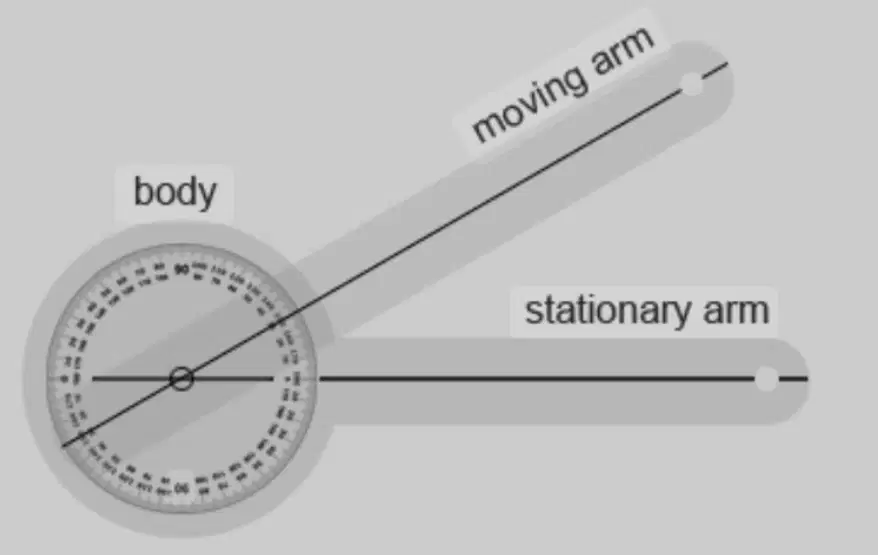
Refer to the diagram. What is the round piece of the instrument called?
Body
Neck
Bridge
Headstock
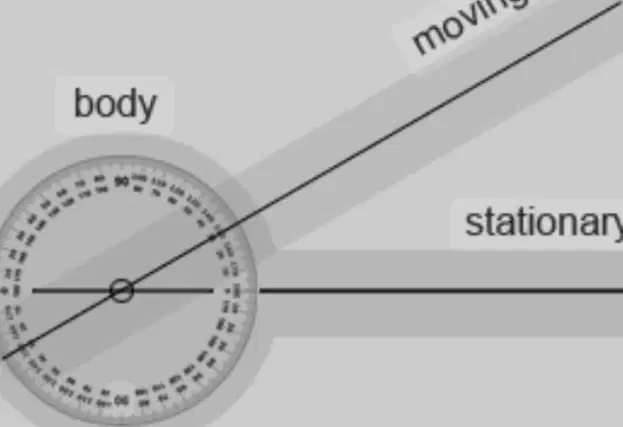
Which part of the instrument contains all of the measurements?
Body
Handle
Pointer
Scale
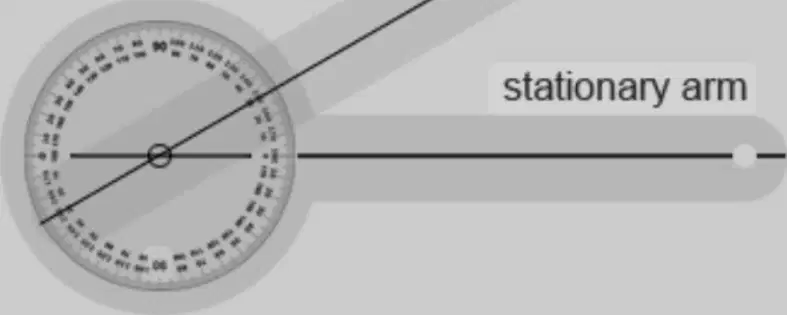
Where is the fulcrum located in the instrument shown in the diagram?
In the body
At the tip
In the handle
Outside the instrument
When taking a goniometric measurement, you must know the typical ________ for the joint.
Range of Motion (ROM)
Muscle Strength
Joint Stability
Bone Density
When taking a goniometric measurement, you must know the center of the joint, also called the ________.
fulcrum
axis
pivot
epicondyle
When taking a goniometric measurement, you must know the distal bone, also called the ________.
moving arm
stationary arm
axis
fulcrum
When taking a goniometric measurement, you must know the proximal bone, also called the ________.
stationary arm
moving arm
fulcrum
axis
When taking a goniometric measurement, you must know how to ________ the patient.
position
diagnose
medicate
discharge
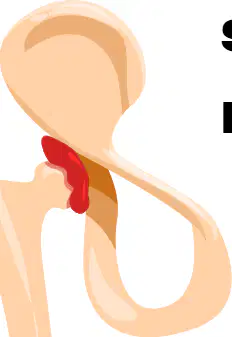
What is the typical range of motion (ROM) for hip flexion? The typical ROM for hip flexion is ____ degrees.
0-135
0-90
0-180
0-60
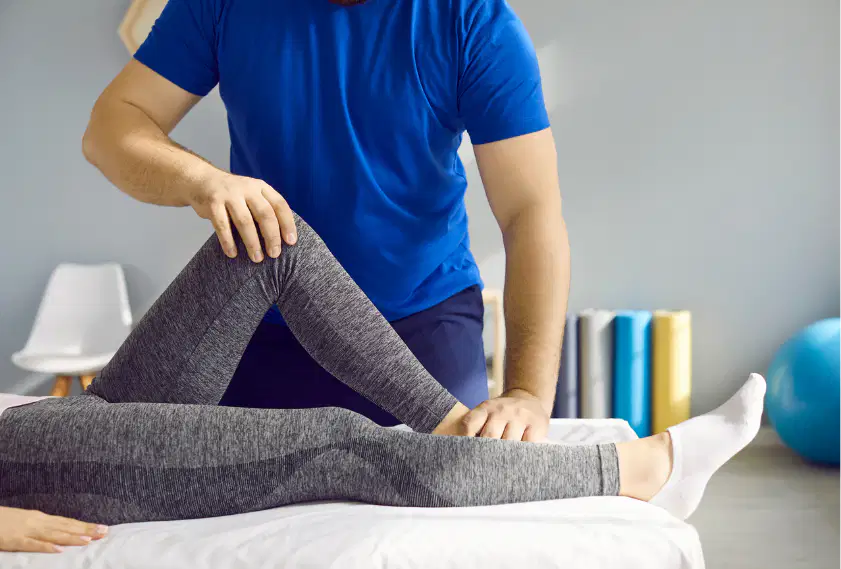
Based on the instructions and image for hip flexion, how should the patient be positioned?
Prone (on their stomach) with both legs extended
Supine (on their back) with test leg knee up and other leg extended
Sitting with both knees bent
Standing with both legs straight
Where is the middle of the joint?
Ball and socket
Hinge joint
Pivot joint
Gliding joint
Where is the proximal bone?
Pelvis/Spine
Hand
Foot
Skull
Where is the distal bone?
Femur
Scapula
Clavicle
Mandible
According to the instructions for hip flexion, what should you do before the patient performs hip flexion?
Align your goniometer to the points
Ask the patient to stand up
Measure the patient's height
Record the patient's weight
Fill in the blank: The line through the middle of both arms of the goniometer should align with the ______ and distal bone respectively.
proximal
medial
lateral
posterior
What is the number you should watch at the time of measurement when using a goniometer for hip flexion?
The number where the moving arm is at zero degrees.
The number where the stationary arm is at zero degrees.
The number at the midpoint of the goniometer scale.
The number closest to the patient's body.
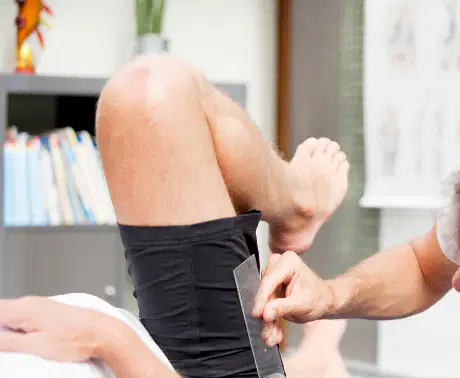
Using those reference points, have the patient go through hip flexion and take the measurement. Remember where you saw zero? What’s the number now?
The number is the degree of hip flexion measured.
The number is always zero.
The number is the patient's age.
The number is the length of the femur.
AROM means the patient would do the movement on their own. Fill in the blank: AROM stands for _______.
Active Range of Motion
Assisted Range of Motion
Automatic Range of Motion
Adjusted Range of Motion
PROM means we would help the patient with the movement. Fill in the blank: PROM stands for _______.
Passive Range of Motion
Physical Rehabilitation of Muscles
Progressive Resistance of Movement
Primary Range of Mobility
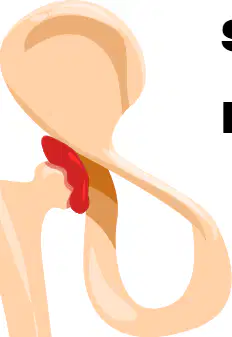
What is the typical range of motion (ROM) for hip extension? ________ degrees.
0-30
0-60
0-90
0-120
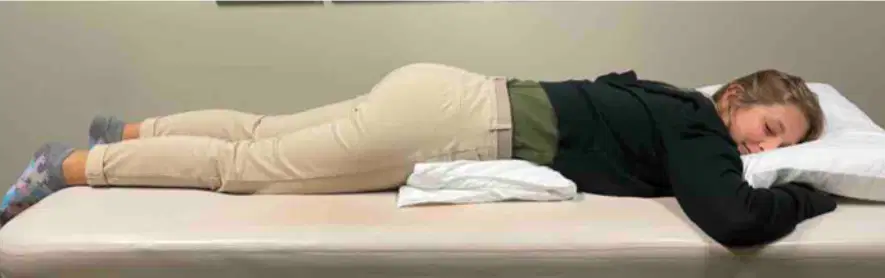
According to the instructions for hip extension, how should the patient be positioned?
Supine (on their back) with pillow under head
Prone (on their stomach) with pillow under hips
Sitting upright with pillow behind back
Lying on their side with pillow between knees
Where is the middle of the joint?
ball and socket
hinge joint
pivot joint
gliding joint
Where is the proximal bone?
Pelvis/Spine
Hand
Foot
Skull
Where is the distal bone?
Femur
Humerus
Scapula
Clavicle
According to the instructions for measuring hip extension, what should you align your goniometer to before the patient performs hip extension?
You should align your goniometer to the proximal and distal bone points before the patient performs hip extension.
You should align your goniometer to the patient's clothing before the patient performs hip extension.
You should align your goniometer to the floor tiles before the patient performs hip extension.
You should align your goniometer to the examiner's hand before the patient performs hip extension.
What is the significance of the line through the middle of both arms of the goniometer when measuring hip extension?
The line should align with the proximal and distal bone respectively.
It indicates the degree of muscle contraction.
It marks the midpoint of the joint capsule.
It is used to measure the circumference of the limb.
When measuring hip extension, what number should you watch at the time of measurement?
The number where the moving arm is at zero degrees.
The number where the stationary arm is at zero degrees.
The number where the axis is at ninety degrees.
The number where the moving arm is at ninety degrees.
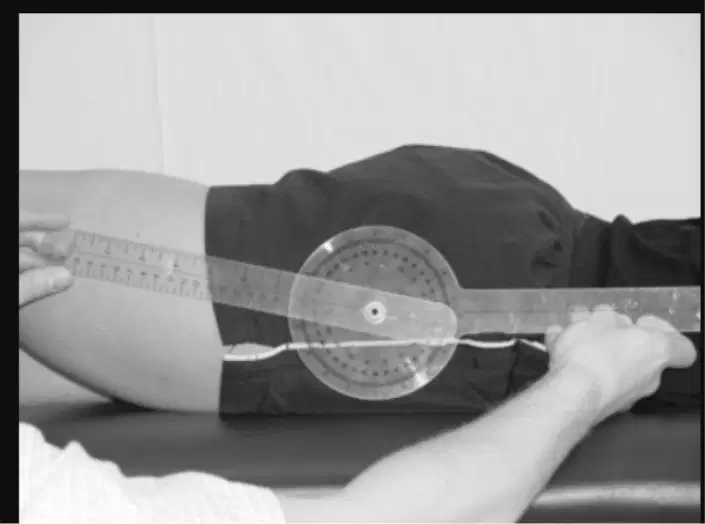
The process for measuring hip extension using reference points involves:
aligning the goniometer with anatomical landmarks such as the greater trochanter, lateral midline of the pelvis, and lateral midline of the femur
measuring the distance between the iliac crest and the patella
using a tape measure to record the length from the hip to the ankle
estimating the angle visually without any reference points
AROM stands for ________ and means the patient would do the movement on their own.
Active Range of Motion
Assisted Range of Motion
Automatic Range of Motion
Adjusted Range of Motion
PROM stands for ________ and means we would help the patient with the movement.
Passive Range of Motion
Physical Rehabilitation of Muscles
Progressive Resistance of Motion
Postural Range of Movement

Knee Flexion: The typical range of motion (ROM) for knee flexion is ______ degrees.
0-135
0-90
0-120
0-150
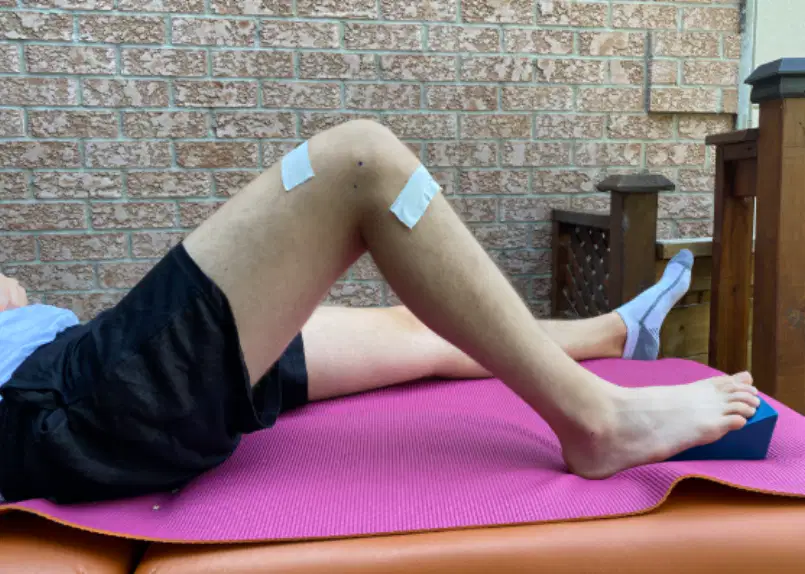
Based on the instructions and the image, how should the patient be positioned for knee flexion?
Sitting with legs crossed
Supine with legs straight, foot on the table
Standing with knees bent
Lying on the stomach
Knee Flexion
Decide....
The middle of the joint (hinge joint) is located at:
The space between the femur and tibia
The top of the femur
The bottom of the tibia
The patella
Where is the proximal bone? ________
Femur
Tibia
Radius
Ulna
Where is the distal bone?
Tibia
Femur
Humerus
Radius
According to the instructions for measuring knee flexion, what should you do before the patient performs knee flexion?
Ask the patient to stand up
Aline your goniometer to the specified points
Measure the patient's height
Record the patient's weight
According to the instructions for measuring knee flexion, the line through the middle of both arms of the goniometer should aline with the ________ and ________ bone respectively.
proximal; distal
distal; proximal
medial; lateral
anterior; posterior
According to the instructions for measuring knee flexion, what is the number you should watch at the time of measurement?
The number where the moving arm is at zero degrees
The patient's age
The patient's weight
The number of repetitions
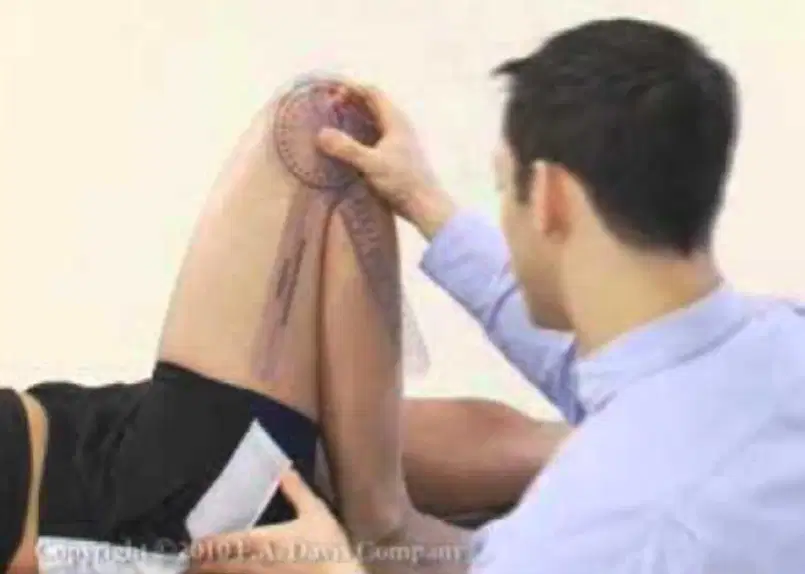
The process for measuring knee flexion using reference points involves which of the following steps?
Aligning a goniometer with the greater trochanter, lateral epicondyle of the femur, and lateral malleolus
Measuring the distance between the patella and the tibial tuberosity
Using a tape measure to record the circumference of the knee
Placing a ruler along the anterior aspect of the thigh
AROM stands for ________ and means the patient would do the movement on their own.
Active Range of Motion
Assisted Range of Motion
Automatic Range of Motion
Adjusted Range of Motion
PROM stands for ________ and means we would help the patient with the movement.
Passive Range of Motion
Physical Rehabilitation of Muscles
Progressive Resistance of Motion
Primary Range of Movement

What is the normal range of motion (ROM) for knee extension?
0-10 degrees hyperextension
10-20 degrees flexion
20-30 degrees extension
30-40 degrees hyperextension

Typically, if there is a knee extension issue, it is a lack of full knee ________.
extension
rotation
flexion
abduction
Knee Extension
Decide where the middle of the joint is (hinge joint).
At the center of the knee joint
At the top of the femur
At the bottom of the tibia
On the side of the knee
Where is the proximal bone?
Femur
Tibia
Radius
Ulna
Knee Extension Decide.... Where is the distal bone?
Tibia
Femur
Fibula
Patella
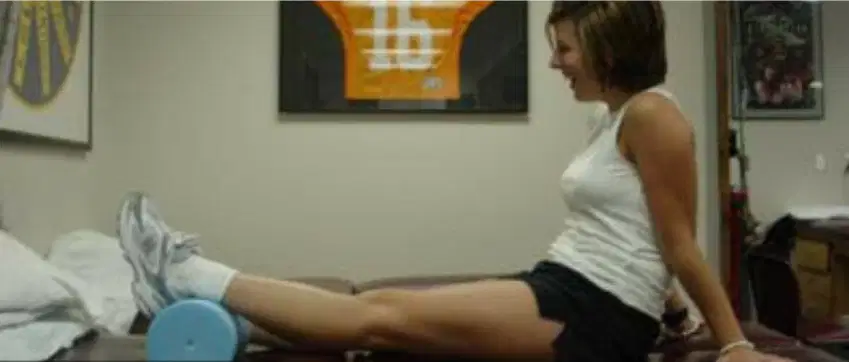
What is the correct position for a patient to achieve full knee extension or hyperextension?
Sitting with feet flat on the floor
Supine with ankle propped up
Standing with knees bent
Lying on the stomach
According to the instructions for measuring knee extension, what should you do before the patient performs knee extension?
Ask the patient to relax
Aline your goniometer to the specified points
Measure the other leg first
Record the patient's height
According to the instructions for measuring knee extension, the line through the middle of both arms of the goniometer should aline with the ______ and ______ bone respectively.
proximal; distal
distal; proximal
medial; lateral
anterior; posterior
When measuring knee extension, what is the significance of the number where the moving arm is at zero degrees?
This is the number you will watch at the time of measurement.
It indicates the maximum flexion possible.
It shows the average range of motion.
It is used to calibrate the goniometer.
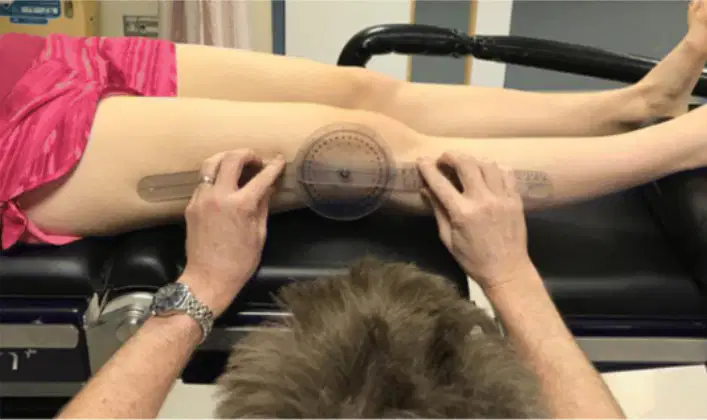
Using those reference points, have the patient go through knee extension and take the measurement. Remember where you saw zero? What’s the number now? (Fill in the blank with the new measurement number.)
10 degrees
0 degrees
-5 degrees
20 degrees
What does AROM stand for?
Active Range of Motion
Assisted Range of Motion
Automatic Range of Motion
Applied Range of Motion
What does PROM mean?
Patient Range of Motion
Passive Range of Motion
Physical Range of Motion
Professional Range of Motion

