wayground logo

Free Printable Worksheets

Font size

S
M
L
XL
Worksheets

Q1 Test Review (6.6ABCDE 6.7ABC)

Total questions: 99

Worksheet time: 2hrs 16mins
Name
Class
Date
1.

At higher temperatures _________.

a)
particles in an object have less energy
b)
particles in an object move faster
2.

A gas has _________.

a)

has a definite shape and volume

b)

fast-moving particles

3.

Matter that has its own shape and takes up space is a _______.

a)
solid
b)
liquid
c)
gas
4.

Matter that always fills the shape in a container, such as air is a _______.

a)
solid
b)
liquid
c)
gas
5.

Milk takes the shape of its container because it is a _______.

a)
solid
b)
liquid
c)
gas
6.

Molecules are closest together in a _______.
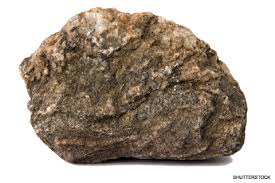
a)
Solid
b)
Liquid
c)
Gas
d)
plasma
7.
Which state of matter has tightly packed molecules?
a)
solid
b)
liquid
c)
gas
8.
True or False: Matter can changes states by adding heat or cooling.
a)
True
b)
False
9.

In a solid, particles ___________.

a)

have a lot of room to move

b)

do not have much room to move

10.

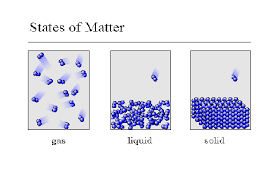
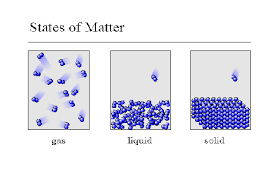
Identify the particles.

a)

solid

b)

liquid

c)

gas

11.

Identify the particles.

a)

solid

b)

liquid

c)

gas

12.

Identify the particles.

a)

solid

b)

liquid

c)

gas

13.

What type of mixture is this?

a)

heterogeneous mixture

b)

homogeneous mixture

c)

solution

d)

colloid

14.

The smallest particle of an element. All matter is made up of _____.

a)

properties

b)

mixture

c)

dissolves

d)

atom

15.

A mixture of two or more substances. If the substances combine, then they are thoroughly mixed.

a)

solution

b)

mixture

c)

atom

d)

properties

16.

When you combine two or more substances.

a)

properties

b)

atom

c)

mixture

d)

dissolves

17.

When two things join together and atoms combine, what happens to the materials?

a)

Their properties change

b)

Their properties stay the same

18.

Why is cake not a mixture?

a)

It consists of only one ingredient

b)

All of the elements are the same

c)

You cannot separate its ingredients

19.
What is a homogeneous mixture?
a)
a mixture that is the same throughout.
b)
a mixture that is made up of one type of atom.
c)
a mixture that is made up of one type of compound
d)
a mixture that cannot be separated through physical changes
20.
A mixture that is NOT evenly distributed is called ....
a)
Compounded
b)
Homogenous
c)
Heterogenous
d)
Salty
21.
Kool-Aid
a)
Element
b)
Compound
c)
Homogeneous Mixture
d)
Heterogeneous Mixture
22.
Aluminum
a)
Element
b)
Compound
c)
Homogeneous Mixture
d)
Heterogeneous Mixture
23.
NaCl
a)
Element
b)
Compound
c)
Homogeneous Mixture
d)
Heterogeneous Mixture
24.
a)
element
b)
compound
c)
mixture of elements
d)
mixture of compounds
25.
a)
element
b)
compound
c)
mixture of elements and compounds
d)
mixture of compounds
26.
a)
element
b)
compound
c)
mixture of elements
d)
mixture of compounds and elements
27.

The elements located to the left of the stair-step

a)

Metals

b)

Nonmetals

c)

Metalloids

d)

Gases

28.

The elements located along the stair-step

a)

Metals

b)

Nonmetals

c)

Metalloids

29.

Which type of element is located to the right of the stair-step?

a)

Metals

b)

Nonmetals

c)

Metalloids

d)

Semimetals

30.

The majority of the periodic table is made up of

a)

Metals

b)

Nonmetals

c)

Metalloids

d)

Noble gases

31.

This element is in Group 1, but it is not a metal

a)

Hydrogen

b)

Potassium

c)

Francium

d)

Helium

32.

This is the term used for a metal that is able to be hammered out or pressed

a)

Malleable

b)

Ductile

c)

Conductive

d)

Shiny

33.

Metals

a)

Anything that has volume and mass

b)

Elements that are typically solid, shiny, malleable, and good conductors of heat and electricity; includes most elements

c)

A substance whose electric conductivity falls between that of a conductor and an insulator; the foundation of modern electronics

d)

A characteristic that can be observed or measured without changing the substance

34.

Metalloids

a)

A physical property that describes the ability of a substance to transfer heat or electrical energy

b)

A material that does not conduct heat or electric current

c)

A table in which all the known elements are arranged by properties and are represented by chemical symbols

d)

Elements that have properties of both metals and nonmetals; sometimes referred to as semiconductors

35.

Nonmetals

a)

A table in which all the known elements are arranged by properties and are represented by chemical symbols

b)

Elements that are typically not shiny, not malleable, and poor conductors of heat and electricity; usually gases or brittle solids

c)

Elements that have properties of both metals and nonmetals; sometimes referred to as semiconductors

d)

Anything that has volume and mass

36.
If a material can easily be drawn into the shape of a wire, it is
a)
Ductile
b)
Magnetic
c)
Malleable
d)
Reactive
37.
Iron is a good conductor, malleable and magnetic. What type of element is Iron? 
a)
Metal
b)
Nonmetal
c)
Metalloid
d)
Pretty
38.

Aluminum can be hammered into different shapes or rolled into flat sheets. This means Aluminum is

a)

metal

b)

nonmetal

c)

metalloid

39.

The way a metal’s surface reflects light is called ________________.

a)

dull

b)

luster

c)

solids

d)

metal

40.
What does brittle mean?
a)
Breaks into pieces
b)
can be hammered into thin sheets
c)
No shine
d)
reflects light shiny 
41.
Carbon is dull and brittle. Carbon is a 
a)
metal
b)
nonmetal
c)
metalloid
d)
metallica
42.
Frank has a paper clip. It has a mass of 9g and a volume of 3cm3. What is its density?
a)
3 g/cm3
b)
1/3 g/cm3
c)
27 g/cm3
d)
39 g/cm3
43.
Frank has an eraser. It has a mass of 4g, and a volume of 2cm3. What is its density?
a)
8 g/cm3
b)
2 g/cm3
c)
1/2 g/cm3
d)
24 g/cm3
44.
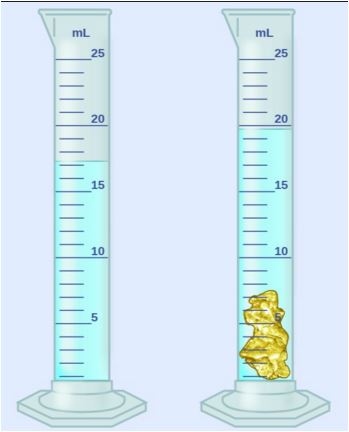
An irregularly shaped piece of gold was lowered into a graduated cylinder holding a volume of water equal to 17 ml. The height of the water rose to 20 ml. If the mass of the gold was 27 g, what was its density?
a)
9 g/mL
b)
10.5 g/mL
c)
6.5 g/mL
d)
8 g/mL
45.
How much water has been displaced in the image shown?
a)
40 mL
b)
65 mL
c)
20 mL
d)
25 mL
46.
How much water has been displaced in the image shown?
a)
80 mL
b)
100 mL
c)
20 mL
d)
60 mL
47.
Find the density of a 2 cm x 2 cm x 2 cm cube with a mass of 64 g.
a)
6 cm3
b)
12 g/cm3
c)
128 g/cm3
d)
8  g/cm3
48.
What is the density of water?
a)
0 g/ml
b)
1 g/ml
c)
10 g/ml
d)
100 g/ml
49.

An object is is placed into 45 mL of water. The water rises to 48 mL. What is the volume of the object?

a)

3 mL

b)

93mL

c)

8 mL

d)

83 mL

50.
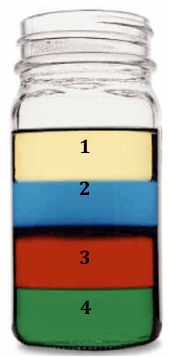
Put the liquids in order from most dense to least dense?
a)
4, 3, 2, 1
b)
1, 2, 3, 4
c)
3, 4, 2, 1, 
d)
4, 3, 1, 2
51.

What 2 measurements are used for DENSITY

a)

Mass and Weight

b)

Mass and Acceleration

c)

Mass and Volume

d)

Length and Width

52.

Which of the following is evidence of a chemical reaction?

a)

Tearing.

b)

Production of a gas.

c)

Production of a precipitate.

d)

Unexpected change in color.

e)

Change in temperature.

53.

Evidence of a chemical reactions is anything that shows - 

a)

a new substance has formed

b)

interaction between 2 gases

c)

a solid dissolved in a liquid

d)

a change in the state of matter

54.

What are chemical changes/reactions?

a)

It's when you mix substances.

b)

When something bubbles.

c)

when the appearance of the substances change.

d)

a process in which atoms rearrange to form new substances

55.

Bubbling and fizzing is evidence that a ________ is forming.

a)

liquid

b)

solid

c)

gas

d)

plasma

56.

A precipitate is a ___________ that is deposited from a solution.

a)

gas

b)

solid

c)

liquid

d)

plasma

57.

A change that affects the appearance but not the chemical makeup of a substance.

a)

property

b)

solution

c)

chemical reactions

d)

physical change

58.

A substance made of only one kind of matter and has definite properties.

a)

pure substance

b)

Atom

c)

Element

d)

Compound

59.

A substance that cannot be broken down into simpler substances

a)

Element

b)

Atom

c)

chemical symbol

d)

Molecule

60.

one or two letters that represent an element

a)

chemical symbol

b)

chemical formula

c)

endothermic reaction

d)

equation

61.

Which of the following are evidence of chemical change?

a)

change in color

b)

melting

c)

freezing

d)

production of a gas

e)

precipitate

62.

A substance made up of atoms of two or more different elements joined by chemical bonds

a)

Molecule

b)

Compound

c)

Element

d)

pure substance

63.

What is a force?

a)

push

b)

none

c)

push or pull

d)

pull

64.

How can forces affect objects?

a)

change an object's size

b)

changes the gravitational pull

c)

changes speed and direction

d)

all of the above

65.

Magnetic force is

a)

a contact force

b)

when magnets attract

c)

when magnets repel

d)

a noncontact force

66.

An example of friction is

a)

a softball player sliding across the clay field to third base

b)

ice melting

c)

roller skating on a smooth surface

d)

balloons sticking to a cat's fur

67.

Which of the following is an example of a noncontact force?

a)

slapping tables

b)

falling into a pool

c)

playing video games

d)

none of these

68.

Gravity is

a)

a contact force that pulls objects down

b)

a force that resists sliding motion

c)

a noncontact attractive force

d)

humans walking on Earth

69.

Mass is the amount of _________ in an object.

a)

weight

b)

matter

c)

particles

d)

atoms

70.
Friction acts in a direction __________ to the direction of the object’s motion.   
a)
Side By Side
b)
Parallel Directions
c)
 Opposite
d)
The Same Direction
71.
What force are you demonstrating when you stand on the ground? 
a)
 Gravitational Force 
b)
Friction 
c)
 Applied Force   
d)
Normal Force
72.
What force are you demonstrating when you pull a cup towards you? 
a)
 Gravitational Force
b)
Normal Force
c)
Applied Force 
d)
Friction
73.
What force are you demonstrating when you drop your book on the floor? 
a)
 Magnetic Force
b)
Gravitational Force
c)
Normal Force
d)
 Electrical Force
74.
What force is demonstrated when you pull a chair across a room?   
a)
Applied Force
b)
Normal Force
c)
Gravitational Force
d)
 Friction
75.
What force is demonstrated when you stand on a bathroom scale? 
a)
 Applied Force
b)
Normal Force
c)
Gravitational Force
d)
 Electrical Force
76.
What force are you demonstrating when you bring the north and south poles of a magnet together? 
a)
Magnetic Force
b)
 Electrical Force
c)
 Contact Force
d)
Friction
77.

Newton’s law states that for every action, there is an ________ reaction.

a)

unequal and opposite

b)

equal and similar

c)

stronger and opposite

d)

equal and opposite

78.

When a cannon fires a cannonball we observe Newton's third law. Which is the reaction force?

a)

The cannon moving forward

b)

The cannon moving backwards

c)

The cannonball moving backwards

d)

The cannonball moving forward

79.

Action reaction forces never cancel each other out because

a)

They act on different objects.

b)

They act on the same objects

c)

They do not act on objects.

80.

How is this an example of Newton’s Third law?

a)

Only the ball is using the head

b)

They are both exerting an equal force on each other

c)

Only the head is pushing the ball

81.

Force always come in________

a)

waves

b)

triplets

c)

pairs

82.

The forces in a force pair are in _______ direction

a)

opposite

b)

same

83.
A person steps out of the boat and onto the dock.  As the person moves forward onto the dock, the boat moves backward.  Which statement best describes the backward motion of the boat as the person steps forward?
a)
For every action there is an equal and opposite reaction.
b)
Every mass exerts a force on every other mass.
c)
An object at rest tends to stay at rest.
d)
Friction opposes the motion of an object.
84.

What happens to the balloon if the air is released ?

a)

Balloon goes right

b)

Balloon goes up

c)

Balloon goes down

d)

Balloon goes left

85.

When you step on a roach, the roach applies an equal and opposite force on your foot.

a)

True

b)

False

86.

Which picture shows the forces that Gene Cernan and the spacecraft put on each other?

a)
b)
c)
d)
87.
Imagine a bat swinging with a force of 1200 N, hitting a ball pitched with a force of 400 N. At what net force does the ball move away from the bat?
a)
1600 N
b)
800 N
c)
400 N
d)
Net force of 0 N
88.
If a force does not cause an object to move, it's considered a(n) __________________ force.
a)
Balanced
b)
Unbalanced
c)
Wimpy
d)
Weak
89.
A cyclist traveling at 25 km/hr turns sharply to the left while continuing to move 25 km/hr. This means the forces involved are_____________________.
a)
Balanced, because the cyclist's speed did not change.
b)
Balanced, because he was still moving forward.
c)
Unbalanced, because it's the same bicycle.
d)
Unbalanced, because his direction changed.
90.
Students are playing tug-of-war. If group B pulls the rope to the right with a force of 400 N and group A pulls the rope to the left with a force of 250 N, what will happen to the ribbon in the middle of the rope?
a)
The ribbon will move to the left and group A will win the tug-of-war.
b)
The ribbon will move to the left and group B will win the tug-of-war.
c)
The ribbon will move to the right and group B will win the tug-of-war.
d)
The ribbon will move to the right and group A will win the tug-of-war.
91.
This model shows the forces applied to a box.  However, this model DOES NOT show ________________________.
a)
the forces acting in opposite directions
b)
that the forces are unequal
c)
that student B is pushing harder
d)
the actual amount of the forces
92.
Is this a balanced or unbalanced force?
a)
Balanced
b)
Unbalanced
c)
Neither
d)
Both
93.
What is the net force of this object?
a)
0N
b)
50N
c)
25N
d)
5N
94.
Which direction will the object move?
a)
Right
b)
Left
c)
Up
d)
Down
95.
Is this a balanced or unbalanced force?
a)
Balanced
b)
Unbalanced
c)
Neither
d)
Both
96.
Calculate the net force of the object.
a)
10N
b)
2N
c)
15N
d)
5N
97.
Which direction will the object move?
a)
Up
b)
Down
c)
Right
d)
Left
98.
Is this a balanced or unbalance force?
a)
Balanced
b)
Unbalanced
c)
Neither one
d)
Both
99.
Calculate the net force of the object in the image shown.
a)
20N
b)
35N
c)
5N
d)
25N