
 Worksheets
Empire Partitioning Across Africa and Africa Geography Review Ga
Total questions: 90
Worksheet time: 50mins
1. Europeans first became interested in Africa because of:
its valuable resources and trade opportunities.
its cold climate and mountainous terrain.
its advanced technology and infrastructure.
its isolation from the rest of the world.
The end of the 19th century is called the 'Age of Imperialism' because:
European powers expanded their empires by colonizing territories around the world.
Industrialization ended and countries became isolated.
Nations focused solely on internal development and ignored foreign affairs.
Democratic governments replaced all monarchies globally.
The purpose of the Berlin Conference was to:
divide Africa among European powers
end World War I
establish the United Nations
create the European Union
The main goal of European countries when they divided Africa was:
to gain access to resources and expand their empires
to promote African unity and independence
to spread democracy and human rights
to establish equal partnerships with African leaders
The result of the 'scramble for Africa' was:
the division of Africa among European powers
the unification of African kingdoms
the end of European colonization in Africa
the independence of all African nations
6. The European country that gained the most land in Africa was:
France
Germany
Belgium
Italy
European countries failed to consider which important factor when making artificial political boundaries in Africa?
The existing ethnic and cultural divisions
The climate of the regions
The mineral resources available
The length of the rivers
European countries cared about maintaining African ethnic groups during colonization.
No, they did not care and often ignored existing ethnic boundaries.
Yes, they carefully preserved all ethnic groups.
They only cared about some ethnic groups.
They created new ethnic groups to maintain balance.
Life for Africans under European control was characterized by which of the following?
Loss of freedom and exploitation
Increased political independence
Equal rights and opportunities
Self-governance and prosperity
By the mid-twentieth century, what spread through Africa?
Nationalist movements
Industrial Revolution
Feudalism
Colonial expansion
Conflicts continued to erupt in many African countries even after they had gained independence because:
colonial borders ignored ethnic divisions
they had strong democratic institutions
there was immediate economic prosperity
foreign intervention completely stopped
Europeans first became interested in Africa because:
they wanted to find new trade routes and resources.
they were searching for a place to settle permanently.
they wanted to escape from European wars.
they were interested in African cuisine.
The end of the 19th century is called the 'Age of Imperialism' because:
European powers expanded their empires by colonizing large parts of Asia and Africa.
Industrialization led to the decline of global trade.
Nations focused on internal development rather than expansion.
There was a worldwide movement towards democracy.
The purpose of the Berlin Conference was to:
divide Africa among European powers
end World War I
establish the United Nations
create the European Union
The main goal of European countries when they divided Africa was:
to gain access to resources and wealth
to promote African unity
to spread democracy
to end all conflicts in Africa
The result of the 'scramble for Africa' was:
the division of Africa among European powers
the unification of African kingdoms
the end of European colonization in Africa
the independence of all African nations
6. The European country that gained the most land in Africa was:
France
Germany
Belgium
Italy
European countries failed to consider which important factor when making artificial political boundaries in Africa?
The existing ethnic and cultural divisions
The climate of the regions
The mineral resources available
The length of the rivers
European countries cared about maintaining African ethnic groups during colonization.
Yes, they respected existing ethnic boundaries.
No, they ignored ethnic groups and created new borders.
They only cared about some ethnic groups.
They tried to unite all ethnic groups.
Life for Africans under European control was characterized by:
harsh treatment and loss of freedom
increased political power
complete economic independence
equal rights with Europeans
By the mid-twentieth century, what spread through Africa?
Nationalist movements
Industrial Revolution
Feudalism
Colonial expansion
Conflicts continued to erupt in many African countries even after they had gained independence because:
colonial borders ignored ethnic and cultural divisions
there was an abundance of natural resources
all leaders were democratically elected
foreign aid was immediately withdrawn
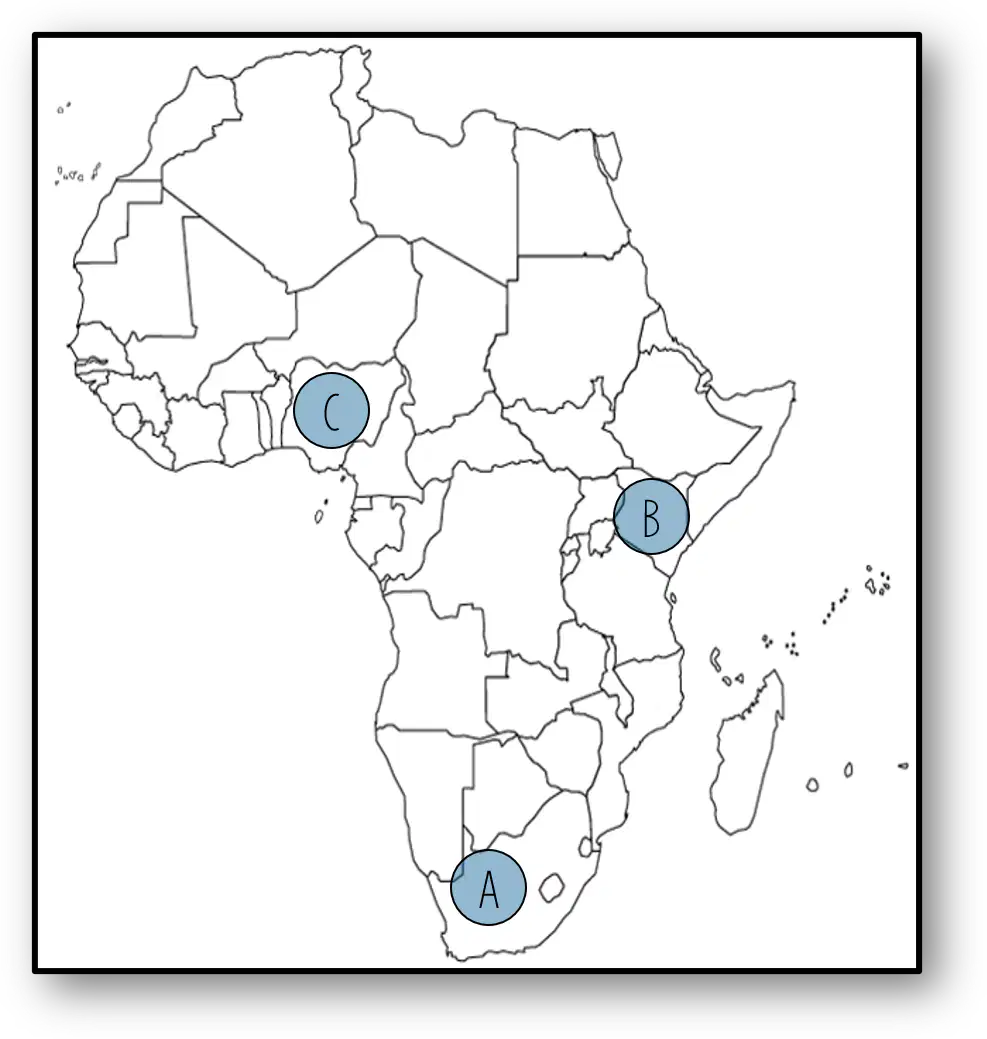
Which country's independence movement occurred in 1963 and was incredibly violent with the Mau Mau Uprising?
Which country's independence movement occurred in 1963 and was incredibly violent with the Mau Mau Uprising?
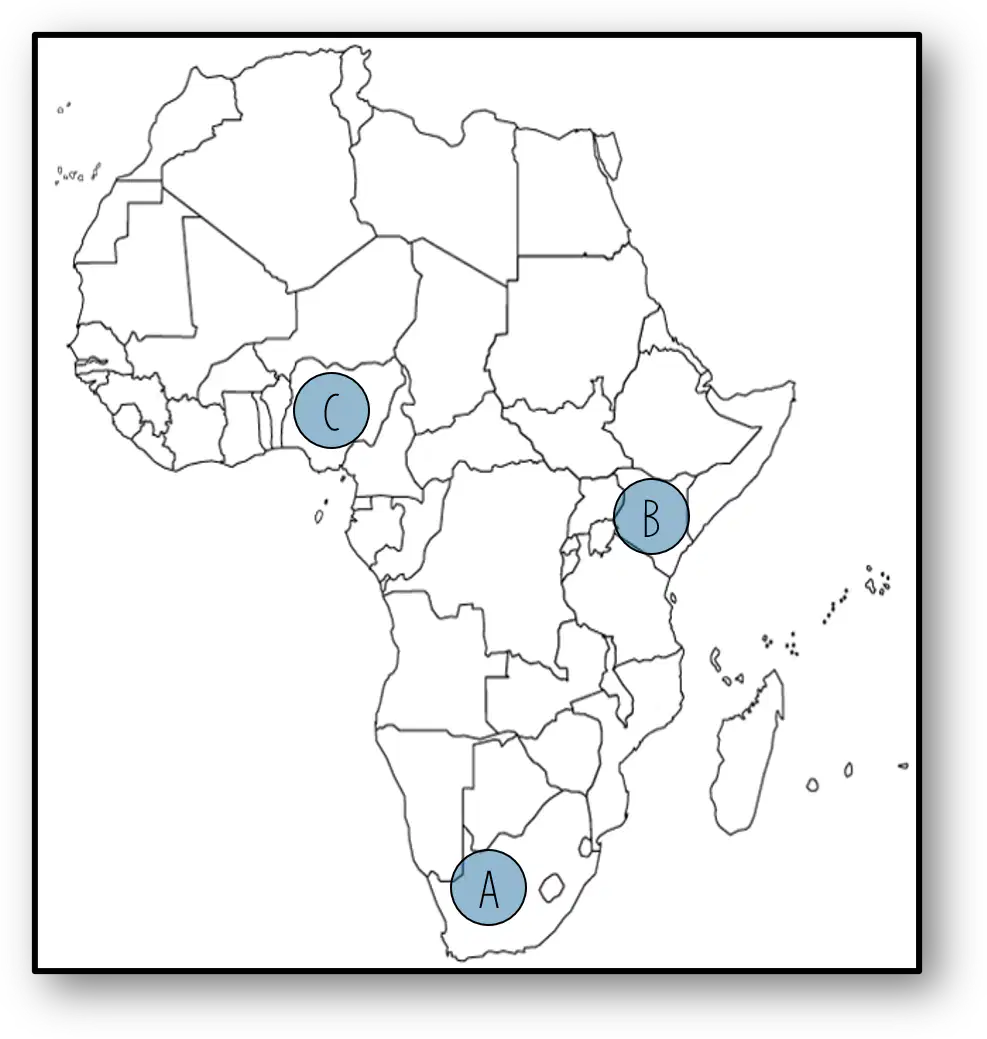
Which country gained its independence in 1960 after many (mostly) peaceful protests but has not maintained peace since?
Put the events in the order that they occurred:
Great Britain took control of Nigeria's resources and land from its tribes.
After WWII, many Nigerians began encouraging nationalism and demanding self-rule.
Nigeria gains full independence from Great Britain.
Nigeria suffers three military takeovers and a civil war.
Put the events in the order that they occurred:
Great Britain establishes a colony in Kenya.
Mau Mau rebels revolt against British rule.
The British begin returning lands to their Kenyan owners.
Great Britain grants full independence to Kenya.
What is the term that describes a country's desire to "expand their borders to overseas territories and colonies"?
Industrialization
Imperialism
Enlightenment
Agriculture
Why was Imperialism "necessary" following the Industrial Revolution?
Great Britain was on a power kick
Great Britain had too much money
Great Britain and Europe needed resources to continue expansion
None of the above
Europe
HOW DID AFRICANS REACT TO THE INVADING EUROPEANS?
THEY WENT AGAINST THEM
THEY WENT WITH THEM
THEY AGAINST WENT THEM
THEY WITH THEM WENT

Imperialism is __________.
when a powerful nation uses its resources to help a weaker nation
when a weaker nation invites a powerful nation to help it industrialize
when a powerful nation takes control of the economy and government of a weaker nation
when weak nations join together to fight a strong nation

The Berlin Conference is most closely associated with the colonization of:
North America
Africa
Asia
South America
The scramble for Africa was
the competition of African countries to grow more powerful.
the competition between European countries to establish colonies in Africa.
the competition between the rival ethnic groups in Africa.
how the resources in Africa were distributed.


A feeling of strong pride for one's home country
Colonialism
Nationalism
Imperialism
Socialism
A social policy or racial segregation involving political and economic and legal discrimination against non-whites.
Independence
Apartheid
Segregation
Partitioning
ANC leader imprisoned by the Afrikaner regime; released in 1990 and elected as president of South Africa in 1994.
FW de Klerk
Nelson de Klerk
Bishop Mandela
Nelson Mandela
last National Party president (1989 - 1994) of South Africa during the Apartheid era. He freed Nelson Mandela in 1990 and worked with him to establish the country's first free election.
Bishop Mandela
FW de Klerk
Nelson Mandela
Nelson de Klerk
In what country was apartheid a part of the law?
Great Britain
Russia
Mexico
South Africa
When did apartheid end?
1964
2002
1994
It hasn't ended officially.

Which country is shaded?
South Sudan
Nigeria
South Africa
Egypt

Which country is shaded?
Kenya
Nigeria
Sudan
South Africa

Which country is shaded?
Democratic Republic of the Congo
Nigeria
Sudan
Egypt

Which country is shaded?
Sudan
Nigeria
Kenya
Egypt

Which country is shaded?
Kenya
Democratic Republic of the Congo
Nigeria
Kenya

Which country is shaded?
South Sudan
Egypt
Democratic Republic of the Congo
Sudan

Which feature is the arrow pointing to?
Atlas Mountains
Mt. Kilimanjaro
Sahara Desert
Kalahari Desert

Which feature is the arrow pointing to?
Kalahari Desert
Tropical Rainforest
Sahara Desert
Gobi Desert

Which major African river flows through Egypt?
Congo River
Niger River
Egyptian River
Nile River

Which river is the arrow identifying?
Niger River
Congo River
Nile River
West African River

Which African region is shaded on the map?
Tropical Rainforest
Kalahari Desert
Savanna
Sahel

Which African region is shaded on the map?
Savanna
Tropical Rainforest
Sahel
Desert

The northern part of Africa is home to the world's largest hot desert. What is the name of this desert?
Kalahari
Sahara
Gobi
North African

Which feature is the arrow pointing to?
Lake Victoria
Congo River
Lake Tanganyika
Lake Nile

Which region is partly shaded in green on the map?
Sahel
Sahara
Tropical Rainforest
Savanna
In central and west Africa there is a high demand for trees in the rainforest. As a result, trees have been removed for farming purposes and building roads. Which environmental issue best describes this practice of tree removal?
Earthquake
Deforestation
Flooding
Desertification
"It is very hard for me to farm here due to overgrazing and poor soil. My farm land is slowly becoming a desert." The quote is best describing which region?
Sahel
Tropical Rainforest
Savanna
Sahara
Which region would deal with the issue of deforestation the most?
Sahara
Tropical Rainforest
Sahel
Savanna

If you are describing someone who is a member of the Ashanti people, what are you describing?
Ethnic group
Language
Religious group
Education

Why is the population smaller in southwestern Africa?
Sahara Desert
Kalahari Desert
Dense tropical rainforests
Active volcanoes
If population growth occurs in an area that depends on farming, what might be a direct result?
Mining for minerals in the area will decrease.
Air pollution from farm equipment will increase.
Deforestation will occur to clear land for additional farms.
The area will also see an increase in industrial productivity.
Overfarming and overgrazing farmlands have been a major influence in which destructive process?
deforestation
reforestation
desertification
income distribution

