
NEW
Font size
 Worksheets
Lecture 3
Total questions: 15
Worksheet time: 12mins
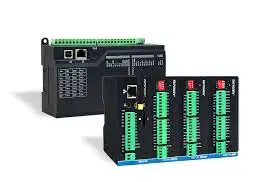
Which of the following best describes the primary role of a PLC in industrial automation?
To execute arithmetic operations and manage office tasks such as word processing
To store and execute control logic that manages inputs (sensors) and outputs (actuators) of machines and processes
To provide internet browsing and remote communication for factory workers
To handle high-resolution image rendering and graphic design applications
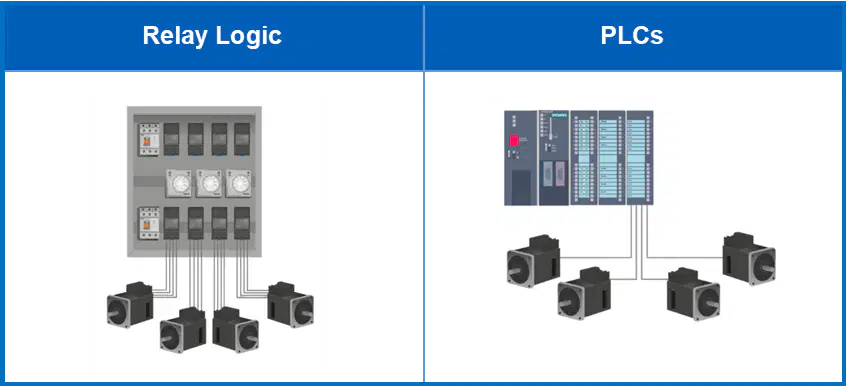
One of the weak points of PLCs compared to traditional relay-based control is
High reprogramming flexibility
High reliability under industrial conditions
Ability to integrate sensors and actuators easily
Higher cost despite similar basic functions
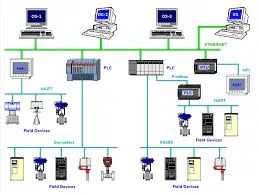
Why is a communication module critical in a PLC system?
It provides connectivity between the PLC and external networks, HMIs, or SCADA systems
It stores the program instructions permanently
It ensures backup power in case of failure
It directly converts analog signals to digital form
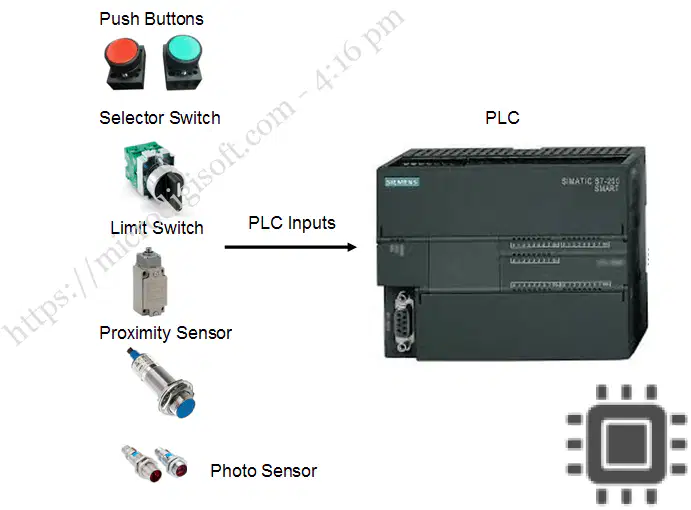
Which of the following best represents a PLC input device?
Motor contactor controlling a conveyor
Solenoid valve actuator
Limit switch monitoring machine position
Alarm siren
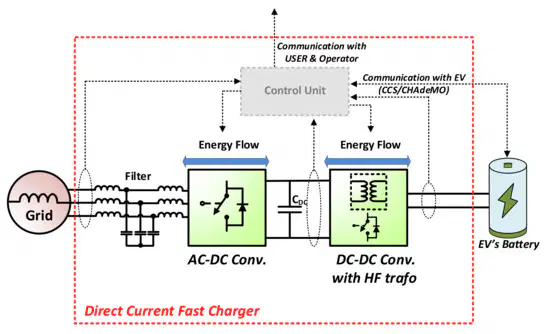
For an application requiring fast and frequent low-power DC switching, which output module is the most suitable?
Relay output
Transistor output
Mechanical contactor
Triac output

You have two start buttons in parallel and three stop buttons in series. One stop button gets disconnected (open circuit). What happens?
The machine can still start normally
The PLC automatically bypasses the faulty stop button
The machine cannot start, because the series path is broken
The PLC restarts the system with default logic
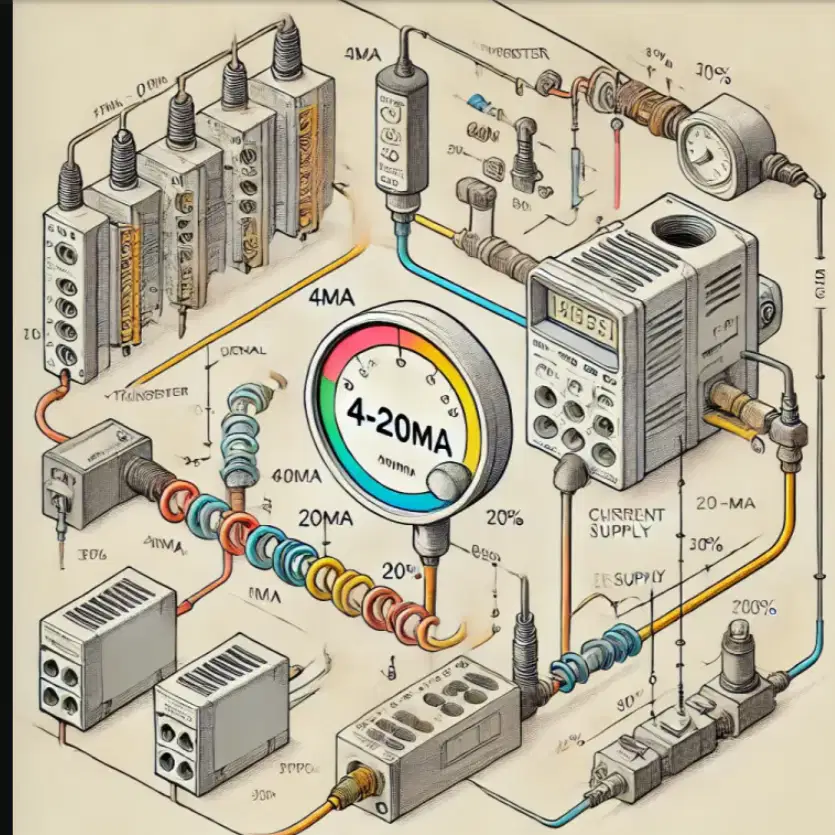
The 4–20 mA analog standard is widely used in PLC systems because it
Allows multiple devices to communicate digitally over a single bus
Ensures permanent program storage in PLC memory
Is mainly used for switching AC actuators
Provides a simple and noise-resistant method of transmitting analog values
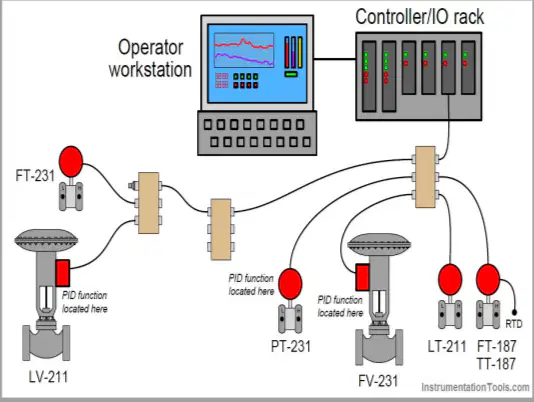
Which of the following belongs to the category of industrial fieldbus protocols?
Profibus
Bluetooth
USB
Wi-Fi
In ladder logic, a normally open (NO) contact behaves as
Conducting current in its rest state and opening when actuated
Non-conducting in its rest state and closing when actuated
A permanent closed path regardless of input state
A device that can only be used in output rungs
Why are stop buttons conventionally wired as normally closed (NC) in ladder circuits?
To reduce the wiring cost of safety circuits
To guarantee that loss of control voltage will safely stop the machine
To allow operators to restart quickly after emergency stops
To minimize the PLC scan cycle time
The main role of a latch circuit in ladder programming is to:
Maintain an output energized even after the start button is released, until a stop input occurs
Reduce the number of rungs required in a program
Provide automatic resetting of timers when inputs change state
Eliminate the need for external relays
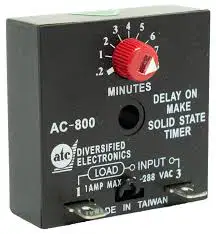
A delay-on timer is used when:
The output must deactivate after a certain time delay
The output must activate only after the input has been held for a set time
The input signal must be filtered before entering the PLC
Continuous oscillation of actuators is required
In TRiLOGI software, setting a timer value to 50 corresponds to
0.5 seconds delay
5 seconds delay
50 milliseconds delay
50 minutes delay
A pulse generator in PLC control is typically applied to:
Create a continuous analog signal for feedback loops
Generate repetitive on/off cycles for actuators such as cylinders
Reset counters during machine initialization
Extend program memory for complex applications
In the combined pulse generator + counter example, the conveyor begins operation:
Immediately when the Start button is pressed
Only after the counter registers six alarm pulses
After one revolution of the shaft is detected
As soon as the delay-on timer is reset

