
Font size
 Worksheets
Cell Transport Test
Total questions: 35
Worksheet time: 53mins

Nucleus control center of the cell
Selectively Permeable golgi apparatus
Non Permeable membrane

Simple Diffusion
Osmosis
Facilitated diffusion
Active transport
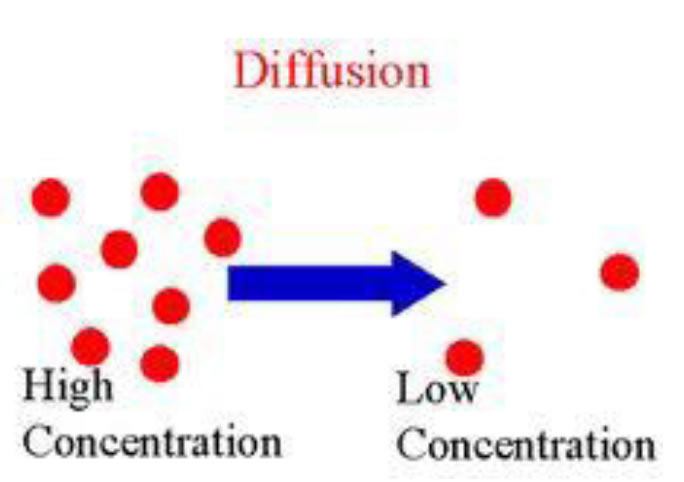

This picture represents what type of active cell transport?


The concentration of red molecules outside the cell is higher than the concentration inside the cell. The red molecules cannot penetrate the cell. What will happen to the cell?
Water will leave the cell, and the cell will shrink. The solution is isotonic.
Water will enter the cell, and the cell will expand. The cell is isotonic.
Water will enter the cell, and the cell will expand. The cell is hypertonic.
Water will leave the cell, and the cell will shrink. The solution is hypertonic.
Which type of passive transport uses transport proteins to transport items such as glucose through the membrane?
Facilitated diffusion
Osmosis
Diffusion
Which type of transport does not use energy to transport substances?
Active transport
Passive transport

The cell expanded in size to the point of lysing (bursting), which means it was placed in a ____ solution.
Isotonic
Hypertonic
Hypotonic

The cell shows water moving in and out equally, which means it was placed in a ___ solution.
Isotonic
Hypertonic
Hypotonic
Another term for maintaining an internal balance is...
Equality
Equential
Homeostasis
Balance


Examples of particles that can diffuse across through the phospholipid bilayer include:
oxygen and carbon dioxide
sugar
water
calcium ions

What macromolecule is embedded into the lipid bilayer and helps to transport molecules?
Carbohydrate
Lipid
Protein
Nucleic Acid
What is the function of carbohydrates in the cell membrane?
The make up the majority of the cell membrane.
They act as channels for substances to pass through.
They act as name tags for the cell which is important for cell recognition and interaction.
They are not found in the cell membrane.
What type of molecules CANNOT easily diffuse through the cell membrane and would need a protein to help them?
Small Molecules
Large Molecules
Charged Molecules
Nonpolar Molecules
You bought some fresh flowers from the store but they started to look wilted. Once you placed them in a vase full of water, the leaves and stems began to swell again. What process is responsible for this swelling?
Photosynthesis
Osmosis
Diffusion
Active Transport
You got your wisdom teeth removed and the doctor told you to rinse your mouth with salt water. Why?
The salt water is a hypertonic solution, and the swollen cells in Devin's mouth will release water through osmosis.
The salt water is a hypotonic solution, and the swollen cells in Devin's mouth will take in water through osmosis.
The salt water is a hypotonic solution, and the swollen cells in Devin's mouth will release water through diffusion.
The salt water is a hypertonic solution, and the swollen cells in Devin's mouth will take in water through diffusion.

What molecule is pictured?
Integral Protein
Carbohydrate chain
Phospholipid

The spreading of molecules from a high concentration to a low concentration. Example is air freshener in a room.
diffusion
osmosis
active transport
The sodium potassium pump is a form of active transport. This means ____________ is required.
glucose
ATP
water
oxygen
An area that contains a large amount of particles is referred to as having a ________________________.
low concentration
high concentration
diffusion
osmosis
Diffusion is the movement of
water from low to high concentration
particles from low to high concentration
water from high to low concentration
particles from high to low concentration

What is the primary role of cholesterol in the cell membrane?
To provide energy for the cell.
To stabilize the membrane's fluidity.
To act as a channel for molecules.

This picture is a representation of what type of transport?
Osmosis because it is diffusing through a protein from an area of high concentration to low concentration.
Facilitated diffusion because it is diffusing through a protein from an area of high concentration to low concentration.
Facilitated diffusion because it is diffusing through a protein from an area of low concentration to high concentration.
Simple diffusion because it is diffusing through a protein from an area of high concentration to low concentration.
Students are observing particles moving against the concentration gradient in a lab investigation. Which type of transport are they observing?
osmosis
active Transport
facilitated diffusion
diffusion
Students are observing particles moving with the concentration gradient in a lab investigation. Which type of transport are they observing? (check all that apply)
using pumps to move things quickly
passive transport
osmosis
endocytosis

This picture shows molecules of red dye that have moved. What is this type of movement called?
Osmosis; the water molecules are moving from high concentration to low
Diffusion; the dye molecules are moving from low to high concentration
Diffusion; the dye molecules are moving from high to low concentration.
Facilitated diffusion; because the molecules are moving through a protein channel.

This a picture of an animal and plant cell placed in a solution. Describe the solution?
Isotonic
Hypotonic
Hypertonic

