
 Worksheets
ToolingU - Reverse Engineering
Total questions: 30
Worksheet time: 15mins
How might reverse engineering be applied in additive manufacturing to improve a product?
By analyzing existing products to create improved designs for 3D printing
By using traditional methods to create improved designs for 3D printing
By ignoring existing products to create improved designs for 3D printing
By focusing on mass production to create improved designs for 3D printing
How could point cloud and mesh data be used in the reverse engineering process?
To digitally reconstruct the shape and features of a scanned object
To physically create the shape and features of a scanned object
To digitally review the shape and features of a scanned object
To digitally avoid the shape and features of a scanned object
How can reverse engineering be useful for analyzing vintage car or truck engines?
It helps determine how the engine was originally manufactured.
It helps design new engine types.
It helps create new vehicle roads.
It helps cook recipes for car parts.
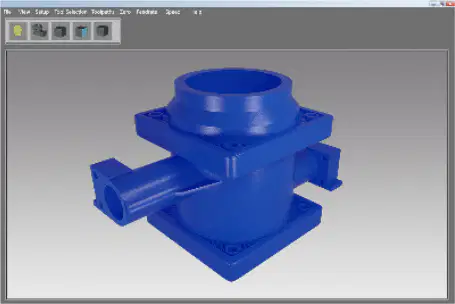
What is the function of a point cloud in the process of reverse engineering a part for additive manufacturing?
It groups virtual dots to represent locations on a part’s surface for digital modeling
It forms virtual dots to create a copy of the part’s surface for digital modeling
It uses virtual dots to color locations on a part’s surface for digital modeling
It gathers virtual dots to measure weight on a part’s surface for digital modeling
How do 3D laser light scanners assist in the reverse engineering process for additive manufacturing?
By recording the geometry of a part and creating a digital point cloud
By painting the geometry of a part and creating a digital point cloud
By melting the geometry of a part and creating a digital point cloud
By assembling the geometry of a part and creating a digital point cloud
What is the main function of CAD software in the AM process?
To create a physical model of the part
To simulate and visualize a 3D virtual model of the part
To convert the model into an STL or AMF file
To slice and layer the model for printing
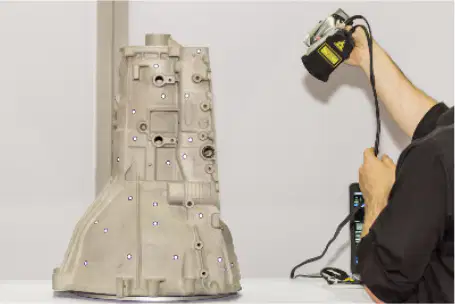
How can reverse engineering be useful when designing new products?
It helps designers find flaws or issues that may have been overlooked during the design process.
It helps designers make products that may be cheaper to manufacture during the design process.
It helps designers avoid any further testing that may be needed during the design process.
It helps designers ensure products will never need updates during the design process.
How does photogrammetry create a 3D model of an object?
By using photos from multiple angles and photogrammetry software
By using X-rays from multiple angles and photogrammetry software
By manually measuring from multiple angles and photogrammetry software
By using only a single angle and photogrammetry software
Why is computed tomography (CT) scanning considered more precise than photogrammetry?
CT scanning uses more images
CT scanning scans the part’s internal structure using X-rays
CT scanning is less expensive to use
CT scanning does not require special software
What is a key difference between photogrammetry and CT scanning in reverse engineering?
Photogrammetry uses X-rays, while CT scanning uses photographs
Photogrammetry creates a 3D model from external images, while CT scanning creates a 3D model from internal images
CT scanning is less accurate, while photogrammetry is more accurate
CT scanning does not require a computer, while photogrammetry does
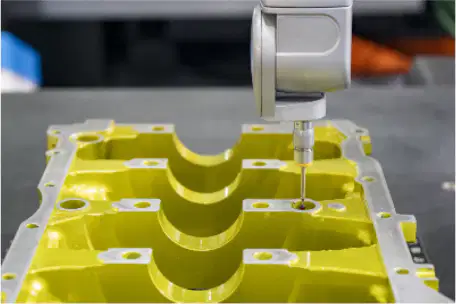
Compare the use of traditional CMMs and portable CMM arms. In what situation would a portable CMM arm be preferred?
When measuring only small objects that cannot be moved
When measuring objects that are larger or cannot be moved
When measuring objects that are larger using noncontact methods
When measuring objects that are larger using light patterns
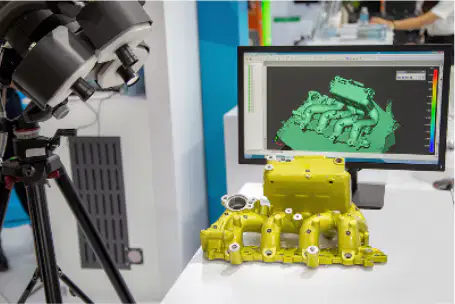
Why might structured-light scanners be preferred over hand-held laser scanners for scanning large objects?
They are less accurate and cover less area than hand-held scanners
They are mounted rather than hand-held, increasing accuracy and coverage
They use a stylus for more precise measurements and coverage
They require fewer points of contact for large objects
Which of the following is a possible use of reverse engineering (RE)?
For criminal purposes
For entertainment purposes
For educational purposes
For manufacturing purposes
What does a point cloud consist of in the context of STL files used in additive manufacturing (AM)?
Many connected triangles
Many connected squares
Many connected circles
Many connected lines
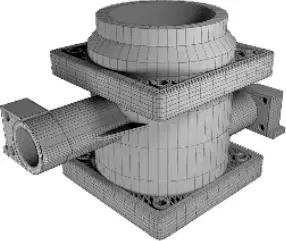
How does a mesh represent the data from a point cloud in modeling software?
By connecting points to form two-dimensional shapes called polygons
By coloring points to form two-dimensional shapes called polygons
By removing points to form two-dimensional shapes called polygons
By converting points to form two-dimensional shapes called polygons
What can engineers do with a mesh after it is created from a point cloud?
Import it into CAD software for further modeling
Use it to scan new objects in CAD software
Convert it back into a point cloud for modeling
Use it to measure temperature in CAD software
What is the purpose of converting a CAD model to an STL file in the reverse engineering process?
To allow the model to be digitally sliced into layers for additive manufacturing
To allow the model to be digitally sliced into layers for easier emailing
To allow the model to be digitally sliced into layers for color changing
To allow the model to be digitally sliced into layers for file storage
How can reverse engineering (RE) help a designer improve a newly designed part after it has been manufactured using additive manufacturing (AM)?
By allowing the designer to recall the original design file for review.
By providing a point cloud that reveals defects or uneven surfaces for correction.
By automatically fixing all errors without human review or correction.
By eliminating the need for post-processing steps like sanding or plating entirely.
What is one advantage of using reverse engineering for additive manufacturing (AM) processes compared to traditional manufacturing processes?
It needs less skill from designers.
It provides greater design flexibility and allows for easier improvements or enhancements.
It removes the need for design files.
It works only for new parts, not existing ones.
How does scanning and reverse engineering an existing part benefit designers and engineers?
It allows them to use the original, idealized design only.
It provides a digital version of the part that can be modified to create improved designs.
It prevents them from making changes to the part design.
It makes the process of manufacturing slower for them.
What is the primary cause of noise in mesh files?
Stray points caused by dust, dirt, or debris.
Errors caused by G Code, dust, or debris.
Errors caused by reverse engineering debris.
Errors caused by polygon, dust, or debris.
What is the purpose of G Code in additive manufacturing (AM) machines?
To direct AM machine movements.
To create AM machine movements.
To measure AM machine movements.
To test AM machine movements.
What is the main purpose of a coordinate measuring machine (CMM) in the context of reverse engineering?
To paint the surface of a product in three-dimensional space.
To inspect parts in three-dimensional space using a contact or noncontact probe.
To assemble parts in three-dimensional space into a final product.
To heat materials in three-dimensional space for molding.
What does the term "axes" refer to in the context of the Cartesian coordinate system?
The tools used in cutting materials.
Imaginary straight lines or circles used to describe the location or movement of an object in three-dimensional space.
The colors used in a CAD drawing model.
The types of materials used in manufacturing.
What is the function of build files in additive manufacturing?
To store finished products safely.
To provide detailed instructions to an additive manufacturing machine about the exact shape and size of each layer.
To measure the temperature of the environment during manufacturing.
To test the strength of the final product after manufacturing.
How does laser scanning contribute to the creation of 3D computer-aided design (CAD) models?
By using a concentrated beam of light to generate data about the geometric shape of an object
By using a concentrated beam of light to melt powdered material into objects
By using a concentrated beam of light to add a thin layer of metal to a surface
By using a concentrated beam of light to combine photographs into a virtual model
Which of the following best describes the purpose of a slicer in additive manufacturing?
To divide an STL file into layers for additive manufacturing
To check a part for surface roughness in manufacturing
To scan objects using structured light in manufacturing
To bond metal sheets using ultrasonic vibrations in manufacturing
How does structured-light scanning work when capturing the geometric surface data of an object?
By projecting a pattern of light on the object and scanning as an image
By using high-frequency sound on the object and scanning as an image
By emitting X-rays on the object and scanning as an image
By dividing a 3D model on the object and scanning as an image
What is the primary use of X-rays in reverse engineering applications?
To scan the interior of a part and create a digital model
To measure the heat inside a part and create a digital model
To bond metal sheets together and create a digital model
To project patterns of light for scanning a digital model
How does ultrasonic consolidation (UC) build a final part in additive manufacturing?
By using high-frequency vibrations to bond successive layers of material together
By using digital slicing to create layered material together
By projecting patterned light to form layered material together
By emitting scanning rays to create layered material together

