
 Worksheets
Microscopy
Total questions: 100
Worksheet time: 50mins
What is a microscope?
An instrument used to magnify an object
A device to measure temperature
A tool for cutting specimens
A machine for mixing chemicals
Images from microscopes are called _________.
micrographs
photographs
holograms
cartoons
Which type of microscope uses visible light to visualize specimens?
Light microscope
Electron microscope
Transmission electron microscope
Scanning electron microscope
Staining of specimen is often required in which type of microscope, and what is a consequence of this process?
Light microscope; kills the cells
Electron microscope; preserves the cells
Light microscope; preserves the cells
Electron microscope; kills the cells
Which microscope can be used to view live cells?
Light microscope
Electron microscope
Both A and B
Neither A nor B
The electron microscope can magnify up to ________ times.
100,000
1,000
10,000
1,000,000
Which of the following statements about electron microscopes is TRUE?
They use a beam of electrons instead of light
They have lower magnification than light microscopes
Preparation of specimen keeps it alive
They use visible light
Name the two types of electron microscopes mentioned in the slide.
Transmission electron microscope and Scanning electron microscope
Compound microscope and Simple microscope
Phase contrast microscope and Fluorescence microscope
Light microscope and Confocal microscope
Refer to the images labeled 'Micrograph' and 'Electron micrograph'. Which image shows a higher magnification and more detailed structure?
Micrograph
Electron micrograph
According to the Modern Cell Theory, what is the fundamental unit of structure and function in living things?
The cell
The tissue
The organ
The molecule
According to the Modern Cell Theory, all organisms are made of how many cells?
One or more cells
Only one cell
Hundreds of cells
No cells
According to the Modern Cell Theory, how do new cells arise?
Cells arise from other cells through cell division
Cells arise spontaneously from non-living matter
Cells arise from the fusion of atoms
Cells arise from the condensation of proteins
According to the additional aspects of cell theory, what do cells carry that is passed to daughter cells during cell division?
Genetic material
Cell wall
Mitochondria only
Chlorophyll
According to the additional aspects of cell theory, all cells are essentially the same in what?
Chemical composition
Shape
Size
Function
According to the additional aspects of cell theory, where does energy flow occur?
Within cells (metabolism)
Outside the body
In the bloodstream only
In the environment
Cell theory states that the cell is the ________ unit of life. (Fill in the blank)
fundamental
chemical
largest
simplest
Cells are living entities surrounded by a ________ that are capable of growing, reproducing, metabolizing and evolving. (Fill in the blank)
membrane
nucleus
cytoplasm
cell wall
Which of the following is an example of the variety of sizes cells can come in?
Bacteria vs Bird Eggs
Fish vs Mammals
Trees vs Flowers
Rocks vs Sand
The smallest living things are ________ microorganisms.
single-celled
multi-celled
plant-like
animal-like
Groups of cells comprise ________ organisms. (Fill in the blank)
multi-cellular
unicellular
prokaryotic
single-celled
Cells can be described as ________ or ________.
prokaryotic; eukaryotic
unicellular; multicellular
autotrophic; heterotrophic
plant; animal
Which type of cell lacks a nucleus?
Prokaryotic cells
Eukaryotic cells
Both
Neither
Which type of cell has a nucleus?
Prokaryotic cells
Eukaryotic cells
Both
Neither
Prokaryotic cells lack various internal structures bound with ______ membranes.
phospholipid
cellulose
chitin
glycoprotein
Eukaryotic cells have internal membrane-bound ______.
organelles
chromosomes
ribosomes
cytoplasm
Prokaryotic cells are typically ______ μm in diameter or smaller.
1.0
10.0
5.0
20.0
Eukaryotic cells are larger: ______ μm in diameter.
10–100
0.1–1
1–5
1000–5000
Which type of cell has a more complex structure?
Prokaryotic cells
Eukaryotic cells
Both
Neither
Prokaryotic cells include which of the following?
Algae and fungi
Bacteria and archaea
Animals and plants
Protozoa and fungi
Eukaryotic cells include algae, protozoa, fungi, animals, and ______.
plants
bacteria
viruses
archaea
Eukaryotic cells lack various internal structures bound with phospholipid membranes.
True
False
What is the function of the plasma membrane in a cell?
The plasma membrane is the outer covering that separates the cell from its environment.
It produces energy for the cell.
It stores genetic information.
It synthesizes proteins.
What is the jelly-like inside of the cell where the intracellular components reside called?
Cytoplasm
Nucleus
Cell wall
Mitochondria
What is the genetic material found in cells called?
DNA
RNA
Protein
Lipid
Which cell structure is responsible for synthesizing proteins?
Ribosomes
Mitochondria
Lysosomes
Golgi apparatus

According to the information provided, what is the typical size range of animal cells?
0.1-5 μm
10-100 μm
100-1000 μm
1-10 mm
According to the information provided, what is the typical size range of bacteria?
0.1-5 μm
10-100 μm
100-1000 μm
1-10 mm

Viruses and subcellular structures are typically how many times smaller than bacteria?
10-100x
100-1000x
1000-10,000x
1-10x
Fill in the blank: 1 micrometer (μm) is ______ times smaller than 1 millimeter (mm).
1000
10
100
10000
Fill in the blank: 1 nanometer (nm) is ______ times smaller than 1 micrometer (μm).
1000
10
100
10000
According to the diagram, which of the following can be seen with a light microscope but not with the naked eye?
Atom
Protein
Animal cell
Adult male
Match the following biological structures to their approximate size range based on the diagram: Match each structure to the correct size range.
~0.1 μm
~0.1 μm
~1 μm
~1 μm
~10-100 μm
~10-100 μm
~100 μm
~100 μm
Look at the diagram of the eukaryotic cell. What is the name of the structure labeled in the center of the cell?
Nucleus
Mitochondria
Golgi apparatus
Endoplasmic reticulum
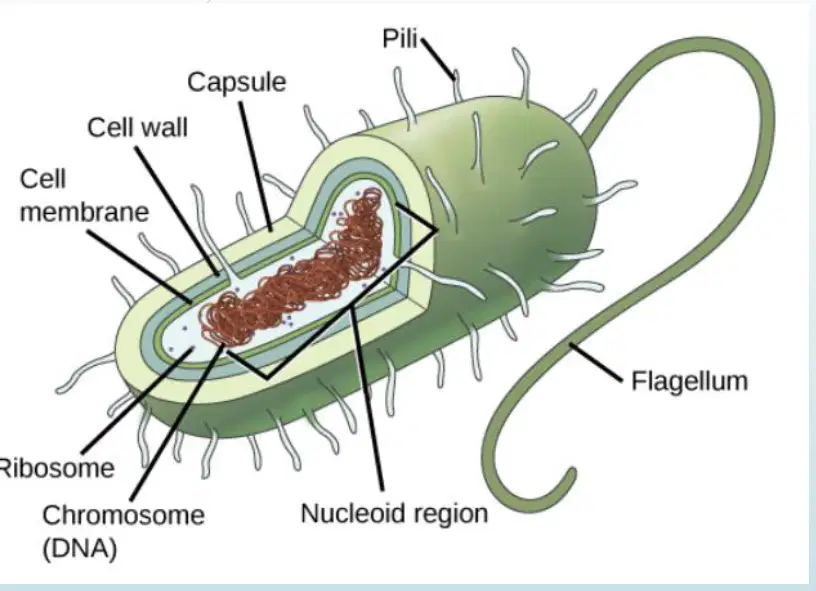
What is the region in the cytoplasm where DNA resides in a prokaryotic cell called?
Nucleoid
Mitochondrion
Ribosome
Chloroplast
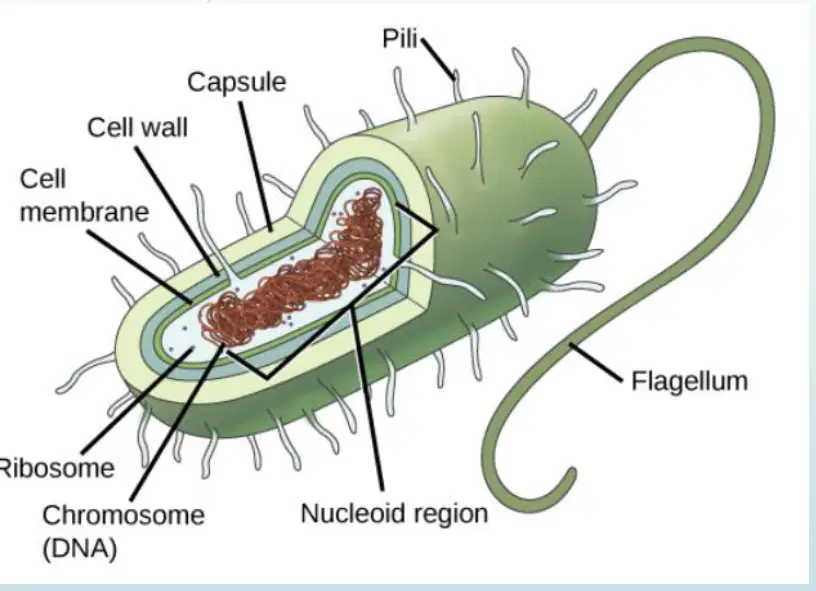
Which structure in a prokaryotic cell is used to generate motion and propel the microbe through its environment?
Flagella
Ribosome
Nucleoid
Capsule
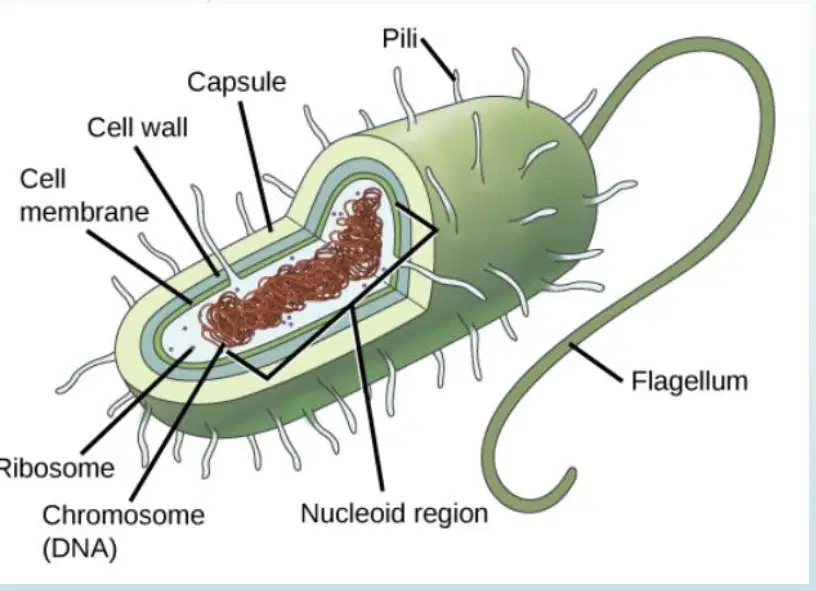
What is the function of fimbriae in prokaryotic cells?
Fimbriae are used as a way to stick to surfaces.
Fimbriae are responsible for energy production.
Fimbriae help in protein synthesis.
Fimbriae are involved in DNA replication.
Pili in prokaryotic cells are used to stick to surfaces and other microbes.
True
False
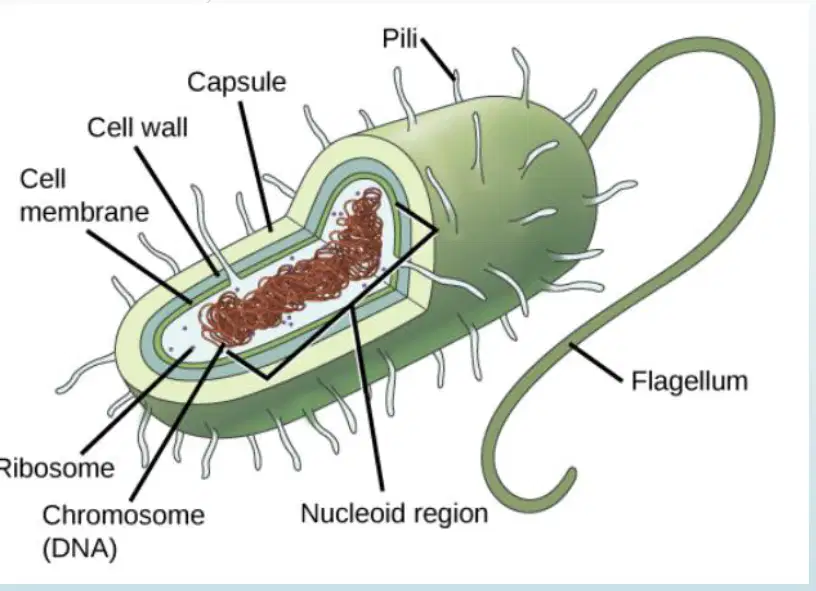
What is the main function of the capsule in some prokaryotic cells?
Prevents dehydration, allows cells to attach to surfaces.
Produces energy for the cell.
Synthesizes proteins for the cell.
Carries genetic information for reproduction.
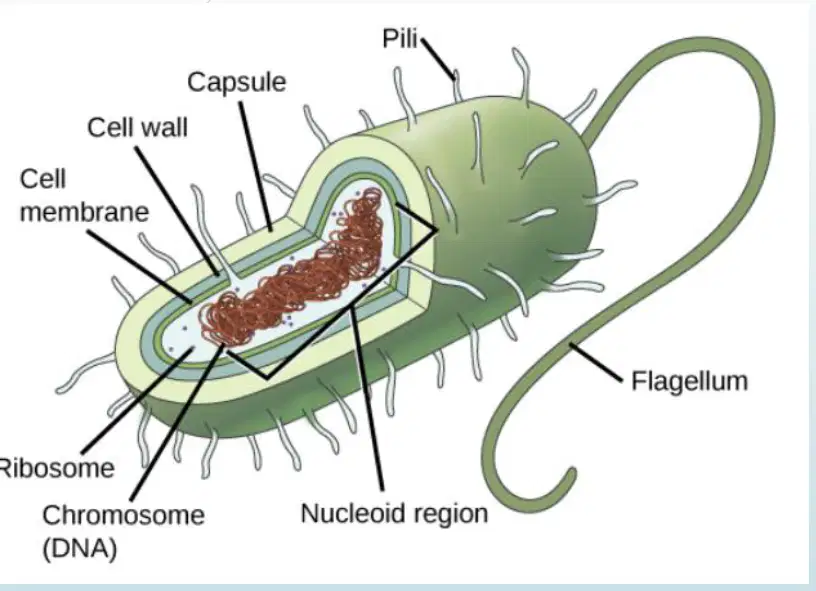
What is the role of ribosomes in prokaryotic cells?
Ribosomes are internal cell structures that make proteins.
Ribosomes store genetic material for the cell.
Ribosomes are responsible for cell movement.
Ribosomes break down waste products in the cell.
The cell wall in prokaryotic cells is found just outside the cell membrane.
True
False
Which structure in prokaryotic cells prevents dehydration, protects the cell, and helps the cell maintain shape?
Cell wall
Nucleus
Ribosome
Plasma membrane
The efficiency of movement of materials around the cell and into and out of the cell is important for cell size because:
it limits how large a cell can grow due to the need for effective transport.
it allows cells to store more genetic material.
it increases the number of organelles in the cell.
it determines the color of the cell.
As the radius of a cell increases, how does its surface area change?
Increases as the square of its radius
Increases as the cube of its radius
Stays the same
Decreases
As the radius of a cell increases, how does its volume change?
Increases as the square of its radius
Increases as the cube of its radius
Stays the same
Decreases
The volume of a cell grows more quickly than its surface area as the radius increases.
True
False
Fill in the blank: Cells with larger _______ and smaller volume are more favorable.
surface area
nucleus
cytoplasm
membrane potential
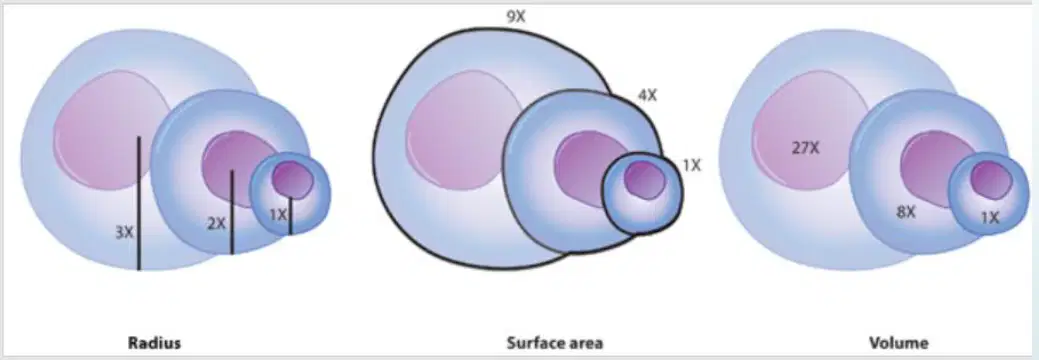
If the radius of a cell increases from 1x to 3x, by what factor does the surface area increase?
The surface area increases from 1x to 9x.
The surface area increases from 1x to 6x.
The surface area increases from 1x to 3x.
The surface area increases from 1x to 27x.
Why is the efficiency of movement of materials around the cell and into and out of the cell important for cell size?
It determines how effectively the cell can exchange materials with its environment, which is more efficient in smaller cells.
It allows the cell to divide more rapidly regardless of its size.
It increases the genetic material within the cell.
It ensures that the cell can survive without any energy input.
As the radius of a cell increases, what happens to its surface area?
It increases as the square of its radius
It increases as the cube of its radius
It stays the same
It decreases
As the radius of a cell increases, what happens to its volume?
It increases as the square of its radius
It increases as the cube of its radius
It stays the same
It decreases
The volume of a cell grows more quickly than its surface area as the radius increases.
True
False
Fill in the blank: Cells with larger surface area and smaller volume are more ________.
favorable
fragile
dense
inactive
According to the table, what is the surface area/volume ratio for a cell with 1 mm side length?
6:1
1:6
3:1
12:1

Match the following side lengths with their corresponding surface area/volume ratios:
6:1
1 mm
3:1
2 mm
3:2
4 mm
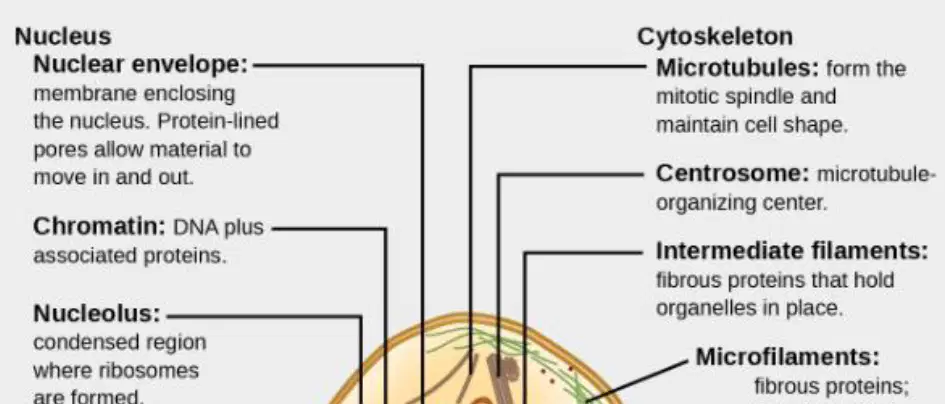
What is the function of the Nucleus in an animal cell?
The nucleus encloses the cell's DNA and directs the synthesis of ribosomes and proteins.
It produces energy for the cell through cellular respiration.
It packages and distributes proteins and lipids within the cell.
It provides structural support and protection to the cell.
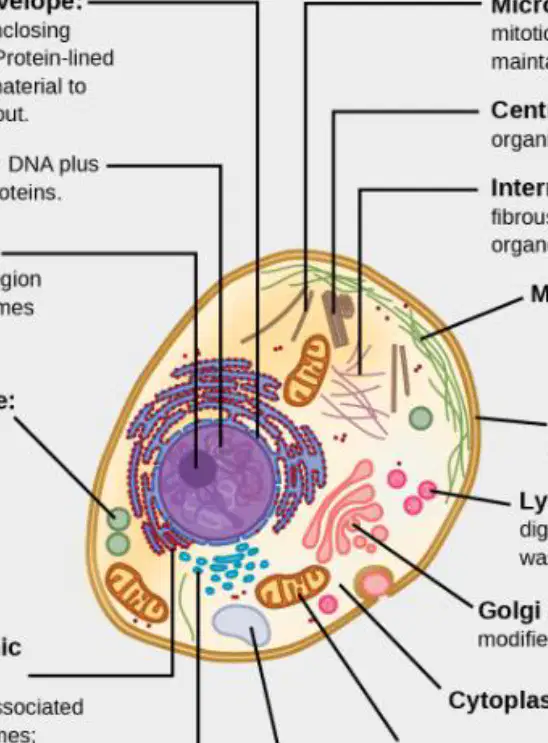
Which structure in an animal cell metabolizes waste?
Peroxisome
Mitochondrion
Ribosome
Golgi apparatus
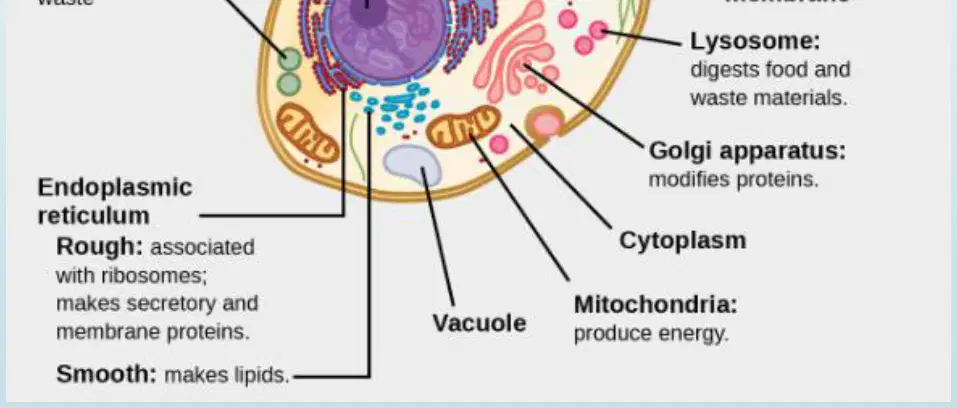
What is the main function of mitochondria in animal cells?
Produce energy.
Store genetic information.
Control cell division.
Synthesize proteins.
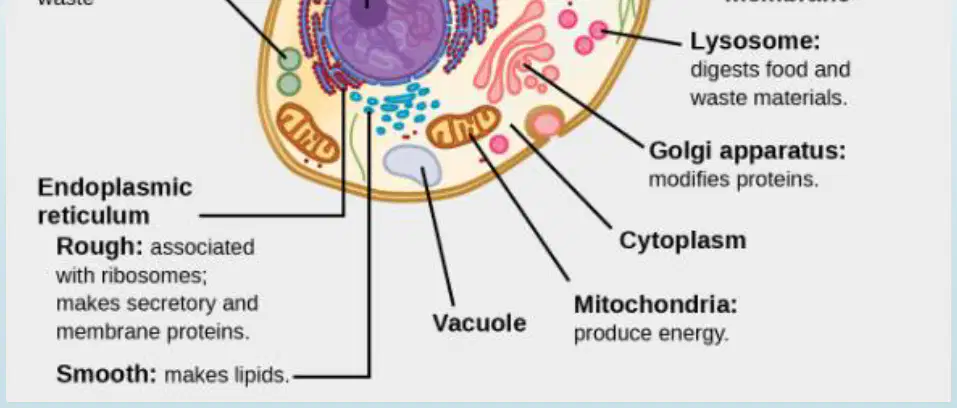
Which part of the animal cell is responsible for digesting food and waste materials?
Lysosome
Nucleus
Mitochondria
Ribosome
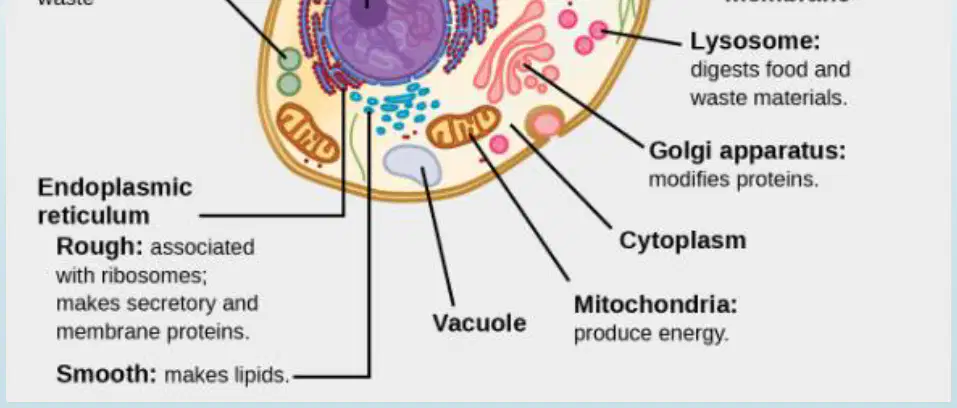
What is the function of the Golgi apparatus in animal cells?
Modifies proteins.
Produces energy.
Synthesizes DNA.
Breaks down waste.
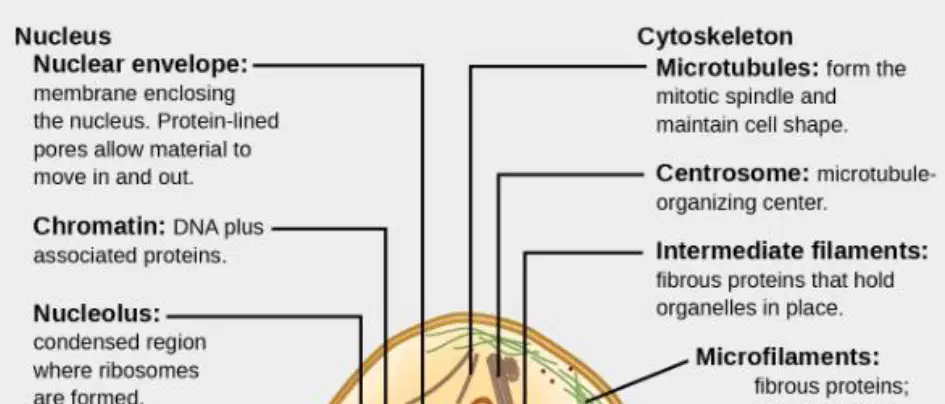
Which structure forms the mitotic spindle and maintains cell shape in animal cells?
Microtubules (part of the cytoskeleton)
Mitochondria
Ribosomes
Lysosomes
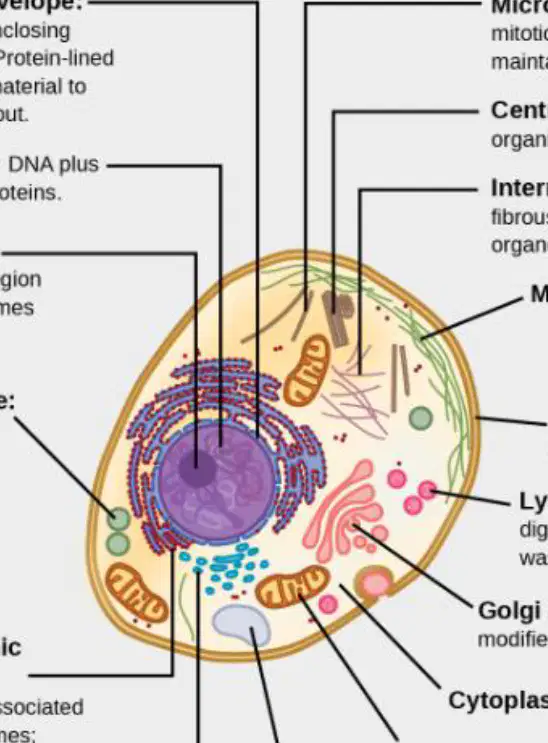
What is the function of the plasma membrane in animal cells?
The plasma membrane encloses the cell, controlling the movement of substances in and out.
It produces energy for the cell through cellular respiration.
It stores genetic information for the cell.
It synthesizes proteins for the cell.
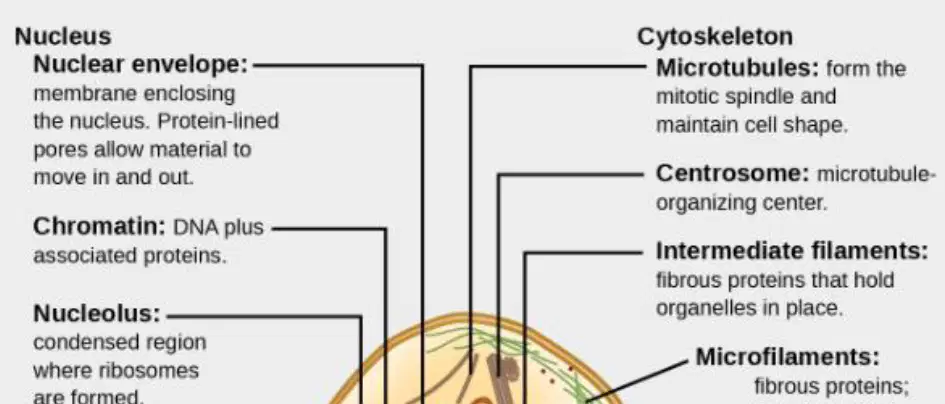
Which structure is the microtubule-organizing center in animal cells?
Centrosome
Mitochondrion
Nucleolus
Golgi apparatus
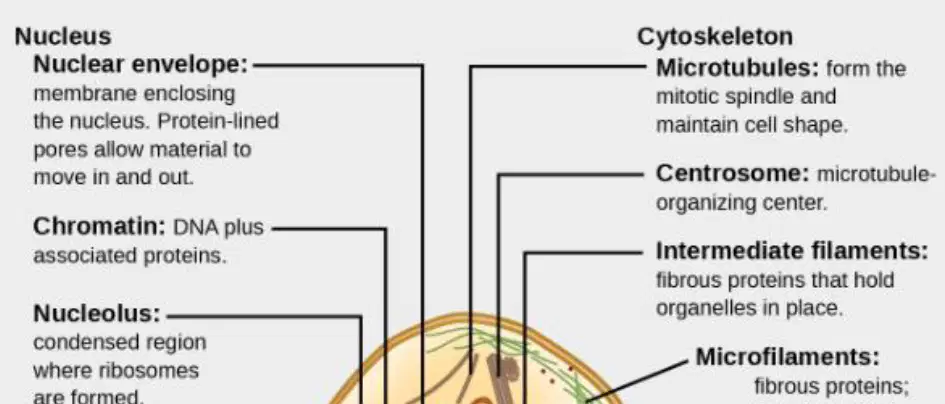
What is the function of the nucleolus in animal cells?
The nucleolus is the condensed region where ribosomes are formed.
It is responsible for storing genetic information.
It controls the movement of substances in and out of the cell.
It is the site of cellular respiration.
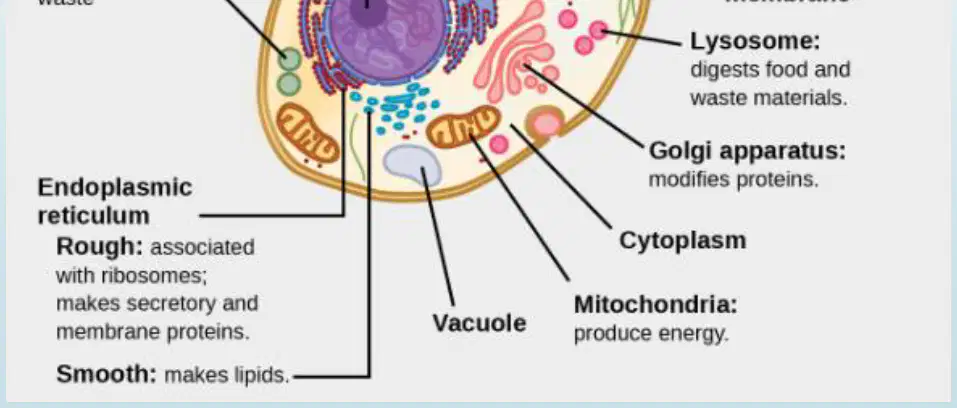
What is the function of rough endoplasmic reticulum in animal cells?
Associated with ribosomes; makes secretory and membrane proteins.
Stores genetic information and controls cell activities.
Produces energy through cellular respiration.
Synthesizes lipids and detoxifies chemicals.
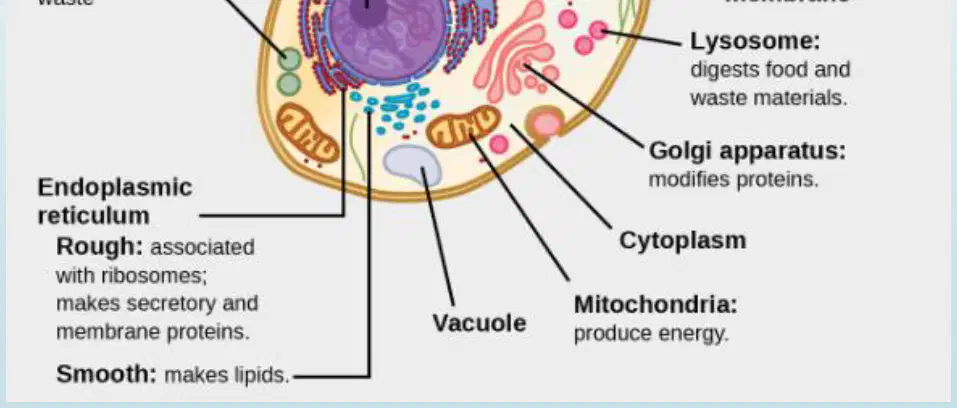
What is the function of smooth endoplasmic reticulum in animal cells?
Makes lipids.
Synthesizes proteins.
Stores genetic information.
Produces energy.
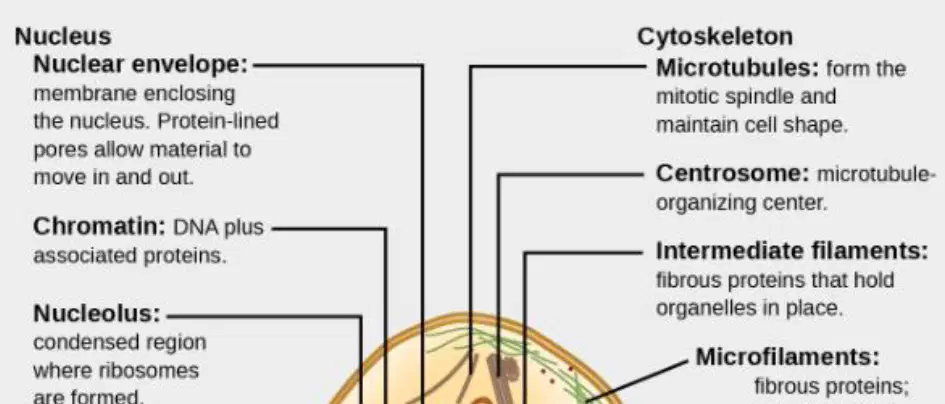
Which structure in animal cells holds organelles in place with fibrous proteins?
Intermediate filaments
Mitochondria
Ribosomes
Golgi apparatus
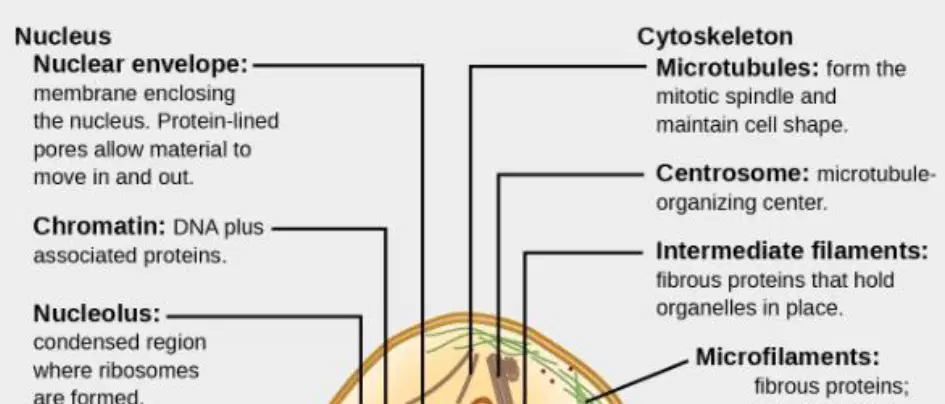
What is the function of microfilaments in animal cells?
Form the cellular cortex with fibrous proteins.
Store genetic information for the cell.
Synthesize proteins for export.
Transport oxygen throughout the cell.
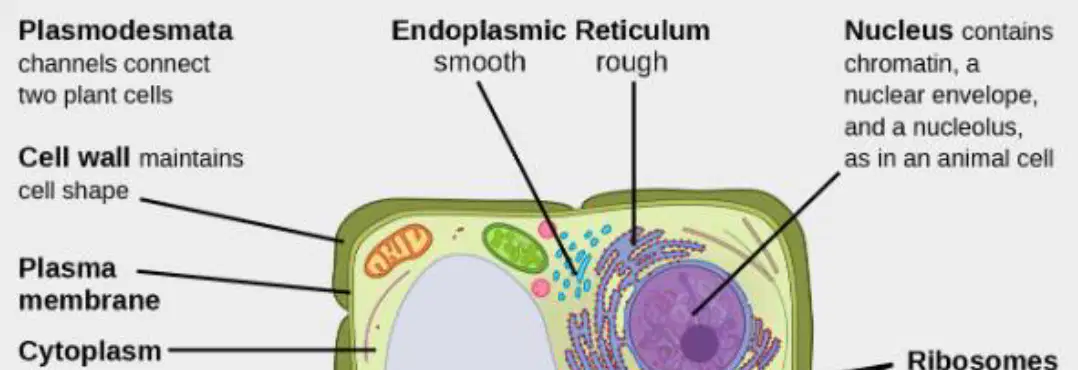
What is the function of the plasmodesmata in plant cells?
Channels connect two plant cells.
Stores genetic information.
Produces energy for the cell.
Breaks down waste materials.
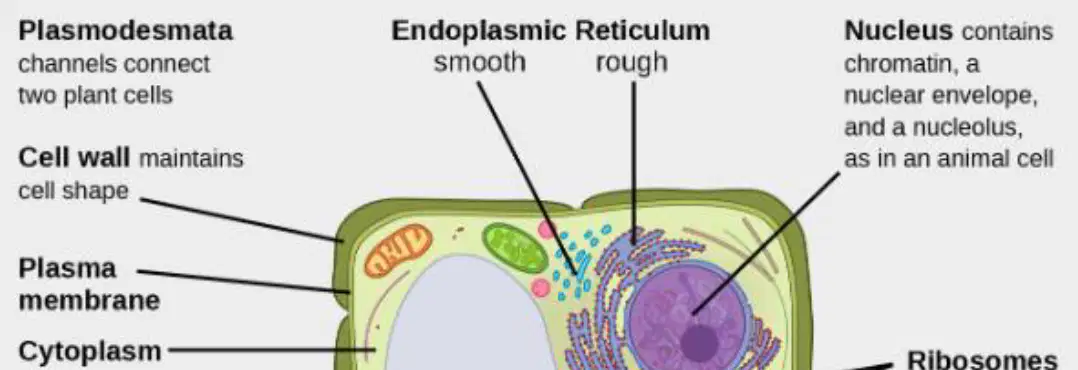
Which structure in plant cells maintains cell shape?
Cell wall
Nucleus
Chloroplast
Mitochondria
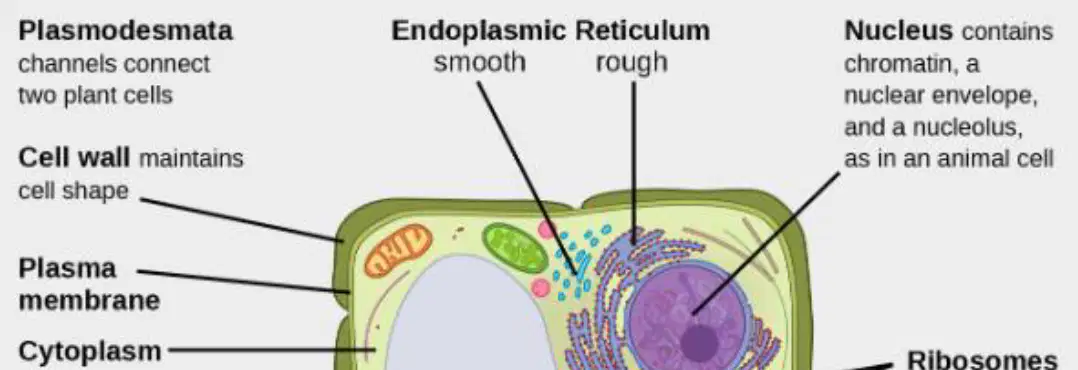
What is the function of the plasma membrane in plant cells?
It surrounds the cytoplasm and controls the movement of substances in and out of the cell.
It produces energy for the cell through photosynthesis.
It stores genetic information for the cell.
It provides structural support and rigidity to the cell.
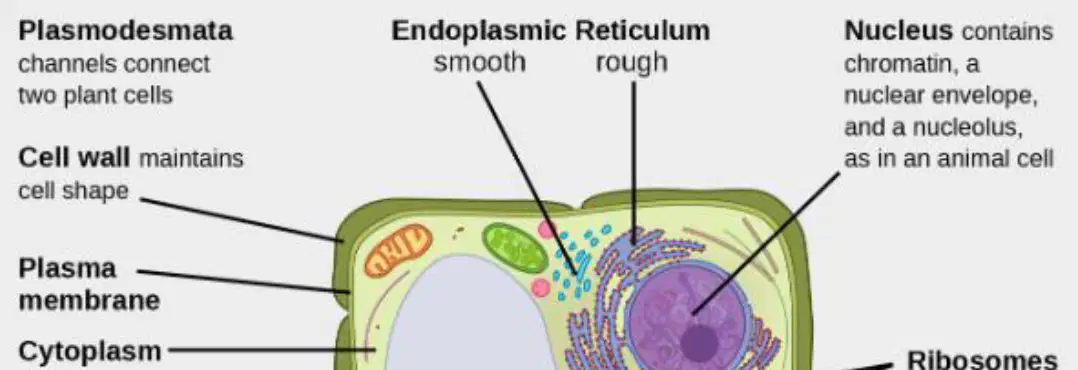
What is the function of the cytoplasm in plant cells?
It is the jelly-like substance where cell components are suspended.
It controls the entry and exit of substances in the cell.
It stores genetic information for the cell.
It provides structural support to the cell.
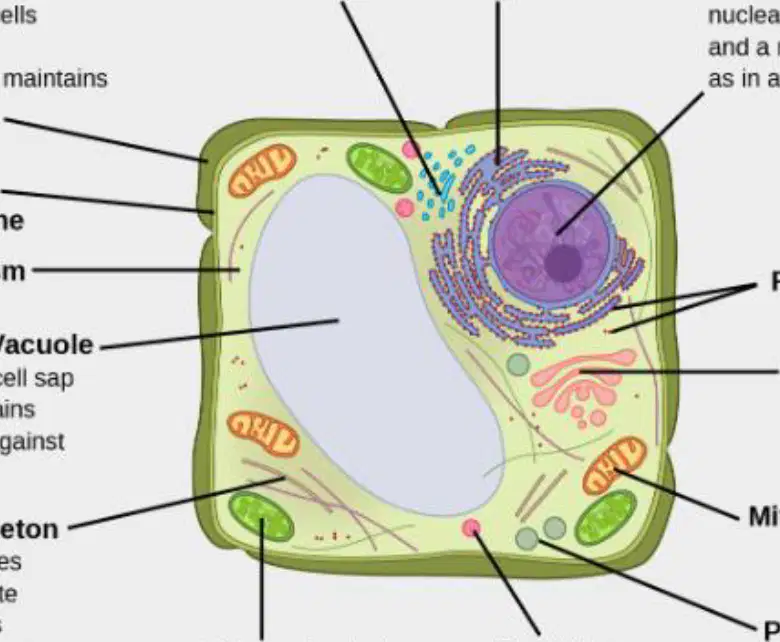
What is the function of the central vacuole in plant cells?
Filled with cell sap that maintains pressure against cell wall.
Produces energy for the cell through respiration.
Controls the activities of the cell.
Synthesizes proteins for the cell.
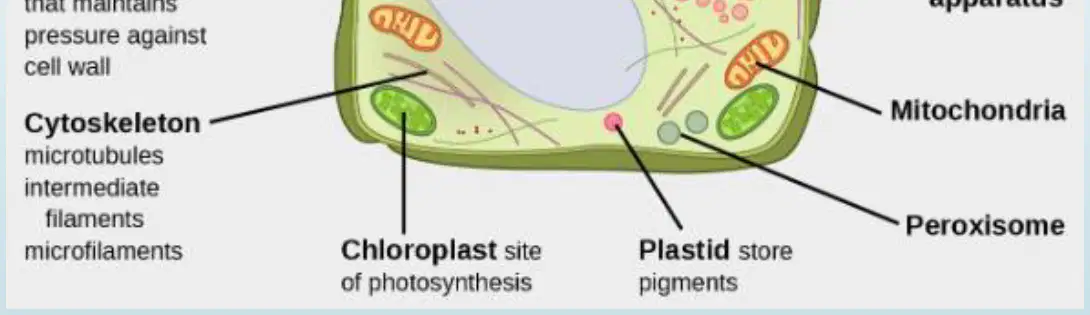
What is the function of the cytoskeleton in plant cells?
Microtubules, intermediate filaments, and microfilaments provide structural support.
It stores genetic information for the cell.
It is responsible for photosynthesis in the cell.
It produces energy in the form of ATP.
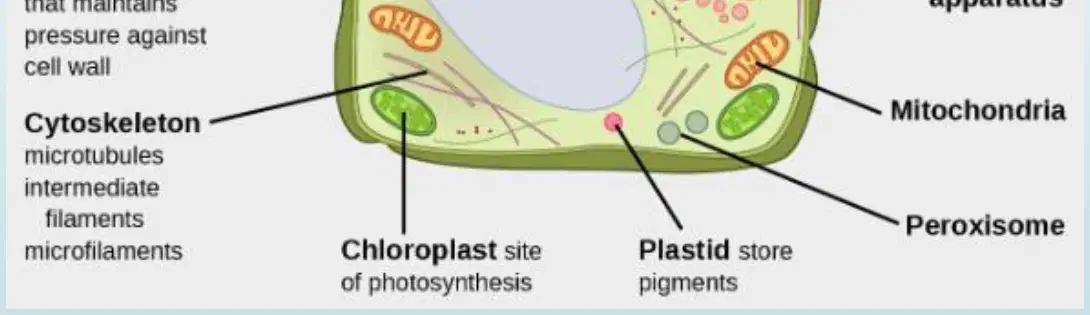
What is the site of photosynthesis in plant cells?
Chloroplast
Mitochondria
Nucleus
Vacuole
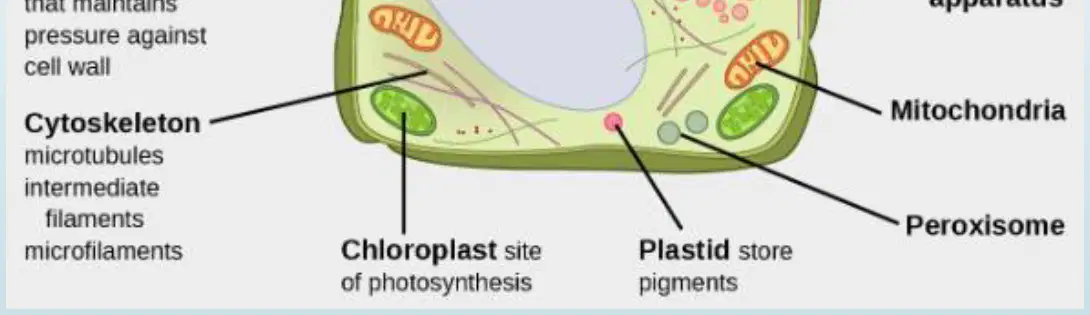
What is the function of the plastid in plant cells?
Store pigments
Transmit nerve impulses
Produce antibodies
Digest proteins
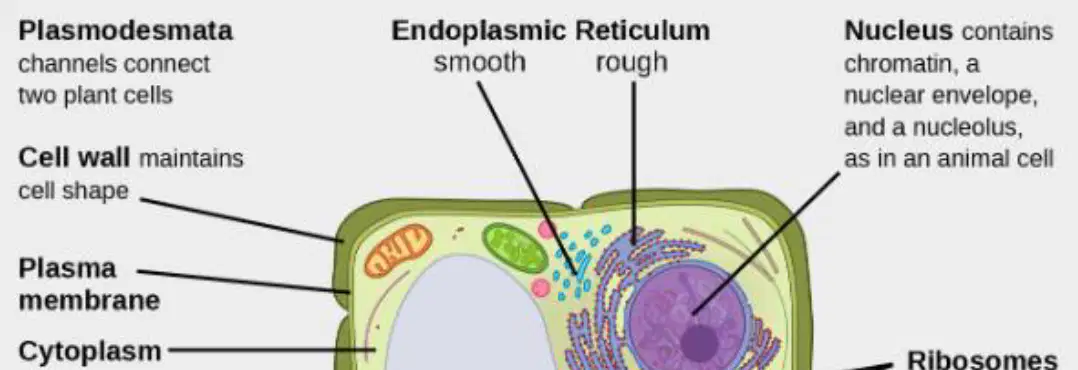
What is the function of the endoplasmic reticulum in plant cells?
Smooth and rough endoplasmic reticulum are involved in protein and lipid synthesis.
It stores genetic information for the cell.
It is responsible for photosynthesis in plant cells.
It controls the movement of substances in and out of the nucleus.
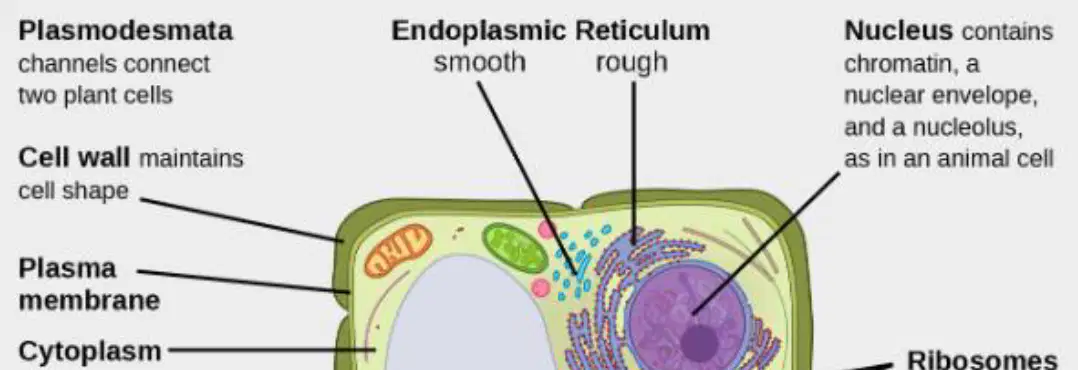
What does the nucleus contain in plant cells?
Chromatin, a nuclear envelope, and a nucleolus, as in an animal cell.
Only mitochondria and ribosomes.
Cell wall and chloroplasts.
Vacuole and cytoplasm.
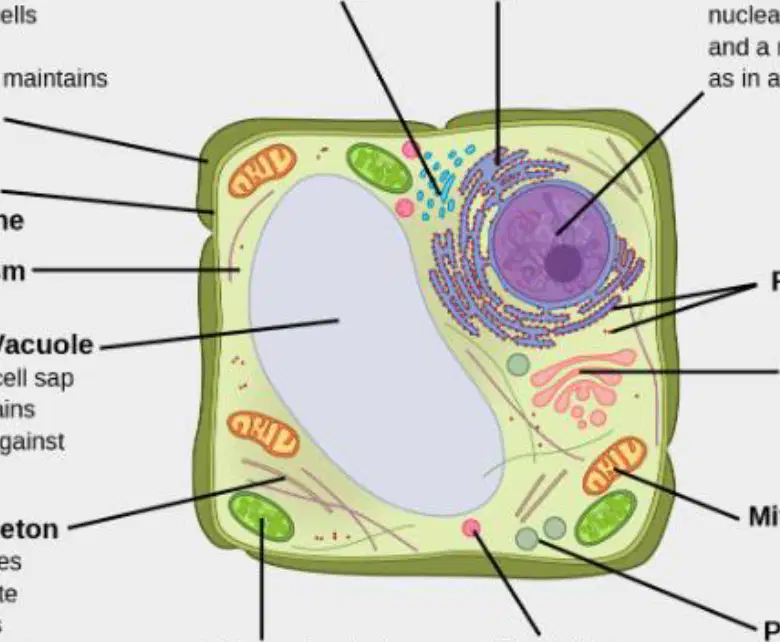
What is the function of ribosomes in plant cells?
Protein synthesis
Photosynthesis
Storage of genetic material
Transport of water
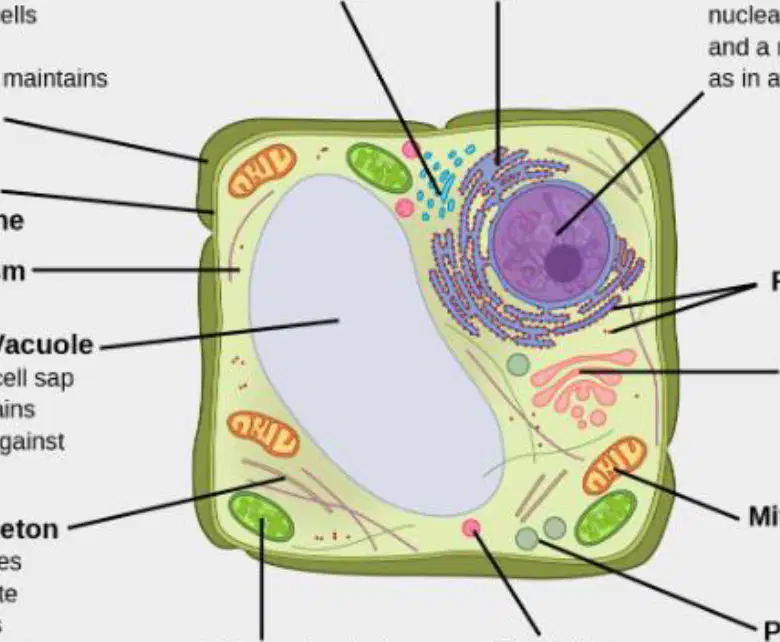
What is the function of the Golgi apparatus in plant cells?
Processing and packaging of proteins and lipids
Photosynthesis and energy production
DNA replication and repair
Cell wall synthesis
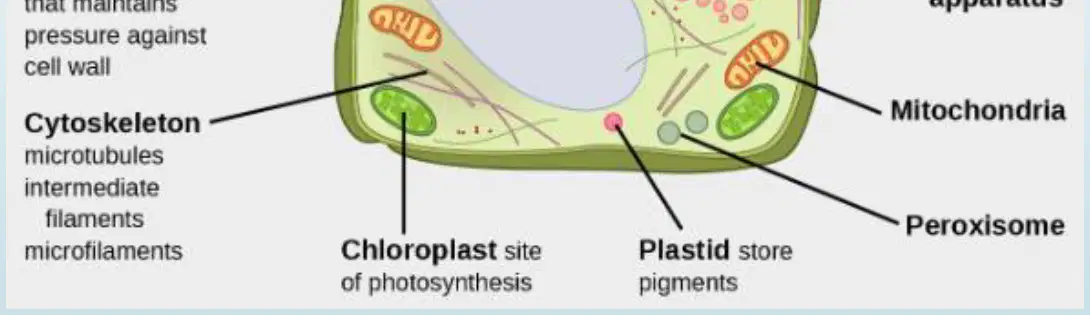
What is the function of mitochondria in plant cells?
Energy production
Photosynthesis
Protein synthesis
Water storage
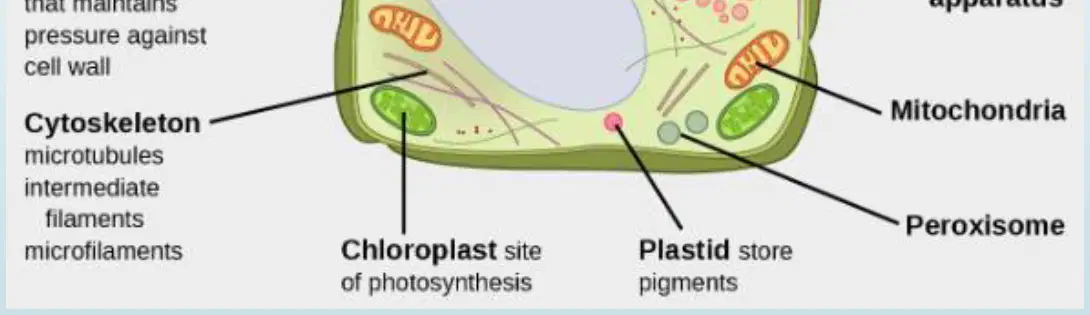
What is the function of peroxisomes in plant cells?
Break down fatty acids and detoxify harmful substances
Produce glucose through photosynthesis
Store genetic information
Synthesize proteins for cell growth
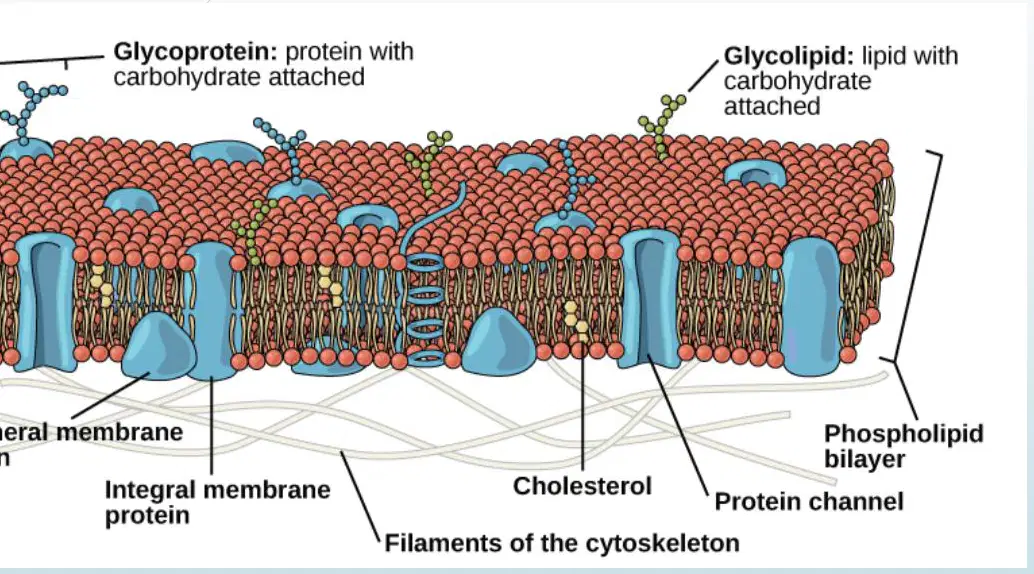
What is the main structural component of the plasma membrane?
Phospholipid bilayer
Cholesterol
Glycoproteins
Nucleic acids
Which of the following is a function of the plasma membrane?
Produces energy for the cell
Separates a cell from the environment
Synthesizes proteins
Stores genetic information
The plasma membrane controls the passage of molecules, ions, water, and oxygen into and out of the cell.
True
False
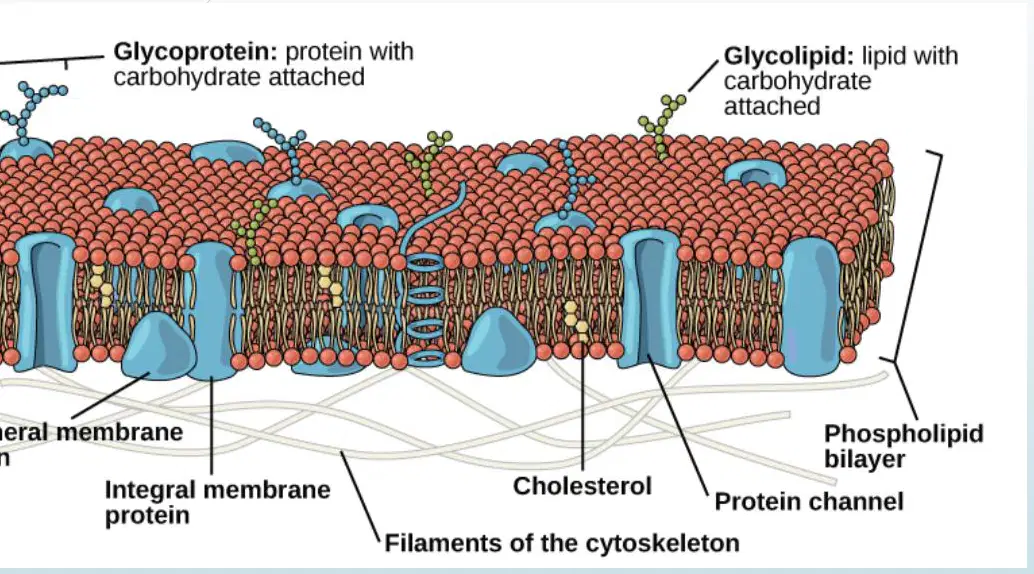
Match the following plasma membrane components to their descriptions:
Glycoprotein
Protein with carbohydrate attached
Glycolipid
Lipid with carbohydrate attached
Integral membrane protein
Embedded in the membrane, helps transport
Cholesterol
Stabilizes membrane fluidity
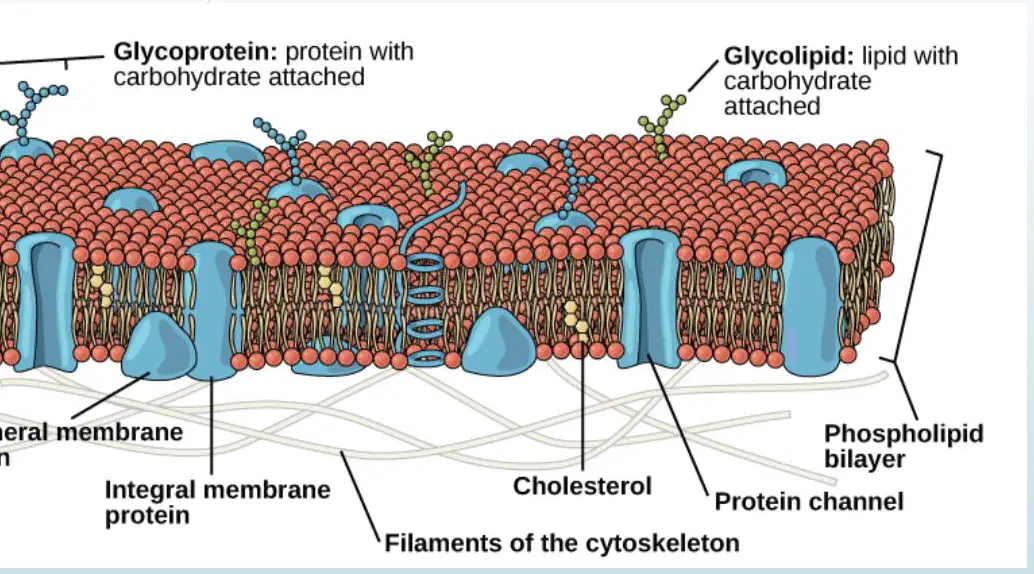
Fill in the blank: The ________ is a protein with a carbohydrate attached, found in the plasma membrane.
Glycoprotein
Phospholipid
Cholesterol
Nucleic acid
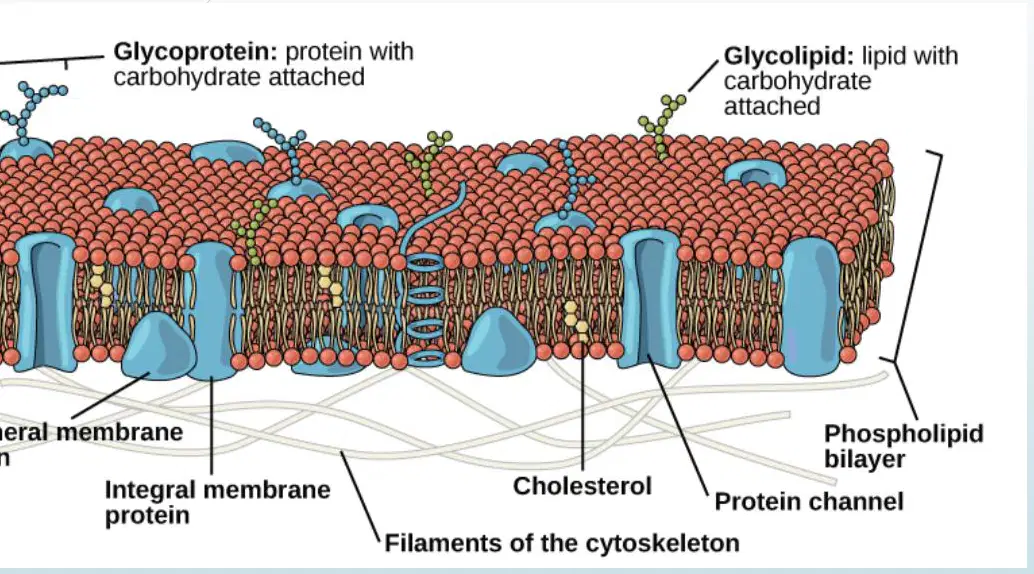
Fill in the blank: The ________ is a lipid with a carbohydrate attached, found in the plasma membrane.
Glycolipid
Phospholipid
Cholesterol
Triglyceride
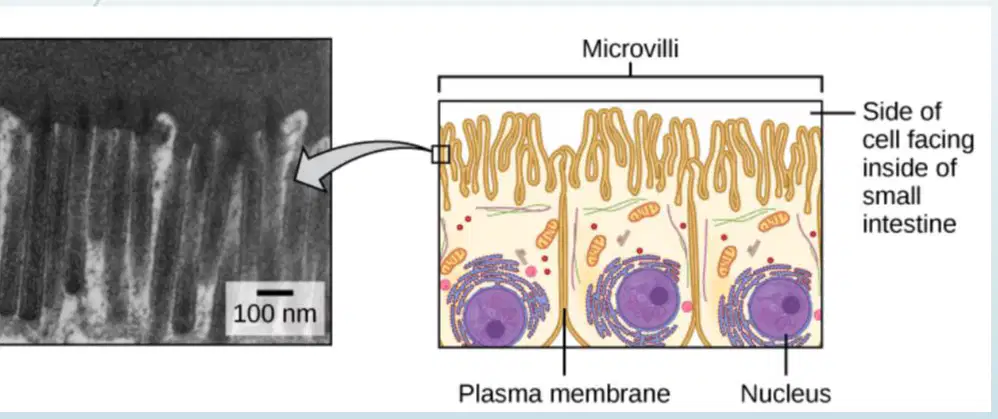
What are microvilli?
Microvilli are finger-like projections sticking out from the surface of some cells that increase their surface area for absorption.
Microvilli are hair-like structures that help in cell movement.
Microvilli are organelles responsible for energy production in cells.
Microvilli are vesicles that store waste products in the cell.
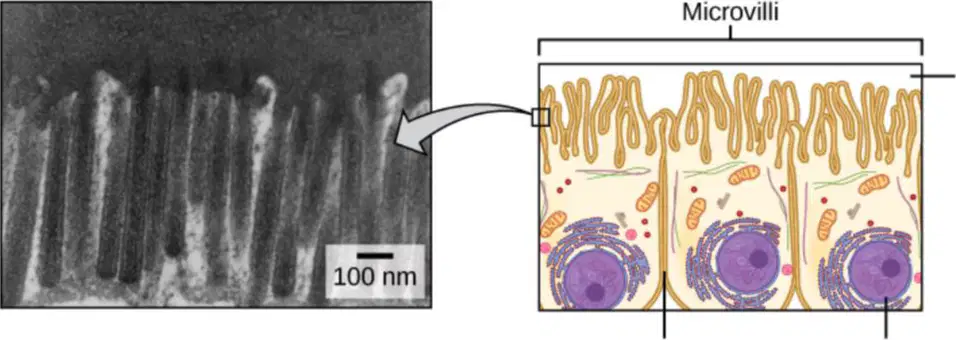
What is the main function of microvilli in cells?
To increase the surface area of the cell for absorption.
To produce energy for the cell.
To store genetic information.
To control cell division.
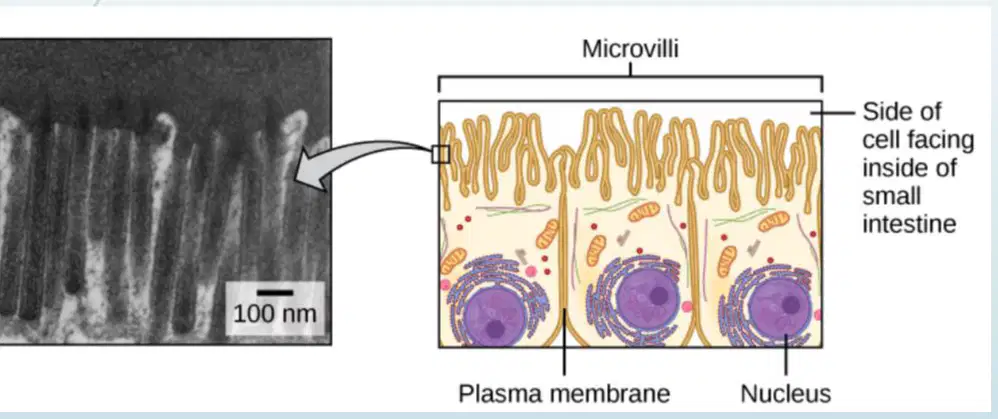
Microvilli are found on the side of the cell facing the inside of the small intestine.
True
False

