Worksheets
BIO 101 Final Exam Review
Total questions: 76
Worksheet time: 49mins
What is the chemical mechanism by which cells make each polymer from monomers?
phosphodiester linkages
hydrolysis
dehydration reactions
ionic bonding of monomers
the formation of disulfide bridges between monomers
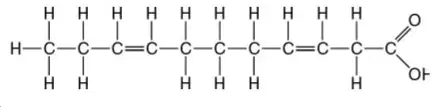
Which of the following statements is true regarding the molecule illustrated?
It is a saturated fatty acid.
A diet rich in this molecule may contribute to atherosclerosis.
Molecules of this type are usually liquid at room temperature.
It is an unsaturated fat
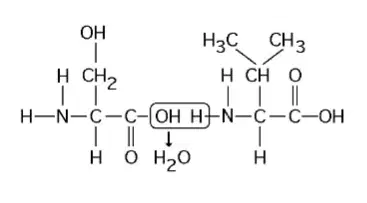
Which of the following statements is/are true regarding the chemical reaction illustrated in Figure 5.5?
It is a hydrolysis reaction.
It results in a peptide bond.
It joins two fatty acids together.
Which bonds are created during the formation of a polysaccharide?
peptide bonds
hydrogen bonds
glycosidic
ester
B and C
Which bonds connect multiple nucleotides together to form nucleic acids?
Ester
Phosphodiester
Glycosidic
Hydrogen
Disulfide Bridges
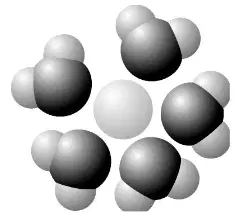
Examine the figure. Based on your knowledge of the polarity of water molecules, the solute molecule is most likely
positively charged.
negatively charged.
without charge.
hydrophobic.
nonpolar.
Prokaryotes are classified as belonging to two different domains. What are the domains?
A) Bacteria and Eukarya
B) Bacteria and Archaea
C) Archaea and Protista
D) Bacteria and Protista
E) Bacteria and Fungi
Large numbers of ribosomes are present in cells that specialize in producing which of the following molecules?
lipids
glycogen
proteins
cellulose
nucleic acids
Which organelle is the primary site of ATP synthesis in eukaryotic cells?
lysosome
vacuole
mitochondrion
Golgi apparatus
peroxisome
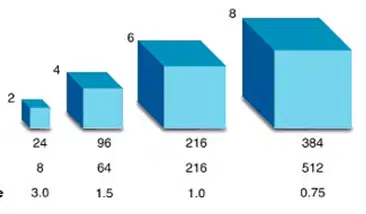
Which size cell would be considered to be the most efficient?
Large surface area, small volume
Large volume, large surface area
Small volume, small surface area
Small surface area, large volume
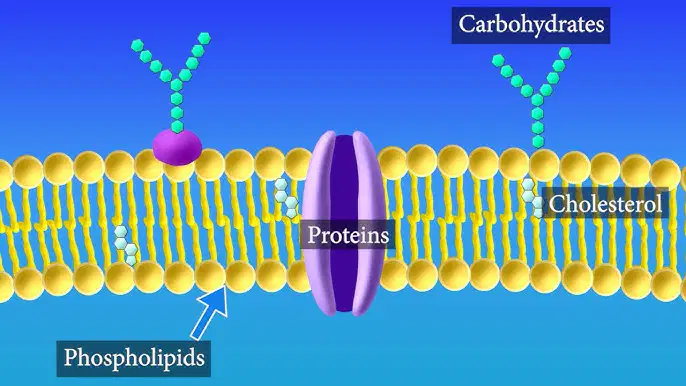
Which of the following types of molecules are the major structural components of the cell membrane?
phospholipids and cellulose
nucleic acids and proteins
phospholipids and proteins
proteins and cellulose
glycoproteins and cholesterol
What is the function of cholesterol in the cell membrane
stabilize the membrane during temperature fluctuations
permit passage of materials
cell communication & recognition

In order for a protein to be an integral membrane protein it would have to have a
hydrophilic region only.
hydrophobic region.
amphipathic cis face.
phospholipid bilayer.
location on only 1 side of the membrane.
What kinds of molecules pass through a cell membrane most easily?
large and hydrophobic
small and hydrophobic
large polar
ionic
monosaccharides such as glucose
Which of the following statements is correct about simple diffusion?
It is very rapid over long distances.
It requires an expenditure of energy by the cell.
It is a passive process in which molecules move from a region of higher concentration to a region of lower concentration.
It is an active process in which molecules move from a region of lower concentration to one of higher concentration.
Water passes quickly through cell membranes because
the bilayer is hydrophilic.
it moves through hydrophobic channels.
water movement is tied to ATP.
it is a small, polar, charged molecule.
it moves through aquaporins in the membrane.
If a plant root with a water potential of -1 is placed in a sucrose solution that has a water potential of -4, water will
Move into the cell, and it will be turgid
Move out of the cell, and it will be turgid
Move into the cell, and it will be flaccid
Move out of the cell resulting in plasmolysis
Which of the following is the correct order of a signal transduction pathway?
Transduction, Reception, Response
Ligand, Transduction, Reception
Reception, Transduction, Response
GTP, cAMP, ATP
Ligand, Reception, Response
Which of the following is a type of long-distance cellular messaging?
Endocrine signaling
Paracrine signaling
Synaptic signaling
Quorum Sensing
Gap junction communication
The term “ligand” refers to
A molecule that acts as a secondary messenger
cAMP
A molecule that initiates a signal on a cell-surface receptor protein
The process of transduction
A GPCR is activated by a ligand which then triggers the phosphorylation of what energy molecule that activates the G-protein to react with a target enzyme?
cAMP
GTP
ATP
Phosphate
Yeast mating factor
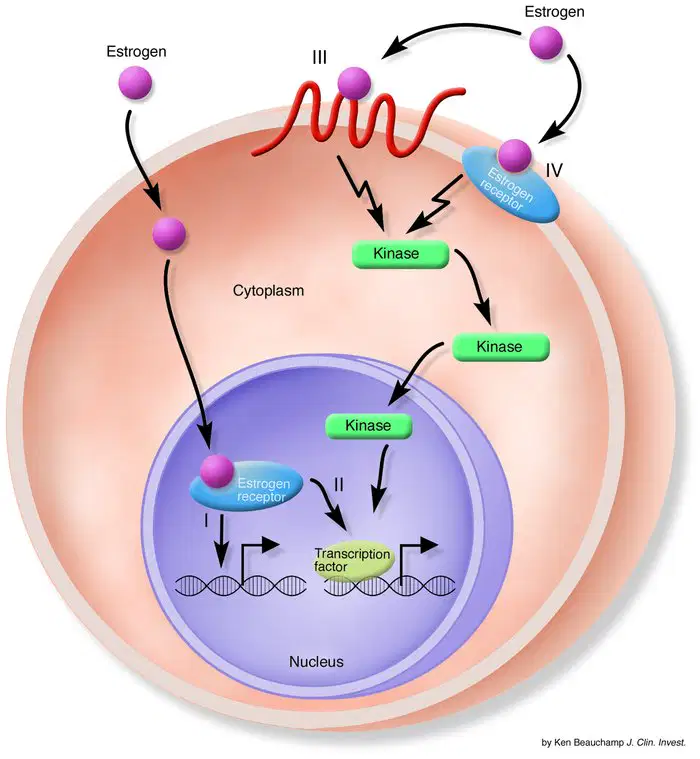
Some molecules enter a target cell and acts as a transcription factor. The function of a transcription factor is to
Begin the process of apoptosis
Phosphorylate a tyrosine kinase receptor
Activate GTP and cAMP
Inhibit Kinase enzymes
Activate a gene
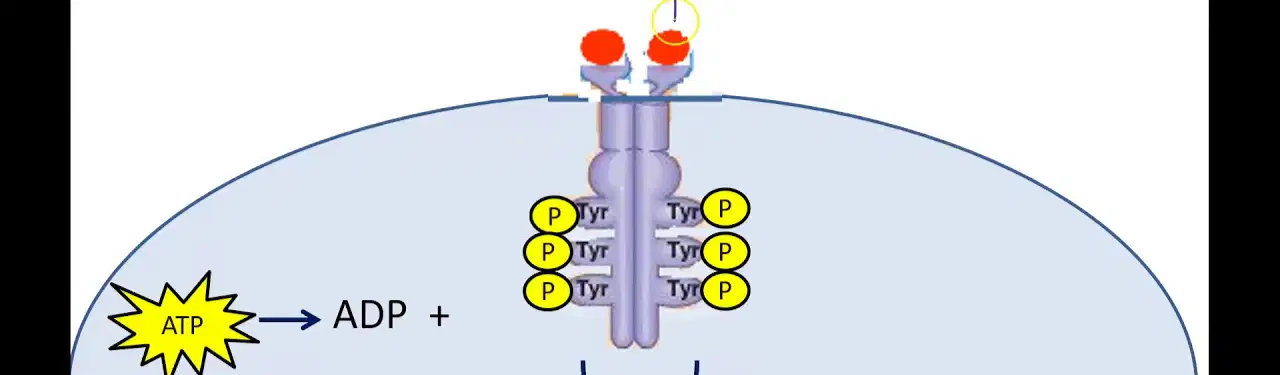
One of the major categories of receptors in the plasma membrane reacts by forming dimers, adding phosphate groups, and then activating relay proteins. Which type does this?
G protein-coupled receptors
ligand-gated ion channels
steroid receptors
receptor tyrosine kinases
Voltage gated ion channel
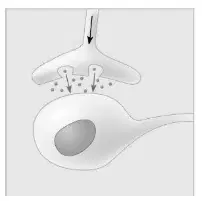
In the figure the dots in the space between the two structures represent which of the following?
receptor molecules
signal transducers
hormones
neurotransmitters
pheromones
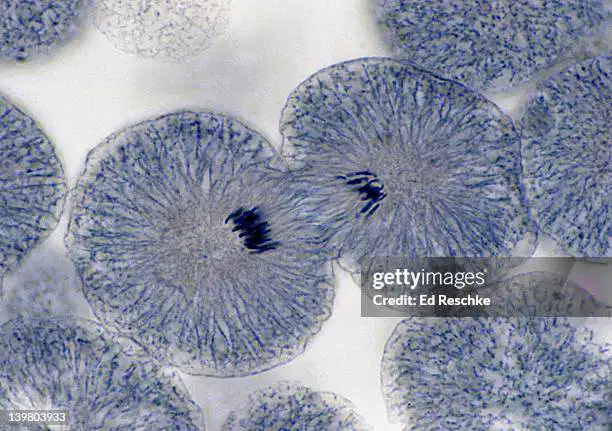
Which of the following is NOT a function of mitosis in regards to cellular activity?
Tissue Repair
Development (creation of an embryo from a zygote)
Asexual reproduction
Production of gametes
All of the above are true

Which of the following cellular divisions occurs in bacteria (prokaryotes)?
Binary Fission
Mitosis
Meiosis
During which phase of the cell cycle are chromosomes duplicated?
M
G1
G2
S
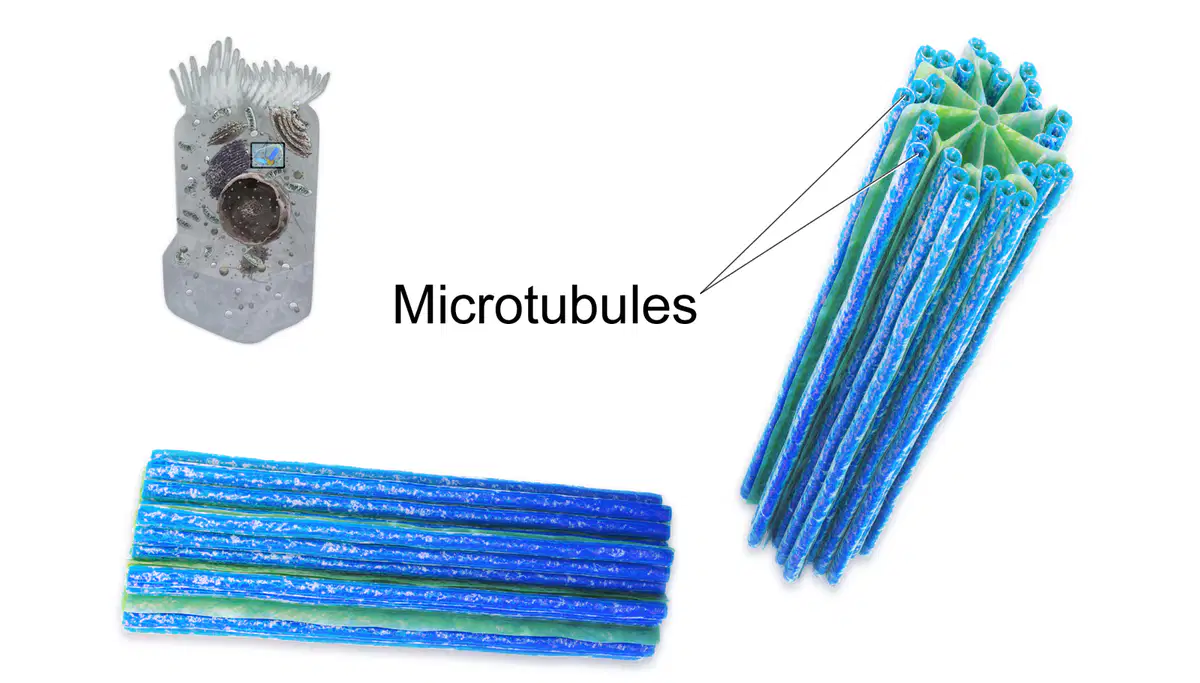
Where do the microtubules of the spindle fibers originate during mitosis in an animal cell?
centromere
nucleus
centriole
chromatid
kinetochore
p53 can trigger apoptosis if certain cell cycle events fail. How does this regulatory outcome benefit a multicellular organism?
Apoptosis helps in controlling the consumption of energy by extra cells
Apoptosis inhibits the production of faulty proteins, which could be due to DNA damage
Apoptosis stops the invasion of viruses in the other cells
Cells are killed to prevent production of reactive oxygen which can harm the organism.
Which term most precisely describes the cellular process of breaking down large molecules into smaller ones?
catabolism
metabolism
anabolism
dehydration
catalysis
Which of the following is (are) true for anabolic pathways?
They do not depend on enzymes.
They are usually highly spontaneous chemical reactions.
They consume energy to build up polymers from monomers.
They release energy as they break down polymers to monomers.
They consume energy to perform catabolic reactions
Which of the following statements is representative of the second law of thermodynamics?
Conversion of energy from one form to another is always accompanied by some gain of free energy.
Heat represents a form of energy that can be used by most organisms to do work.
Without an input of energy, organisms decrease entropy.
Every energy transformation by a cell decreases the entropy of the universe
Cells require a constant input of energy to maintain their high level of organization and decrease entropy.
A chemical reaction that has a positive ΔG is correctly described as
enzymatic
entropy
endergonic
spontaneous.
exothermic.
Which molecule is an important energy carrying molecule?
ATP
ADP
PEP Carboxylase
IP3
Hexokinase
Which of the following statements describes the results of this reaction? C6H12O6 + 6 O2 → 6 CO2 + 6 H2O + Energy
C6H12O6 is oxidized and O2 is reduced.
O2 is oxidized and H2O is reduced.
CO2 is reduced and O2 is oxidized.
The ATP made during glycolysis and the Krebs Cycle is generated by
substrate-level phosphorylation.
electron transport.
photophosphorylation.
chemiosmosis.
Pyruvate must be transported into the mitochondria. How does pyruvate enter the mitochondrion?
active transport
diffusion
facilitated diffusion
through a channel
through a pore
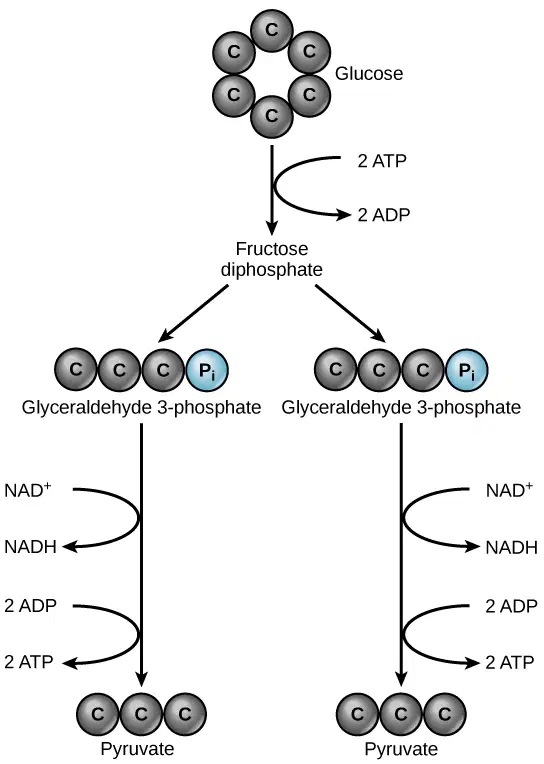
Why is glycolysis described as having an investment phase and a payoff phase?
It both splits molecules and assembles molecules.
It attaches and detaches phosphate groups.
It uses glucose and generates pyruvate.
It shifts molecules from cytosol to mitochondrion.
It uses ATP and then forms a net increase in ATP.
Which of the following intermediary metabolites enters the citric acid cycle and is formed, in part, by the removal of a carbon (CO2) from one molecule of pyruvate?
lactate
glyceraldehydes-3-phosphate
oxaloacetate
acetyl CoA
citrate
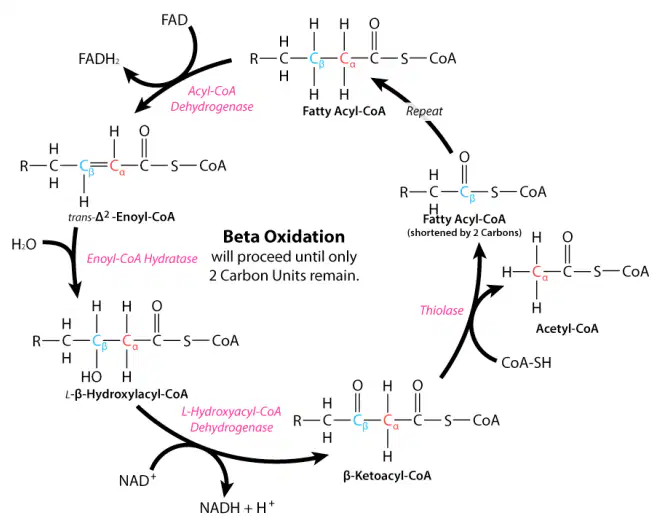
Where do the catabolic products of fatty acid breakdown enter into the citric acid cycle?
pyruvate
malate or fumarate
acetyl CoA
α-ketoglutarate
succinyl CoA
Deamination is the metabolism and break down of what organic molecules?
Proteins
Carbohydrates
Citric Acid
Organic Acids
Lipids
Which of the following is the correct order of events in photosynthesis?
Citric Acid Cycle ➔ Photosystem II ➔ Photosystem I ➔ Photophosphorylation
Photosystem I ➔ Photosystem II ➔ Calvin Cycle
Photosystem II ➔ Photosystem I ➔ Calvin Cycle
Photophosphorylation ➔ Water splitting ➔ Calvin Cycle ➔ Dark Reaction
Glycolysis ➔ Citric Acid Cycle ➔ Oxidative Phosphorylation
For a couple of decades, biologists knew the nucleus contained DNA and proteins. The prevailing opinion was that the genetic material was proteins, and not DNA. The reason for this belief was that proteins are more complex than DNA. What was the basis of this thinking?
Proteins have a greater variety of three-dimensional forms than does DNA.
Proteins have two different levels of structural organization; DNA has four.
Which of the following investigators was/were responsible for the following discovery? Phages with labeled proteins or DNA were allowed to infect bacteria. It was shown that the DNA, but not the protein, entered the bacterial cells, and was therefore concluded to be the genetic material.
Frederick Griffith
Alfred Hershey and Martha Chase
Oswald Avery, Maclyn McCarty, and Colin MacLeod
Erwin Chargaff
Matthew Meselson and Franklin Stahl
Identify which of the following best describe purines and pyrimidines.
Purines include cytosine, thymine and uracil and have single rings while pyrimidines include adenine and guanine and have double rings.
Purines include cytosine, thymine and uracil and have double rings, while pyrimidines include adenine and guanine and have single rings.
Purines include adenine and guanine and have double rings, while pyrimidines include thymine, uracil and cytosine and have single rings.
Purines include adenine and guanine and have single rings, while pyrimidines include thymine, uracil and cytosine and have double rings.
Pyrimidines and purines complementary base pair due to
hydrogen bonding
ionic bonding
covalent bonding
sulfhydryl bridges
phosphodiester linkages
It became apparent to Watson and Crick after completion of their model that the DNA molecule could carry a vast amount of hereditary information in which of the following?
sequence of bases
phosphate-sugar backbones
complementary pairing of bases
side groups of nitrogenous bases
different five-carbon sugars
What is meant by the description "antiparallel" regarding the strands that make up DNA?
The twisting nature of DNA creates nonparallel strands.
The 5' to 3' direction of one strand runs counter to the 5' to 3' direction of the other strand.
Base pairings create unequal spacing between the two DNA strands.
One strand is positively charged and the other is negatively charged.
One strand contains only purines and the other contains only pyrimidines.
Which enzyme catalyzes the elongation of a DNA strand in the 5' → 3' direction?
primase
DNA ligase
DNA polymerase III
topoisomerase
helicase
What is the effect of a silent mutation in a gene?
It changes an amino acid in the encoded protein.
It has no effect on the amino acid sequence of the encoded protein.
It introduces a premature stop codon into the mRNA.
It alters the reading frame of the mRNA.
It prevents introns from being excised.
What are the coding segments of a stretch of eukaryotic DNA called?
introns
exons
codons
replicons
transposons
Which statements are TRUE about the cell theory:
Cells come from existing cells; All living things are made of cells; Cells are the basic unit of life; All cells contain the same basic components
Cells can only be seen with the naked eye; Only animals are made of cells; Cells are not necessary for life; All cells are identical in function
Cells are made only of water; Only plants have cells; Cells do not divide; Cells are not found in bacteria
Cells are made of plastic; All living things are made of rocks; Cells are not found in humans; Cells are not important for life
Prokaryote, Eukaryote, or Both?
Ribosomes
Cytoplasm
Cell Membrane
DNA
No Nucleus
Nucleoid Region
Unicellular
Bacteria
Nucleus
Membrane Bound Organelles
No membrane bound organelles
specialized
often multicellular
In what process is mRNA synthesized?
Transcription
DNA Replication
Translation
Mitosis
Where does transcription occur?
Cytoplasm
Nucleus
Ribosome
Mitochondria
How many codons equals 1 amino acid?
1
2
3
4

Which molecule carries the anticodon?
mRNA
rRNA
DNA
tRNA

A polypeptide (protein chain) is a sequence of ____________________ held together by a _______________ bond.
amino acids; peptide
proteins; hydrogen
fatty acids; ionic
fatty acids; covalent
Transcribe this DNA sequence: 3' TACGTTACT 5'
5' AUGCAAUGA 3'
5' AUGGATUGA 3'
3' ATGCAATGA 5'
3' AUGCAAUGA 5'

What process is going on in this photo?
DNA Replication
Transcription
Translation
Mitosis
Where is the TATA box located?
Near the introns
Near the exons
Near the poly adenylation sequence
Near the promoter
Which of the following is the enzyme used in the process of transcription?
DNA polymerase
RNA polymerase
Primase
Helicase
Which of the following describes the direction the DNA template strand is read during transcription?
5' to 3'
3' to 5'
N terminus to C terminus
C terminus to N terminus
Which of the following is the function of the poly-A tail?
To protect mRNA from hydrolytic enzymes
To allow for entry into the nucleus
To signal for termination of translation
To decrease the length of mRNA molecules
Where on the DNA does the enzyme responsible for transcription bind?
Promoter
Enhancer
Polyadenylation sequence
Start codon
Where does transcription take place in a eukaryote?
Nucleus
Endoplasmic reticulum
Cytosol
Ribosome
Which of the following is NOT involved in transcription?
mRNA
DNA
ribosome
TATA box
A frameshift mutation could result from
A base insertion only
A base deletion only
A base substitution only
Deletion or insertion
Identify the levels of Protein Structure
Amino Acid chain
beta sheets, alpha helixes
Hydrogen Bonding
3 D folding
ionic bonds
disulfide bridges
hydrophobic interactions
interactions of multiple protiens
functional protein
peptide bonds

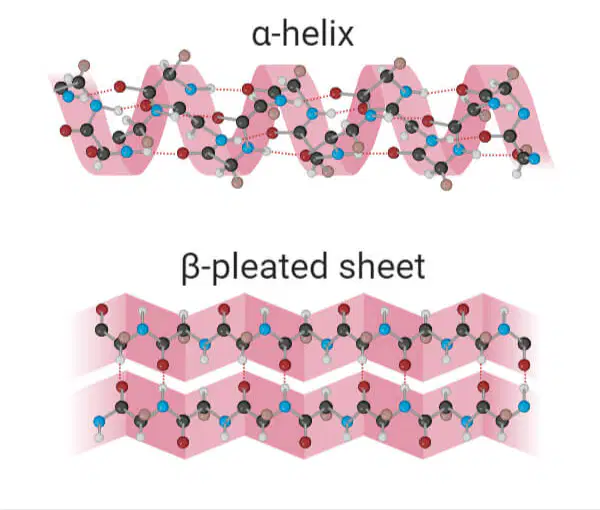
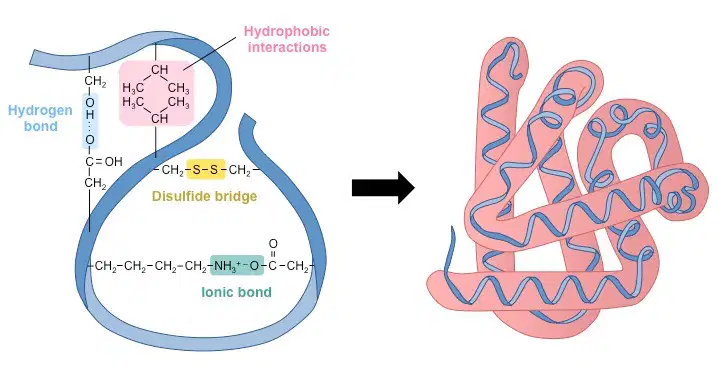
R group interactions
GAG-CTC-GAC-AGA
Mutant
GAG CTC-CAC-AGA

A substitution mutation that has no effect
on amino acids sequence
Insertion Mutation
Translocation
Silent Mutation
Deletion Mutation

What type of impact?
Silent
Nonsense
Missense
Frameshift
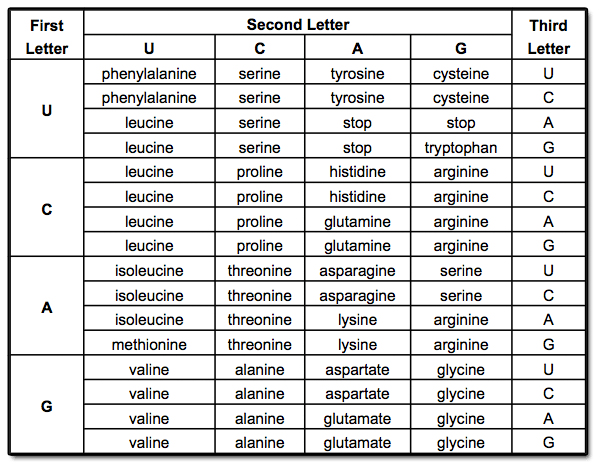
Which of the following are post-transcriptional modification of the primary mRNA transcript?
5' methyl cap
Poly A tail
Removal of introns
Removal of Exons
Identify to which category each molecule belongs