
 Worksheets
H.F.L.E study guide
Total questions: 15
Worksheet time: 8mins
What are Good Hygiene Practices?
Routines and habits that promote cleanliness and health by preventing the spread of germs, bacteria, and viruses.
Eating healthy foods only.
Playing outside every day.
Sleeping for 8 hours.

Which of the following is NOT a type of good hygiene habit you should teach your kids early?
Oral Hygiene
Bathing Ritual
Watching TV
Hand Hygiene

Fill in the blank: ________ hygiene involves keeping your mouth and teeth clean to prevent dental problems.
Oral
Hand
Foot
Hair
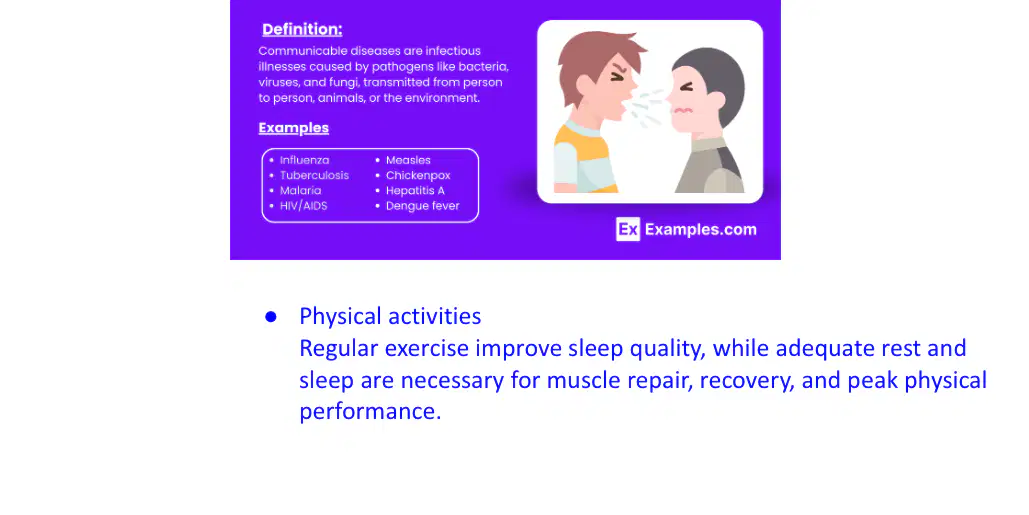
What are communicable diseases also called?
Non-infectious diseases
Infectious diseases
Chronic diseases
Genetic diseases
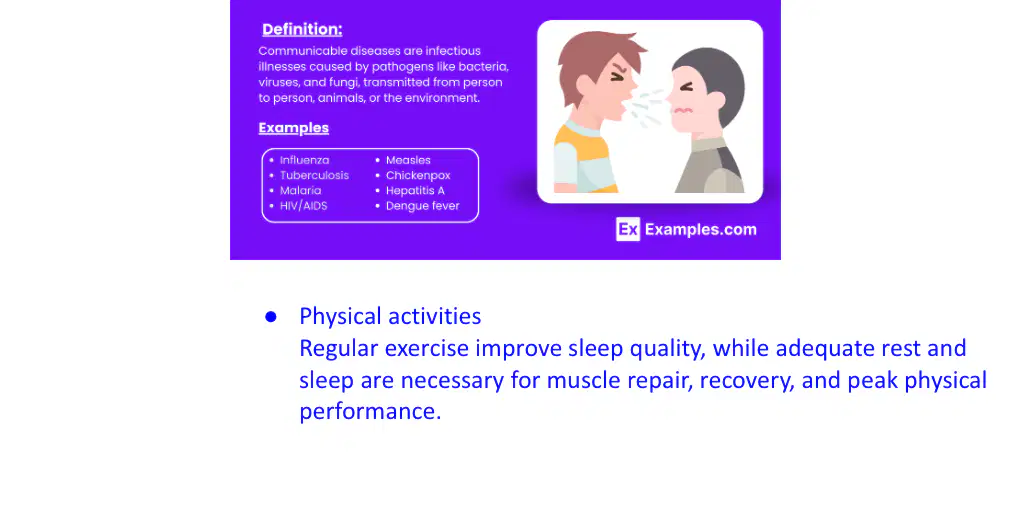
Fill in the blank: Communicable diseases can spread from person to person or through things we _______.
touch
see
hear
smell

Which of the following is an example of a communicable disease? Choose the correct answer.
Diabetes
Influenza
Asthma
Cancer
Regular exercise improves sleep quality and is necessary for muscle repair, recovery, and peak physical performance.
True
False
What are the benefits of taking breaks and sleeping?
Taking breaks and sleeping helps your body get better, makes you feel calm and not angry, and keeps your whole body and mind healthy.
Taking breaks and sleeping makes you forget everything you learned.
Taking breaks and sleeping makes you feel more tired and upset.
Taking breaks and sleeping stops you from growing tall.
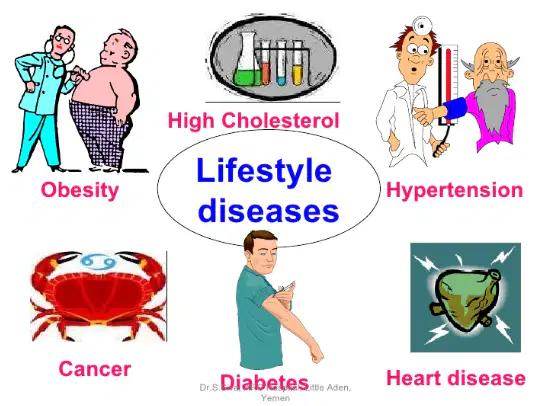
Which of the following is NOT a lifestyle disease?
Obesity
Hypertension
Common cold
Diabetes
Lifestyle diseases are also known as ________.
non-communicable diseases (NCDs)
infectious diseases
genetic disorders
parasitic diseases
Which of the following is a component of a balanced diet?
Fruits and vegetables
Candy
Soda
Chips
A balanced diet provides the body with the right proportions of essential nutrients, including carbohydrates, ________, vitamins and minerals.
fats
sugars
fibers
water
Hygiene, playing, and resting make your whole body and mind healthy.
True
False
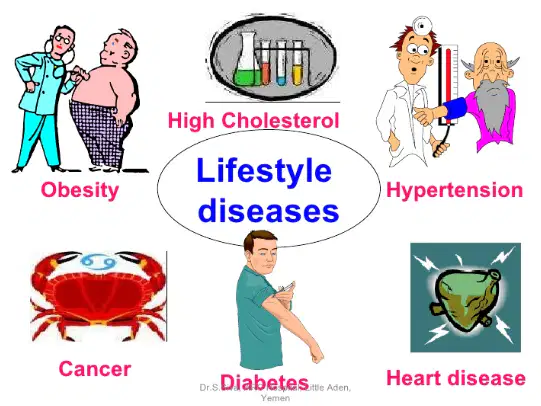
List any three lifestyle diseases mentioned in the diagram.
Obesity, High Cholesterol, Hypertension, Cancer, Diabetes, Heart disease (any three)
Malaria, Tuberculosis, Influenza (any three)
Chickenpox, Measles, Mumps (any three)
Dengue, Typhoid, Cholera (any three)
Which of the following is NOT a component of a balanced diet?
Whole grains
Lean protein
Healthy fats
Candy

