
 Worksheets
Stop The Bleed EXAM
Total questions: 72
Worksheet time: 36mins

Which organization is represented by the logo with a red figure and the text 'THE COMMITTEE ON TRAUMA'?
The American College of Surgeons Committee on Trauma
World Health Organization
American Heart Association
Centers for Disease Control and Prevention

Which organization is represented by the logo with a blue ECG line and the text 'American College of Emergency Physicians'?
The American College of Emergency Physicians
The American Heart Association
The American Medical Association
The National Emergency Nurses Association

Which organization is represented by the blue star of life and the text 'NAEMT'?
The National Association of Emergency Medical Technicians
National Association of Emergency Managers and Technicians
North American Emergency Medical Team
National Association of Emergency Medical Trainers
Which organization is represented by the logo with two soldiers and the text 'TACTICAL COMBAT CASUALTY CARE'?
The Committee on Tactical Combat Casualty Care
The American Red Cross
World Health Organization
United Nations Peacekeeping Forces

According to the slide, what is the #1 cause of preventable death after injury?
Infection
Bleeding
Broken bones
Shock

In which of the following places can you use 'Stop the Bleed' training?
At home
At a school
In a city
All of the above

Can 'Stop the Bleed' training be used in a car accident scenario?
Yes
No

Is 'Stop the Bleed' training useful in situations involving gun violence?
Yes
No

Can 'Stop the Bleed' training be applied during natural disasters, such as storms?
Yes
No

Is 'Stop the Bleed' training only useful in medical facilities?
Yes
No

Which of the following is NOT a place where 'Stop the Bleed' training can be used?
Home
School
City
None of the above
What is the first goal in the 'Stop the Bleed' course?
Stop the Bleed
Identify
Call for Help
Bandage the Wound
What should you recognize according to the first goal of the 'Stop the Bleed' course? Fill in the blank: Recognize life-threatening _______.
bleeding
fractures
burns
allergies
Which of the following is NOT a step to stop the bleeding according to the 'Stop the Bleed' course?
A) Pressure
B) Packing
C) Tourniquets
D) Giving water
List the three methods mentioned in the 'Stop the Bleed' course to stop the bleeding.
Pressure, Packing, Tourniquets
Bandages, Ice, Elevation
Splinting, Rest, Hydration
Antibiotics, Oxygen, CPR
Personal Safety: What is your first priority according to the safety instructions?
Helping others
Your safety
Moving to safety
Calling for help
Personal Safety: True or False: If you are injured, you cannot help others.
True
False
Personal Safety: You should help others only when it’s ______ to do so.
safe
fun
easy
quick
Personal Safety: If the situation changes or becomes unsafe, what should you do?
A) Stop
B) Move to safety
C) Take the victim with you if you can
D) Ignore the situation
Personal Safety: What is your first priority when providing care in a situation involving blood?
The patient's safety
Your safety
The safety of bystanders
The safety of equipment
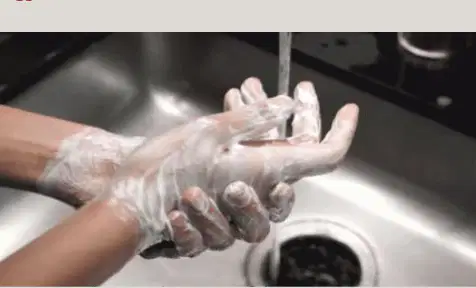
Personal Safety: What should you do if you get blood on any part of your body?
Ignore it
Clean the area that the blood has touched
Cover it with a bandage
Wait for a health care provider
Personal Safety: Fill in the blank. If you get blood on you, you should tell a ________ that you got blood on you and follow his or her direction.
health care provider
friend
janitor
patient
What does the 'A' stand for in the ABCs of Bleeding Control?
Alert 911
Apply Pressure
Assess the Scene
Activate Tourniquet
What does the 'B' stand for in the ABCs of Bleeding Control?
Bleeding
Breathing
Bandage
Bones
What does the 'C' stand for in the ABCs of Bleeding Control?
Compress
Circulate
Cleanse
Cover
According to the ABCs of Bleeding Control, what is the first step you should take in an emergency?
Alert 911
Apply pressure
Check for breathing
Move the victim
Fill in the blank: When you see someone bleeding severely, you should ______ 911.
call
ignore
run from
wait before calling
Fill in the blank: It is important to ______ your location when calling 911.
know
forget
ignore
hide
Fill in the blank: You should follow instructions provided by the ______ operator.
911
fire
bus
radio
When calling 911, what information about your location should you provide?
Only your city
Exact location, including street address, landmarks, or specific details
Just your name
The nearest hospital
Fill in the blank: Be ready to give your ______ and contact number to the 911 operator.
name
address
age
license plate
Fill in the blank: Clearly state the ______ of the incident when calling 911.
nature
location
duration
severity
Fill in the blank: Inform the operator of any immediate ______, such as weapons present, ongoing violence, or environmental dangers.
dangers
instructions
vehicles
delays
What does 'A' stand for in the ABCs of Bleeding Control?
Alert 911
Apply Bandage
Assess Situation
Assist Victim
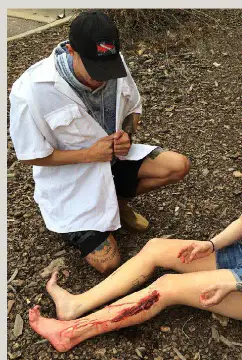
What does 'B' stand for in the ABCs of Bleeding Control?
Bandage
Bleeding
Breathe
Balance
What does 'C' stand for in the ABCs of Bleeding Control?
Call for Help
Clean Wound
Compress
Check Pulse
According to the ABCs of Bleeding Control, what should you do first when you see someone bleeding?
Call for help
Find the source of bleeding
Apply a bandage
Give water
Which of the following are signs to look for when identifying serious bleeding?
A) Continuous bleeding
B) Small scrape
C) Large-volume bleeding
D) Pooling of blood
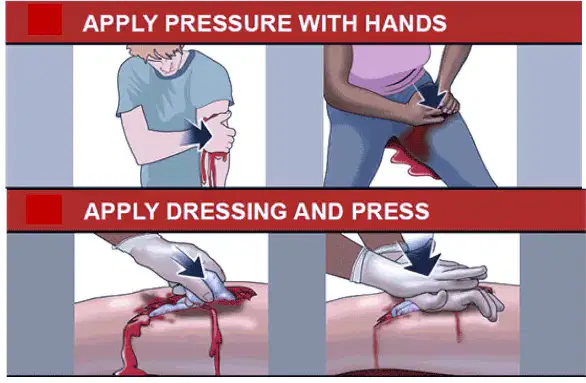
Fill in the blank: When you find the source of bleeding, you should ________ with your hands and apply dressing and press.
apply pressure
wash gently
shake vigorously
cool rapidly
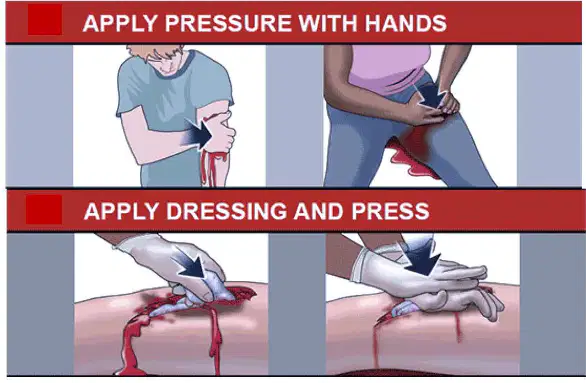
What are the two main actions shown in the diagram for controlling bleeding?
Apply pressure with hands and apply dressing and press
Give water and call for help
Elevate the limb and apply ice
Remove clothing and wait for help
According to the ABCs of Bleeding Control, what does the 'B' stand for?
Breathing
Bleeding
Bandaging
Bones
There may be multiple places the victim is _________
bleeding
laughing
sleeping
eating
Clothing may also hide life-threatening _________
bleeding
bruises
scars
tattoos
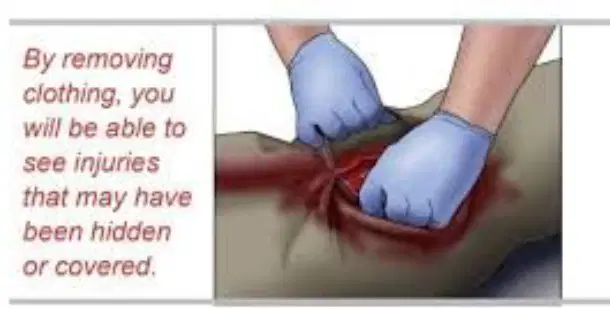
By removing clothing, you will be able to see injuries that may have been hidden or covered.
True
False
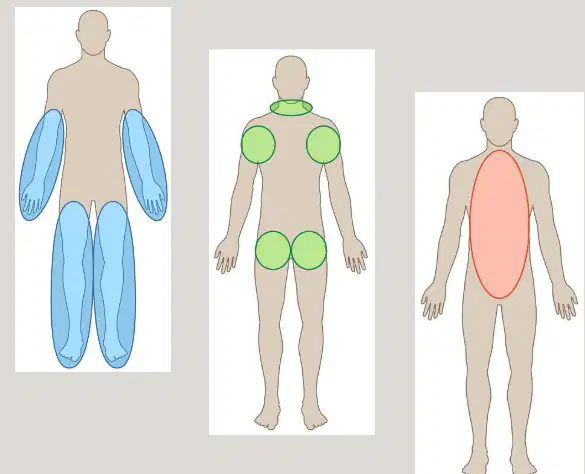
According to the 'ABCs of Bleeding Control', which of the following are areas where bleeding can occur?
Arms and legs
Neck, armpits, and groin
Body
All of the above
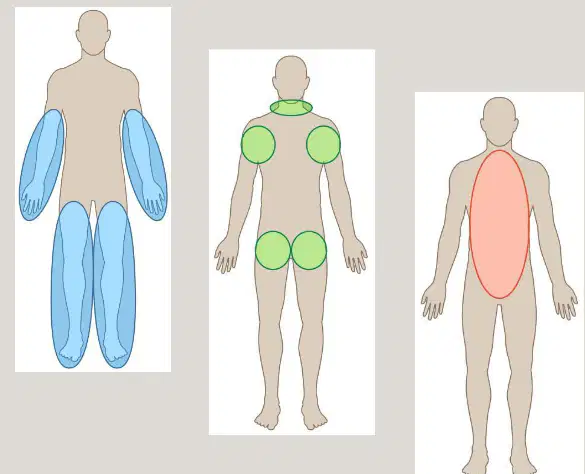
Fill in the blank: The three main areas where bleeding can occur, as shown in the 'ABCs of Bleeding Control', are ________, neck/armpits/groin, and body.
arms and legs
head and feet
hands and feet
chest and back

Which body regions are highlighted in green in the diagram to indicate possible bleeding sites?
Arms and legs
Neck, armpits, and groin
Body
Head and feet
What should you apply directly to a wound to control bleeding?
Direct pressure
Ice pack
Bandage only
Antibiotic ointment
When controlling bleeding, what should you focus on?
The location of the bleeding
The color of the blood
The age of the patient
The time of day
What should you use just enough of to cover an injury when controlling bleeding?
Gauze or cloth
Band-Aid wrapper
Plastic wrap
Paper towel
If pressure stops the bleeding, what should you do until help arrives?
Keep pressure on wound
Remove the pressure immediately
Apply ice to the wound only
Elevate the wound and leave it uncovered
For large wounds, is superficial pressure effective?
Yes
No
If bleeding is from a deep wound, what should you do?
Pack gauze tightly into the wound until it stops the bleeding and hold pressure until help arrives
Apply a bandage loosely over the wound
Do nothing and wait for help
Fill in the blank: For large wounds, superficial pressure is not ________.
effective
painful
visible
necessary
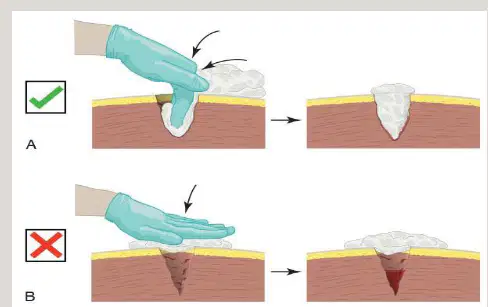
Look at the diagram. Which method (A or B) correctly shows how to pack a deep wound to stop bleeding?
A
B
In the ABCs of Bleeding Control, what does the 'C' stand for?
Circulation
Compress - Packing
Care
Clean
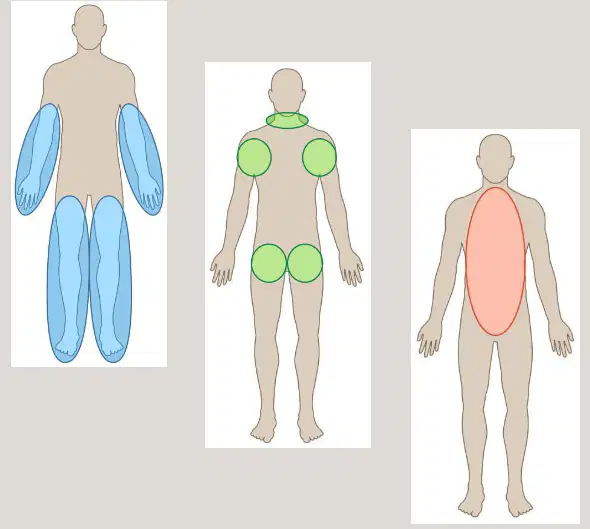
Which areas of the body should you apply compress and packing to control bleeding?
Arms and legs
Neck, armpits, and groin
Body
All of the above
Fill in the blank: To control bleeding, you should apply compress and packing to the ________, neck, armpits, and groin, and body.
arms and legs
head and chest
hands and feet
back and stomach
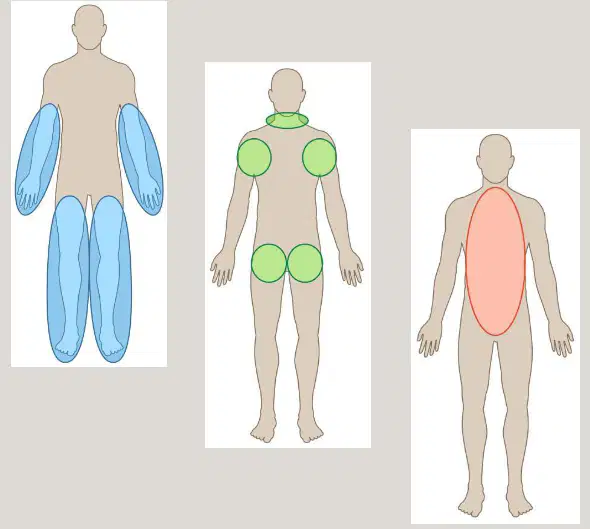
The body is one of the areas where compress and packing should be applied to control bleeding.
True
False
Fill in the blank: When using a tourniquet, apply it 2 to ___ inches above the wound.
3
1
6
10
You should place a tourniquet over the elbow or knee.
True
False
Fill in the blank: Tighten the tourniquet until ______ stops.
bleeding
pain
swelling
breathing
You should remove the tourniquet after applying it.
True
False
According to the ABCs of Bleeding Control, can a tourniquet be applied to others or on yourself? Fill in the blank: A tourniquet can apply to ________ or on yourself.
others
animals
machines
plants
According to the ABCs of Bleeding Control, can a tourniquet be applied over clothes? Fill in the blank: A tourniquet can be applied over ________.
clothes
bare skin only
bandages only
open wounds only
According to the ABCs of Bleeding Control, what is a common effect of using a tourniquet? Fill in the blank: Tourniquets ________.
HURT
heal wounds
stop breathing
cause infection
According to the ABCs of Bleeding Control, may a second tourniquet be required to stop the bleeding? Fill in the blank: A second tourniquet may be required to stop the ________.
bleeding
pain
swelling
infection
Which of the following are ACS endorsed CoTCCC recommended tourniquets for Stop the Bleed (STB)?
Combat Application Tourniquet (C-A-T)
SOF Tactical Tourniquet–Wide (SOFTT-Wide)
Both A and B
None of the above
Fill in the blank: The abbreviation 'C-A-T' stands for _________.
Combat Application Tourniquet
Critical Airway Tube
Cardiac Assessment Tool
Controlled Arterial Tourniquet
In all but the extremely young child, the same _______ used for adults can be used in children.
tourniquet
stethoscope
bandage
syringe
For the infant or very small child, when the tourniquet is too big, what method will work in virtually all cases?
Applying ice
Direct pressure on the wound
Giving medication
Elevating the limb
For large, deep wounds, wound packing can be performed in children just as in adults using the same technique as described previously.
True
False

