
 Worksheets
Musculoskeletal System Quiz
Total questions: 99
Worksheet time: 50mins
Which of the following is included in the functional anatomy and physiology of the musculoskeletal system?
Bone
Blood tests
Vasculitis
Fibromyalgia
What is the primary focus of rheumatology as indicated by the chapter title?
Diseases of the nervous system
Diseases of the digestive system
Rheumatology and bone disease
Cardiovascular diseases
Which investigation is commonly used in musculoskeletal disease?
Joint aspiration
Dietary analysis
Vision testing
Pulmonary function test
Which of the following is a type of arthritis mentioned in the content?
Osteoarthritis
Diabetes
Hypertension
Asthma
Which of the following is a non-pharmacological intervention for musculoskeletal disease management?
Physical therapy
Antibiotic therapy
Chemotherapy
Radiation therapy
What is a presenting problem in musculoskeletal disease?
Fracture
Migraine
Cough
Rash
Which of the following is classified as an autoimmune connective tissue disease?
Vasculitis
Osteoporosis
Osteoarthritis
Bone tumour
Which of the following is a principle of management for musculoskeletal disease?
Education and lifestyle interventions
Increasing sugar intake
Reducing water consumption
Avoiding all exercise
Which of the following is a type of spondyloarthritis?
Axial spondyloarthritis
Osteomalacia
Fibromyalgia
Osteoporosis
Which of the following is a common finding in the hands during a clinical examination of the musculoskeletal system?
Swelling
Alopecia
Kyphosis
Scleritis
What is a typical feature observed on the extensor surfaces in musculoskeletal diseases?
Rheumatoid nodules
Butterfly rash
Bone deformity
Alopecia
Which symptom is associated with the face in systemic lupus erythematosus?
Butterfly rash
Tophi
Nail dystrophy
Paget’s disease
What should be observed during a general musculoskeletal examination?
General appearance, gait, deformity, swelling, redness, rash
Blood pressure, heart rate, temperature, oxygen saturation
Hearing, vision, taste, smell
Liver size, spleen size, bowel sounds, jaundice
Which of the following is a sign of psoriatic arthritis in the hands?
Nail dystrophy
Scleritis
Kyphosis
Alopecia
What is a possible finding in the feet during a musculoskeletal examination?
Acute gout
Scleritis
Butterfly rash
Swollen bursa
Which of the following is NOT typically observed in the trunk during a musculoskeletal examination?
Scleritis
Kyphosis
Scoliosis
Tender spots
A patient presents with bone deformity in the leg. Which disease is most likely associated with this finding?
Paget’s disease
Systemic lupus erythematosus
Psoriatic arthritis
Raynaud’s phenomenon

Which labeled region in the diagram is associated with synovitis and deformity in rheumatoid arthritis?
Hands
Trunk
Legs
Feet
Which of the following is a key observation in osteoarthritis affecting the hands?
Heberden and Bouchard’s nodes
Butterfly rash
Scleritis
Alopecia

What is the primary purpose of asking a patient to walk for a few steps and then come back during the GALS assessment?
To test hand function
To look for pain or limp
To assess shoulder movements
To check for synovitis

Which test is performed by pressing over the supraspinatus muscle during the arm examination?
Test for inflammation
Test for hyperalgesia
Test for elbow flexion
Test for metatarsophalangeal synovitis
During the GALS assessment, what does squeezing the metacarpals test for?
Synovitis
Inflammation
Hip movement
Scoliosis

What is the correct procedure for the Schöber’s test?
Mark 4 cm above the iliac crest, ask patient to bend backwards
Mark 10 cm above and 4 cm below the iliac crest, ask patient to jump
Mark 4 cm below the iliac crest, then 10 cm above that, ask patient to bend forwards
Mark 15 cm below the iliac crest, ask patient to touch toes
Why is the patient asked to flex each hip with hand on knee and rotate hips internally and externally during the leg assessment?
To test for elbow flexion
To test hip movements and detect knee crepitus
To test for metacarpal inflammation
To test for thoracolumbar rotation

What does asking the patient to put their hands behind their head test for in the GALS assessment?
Shoulder movements
Hip movements
Knee swelling
Ankle synovitis
How is lateral flexion of the cervical spine tested during the spine assessment?
Patient looks at ceiling and puts chin on chest
Patient tries to put ear on shoulder
Patient slides hand down leg to knee
Patient touches toes
What is the normal expected increase in distance between the two marks in Schöber’s test when the patient bends forward?
5 cm
10 cm
15 cm
From 10 cm to 15 cm
During the GALS assessment, what is the purpose of inspecting the spine from behind and the side?
To check for synovitis
To look for scoliosis, kyphosis, or localized deformity
To test hand function
To assess metacarpal inflammation
What does squeezing the forefoot during the leg assessment test for?
Metatarsophalangeal synovitis
Hip movement
Elbow flexion
Shoulder movement
Which of the following is a primary function of the musculoskeletal system?
Producing digestive enzymes
Protecting internal organs and storing minerals
Regulating blood sugar levels
Filtering waste from the blood
What is the main difference between flat bones and long bones in terms of their embryonic development?
Flat bones develop from cartilage, long bones from fibrous tissue
Flat bones develop by intramembranous ossification, long bones by endochondral ossification
Flat bones develop from muscle, long bones from cartilage
Flat bones develop by endochondral ossification, long bones by intramembranous ossification
Which cell type is responsible for bone resorption?
Osteoblasts
Osteocytes
Osteoclasts
Chondrocytes
What is the role of osteoblasts in bone tissue?
Bone resorption
Bone formation
Producing synovial fluid
Breaking down cartilage
Which of the following best describes the function of osteocytes?
Initiate bone resorption
Differentiate into chondrocytes
Sense and respond to mechanical stimuli in bone
Produce red blood cells
Which structure surrounds a central canal containing blood vessels in cortical bone?
Trabecular bone
Haversian system
Synovium
Articular cartilage
Diseases of the musculoskeletal system are most common in which group?
Young children
Middle-aged men
Older people and women
Teenagers

Which part of the bone contains an interconnecting meshwork of trabeculae separated by spaces filled with bone marrow?
Cortical bone
Articular cartilage
Trabecular (cancellous) bone
Synovium
Bone marrow stromal cells are important because they:
Produce synovial fluid
Produce RANKL and cytokines that support osteoclast formation and haematopoiesis
Form the outer layer of articular cartilage
Differentiate into osteoclasts directly
Which of the following statements best explains why musculoskeletal diseases are a major cause of physical disability in older people?
They only affect the skin and connective tissue
They impair locomotor function, which increases with age
They are easily cured with medication
They are less common in older people
Which type of collagen is the most abundant protein found in bone?
Type I collagen
Type II collagen
Type III collagen
Type IV collagen
What is the main mineral component deposited between collagen fibrils in bone?
Calcium carbonate
Hydroxyapatite
Magnesium sulfate
Sodium chloride
What is the primary function of bone remodelling?
To increase bone length only
To repair and renew the skeleton throughout life
To store fat in the bone marrow
To produce red blood cells
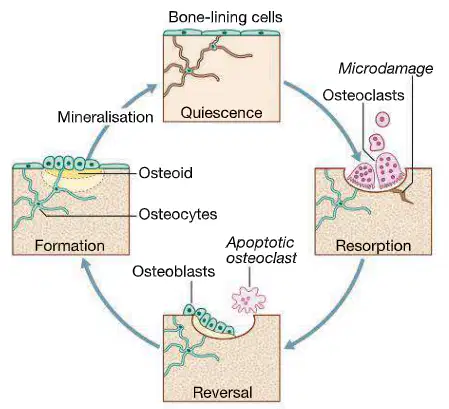
During which phase of the bone remodelling cycle are osteoclasts responsible for removing old and damaged bone?
Formation
Resorption
Mineralisation
Quiescence
Which molecule inhibits osteoblast activity in the bone microenvironment?
Wnt
Sclerostin (SOST)
FGF23
OPG
What is the role of osteocytes in bone remodelling?
They resorb bone matrix
They become trapped in bone matrix and regulate bone-lining cells
They produce red blood cells
They only form new bone
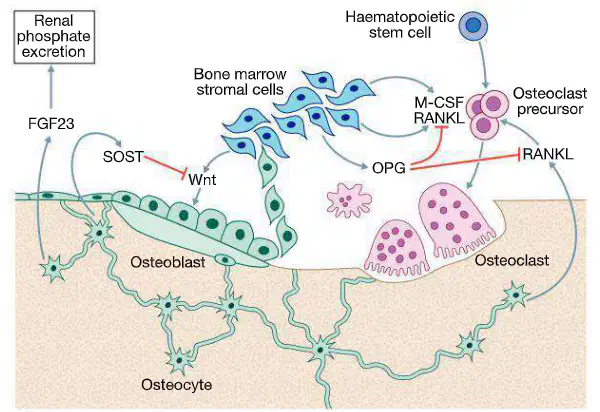
Which factor is produced by osteocytes and acts on the kidney to promote phosphate excretion?
RANKL
FGF23
OPG
M-CSF
Which of the following best describes the process of mineralisation in bone?
The removal of old bone by osteoclasts
The deposition of calcium and phosphate crystals in the bone matrix
The differentiation of osteoclast precursors
The production of red blood cells in bone marrow
Which protein blocks the effect of RANKL, thereby inhibiting osteoclastic bone resorption?
SOST
OPG
FGF23
Wnt
Why is over-mineralisation of bone clinically significant?
It causes bones to become more flexible
It causes bones to become brittle
It increases bone marrow production
It leads to increased bone length
Which mediator stimulates bone resorption by activating RANK?
Osteoprotegerin
Sclerostin
RANKL
Wnt
What is the main effect of osteoprotegerin in bone remodelling?
Stimulates bone resorption
Inhibits bone resorption
Stimulates bone formation
Inhibits bone formation
Which hormone increases both bone resorption and formation and is produced by the parathyroid glands?
Thyroid hormone
Parathyroid hormone
Oestrogen
Glucocorticoid
Which type of joint allows the most movement?
Fibrous
Fibrocartilaginous
Synovial
Cartilaginous
What is the main function of the nucleus pulposus in fibrocartilaginous joints?
Provides rigid support
Acts as a cushion to improve shock-absorbing properties
Facilitates bone resorption
Increases joint flexibility
Which of the following is a correct example of a fibrous joint?
Symphysis pubis
Intervertebral discs
Skull sutures
Temporomandibular joint
Which mediator inhibits bone formation and blocks the effect of Wnt on LRP receptors?
Osteoprotegerin
Sclerostin
RANKL
Glucocorticoid
Why are synovial joints considered complex structures?
They contain only one cell type
They are found where minimal movement is needed
They contain several cell types and allow a wide range of movement
They are composed only of fibrous tissue
Which of the following best describes the role of aggrecan in articular cartilage?
Stimulates bone resorption
Binds water molecules to ensure shock-absorbing properties
Inhibits bone formation
Increases joint rigidity
How does hyaluronan contribute to the function of articular cartilage?
It stimulates osteoclast differentiation
It binds to aggrecan molecules to form large complexes
It inhibits chondrocyte division
It increases the mineral content of cartilage
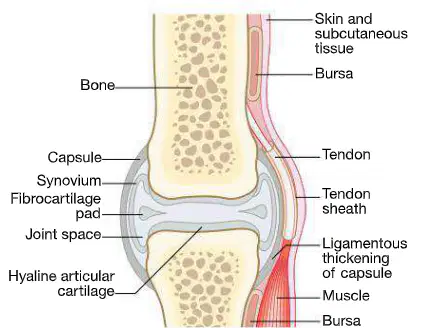
Which structure is responsible for lubricating the joint space in synovial joints?
Synovial fluid
Bone marrow
Ligament
Tendon sheath
What is the main function of bursae in the musculoskeletal system?
To store calcium
To help tendons and muscles move smoothly in relation to bones and other structures
To produce red blood cells
To connect muscles to bones
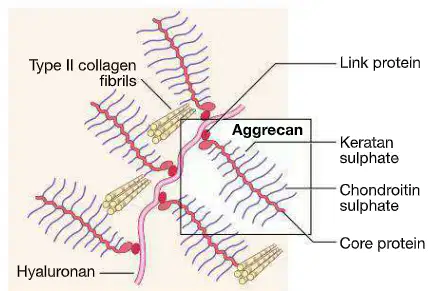
Which of the following is NOT a component of the articular cartilage matrix?
Keratan sulphate
Chondroitin sulphate
Myoglobin
Hyaluronan
What is the primary role of myocytes in skeletal muscle?
To produce synovial fluid
To provide oxygen to cartilage
To contract and enable body movements and respiration
To store fat
Which statement best describes the function of entheses?
They secrete synovial fluid into the joint space.
They transmit tensile load from soft tissues to bone.
They produce red blood cells.
They store calcium for bone growth.
Why is joint aspiration with examination of synovial fluid important in patients with suspected septic arthritis?
It helps in diagnosing and managing musculoskeletal diseases by allowing microbiology and clinical chemistry analysis.
It increases the production of synovial fluid.
It strengthens the joint capsule.
It prevents muscle contraction.
Which of the following best explains why the menisci of the knee are clinically important?
They are highly vascular and provide nutrients to the joint.
They act as shock absorbers within the joint space.
They produce synovial fluid.
They connect muscles to bones.
What is the effect of inflammation on synovial fluid?
It decreases the viscosity and increases the cell count.
It makes the fluid clear and colorless.
It increases the production of red blood cells.
It causes the fluid to become solid.
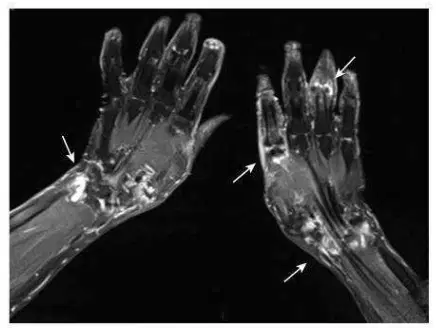
Which imaging technique is used to show extensive enhancement consistent with synovitis in joints?
Magnetic resonance imaging (MRI)
X-ray
Computed tomography (CT)
Positron emission tomography (PET)
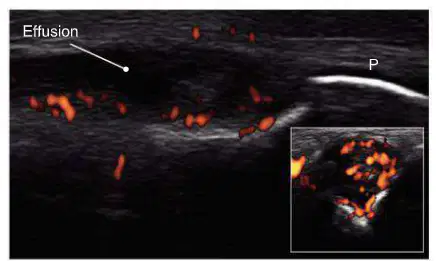
What does the presence of a hypoechoic area in an ultrasound image of a joint most likely indicate?
Effusion
Fracture
Calcification
Tumor
What is the main principle behind Dual X-ray Absorptiometry (DXA) for measuring bone mineral density?
The more mineral present, the higher the BMD value
The more fat present, the higher the BMD value
The more water present, the higher the BMD value
The more protein present, the higher the BMD value
Which of the following T-score values indicates osteoporosis according to DXA scan results?
-2.5 or below
Between -1.0 and -2.5
Between 0 and +2.5
Above +2.5
Why is it important to recognize that T-score values fall with age in the whole population as bone density falls?
Many people aged 60 and above may have osteopenia or osteoporosis based on T-score, even if BMD results are in the 'normal range' for their age group.
T-score values increase with age, indicating stronger bones.
T-score values are not affected by age.
T-score values only apply to children.
Which blood test abnormality is often seen in inflammatory rheumatic diseases?
Abnormalities in the full blood count (FBC)
High blood glucose
Low cholesterol
Elevated liver enzymes
Which bone disease is characterized by normal calcium and phosphate levels, but a greatly increased alkaline phosphatase (ALP) level?
Osteoporosis
Paget's disease
Renal osteodystrophy
Vitamin D-deficient osteomalacia
Which of the following is NOT a typical cause of an elevated serum creatine phosphokinase (CPK)?
Muscular dystrophy
Alcohol use
Hypothyroidism
Diabetes mellitus
According to the table, which condition is associated with a positive rheumatoid factor in 100% of cases?
Rheumatoid arthritis with nodules and extra-articular manifestations
Primary Sjögren syndrome
Mixed essential cryoglobulinaemia
Primary biliary cholangitis
What is the main use of C-reactive protein (CRP) in the context of rheumatology?
To diagnose osteoporosis
To assess renal function
To monitor infection and inflammation
To measure calcium levels
Which antibody is directed against the Fc fragment of human immunoglobulin?
Rheumatoid factor (RF)
Anti-citrullinated peptide antibody (ACPA)
Antinuclear antibody (ANA)
Anti-DNA antibody
Why is anti-citrullinated peptide antibody (ACPA) considered more specific than rheumatoid factor (RF) for diagnosing rheumatoid arthritis?
ACPA is positive in more than 95% of healthy people
ACPA is positive in around 70% of people with RA and has higher specificity (>95%)
RF is never positive in RA
ACPA is only found in children
Which of the following statements about antinuclear antibodies (ANAs) is TRUE?
A positive ANA test always confirms SLE
ANAs are directed against nucleic acids and proteins that process DNA or RNA
ANA testing is only useful in diagnosing infections
A negative ANA test always rules out autoimmune disease
A patient with SLE may have a normal CRP but a raised ESR. What does this suggest?
The patient has an acute infection
The patient has active systemic disease
The patient has no inflammation
The patient has osteoporosis
Which of the following conditions is associated with a positive rheumatoid factor in approximately 90% of cases?
Primary biliary cholangitis
Mixed essential cryoglobulinaemia
Infective endocarditis
Tuberculosis
What is the significance of a negative ANA test in the context of suspected SLE?
It confirms the diagnosis of SLE
It excludes SLE but a positive result does not confirm it
It indicates severe infection
It suggests the presence of rheumatoid arthritis
Which condition is associated with a 100% approximate frequency of a positive antinuclear antibody?
Systemic lupus erythematosus
Rheumatoid arthritis
Sjögren syndrome
Autoimmune thyroid disease
What is the main use of anti-dsDNA antibodies in clinical practice?
Monitoring SLE activity and predicting relapses
Diagnosing rheumatoid arthritis
Screening for infectious diseases
Detecting malignancy
Which antibody is most commonly associated with drug-induced lupus?
Anti-histone antibody
Anti-centromere antibody
Anti-RNA polymerase
Anti-La antibody
What is the primary reason for performing tissue biopsy in musculoskeletal diseases?
To confirm the diagnosis in certain musculoskeletal diseases
To measure antibody levels
To monitor disease progression
To assess liver function
Which antibody is associated with mixed connective tissue disease?
Anti-ribonucleoprotein antibody (anti-RNP)
Anti-histone antibody
Anti-RNA polymerase
Anti-centromere antibody
Why should testing for autoantibodies only be performed to support clinical assessment?
Because they are not screening tests and have limited sensitivity and specificity
Because they are expensive
Because they are only available in specialized centers
Because they are always positive in healthy individuals
Which of the following is NOT a common use for antineutrophil cytoplasmic antibodies (ANCA)?
Diagnosing systemic vasculitis
Monitoring systemic vasculitis
Diagnosing SLE
Detecting antibodies to myeloperoxidase
A patient with diffuse systemic sclerosis and more severe organ involvement is most likely to have which antibody?
Anti-Scl-70 (anti-topoisomerase I antibody)
Anti-centromere antibody
Anti-histone antibody
Anti-La antibody
What is the significance of low complement C3 in patients with SLE?
It indicates consumption of complement by immune complexes
It confirms the diagnosis of rheumatoid arthritis
It is associated with drug-induced lupus
It is a marker for infectious diseases
Which antibody is particularly associated with interstitial lung disease in polymyositis or dermatomyositis?
Anti-Jo-1 (anti-histidyl-tRNA synthetase)
Anti-La antibody
Anti-RNA polymerase
Anti-histone antibody
Which of the following is NOT a common cause of monoarthritis?
Gout
Pseudogout
Juvenile idiopathic arthritis
Septic arthritis
What is the primary use of electromyography in musculoskeletal disease?
To investigate suspected myopathy and inflammatory myositis
To measure bone density
To assess joint flexibility
To detect bone fractures
Which clinical feature is most suggestive of gout in a patient with monoarthritis?
Rapid onset of pain (6–12 hours) in a single joint
Gradual swelling of multiple joints
Morning stiffness in both hands
Symmetrical joint involvement
Which investigation is mandatory in patients with sudden onset of a hot swollen joint?
Aspiration of the affected joint
MRI scan of the joint
X-ray of the joint
Blood culture only
In the management of suspected septic arthritis, what is the recommended initial step?
Give intravenous antibiotics pending the results of cultures
Start non-steroidal anti-inflammatory drugs immediately
Perform joint replacement surgery
Begin physiotherapy
Which of the following is a hallmark of inflammatory polyarthritis?
Early-morning stiffness and worsening of symptoms with inactivity
Sudden onset of pain in a single joint
Pain only after physical activity
Absence of joint swelling

