
Font size
 Worksheets
Marketing Mix Quiz
Total questions: 85
Worksheet time: 43mins
What is the main purpose of the marketing mix?
To provide a balance between the demand and supply of products and services in the market.
To create advertisements for products.
To design company logos.
To hire new employees.
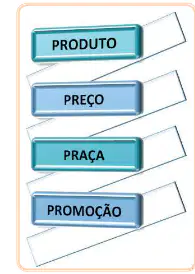
Which of the following is NOT one of the four elements of the marketing mix?
Design
Product
Price
Promotion
What question does the "PRODUTO" element of the marketing mix help answer?
What product or service will be offered to consumers?
How much will the consumer pay for the product?
Where will the product be sold?
How will the consumer learn about the product?
If a company wants to know how much a consumer is willing to pay for a product, which element of the marketing mix should they focus on?
Price (PREÇO)
Product (PRODUTO)
Place (PRAÇA)
Promotion (PROMOÇÃO)
Why is the marketing mix considered a tool for organizations?
Because it helps guide organizations in planning actions to reach their goals in the market.
Because it is used to create new products only.
Because it is a way to hire employees.
Because it is a method for making advertisements.
A company wants to make sure customers know about a new product. Which part of the marketing mix should they use?
Promotion (PROMOÇÃO)
Price (PREÇO)
Product (PRODUTO)
Place (PRAÇA)
What is a "produto" (product) in marketing?
Something that can be offered to the market to satisfy a need or desire.
Only physical objects that can be touched.
Only services provided by companies.
Only ideas and inventions.
Which of the following is an example of a "bem" (good) according to the text?
Automobile
Beauty salon
Tourist spot
Celebrity
What is the main difference between "tangíveis" (tangible) and "intangíveis" (intangible) products?
Tangíveis can be touched, intangíveis cannot be touched.
Tangíveis are always more expensive than intangíveis.
Tangíveis are only services, intangíveis are only goods.
Tangíveis are ideas, intangíveis are physical objects.
Which of the following best describes a "produto central" (central product)?
The essential benefit or service that satisfies the consumer's need.
The packaging of the product.
The brand name of the product.
The color of the product.
What is included in the "produto ampliado" (augmented product)?
Added value like after-sales service, warranties, and technical support.
Only the physical attributes of the product.
Only the price of the product.
Only the color and design of the product.
Which of the following is NOT listed as an element that can be offered as a product in marketing?
Weather
Events
People
Information
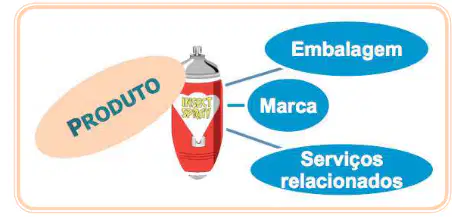
According to the diagram, which of the following is an element that integrates a product?
Packaging
Price
Location
Advertisement
What is the mix of marketing described as in the summary?
A base reference for applying marketing in any context.
A type of product sold in stores.
A way to create advertisements only.
A method for making products only for children.
According to the summary, what is the base for marketing actions?
The study of "product"
The study of "price"
The study of "promotion"
The study of "place"
Why is the mix of marketing important, based on the summary?
It helps guide all marketing strategies.
It is only used for selling food.
It is not important for marketing.
It is only about advertising on TV.
Imagine you are creating a new product. Based on what you learned, what is one reason why understanding the "product" is essential for marketing actions?
Because it is the base for all marketing actions.
Because it is the only thing customers care about.
Because it is not related to marketing.
Because it is only important for online sales.
What does a brand (marca) represent for the consumer?
The identity of the product
The price of the product
The location of the store
The color of the packaging
Which of the following is NOT a way a brand can be determined?
By a name
By a symbol
By a combination of elements
By the weather
Why is it important for a brand to be unique and aligned with its characteristics?
To make it exclusive and different from competitors
To make it more expensive
To make it harder to find
To make it taste better
What are some factors that promote the positive visibility of a brand?
Quality and performance of the product or service
The color of the logo
The number of stores
The size of the packaging
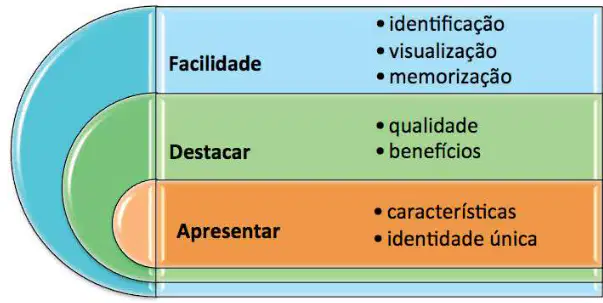
Which of the following is an attribute of a brand according to the diagram?
Identification
Speed
Weight
Temperature
How does a brand gain credibility and excellence?
By maintaining quality and good performance over time
By changing its name often
By lowering its price every week
By copying other brands
If a company wants its brand to be easily remembered by consumers, which attribute should it focus on?
Memorization
Price
Size
Location
What is the main purpose of packaging for a product?
To protect the product
To make the product heavier
To increase the price of the product
To hide the product from customers
Which of the following is NOT a function of packaging mentioned in the text?
Making the product invisible
Protection of the product
Storage
Providing information
According to the text, what psychological effects can packaging have on consumers?
Attention, Interest, Desire, Action
Confusion, Anger, Sadness, Joy
Sleepiness, Hunger, Thirst, Excitement
Fear, Surprise, Disgust, Trust
What is the main objective of a product label (rótulo)?
To identify the product and provide information
To make the product heavier
To hide the product from competitors
To increase the price of the product
Why is it important for some products to have information required by law on their labels?
To meet legal requirements and inform consumers
To make the label colorful
To confuse the buyer
To make the product more expensive
How does packaging help with storage and logistics?
By making handling and logistics easier
By making the product invisible
By making the product heavier
By hiding the product from customers
What is one of the functions of product assistance mentioned in the text?
To inform and guide about correct use and maintenance
To make the product more expensive
To hide the product from customers
To make the product invisible
If a company wants its product to stand out from competitors, which packaging function should it focus on?
Peculiarity (Distinction from competitors)
Making the product heavier
Hiding the product
Increasing the price

Which function of packaging is associated with "Economy – correct use" as a perceived effect?
Rationality
Visibility
Legality
Peculiarity

What does the acronym AIDA stand for in the context of packaging effects?
Attention, Interest, Desire, Action
Awareness, Information, Decision, Agreement
Action, Interest, Demand, Attention
Attraction, Information, Design, Action
What impact can a brand have on a customer/consumer?
It can create trust and loyalty in the customer.
It can make the product taste better.
It can change the color of the product.
It can make the product heavier.
How can packaging influence a customer/consumer when buying a product?
By making the product look more attractive and providing important information.
By making the product disappear.
By making the product more expensive.
By making the product harder to find in the store.
What are the main stages in the life cycle of a product?
Birth, growth, maturity, decline
Start, stop, pause, end
Launch, break, fix, finish
Begin, middle, end, restart
How can products be compared to living beings according to the text?
They are both made of cells
They both have a life cycle: birth, growth, maturity, and decline
They both need food to survive
They both can talk
Why do products eventually disappear from the market?
Because they become too expensive
Because they reach maturity and then decline, being replaced by newer products
Because people forget about them
Because they are all the same
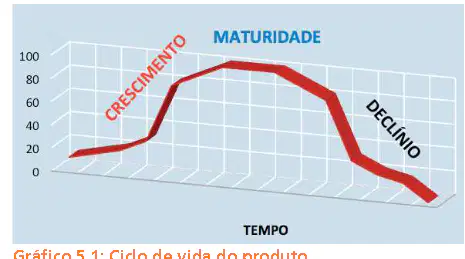
What does the graph in the image represent?
The weather forecast
The product life cycle
The water cycle
The food chain
What is the purpose of different marketing strategies at each stage of a product's life cycle?
To keep the product the same forever
To maintain sales volume and desired profitability
To make the product disappear quickly
To confuse customers
What is the main difference between a product and a service according to the text?
Products are always more expensive than services
There are particularities for each, even though they are often connected
Services are always better than products
Products never change

What is the main difference between a product and a service according to the table shown in the material?
A product is always more expensive than a service.
A product is something you can touch, while a service is an action or activity.
A product is only for companies, while a service is only for customers.
A product is always better than a service.
What is the purpose of post-sale (pós-venda) services?
To end the relationship with the customer.
To ensure customer satisfaction and improve the company's image.
To increase the price of the product.
To avoid customer feedback.
Which of the following is an example of a post-sale service?
Selling the product.
Advertising the product.
Providing assistance and training after the sale.
Designing the product.
Why is it important for companies to pay attention to customer feedback after a sale?
To ignore complaints.
To correct errors and improve their services.
To increase competition.
To reduce the quality of their products.
How can a company gain a "competitive advantage" according to the text?
By ignoring customer needs.
By offering something extra and excelling in services.
By lowering the quality of their products.
By not providing post-sale services.
What is the main idea of the "product life cycle" discussed in the lesson summary?
Every product lasts forever
No product is eternal
Products and services are the same
Only new products are important
Which of the following is an important action after a sale to keep customers coming back?
Ignoring the customer
Post-sale actions (after-sales service)
Only selling new products
Lowering the price
What is the difference mentioned in the summary between products and services?
There is no difference
Products are always better than services
There are different aspects related to products and services
Services are not important
Why is it important for a company to focus on customer satisfaction after a sale?
To make the product last forever
To ensure the customer returns
To stop selling products
To ignore the market
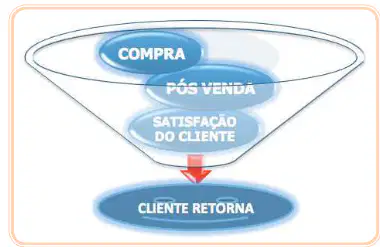
What does the diagram in the image represent?
The process of making a product
The process of customer loyalty after a sale
The process of advertising
The process of product design
What is one of the most important factors in attracting customers, according to the lesson?
The color of the product
The price of the product
The size of the product
The location of the store
According to Philip Kotler, what is included in the process of Marketing Administration?
Only advertising products
Planning, executing conception, determining price, promotion, and distribution
Only selling products
Only designing products
Why is the price considered an important element for companies?
It determines the color of the product
It produces "revenue" for the company
It decides the company’s name
It creates new products
If a company offers a product that is not attractive to consumers, what is likely to happen?
The product will be very successful
The product will not succeed in the market
The product will become cheaper
The product will be given away for free
What usually happens when the price of a product is reduced?
It causes immediate changes in results
It makes the product heavier
It changes the product’s color
It increases the product’s size
Who usually determines the price of a product or service?
The company’s owner
The market
The government
The employees
Why is it important to identify the value a consumer is willing to pay for a product?
To make the product more colorful
To set a fair price and succeed in the market
To increase the product’s weight
To make the product last longer
What is the main difference between massification and specialty products?
Massification products are cheap and accessible to many people, while specialty products are exclusive and for people with high purchasing power.
Massification products are always expensive, while specialty products are cheap.
Specialty products are for everyone, while massification products are only for a few people.
Massification products are handmade, while specialty products are made in factories.
Which of the following is a characteristic of a specialty product?
It is exclusive and has specific features.
It is cheap and for everyone.
It is always sold in supermarkets.
It is always a food item.
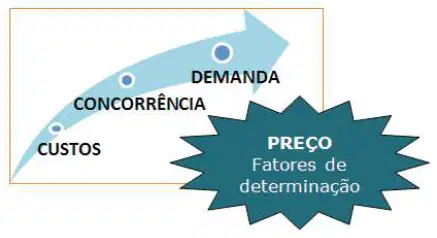
What are some factors that determine the price of a product according to the text?
Demand, competition, and costs.
Only the cost of making the product.
Only the demand for the product.
Only the competition in the market.
Why is it important to monitor the market when setting prices?
To keep up with changes and not lose competitiveness.
To make products more expensive.
To ignore what customers want.
To only focus on production costs.
What is one effective method for setting a competitive price for a product?
Doing market research with groups of potential buyers.
Guessing the price.
Copying prices from other countries.
Setting the highest possible price.
What is considered a fundamental factor for a product to be competitive?
Price
Color
Size
Brand
According to the summary, what forms the price of a product?
Internal and external factors
Only the cost of materials
The opinion of the seller
The color of the product
Why must products have minimum attributes, even if they have a low price?
To meet the needs of the consumer
To look more expensive
To be heavier
To be more colorful
Imagine you are buying a product with a low price. What should you check to make sure it satisfies your needs? (Choose the best answer)
If it has the basic elements needed for its use
If it is the most expensive
If it is the biggest
If it is the oldest
What does the term "praça" represent in the marketing mix?
The facilitation of access to a product or service for the consumer
The price of a product
The quality of a product
The advertising of a product
Why is it important for a product to reach the hands of those who need it?
Because it increases the price
Because it ensures the product is not condemned
Because it improves the product's quality
Because it reduces advertising costs
Which of the following is NOT listed as an element of distribution channels in the text?
Agents (Representatives)
Distributors
Manufacturers
Internet
What is the main purpose of logistics in the distribution chain?
To advertise products
To manage the flow of supply through a planned system
To set product prices
To improve product quality
If a company has the best product and price, but it does not reach the consumer, what happens to the product?
It becomes more popular
It is condemned
It gets cheaper
It is improved
Which of the following is an example of a distribution channel mentioned in the text?
Product design
Fairs and exhibitions
Customer service
Product warranty
What is the main purpose of promotion in marketing?
To attract customers and communicate messages about products or services.
To create new products for the market.
To set the price of products.
To design the packaging of products.
Which of the following is NOT mentioned as a channel of communication for promotion?
Radio
Internet
Factory production
TV
Why is it important to establish a form of communication that presents positive effects in the customer's view?
Because it helps the company sell more products by making a good impression.
Because it reduces the cost of making products.
Because it increases the number of employees.
Because it makes the company famous only among its workers.
What is the main goal of advertising (propaganda) according to the text?
To persuade clients to buy and prefer the product.
To create new products.
To lower the price of products.
To hire more employees.
Imagine you are launching a new product. Based on the text, what should you consider when planning your promotion strategy? (DoK Level 3)
What message to communicate, how to inform, who the audience is, and how often to communicate.
How to make the product in the factory.
How to reduce the number of advertisements.
How to increase the price of the product.
What is the main purpose of publicity in marketing?
To inform the public about the company and its products through news
To sell products directly to customers
To create new products for the market
To increase the price of products
Which of the following is an example of a sales promotion?
Discounts and special offers
Writing a news article
Designing a new logo
Opening a new store
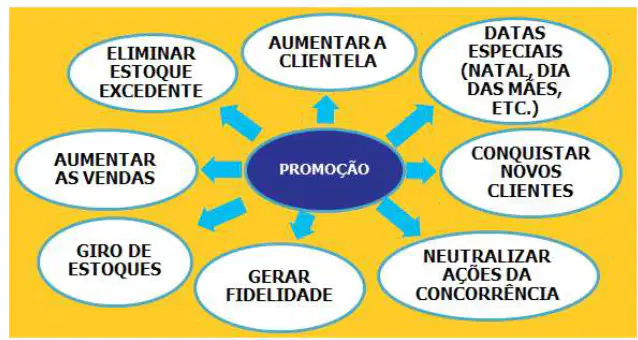
What is one effect of promotion according to the diagram in the material?
Increasing sales
Reducing product quality
Raising prices
Decreasing customer loyalty
Why do organizations use publicity as part of their marketing mix?
Because news about their products has journalistic value
Because it is the only way to sell products
Because it guarantees immediate sales
Because it replaces all other marketing activities
How does the element "praça" (place) help the consumer, according to the summary?
It makes access easier and provides comfort
It increases the price of products
It creates advertisements
It reduces the number of products available
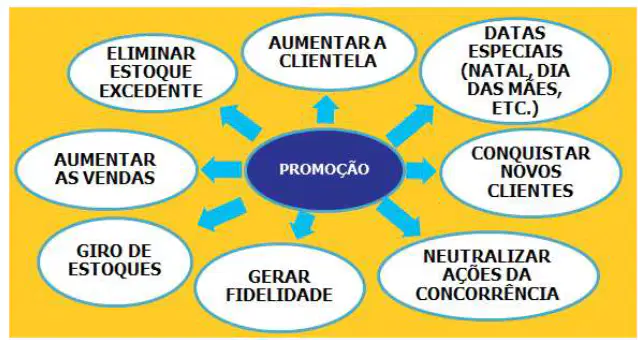
Which of the following is NOT a typical effect of promotion as shown in the diagram?
Reducing the number of stores
Increasing sales
Generating customer loyalty
Attracting new clients

