
Font size
 Worksheets
SFMA: Cervical, UEP1, and UEP2 Analysis; SFMA Tx Approaches
Total questions: 20
Worksheet time: 3600secs
During your cervical flexion breakout you discover your patient has an Active Cervical Spine SMCD. Which of the following is likely the reason for the SMCD?
Short cervical extensors
Long/weak intrinsic neck flexors
Long cervical extensors
Short/weak intrinsic neck flexors
Select all that apply: If you are suspecting a MD, which of the following is/are true?
Joint play should be assessed.
AROM/PROM are both limited.
Joint mobilizations may be an appropriate intervention.
Weak musculature could be a reason for the mobility dysfunction.
Your patient presents with a downwardly rotated scapula on his RIGHT side. Which of the following could be the cause of this?
A long contralateral upper trap.
A shortened ipsilateral levator scapula and rhomboids.
A weak ipsilateral deltoid and supraspinatus.
A weak RIGHT subscapularis.
During UEP1, the patient demonstrates a right shoulder IR MD. Which of the following is the best reason for this impairment?
Short internal rotators of the shoulder
Short external rotators of the shoulder
Long internal rotators of the shoulder
Long external rotators of the shoulder
Weakness or long serratus anterior musculature could likely present as which of the following at rest during a postural assessment? SELECT ALL THAT APPLY
Downwardly rotated scapula
Depressed scapula
Winging scapula or tilted scapula
Adducted scapula
True/False: Joint mobilizations will have a quicker impact on a mobility dysfunction vs. stretching.
True
False
All medial rotators of the shoulder may potentially be short if a patient is having difficulties flexing their shoulder beyond 90 degrees. Which of the following is the BEST reason for this potential impairment?
All medial rotators also extend the shoulder.
All medial rotators need to lengthen during shoulder flexion.
All medial rotators need to shorten during shoulder flexion.
Medial rotators have no effect of shoulder flexion if they are short.
True/False: Top tier assessment, breakouts, and analyses get you to the CAUSE of the dysfunction.
True
False
Treatment for an Elbow Flexion MD may include all of the following EXCEPT:
Stretching of the triceps brachii
Humeroradial ventral glides
Strengthening of the anconeus
Strengthening of the pronator teres
True or False: A performance test is a better measure of learning vs. a retention test.
True
False
Which practice style do you think will lead to the most-beneficial long-term outcomes for treating a patient with an SMCD?
Blocked Practice
Random Practice
Whole-Part-Whole Practice
Part-Whole-Part Practice
Please rank the following postural progressions (1-5) from least (1) to most challenging (5).
Standing, tall kneeling, 1/2 kneeling, rolling, quadruped.
5, 4, 3, 1, 2
5, 3, 4, 1, 2
1, 2, 3, 5, 4
1, 3, 2, 5, 4
Which of the following levels of function on the functional continuum is one in which your patient is functional, but not automatic?
Subconscious function
Conscious function
Conscious dysfunction
Subconscious dysfunction
Using the 4x4 Matrix choose the following picture(s) that demonstrate a suspended position.

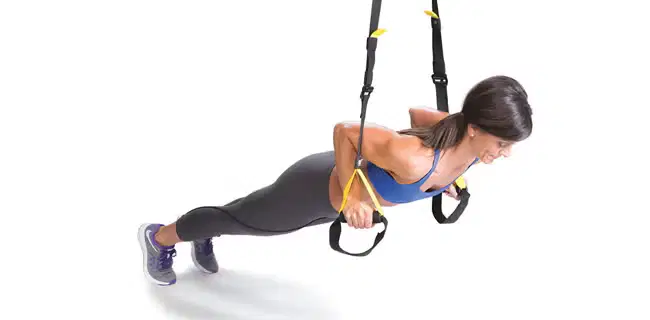
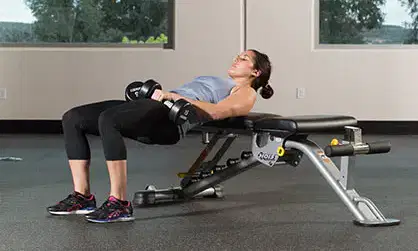

SELECT ALL THAT APPLY: Which of the following condition(s) can cause an anteriorly tilted scapula?
Tight pec minor
Tight short head of the biceps
Weak lower trap
Weak teres major
The 3 R's for SFMA treatment are:
Rest, Relax, Rejuvenate
Rest, Reload, Revive
Reset, Reinforce, Reload
Reset, Rest, Reload
According to SFMA, which of the following top-tier categories will you break out LAST?
UE Pattern 2: Functional Painful
Cervical rotation: Functional Painful
UE Pattern 1: Dysfunctional Painful
SLS: Dysfunctional Nonpainful
Need more information
Following the SFMA top tier assessment, your client was identified as having a dysfunctional nonpainful multi-segmental extension:
Prone press up = 3.5 inches
Active lumbar lock = 40 degrees bil; Passive lumbar lock 45 degrees bil
Active/Passive POE extension/rotation = 20 degrees bil
Active shoulder flexion = 170
Passive shoulder flexion = 180
FABER = (+) bil
Stabilized FABER = (+) bil: no change
Modified Thomas test = (-) bil
Active/Passive hip extension = 0 degrees
(a)
SELECT ALL THAT APPLY: If a patient presenting with an SMCD is unable to complete a task with feedback:
You may have missed a mobility dysfunction.
The task may be too challenging for the patient.
You need to add load/capacity.
You need to move them into a more advanced position such as standing.
True/False: A SMCD is only due to a muscle weakness.
True
False

