
 Worksheets
[IB] Biochemistry Practice Test
Total questions: 32
Worksheet time: 42mins
Which feature of a water molecule allows it to form hydrogen bonds with other molecules?
Small molecular size and even electron distribution
polarity
Nonpolar covalent bonds
Presence of partial positive and negative charges
Hydrogen bonding in water most directly explains which property?
Cohesion and surface tension
Low latent heat of vaporization
High specific heat capacity
Greater density as a solid
Chose the best matches among the following options.
Enables formation of droplets and surface tension
Cohesion
Explains capillary rise of water through xylem vessels
Adhesion
Stabilizes large bodies of water and internal body temperatures
High specific heat capacity
Explains water’s role in temperature regulation via sweating
High latent heat of vaporization
Allows ions and polar molecules to dissolve and be transported
Solvent ability
In condensation reactions, bonds (a) and (b) molecules are produced. In the process, water is (c) .
Explain how hydrogen bonding gives water its high specific heat capacity. Select all correct answers.
A large amount of energy is required to break extensive hydrogen bonding.
Initial heat energy added goes into disrupting hydrogen bonds rather than raising temperature.
Water molecules have no intermolecular forces, so they absorb heat easily.
Hydrogen bonds prevent water molecules from vibrating when heated.
Contrast the thermal properties of water and methane.
Water has a higher specific heat capacity because hydrogen bonds absorb more energy before molecules move freely.
Methane lacks hydrogen bonds and therefore heats and cools more rapidly.
Methane has a lower boiling point than water due to weaker intermolecular forces.
Methane’s density decreases when frozen because of hydrogen bonding.
Match the picture to its label.

Hydrogen bond

Covalent bond

Incorrectly labeled water molecule

Correctly labeled water molecule
Label the parts of the nucleic acid.
Select all statements that accurately describe the structure of DNA.
Each molecule consists of two antiparallel polynucleotide strands.
Complementary bases pair by hydrogen bonds: A–T and G–C.
Both strands run in the 5' → 3' direction.
Complementary bases pair by covalent bonds: A–T and G–C.
Strands are identical in their sequence of nitrogenous bases.
Select all statements that accurately describe how complementary base pairing maintains DNA replication fidelity.
Each parent strand acts as a template for a new complementary strand.
Adenine pairs only with thymine; guanine pairs only with cytosine.
The complementary rules ensure identical daughter molecules.
Polymerase forms covalent bonds between identical bases.
Base pairing occurs at random but is corrected by polymerase.
Compare and contrast the structure of DNA and RNA.
double-stranded helix
single-stranded helix
Deoxyribose sugar
Ribose sugar
Nitrogenous bases: A T C G
Nitrogenous bases: A U C G
Function: Informational storage
Function: Protein synthesis
Primary location: Nucleus
Primary location: Cytoplasm
How did Meselson and Stahl’s experiment demonstrate that DNA replication is semi-conservative?
Both strands of parental DNA remained together after replication.
DNA grown in ¹⁵N then transferred to ¹⁴N produced hybrid (intermediate-density) DNA after one replication cycle.
After one replication, only light ¹⁴N DNA was found.
Heavy ¹⁵N DNA disappeared immediately after replication.
Organize these options into the right categories.
DNA → DNA
Purpose: Copy the genome
DNA → mRNA
mRNA → Protein
Purpose: Write RNA instructions from DNA
Purpose: Build protein
Select all statements that accurately describe the role of hydrogen bonds in DNA's structure and function.
They hold complementary bases together, maintaining helix stability.
They are weak enough to separate during replication, allowing enzyme access.
They form between the phosphate and deoxyribose molecules in the backbone.
They permanently prevent strand separation under any conditions.
They ensure random pairing of bases during DNA synthesis.
Match the following
One sugar unit
Monosaccharide
Two sugar units
Disaccharide
Long chain of sugar units
Polysaccharide
Organize these options into the right categories
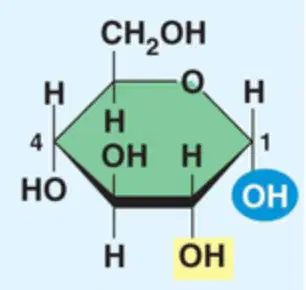
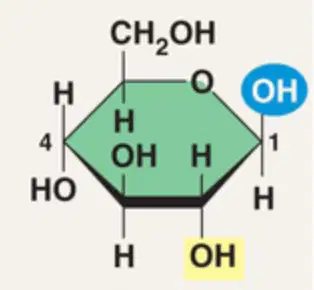
Both OH groups DOWN
1 OH group UP, 1 OH group DOWN
Does not pack tightly
Forms helices and branches
Packs in tightly
Forms straight chains
Organize these options into the right categories
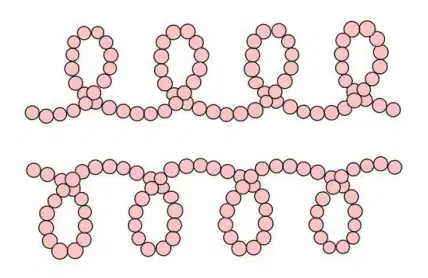
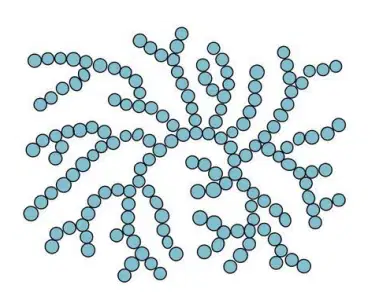
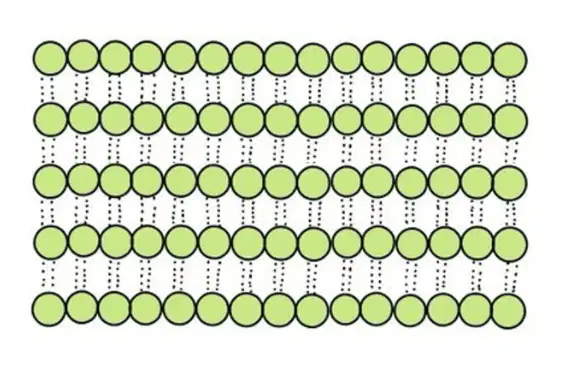
Helical α-glucose polymer
Branched α-glucose polymer
Straight, fibrous β -glucose chains
Plant energy storage
Animal energy storage
Plant cell wall structure
In muscle tissue, glycogen can be rapidly mobilized during exercise because:
The molecule’s branching restricts enzyme binding to a single site.
Numerous branch points create many points of access for hydrolysis.
Its linear chains allow gradual, sequential release of glucose.
The β-1,4 bonds in glycogen are easily cleaved by cellulase.
Why can starch be digested by most animals but cellulose cannot?
Both contain α-glucose monomers but differ in molecular size.
Animals lack cellulase for β bonds in cellulose.
Cellulose has the same linkage type as glycogen but is less soluble.
Starch and cellulose differ only in branching frequency, not in bond type.
Identify these items as belonging to saturated, unsaturated (trans), or unsaturated (cis) fatty acids.
🚫 No double bond 🚫 No bend
✅ Double bond, 🚫 No bend
✅ Double bond, ✅ Bend
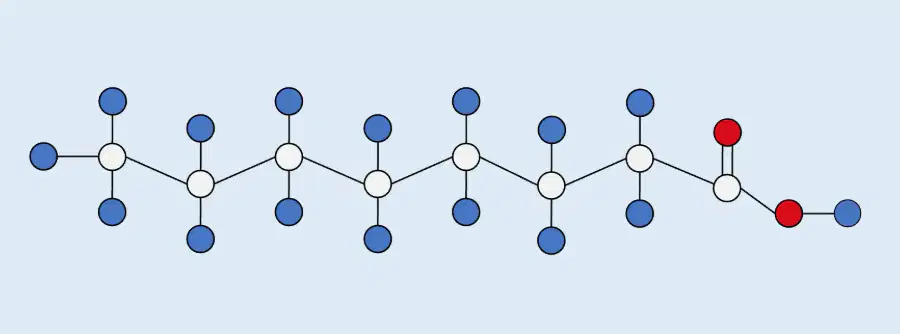
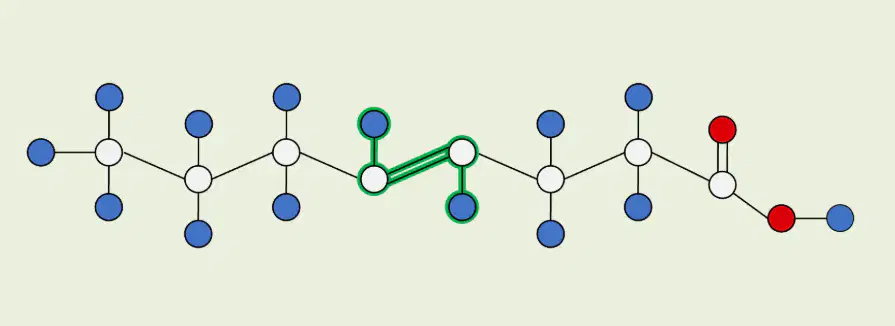
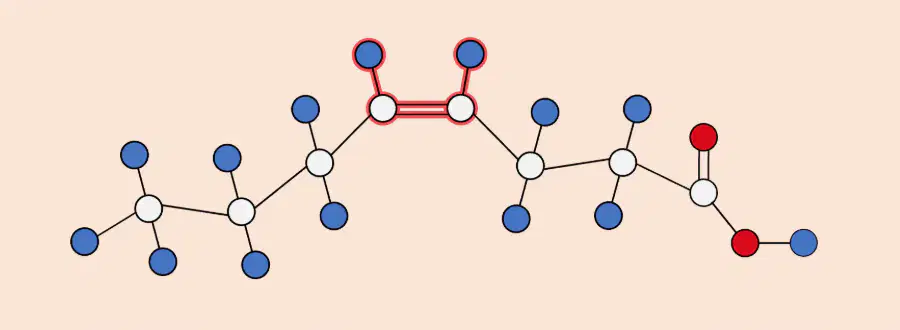
What structural feature causes olive oil to be liquid while butter is solid at room temperature?
Both contain only saturated fatty acids that form flexible chains.
Olive oil contains cis double bonds that introduce kinks and reduce packing efficiency.
Butter’s fatty acids contain double bonds that disrupt molecular alignment.
Olive oil molecules have stronger van der Waals forces between chains.
Select all statements that correctly contrast lipids and carbohydrates in terms of energy storage.
Lipids contain about twice as much energy per gram as carbohydrates.
Lipids are more energy-dense because they contain more C–H bonds and are less oxidized.
Lipids provide efficient long-term storage, while carbohydrates are better for short-term, rapid energy release.
Carbohydrates are insoluble and used mainly for long-term storage in animals.
Carbohydrates store about twice as much energy per gram as lipids.
Label the parts of the amino acid. Not all answers will be used.
Click on the peptide bond that has formed between two amino acids.
Match the four levels of protein structure to their description.
Primary
amino acid sequence
Secondary
α-helices or β-sheets
Tertiary
3-D folding via R-group interactions
Quaternary
multiple 3-D folded polypeptide units
Which statement best explains how a single amino acid substitution can cause sickle cell disease?
The hydrophobic substitution promotes hemoglobin aggregation, distorting red blood cells and blocking capillaries.
The polar substitution allows excessive water uptake, bursting red blood cells.
The neutral substitution prevents hemoglobin from binding oxygen at low altitude.
The ionic substitution enhances electron transport, increasing ATP demand.
Categorize each item as belonging to fibrous or globular proteins.
Example: Collagen
Example: Hemoglobin
Structure: Long, rope-like
Structure: Compact, spherical
Function: Structural support
Function: transport and metabolism
Insoluble in water
Soluble in water
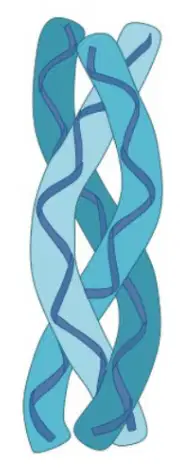
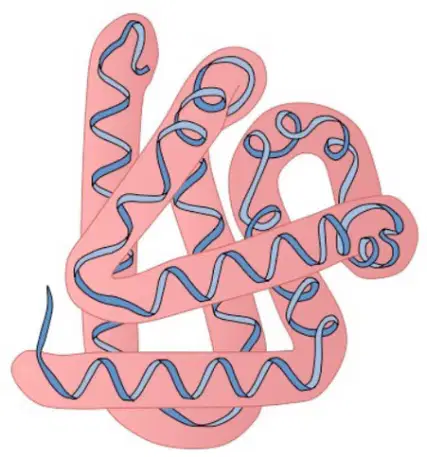
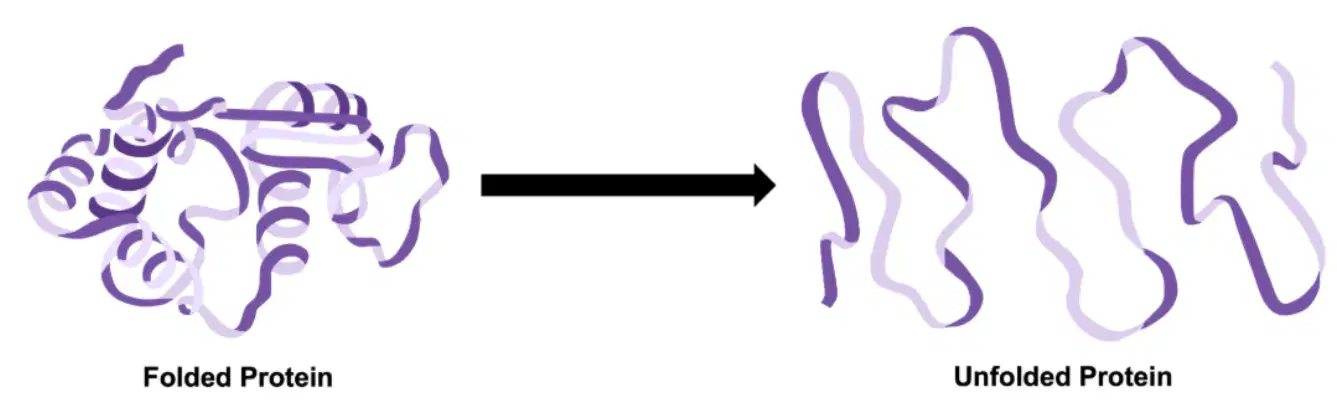
Refer to the image shown. What is this process called and what might cause it to happen?
Denaturation; caused by heat or pH extremes disrupting weak interactions that maintain the protein’s tertiary structure.
Hydrolysis; caused by digestive enzymes breaking peptide bonds and releasing free amino acid monomers.
Coagulation; caused by formation of additional covalent cross-links between unfolded protein chains.
Precipitation; caused by aggregation of folded proteins when nonpolar regions are exposed to the aqueous environment.
Hydrogen bonding plays a key role in which of the following biological processes or structures?
Cohesion between water molecules
Base pairing in DNA
Folding of secondary protein structures
Formation of peptide bonds between amino acids
Which pairs show the effect of polarity on function?
Water’s polarity allows solvent transport of ions in plasma.
Phospholipid polarity creates bilayers forming cell membranes.
β-glucose polarity makes cellulose soluble for easy digestion.
Polarity of fatty acids enables long-term energy storage.
Which comparisons illustrate how small molecular changes yield large functional differences?
α-glucose vs β-glucose → flexible starch vs rigid cellulose
Glutamic acid → valine mutation → sickle-cell anemia
Adenine → guanine substitution → identical base pairing
Saturated → unsaturated fat → unchanged melting point
Which general principles apply to multiple biological molecules?
Polymerization through condensation and breakdown through hydrolysis
Structure determines function at multiple levels of organization
Water solubility is universal to biomolecules
All polymers contain Carbon as a basic component

