
 Worksheets
Fall 2025 NRS 1235 Exam 3 O2 Perfusion (Cardiovascular)
Total questions: 59
Worksheet time: 30mins

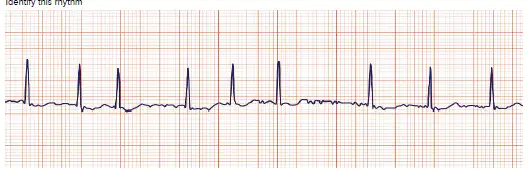
Using the strip, enter the heart rate per minute. Record your answer as a whole number.
60
75
100
90
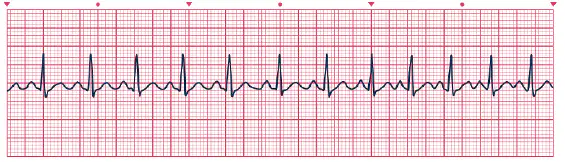
A client’s electrocardiogram strip shows atrial and ventricular rates of 110 beats/minute. The PR interval is 0.14 seconds, the QRS complex measures 0.08 seconds, and the PP and RR intervals are regular. How would the nurse correctly interpret this rhythm?
Sinus Tachycardia
Sinus Bradycardia
Normal Sinus Rhythm
Ventricular Tachycardia
The nurse cares for a client with a history of left-sided heart failure who does not regularly take their medications. What findings, if observed by the nurse, does the nurse find most concerning? For each finding, select whether it requires immediate action or is not concerning to the nurse. Finding: Arms and feet are cool to the touch
Requires Immediate Action
Not Concerning
The nurse cares for a client with a history of left-sided heart failure who does not regularly take their medications. What findings, if observed by the nurse, does the nurse find most concerning? For each finding, select whether it requires immediate action or is not concerning to the nurse. Finding: Tachypnea
Requires Immediate Action
Not Concerning
The nurse cares for a client with a history of left-sided heart failure who does not regularly take their medications. What findings, if observed by the nurse, does the nurse find most concerning? For each finding, select whether it requires immediate action or is not concerning to the nurse. Temperature 98.2 F (36.8C)
Requires Immediate Action
Not Concerning
The nurse cares for a client with a history of left-sided heart failure who does not regularly take their medications. What findings, if observed by the nurse, does the nurse find most concerning? For each finding, select whether it requires immediate action or is not concerning to the nurse. Finding: 2+ pitting edema in the lower extremities
Requires Immediate Action
Not Concerning
The nurse cares for a client with a history of left-sided heart failure who does not regularly take their medications. What findings, if observed by the nurse, does the nurse find most concerning? For each finding, select whether it requires immediate action or is not concerning to the nurse. Finding: Crackles in all lung fields
Requires Immediate Action
Not Concerning
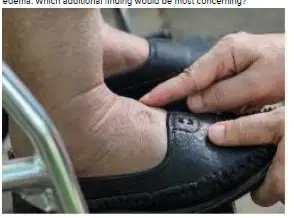
A home health nurse visits a client with right-sided heart failure who is sitting in a wheelchair. The nurse notes bilateral lower extremity edema. Which additional finding would be most concerning?
Weight gain of 4 lb (1.8 kg) in 2 days
Report of mild ankle stiffness at night
Client states shoes feel tight in the evenings
Skin on the lower extremities appears dry and flaky
A client who is 2 days postoperative from abdominal surgery reports discomfort in the right calf. Which assessment finding should the nurse recognize as a possible indication of thrombophlebitis?
Diminished bowel sounds and abdominal distention
Hypotension and cool, clammy skin
Pain relieved by elevating the leg above the heart
Erythema, warmth, and tenderness over the affected calf
A nurse is caring for a client newly diagnosed with heart failure and will be starting sacubitril/valsartan (Entresto) an angiotensin receptor neprilysin inhibitor (ARNI). When teaching a patient about the medication’s side effect of orthostatic hypotension, the nurse should explain that the risk for falls can be reduced by which action?
Reclining slowly after ambulation
Lying down for 30 minutes after taking medication
Increasing fluid intake to reduce hypotension
Sitting on the edge of the bed a short time before arising
A patient admitted for heart failure exacerbation is due for a morning dose of furosemide (Lasix) 60 mg IV. The nurse notes the client's potassium is 3.0 mEq/L (reference range: 3.5-5.0 mEq/L). Which of the following is the appropriate action by the nurse?
Administer the furosemide (Lasix) as ordered.
Notify the provider and request a potassium replacement.
Administer IV potassium chloride 20 mEq IV push STAT.
Administer half the furosemide (Lasix) now and notify the provider.
A nurse is working in a cardiovascular clinic seeing clients with hypertension that have started new antihypertensive medications. Which of the following clients has indications of orthostatic hypotension?
118/68 mm Hg when standing and 110/72 mm Hg when lying down.
146/78 mm Hg lying down, HR 82 beats/min and 136/76 mm Hg, HR 98 beats/min when standing.
126/72 mm Hg lying down and 133/80 mm Hg when sitting, and reports shortness of breath.
146/88 mm Hg when lying down and 130/78 mm Hg when standing, and reports feeling dizzy.
A nurse is providing discharge teaching to a patient with heart failure and will be taking spironolactone (Aldactone). Which of the following instructions should the nurse emphasize to optimize renal rest at night in a patient taking a diuretic?
Restrict daytime fluid intake to prevent nocturia
Take the diuretic in the morning with food
Restrict salt intake to prevent hypertension
Sleep with the head elevated to improve breathing
A client is admitted with complaints of leg pain. The client states, "Every time I walk to my mailbox, my calves start to hurt, but when I sit down, the pain goes away." On assessment, the nurse notes diminished pedal pulses and shiny, hairless skin on both legs. Which clinical manifestation is most consistent with the client's diagnosis of peripheral arterial disease (PAD)?
Leg pain that reoccurs with exercise and is relieved by rest
Unilateral swelling of the affected leg
Decreased pain when legs are elevated
Pulse oximetry reading of 90%
A home health nurse visits a client with chronic venous insufficiency. On assessment, the nurse notes bilateral ankle edema, brown discoloration around the ankles, and varicose veins. Which additional finding would the nurse expect?
Ulcers located on the lower legs
Shiny, hairless skin on the lower legs
Pain in the calves relieved by rest
Weak or absent pedal pulses
When assessing an individual with peripheral arterial disease, which clinical manifestation would indicate complete arterial obstruction of the lower left leg?
A. Aching pain in the left calf
B. Burning pain in the left calf
C. Numbness and tingling in the left leg
D. Pulselessness of the left foot and ankle
When an peripheral arterial embolus has been diagnosed in the lower left extremity, an emergency surgical embolectomy may be considered if the involved extremity is viable. After an embolectomy surgery, which of the following nursing actions is a priority to prevent complications?
Administer pain medication
Administer the anticoagulants as ordered
Encourage activity within the guidelines specified by the physician
Monitor the pulses
The nurse should teach patients with peripheral vascular disease to stop smoking because of the effects of nicotine. Which of the following are effects of nicotine?
Nicotine widens blood vessels and improves blood flow to the legs
Nicotine narrows blood vessels and makes it harder for blood to reach the legs
Nicotine improves circulation by opening collateral blood vessels
Nicotine increases oxygen delivery to the tissues in the legs
The nurse measures the blood pressure of a 78-year-old patient and finds it to be 168/86 mm Hg. Which of the following is an age-related change that contributes to this finding?
stenosis of the heart valves
loss of elasticity in arterial vessels
increased baroreceptor sensitivity
increased heart valve competency
The nurse is caring for a client admitted with peripheral arterial disease (PAD) and performing an admission assessment. The nurse is unable to palpate the patient's left dorsalis pedal pulses. Which of the following actions would the nurse take next?
Palpate the toes for a pulse
Document left dorsalis pedal pulse absent
Use a doppler ultrasound device to find the pulse
Auscultate the left foot with a stethoscope
The nurse has been assigned to a patient with Raynaud's disease. The nurse is providing education to the client for methods to prevent vasospasms of the hands. Which of the following statements from the client indicates a need for further education?
I will not smoke in the mornings, only in the afternoons
I will wear gloves when going outside in the winter
I will decrease my caffeine intake
I will avoid extreme temperature changes
During assessment of a patient who has primary hypertension, the nurse understands that the patient will most commonly experience which of the following?
Nose bleeds
No symptoms
Blurred vision
Dyspnea on exertion
A client with hypertension is prescribed propranolol 80 mg twice daily. During a follow-up visit, the client reports fatigue and malaise. Which action by the client best shows understanding of propranolol therapy?
Checks pulse rate before taking the medication
Schedules an appointment for mild fatigue
Stops the medication if chest pain occurs
Takes the medication with meals each day
The nurse assesses that a patient with acute decompensated heart failure is dyspneic. What is the priority nursing action?
perform ultrafiltration
draw ABGs
provide mechanical ventilation
place the patient in high fowler's
A client with peripheral arterial disease returns to the surgical unit after a femoral-popliteal bypass graft. Which nursing action is the first priority?
Assess the client for postoperative pain
Assess peripheral pulses in the affected extremity
Assess the apical heart rate
Initiate wound infection prevention measures
A 62 year-old patient is admitted to the hospital with a blood pressure of 240/118 mm Hg. The patient has been taking metoprolol and hydrochlorothiazide for 10 years for hypertension. The nurse assesses the reason for the patient’s hypertensive crisis. Which of the following would be a priority reason to question the patient?
Toxic effects of combination drug therapy
The use of antihistamines in over-the-counter sleep preparations
Noncompliance or abrupt withdrawal of drug therapy
The addition of over-the-counter drugs containing aspirin to his drug regimen
A nurse is caring for a client with a left lower venous thromboembolism (VTE) and is being discharged on rivaroxaban (Xarelto). Which of the following is a priority to teach the patient about the medication?
Monitor for and report any signs of bleeding.
Do not take acetaminophen (Tylenol) for a headache.
Decrease your dietary intake of foods containing vitamin K.
Arrange to have blood drawn routinely to check drug levels.
The nurse receives report on a client with heart failure who received a 1.5-liter bolus of normal saline for hypovolemia the previous shift. Which post-intervention assessment finding is a priority concern for the nurse?
Blood pressure 138/90
Pulse 96/min
SpO2 94% on 2 L/min nasal cannula
Respiratory rate 34/min
A client is prescribed digoxin secondary to heart failure. What assessment findings would be most concerning to the nurse? Select all that apply.
B. Diarrhea.
C. Vomiting.
F. Green-yellow halo vision around lights.
A. A heart rate above baseline values.
D. Double vision
When caring for a client on digoxin therapy which laboratory finding alerts the nurse to the potential for digoxin toxicity?
Low serum sodium level
High serum sodium level
Low serum potassium level
High serum potassium level
The nurse is providing care to a client on IV heparin sodium. Which laboratory test indicates to the nurse that the medication is effective?
Prothrombin time (PT)
Platelet count
Partial thromboplastin time (PTT)
Hemoglobin (Hgb)
A client who is hypertensive receives a prescription for furosemide (Lasix). When teaching about the side effects of this drug, which symptoms are most important for the nurse to instruct the client to report?
Persistent leg cramping
Anxiety and headache
Constipation
Blood pressure 118/74
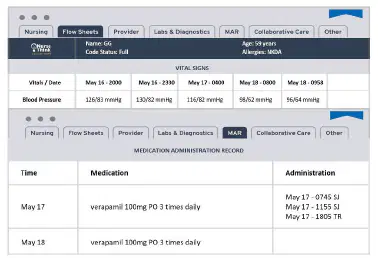
Review the client's electronic health record and determine the nurse's next best action.
Note that the medication is effective.
Skip one dose of the verapamil.
Hold the verapamil and contact the health care provider.
Reassess the blood pressure in one hour.
A patient who has recently started taking pravastatin (Pravachol) for hyperlipidemia reports several symptoms to the nurse. Which information is most important to communicate to the health care provider as a potential adverse effect of the medication?
Mild constipation for the last 3 days
Nausea when taking the drugs before meals
Persistent muscle aches and pains
Generalized weakness at the end of the day
Interventions for patients with atherosclerosis or those at high risk for the disease focus on modifiable risk factors. Which of the following are modifiable risk factors?
age and gender
physical inactivity and smoking
family history and living in high altitudes
ethnic background and environmental pollutants
Ultrasound confirms the presence of a large deep vein thrombosis and the physician orders continuous intravenous (IV) heparin infusion for a patient with edema and pain of the upper leg. Which action is most appropriate for the nurse while the patient is receiving the heparin infusion?
avoid intramuscular (IM) medications to prevent localized bleeding
notify the physician if the aPTT is 50 seconds (normal range 30-40 sec)
have vitamin K available if the patient bleeds from the action of heparin
maintain the extremity in a dependent position
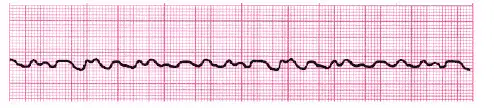
Identify this rhythm
Ventricular tachycardia
Ventricular fibrillation
Atrial fibrillation
Asystole
Identify this rhythm
Sinus tachycardia
Ventricular fibrillation
Atrial fibrillation
Normal sinus rhythm
A patient with newly diagnosed Raynaud's disease is referred to the nurse clinician for teaching. The teaching plan should include which of the following strategies to prevent vasospasm?
Wear gloves when handling ice
Drinking hot coffee
Do not smoke more than 3 cigarettes a day
Avoiding activities involving pressure on the fingertips
The nurse is taking a health history of a new client who reports pain in his left lower leg and foot when walking. This pain is relieved with rest and the nurse observes that the left lower leg is slightly edematous and is hairless. When planning this client's care, the nurse should most likely address what health problem?
Intermittent claudication
Raynaud disease
Deep vein thrombosis
Buerger's disease
A nurse is reviewing the assessment findings of a client with Heart Failure with reduced ejection fraction (HFrEF). Which of the following is indicative of a diagnosis of heart failure?
Serum potassium level of 3.2 mEq/L (reference range 3.5-5.0 mEq/L)
Left ventricular ejection fraction of 35%
B-type natriuretic peptide (BNP) of 60 pg/mL (reference range <100 pg/mL)
Chest x-ray report showing right middle lobe consolidation
The nurse is performing an assessment on a client with a diagnosis of left-sided heart failure. Which assessment component would prompt the nurse regarding the client's left-sided heart function?
Listening to lung sounds
Palpating for hepatomegaly
Assessing for jugular vein distention
Assessing for peripheral and sacral edema
A patient diagnosed with heart failure is treated with an angiotensin-converting enzyme (ACE) inhibitor. The nurse should monitor the patient for what side effect?
Dry cough
Anemia
Increased body temperature
Hyperpigmentation
A nurse caring for a client being worked up with complaints of worsening fatigue, weight loss, poor appetite and shortness of breath. After reviewing the client’s record, the nurse notes the echocardiogram reveals an left ventricular ejection fraction of 35%. Which of the following problems does the nurse expect?
Normal
Borderline heart failure
Systolic heart failure
Diastolic heart failure
The clinic nurse is providing instructions to a client with hypertension who will be taking captopril. Which statement by the client indicates a need for further instruction?
I need to change positions slowly.
I need to avoid taking hot baths or showers.
I need to drink at least 4 quarts (4 liters) of water daily.
I need to sit down and rest if dizziness or light-headedness occurs.
A patient recently had a cardiac catheterization via right-radial approach and now has a compression device in place. The patient reports numbness and pain in the right hand. The cardiac-vascular nurse notes a diminished pulse, with a cool and cyanotic hand. Which of the following is the most appropriate action for the nurse to implement?
Administer ordered pain medication
Instruct the client to perform range of motion exercises to the right hand
Notify the provider to recommend reducing the pressure on the compression device.
Uses the doppler ultrasound to assess for pulse signals.
A nurse is caring for a client admitted with acute coronary syndrome for observation. The patient has been receiving a heparin sodium IV weight based infusion daily for the last three days. The patient’s most current platelet count is 65,000×103/uL ; while the platelet count on admission was 350,000×103/uL (Reference range: 150,000−400,000×103/uL ). The nurse contacts the provider to recommend which of the following?
Report that the medication is subtherapeutic.
Report that the patient is exhibiting signs of adverse reaction.
Request an increase in the medication infusion rate.
Request an order for a platelet transfusion.
A nurse is caring for an observation patient that was admitted with chest pain. The patient is reporting recurring chest pain that is similar to their pain on admission. What is the most appropriate action at this time of the nurse?
Obtain a 12 lead electrocardiogram (ECG) STAT
Administer IV Nitroglycerin STAT
Notify the cardiac catheterization team to prepare for surgery.
Promote relaxation and monitor the response.
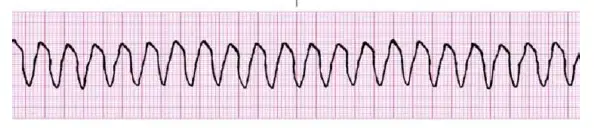
A nurse is responding to a code blue on the unit. When compressions are paused, the nurse notes the following rhythm on the monitor. What does the nurse interpret as the rhythm?
Ventricular Fibrillation
Ventricular Tachycardia
Asystole
Sinus Tachycardia
A client with coronary artery disease is prescribed clopidogrel (Plavix). Which client statement indicates a need for further teaching?
I will take this medication every day even if I feel well.
I should stop taking this medication 5 days before my scheduled surgery.
I will notify my provider if I notice unusual bruising.
I can take aspirin for headaches unless my provider tells me otherwise.
A client is prescribed sublingual nitroglycerin for angina. Which teaching should the nurse include?
You may take up to 3 tablets, 5 minutes apart, if chest pain continues.
Store the tablets in a pill organizer for easy access.
Swallow the tablets whole with water.
Stop taking the medication if you develop a headache.
A client is receiving a weight-based heparin infusion for a DVT. The current aPTT is 95 seconds (therapeutic range: 60–80 seconds). According to protocol, what is the nurse’s priority action?
Stop the infusion immediately and notify the provider
Increase the infusion rate by 2 units/kg/hr
Decrease the infusion rate as per protocol and recheck aPTT in 6 hours
Administer vitamin K to reverse the effects of heparin
A client with hypertension is prescribed captopril. Which client statements indicate correct understanding of this medication? Select all that apply.
I need to change positions slowly to avoid dizziness.
I should only use potassium chloride as a salt substitute to decrease my salt intake.
I need to increase my fluid intake to at least 4 liters a day.
If I feel light-headed, I should sit down right away.
A persistent dry cough is a possible side effect I may experience.
The nurse is teaching a client with a new prescription for aspirin therapy. Which statements by the client indicate correct understanding? Select all that apply.
I should take aspirin with food to reduce stomach upset.
I should notify my provider if I develop black, tarry stools.
I should consult with my provider before taking herbal supplements while on aspirin.
I should expect aspirin to reduce my blood pressure.
I should avoid alcohol while taking this medication.
Which laboratory test is most important to monitor for a client on warfarin?
Partial thromboplastin time (aPTT)
International normalized ratio (INR)
Platelet count
Activated clotting time (ACT)
A client prescribed spironolactone (Aldactone) for heart failure has a potassium level of 6.0 mEq/L. What is the nurse’s priority action?
Continue the medication and encourage high-potassium foods
Hold the medication and notify the provider immediately
Administer potassium chloride 20 mEq IV push
Document the finding as expected with spironolactone
Which task can the nurse safely delegate to an unlicensed assistive personnel (UAP) when caring for a client with stable heart failure?
Weigh the client and report the result to the nurse
Assess the client’s lung sounds for crackles
Teach the client about a low-sodium diet
Evaluate the client’s response to diuretic therapy
The nurse provides lifestyle teaching to a client with hypertension. Which statement indicates correct understanding?
I will limit my sodium intake to less than 2 grams daily.
I will drink at least 3 liters of fluid daily to control my blood pressure.
I will eat more red meat to increase my protein intake.
I can stop taking my blood pressure medicine once my pressure is normal.
The nurse reviews laboratory results for a client receiving digoxin. Which finding would place the client at greatest risk for digoxin toxicity?
Potassium 4.0 mEq/L (reference range 3.5–5.0)
Sodium 138 mEq/L (reference range 135–145)
Digoxin level 2.6 ng/mL (therapeutic 0.5–2.0)
Magnesium 1.8 mg/dL (reference range 1.5–2.5)

