
 Worksheets
Fall 2025 Unit 4 Test Review
Total questions: 30
Worksheet time: 15mins
The direction of a typical supply curve is ___________
A. Upward
B. Downward
The slope of a typical demand curve is ____________
A. Negative
B. Positive
A restaurant prepared 150 servings of steak for a banquet. On the day of the event, only two-thirds of the expected guests arrived. Will the restaurant have a shortage or surplus of steak?
A. Shortage because the restaurant will need to prepare more steak for the guests who arrived.
B. Surplus because the restaurant made steak for more people than actually attended.
C. Equilibrium because the guests who did not come were vegetarians.
D. Depression because there will not be enough steak for everyone.
A toy store ordered the same number of game consoles in November as it did in previous months. This year, a popular magazine featured the game console as the top holiday gift. What is the store most likely to experience regarding its stock of game consoles?
A. Surplus because the magazine feature will not affect demand for game consoles.
B. Shortage because the magazine feature will increase demand, especially during the holiday season.
C. Recession because game consoles are too costly even if they are popular gifts.
D. Equilibrium because the manufacturer will perfectly match supply to the increased demand.
Which of the following best describes the law of demand?
A. As price increases, demand increases
B. As price decreases, demand increases
C. As price decreases, demand decreases
D. As price increases, demand remains unchanged
If Product X and Product Y are complementary goods, what will happen to the demand for Product X if the price of Product Y increases?
A. The demand for Product X will decrease
B. The demand for Product X will increase
C. The demand for Product X will remain unchanged
D. The price of Product X will decrease
Which of the following pairs are also considered complementary goods?
A. Coffee, tea
B. Printers, ink cartridges
C. Apples, oranges
D. Bread, cereal
Which of the following pairs are considered substitute products?
A. Coffee and Tea
B. Bread and Butter
C. Printer and Ink
D. Toothbrush and Toothpaste
A bakery usually sells their loaves of bread for $2.00 each. After a holiday, they had many loaves left, so they decided to sell them for $0.75 each. Which of the following is most likely true?
A. The bakery had a surplus but will end up with a shortage
B. They had too many loaves
C. The bakery had neither a shortage nor a surplus
D. The bakery had a shortage but will end up with a surplus
If Maria earns $200 a week and the cost of living increases while her income remains unchanged, what is likely to happen to Maria’s purchasing power?
A. Maria will be able to buy more goods.
B. Maria’s purchasing power will decrease.
C. Maria will save more money.
D. Maria’s demand for goods will increase.
If you run a profitable bakery, what is one advantage of incorporating your business?
A. To avoid all business debts
B. To make it easier to attract investors
C. To eliminate all paperwork requirements
D. To have unlimited personal liability
If the price of steel decreases due to a new technology, what is likely to happen to the supply of refrigerators?
A. It will increase
B. There will be no change in supply.
C. It will decrease
D. All refrigerators would be banned.
Advancements in technology have reduced the cost of manufacturing smartphones. What is the likely effect on the smartphone market?
A. The demand curve will shift to the right.
B. The supply curve will shift to the left.
C. The demand curve will shift to the left.
D. The supply curve will shift to the right.
A sudden drought has drastically reduced the supply of corn, causing corn prices to rise sharply. The government intervenes by setting a maximum price below the new market equilibrium. What do economists call this government action and the likely market outcome?
A. Price floor: surplus
B. Price ceiling: shortage
C. Price floor: shortage
D. Price ceiling: surplus
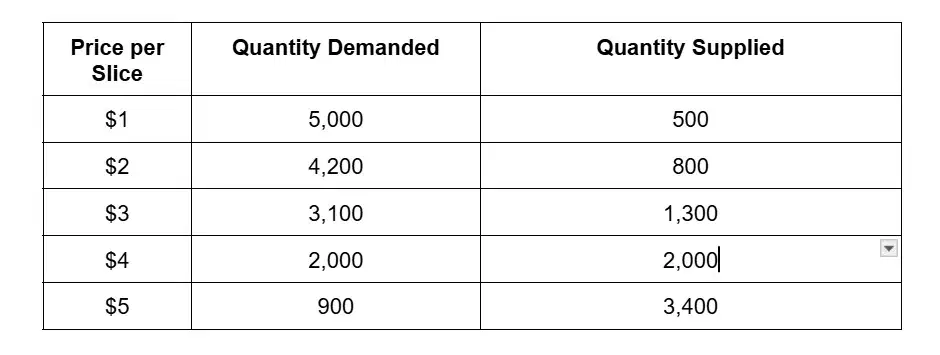
At what price per slice is the quantity of pizza slices demanded equal to the quantity supplied?
$2
$4
$15
$5
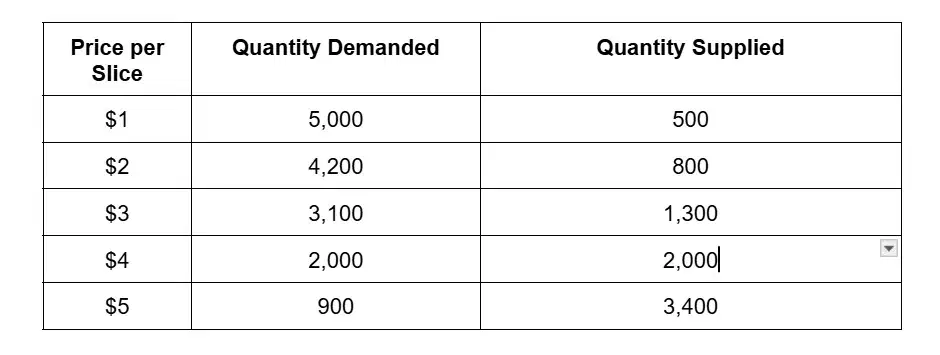
If the managers of the baseball park decide to set the price of pizza at $2 a slice, how many slices will be demanded?
4,200
3,100
2,000
900
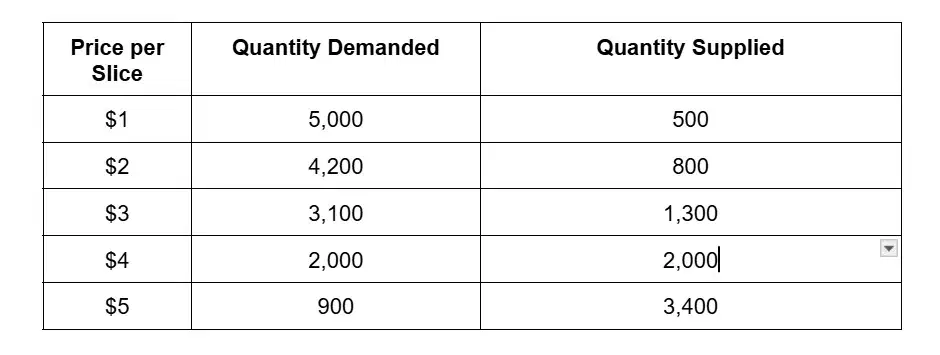
If the managers of the baseball park decided to set the price of pizza at $5 a slice, will there be a shortage or a surplus of pizza?
Surplus
Shortage
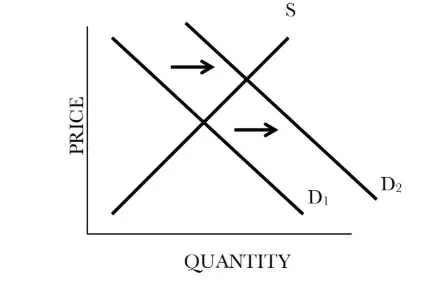
According to the graph, what happens to the equilibrium quantity when demand increases?
A. It stays the same
B. It increases
C. It decreases
D. It goes down and then goes up.
Sarah opened a bakery on her own. If she wants to stop operating the bakery, she can do so without much legal hassle because her business is a _______________________.
A. Corporation
B. Limited partnership
C. Sole proprietorship
D. General partnership
A person becomes a shareholder in a corporation when he/she
A. is hired as an employee by the corporation.
B. purchases shares of the corporation.
C. manages the corporation's daily operations.
D. is appointed as the corporation's accountant.
Which of the following is NOT considered a barrier to entry for a new business?
A. A new airline must purchase expensive airplanes before offering flights.
B. A bakery must buy flour, sugar, and other ingredients to make products.
C. A taxi company must obtain a special license from the city to operate.
D. A pharmaceutical company must complete years of testing before selling a new drug.
Monopolies are often criticized because
A. they reduce competition in the market.
B. they increase the number of small businesses.
C. they lower the quality of products.
D. they encourage innovation.
In a perfectly competitive market, ____________ firms offer ____________ goods.
A. few, different
B. many, identical
C. some, unique
D. no, similar
Which of the following market structures is most likely to result in the most competitive prices for consumers?
A. Monopoly
B. Monopolistic competition
C. Oligopoly
D. Perfect competition
An industry is considered an oligopoly when:
A. a single firm dominates the market.
B. a few large firms control the majority of the market share.
C. many small firms compete equally.
D. the government sets all prices.
Which of the following is NOT typically associated with the negative effects of monopolies?
A. Higher prices
B. Limited choices
C. Increased innovation
D. Reduced efficiency
A government-imposed limit that sets the lowest legal amount a worker can be paid is known as a:
A. price floor.
B. price ceiling.
C. market equilibrium.
D. monopoly.
What is the main goal of setting a maximum legal price for a product?
To ensure producers always make a profit
To prevent prices from falling below equilibrium
To stop prices from becoming unaffordable for consumers
To guarantee equal benefits for buyers and sellers
The government imposes a maximum price on gasoline that is below the market equilibrium price. What is the most likely outcome of this policy?
Gasoline prices will increase above the set maximum.
There will be a shortage of gasoline as demand exceeds supply.
Everyone will be able to buy as much gasoline as they want.
Gasoline will be available in unlimited quantities.
Which scenario best illustrates an oligopolistic market structure?
A neighborhood garage sale with dozens of independent sellers.
The commercial airline industry, where a few large companies control most of the market.
A single gas station in a remote town.
A flea market with many vendors selling unique crafts.

