
 Worksheets
Understanding Vitamins
Total questions: 25
Worksheet time: 13mins
What are vitamins?
Organic compounds your body needs in small amounts to function properly
Inorganic substances that provide energy to the body
Proteins that help in muscle building
Minerals that strengthen bones
Why does your body need vitamins?
To provide energy for daily activities
To help the body grow, develop, and maintain good health
To produce all essential nutrients on its own
To replace carbohydrates in the diet

How does the body obtain most vitamins?
By producing them internally
By consuming food
By exposure to sunlight
By drinking water
Which of the following is a characteristic of water-soluble vitamins?
They dissolve in fat and can be stored in body tissues.
They dissolve in water and are not stored in the body.
They are only found in animal-based foods.
They are stored in the liver indefinitely.
Which of the following vitamins is fat-soluble?
Vitamin C
Vitamin D
Vitamin B12
Thiamine
Why must water-soluble vitamins be consumed regularly?
They are stored in the body for long periods.
They are excreted in urine if consumed in excess.
They are only found in animal products.
They are not essential for daily health.
Which of the following foods is a good source of water-soluble vitamins?
Butter and cheese
Fruits, vegetables, whole grains, and lean proteins
Red meat and poultry
Fried and processed foods
What happens if the intake of water-soluble vitamins is inadequate?
The body stores them for future use.
Deficiency symptoms appear quickly.
The body compensates by producing them.
There are no noticeable effects.
Which vitamins are classified as fat-soluble vitamins?
Vitamins B and C
Vitamins A, D, E, and K
Vitamins B12 and B6
Vitamins C and K
What is required for the proper absorption of fat-soluble vitamins?
Water
Dietary fat
Protein
Carbohydrates
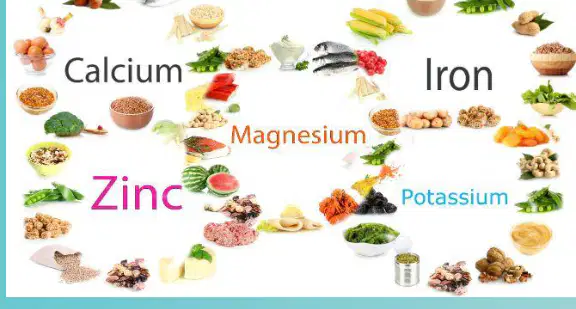
Why must minerals come from food and water?
Because the body cannot produce them
Because they are artificial substances
Because they are only found in processed foods
Because they are made by the body
Which mineral is essential for strong bones and teeth, as well as muscle function?
Iron
Calcium
Potassium
Magnesium
What is the primary role of iron in the body?
Energy production
Oxygen transport in blood
Nerve function
Fluid balance
Which mineral helps with heart function, muscle contractions, and fluid balance?
Sodium
Magnesium
Potassium
Calcium
Sodium is important for which of the following functions?
Protein synthesis
Nerve function and fluid balance
Muscle contractions
Oxygen transport
What functions do trace minerals support in the body?
Immune function, wound healing, and metabolism
Bone growth and muscle contraction
Vision and hearing
Blood clotting and digestion
What percentage of your total body weight is made up of water?
20-30%
50-70%
80-90%
10-15%
Why does every cell, tissue, and organ in your body need water?
To provide energy directly
To function properly
To store fat
To produce vitamins
How long can you survive without water compared to food?
Months without water, weeks without food
Days without water, weeks without food
Weeks without water, days without food
The same amount of time without both
What is one of the ways water helps your body?
It transports nutrients and oxygen to cells.
It produces energy for the body.
It creates new cells in the body.
It replaces damaged tissues.
How does water help remove waste products from the body?
Through digestion and absorption.
Through urine, sweat, and breathing.
Through the production of enzymes.
Through the growth of new tissues.
Which of the following is a function of water in regulating body temperature?
By increasing blood pressure.
By promoting digestion.
By sweating and circulation.
By producing hormones.
What role does water play in protecting joints and organs?
It strengthens bones.
It lubricates joints and acts as a cushion.
It increases muscle mass.
It improves blood flow.
How many cups of fluids do teens need daily, especially during exercise?
4-6 cups
6-8 cups
8-10 cups
10-12 cups
What is the recommended way to stay hydrated throughout the day?
Drink water only when you feel thirsty
Stay consistently hydrated throughout the day
Drink water only in the morning
Avoid drinking water during meals

