
Font size
 Worksheets
Human Body Systems Quiz
Total questions: 81
Worksheet time: 14mins
What is the primary role of the nervous system in the human body?
To regulate water and electrolyte balance
To sense internal and external conditions and coordinate physiological responses
To transport nutrients and oxygen throughout the body
To produce energy for physical activity
Which system is responsible for regulating all biological processes in the body through glands and hormones?
Nervous system
Digestive system
Endocrine system
Respiratory system
What does "maintaining homeostasis" refer to in the context of the human body?
Balancing water and electrolytes
Keeping the body's internal environment stable and consistent
Transporting nutrients and oxygen
Producing energy for physical activity
Which of the following is NOT a focus area under "Hydration and nutrition" in exercise physiology?
Water and electrolyte balance
Fuelling for health and performance
Qualities of training
Energy systems
What is the significance of "fatigue and recovery" in the context of exercise physiology?
It helps in understanding the body's response to training and rest.
It focuses on maintaining homeostasis during exercise.
It regulates the endocrine system's hormonal processes.
It ensures proper hydration and nutrition.
What does the intricate structure of the nervous system enable in the human body?
The body's perception and response mechanisms
The production of red blood cells
The digestion of food
The regulation of body temperature
Which of the following distinguishes the central nervous system from the peripheral nervous system?
The central nervous system includes the brain and spinal cord, while the peripheral nervous system includes nerves branching to extremities.
The central nervous system controls digestion, while the peripheral nervous system controls respiration.
The central nervous system is responsible for voluntary movements, while the peripheral nervous system is responsible for involuntary movements.
The central nervous system is located in the limbs, while the peripheral nervous system is located in the brain.
What is the primary role of the autonomic nervous system?
Involuntary control of bodily functions
Regulation of voluntary movements
Coordination of sensory input
Control of muscle contractions
How does the somatic nervous system contribute to the body's functions?
By regulating voluntary movements
By controlling involuntary bodily functions
By transmitting signals to the brain only
By maintaining the body's temperature
What is the nervous system primarily composed of?
Bones and muscles
Billions of neurons
Blood vessels
Skin and tissues
Which of the following is NOT a task carried out by the nervous system?
Producing speech
Regulating internal organs
Controlling body movements
Digesting food directly
What are the three basic functions of the nervous system?
Sensory function, integrative function, motor function
Cognitive function, emotional function, physical function
Reflex function, memory function, sensory function
Motor function, digestive function, respiratory function
What is the role of sensory function in the nervous system?
Responding to integration decisions
Detecting internal stimuli, such as an increase in blood acidity
Storing sensory information
Regulating internal organs
How do motor neurons function in the nervous system?
They store sensory information for future use
They detect changes in the environment
They carry information from the brain towards the spinal cord
They regulate the acidity of blood
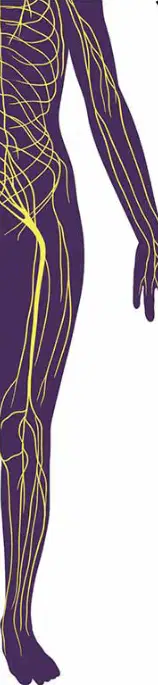
What are the two main divisions of the nervous system?
Central Nervous System and Peripheral Nervous System
Autonomic Nervous System and Somatic Nervous System
Sympathetic Division and Parasympathetic Division
Brain and Spinal Cord
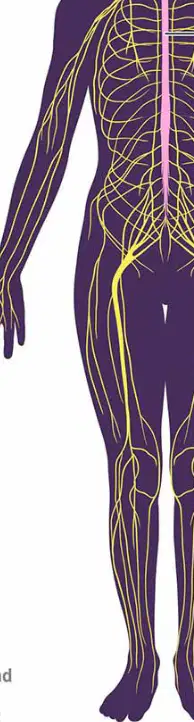
Which part of the nervous system is responsible for controlling voluntary skeletal muscles?
Autonomic Nervous System
Somatic Nervous System
Sympathetic Division
Parasympathetic Division
What is the primary function of the Parasympathetic Division of the Autonomic Nervous System?
To prepare the body for "active and alert" responses
To control voluntary skeletal muscles
To regulate "rest and digest" functions
To transmit signals between the brain and spinal cord
Which division of the nervous system includes the brain and spinal cord?
Peripheral Nervous System
Autonomic Nervous System
Central Nervous System
Somatic Nervous System
What is the role of the Sympathetic Division in the Autonomic Nervous System?
To control voluntary skeletal muscles
To regulate "rest and digest" functions
To prepare the body for "active and alert" responses
To transmit signals between cranial and spinal nerves
What are the two main components of the central nervous system?
Brain and spinal cord
Sensory and motor nerves
Autonomic and somatic nervous systems
Sympathetic and parasympathetic nervous systems
Which type of nerves are responsible for transmitting sensory information to the central nervous system?
Motor (efferent) nerves
Sensory (afferent) nerves
Autonomic nerves
Somatic nerves
What is the primary function of the autonomic nervous system?
Control voluntary muscle movements
Transmit sensory information to the brain
Regulate involuntary bodily functions
Connect the brain and spinal cord
What is the role of the somatic nervous system?
Control involuntary actions like digestion
Transmit sensory signals to the brain
Control voluntary muscle movements
Regulate the "rest and digest" response
What is the primary function of the hypothalamus?
Governs balance and coordinates skilled movements
Maintains homeostasis
Relays information between the brain and spinal cord
Controls voluntary movement
Which part of the brain is responsible for governing balance and coordinating skilled movements?
Cerebrum
Brainstem
Cerebellum
Diencephalon
What does the brainstem primarily do?
Connects the brain and spinal cord and relays sensory and motor messages
Maintains homeostasis
Controls voluntary movement
Governs balance and coordination
What is the cerebrum composed of?
The thalamus and hypothalamus
Two connected hemispheres, including the cerebral cortex
The brainstem and spinal cord
The cerebellum and diencephalon
Which part of the brain contains the thalamus and hypothalamus?
Cerebellum
Brainstem
Diencephalon
Cerebrum
What is the primary response of the sympathetic nervous system during sport and exercise?
Rest and digest
Fight or flight
Sleep and recover
Relaxation and calmness
What is the term used to describe the heart's ability to generate and conduct electrical impulses without nervous input?
Extrinsic excitation
Intrinsic excitation
Pacemaker override
Neural excitation
Which node initiates the impulse for heart contraction and is located in the wall of the right atria?
Atrioventricular (AV) node
Sinoatrial (SA) node
Bundle of His
Purkinje fibers
What is the sequence of structures through which the electrical impulse travels in the heart after being initiated by the SA node?
SA node → AV node → Bundle of His → Purkinje fibers
AV node → SA node → Purkinje fibers → Bundle of His
SA node → Bundle of His → AV node → Purkinje fibers
Purkinje fibers → SA node → AV node → Bundle of His
Which fibers conduct the electrical impulse from the apex of the heart upwards to the ventricles, causing them to contract?
Sinoatrial fibers
Purkinje fibers
Atrioventricular fibers
Bundle of His fibers
What are the three extrinsic factors that can alter heart rate (HR) and the force of contraction?
Parasympathetic nervous system, sympathetic nervous system, endocrine system
Neural system, muscular system, respiratory system
Circulatory system, digestive system, skeletal system
Hormonal system, lymphatic system, sensory system
What is the primary function of proprioceptors in the human body?
Detect changes in blood pressure
Monitor the position and movement of the body
Sense changes in oxygen levels in the blood
Regulate body temperature
Why do chemoreceptors cause faster breathing during a 400m sprint?
To increase oxygen supply to muscles
To regulate body temperature
To maintain balance and posture
To prevent fainting
How do baroreceptors help prevent fainting when an athlete suddenly stands up?
By increasing heart rate to maintain blood pressure
By detecting changes in body temperature
By monitoring oxygen levels in the blood
By controlling muscle movement
Where are proprioceptors primarily located in the body?
In the skin
In muscles, tendons, and joints
In the lungs
In the blood vessels
What stimulus do baroreceptors detect in the body?
Changes in blood pressure
Changes in body temperature
Changes in muscle tension
Changes in oxygen levels

What is the first step in the process of responding to a change in the environment?
Reception
Coordination of response
Effect brought about
Response
Which of the following is an example of a "change in environment" that can trigger a response?
Sense of balance in gymnastics
A boxing glove moving towards the face
Both A and B
None of the above
What role do proprioceptors play in the response process?
They detect changes in light.
They detect changes in sound.
They detect changes in muscle tension and pressure.
They coordinate the response in the brain.
What is the function of the "Coordinator" in the response process?
To detect changes in the environment.
To translate sensory input into a response.
To process information in the brain or spinal cord.
To bring about the effect through muscles or glands.
Which of the following is an example of an "Effect brought about" in the response process?
Secretion of hormones
Transfer of forces onto bones by tendons
Both A and B
None of the above
What is an example of a "Response" in the process described?
A badminton overhead clear technique
Detection of light by the eye
Processing of information in the spinal cord
Muscle tension detected by proprioceptors
What is the position of the athlete's thumb when the ruler is held by the assistant at the start of the test?
Below the zero-centimeter line on the ruler
Level with the zero-centimeter line on the ruler
Above the zero-centimeter line on the ruler
At the midpoint of the ruler
What is the primary instruction given to the athlete during the test?
To hold the ruler tightly
To catch the ruler as soon as possible after it is released
To measure the length of the ruler
To drop the ruler at a specific time
How many times is the test repeated to calculate the average value for assessment?
One time
Two times
Three times
Four times
What is the distance recorded during the test?
The length of the ruler
The distance between the assistant's hand and the athlete's hand
The distance between the bottom of the ruler and the top of the athlete's thumb where the ruler is caught
The distance between the athlete's thumb and index finger
According to the normative data, what is the range for an 'Above Average' performance for 16 to 19-year-olds?
<7.5 cm
7.5 - 15.9 cm
15.9 - 20.4 cm
20.4 - 28 cm
What is considered a 'Poor' performance based on the normative data for 16 to 19-year-olds?
<7.5 cm
7.5 - 15.9 cm
20.4 - 28 cm
>28 cm
What is the primary purpose of proprioceptors in the human body?
To regulate blood pressure
To provide detailed and continuous information about the position of limbs and body parts in space
To control the digestive system
To detect changes in temperature
Where are proprioceptors primarily found in the body?
In the brain and spinal cord
In the skin and hair follicles
In muscles and tendons
In the digestive tract
What happens when there is greater tension detected by proprioceptors in muscles or tendons?
Parasympathetic stimulation decreases heart rate
Sympathetic stimulation of the SA node increases heart rate
The brain reduces oxygen supply to the muscles
The cardiac control center stops functioning
What is the role of muscle spindles as an example of proprioceptors?
They detect changes in muscle length and stretch
They regulate blood flow in the muscles
They control the contraction of the heart
They monitor oxygen levels in the blood
What are Golgi tendon organs (GTOs) responsible for detecting?
Changes in blood pressure
Changes in muscle tension
Changes in body temperature
Changes in heart rate
Where are chemoreceptors that sense changes in blood chemistry located?
In the lungs and liver
In the heart and brain
In the stomach and intestines
In the kidneys and pancreas
What is the role of chemoreceptors positioned in the aorta?
To regulate digestion
To sense changes in blood chemistry
To control muscle movement
To monitor oxygen levels in the lungs
What happens to blood pH when a badminton player lunges for an underarm shot?
Blood pH increases
Blood pH decreases
Blood pH remains constant
Blood pH fluctuates randomly
Why does blood acidity increase during intense physical activity, such as playing badminton?
Due to a decrease in oxygen levels
Due to an increase in lactic acid and CO2
Due to a decrease in blood flow
Due to an increase in glucose levels
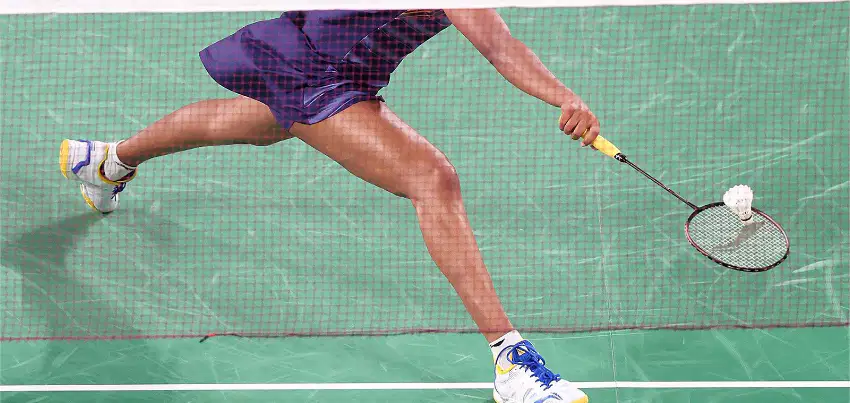
What happens to blood pH when a badminton player lunges for an underarm shot?
It decreases (becomes more acidic)
It increases (becomes more alkaline)
It remains unchanged
It fluctuates randomly
Where are baroreceptors primarily found in the body?
In the digestive system and liver
In the circulatory system and brain
In the respiratory system and lungs
In the skeletal system and muscles
What happens to blood pressure when a boxer warms up with their coach in the ring?
Blood pressure decreases due to reduced heart activity
Blood pressure remains constant
Blood pressure increases due to greater venous return and ejection force
Blood pressure fluctuates randomly
What is the role of baroreceptors in the body?
Detect changes in temperature
Detect changes in pressure
Detect changes in oxygen levels
Detect changes in glucose levels
What is the physiological response triggered by baroreceptors when blood pressure increases?
Decrease in heart rate via the SA node
Sympathetic control and increase in heart rate via the SA node
No change in heart rate
Decrease in venous return to the heart
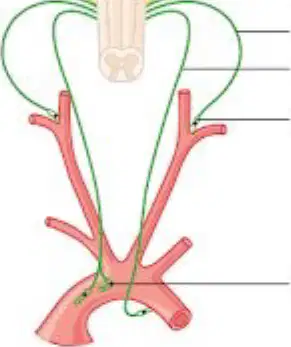
Diagram showing the location of baroreceptors in the circulatory system, including the medulla, glossopharyngeal nerve, vagus nerve, carotid body, and aortic bodies. Which of the following diagrams correctly shows the location of these baroreceptors?
A diagram showing baroreceptors in the carotid sinus and aortic arch, with connections to the medulla via the glossopharyngeal and vagus nerves, and including the carotid and aortic bodies.
A diagram showing baroreceptors only in the left ventricle and pulmonary artery, with no connection to the medulla.
A diagram showing baroreceptors in the femoral artery and jugular vein, with connections to the spinal cord only.
A diagram showing baroreceptors in the renal artery and hepatic portal vein, with no neural connections.
Identify the structure connecting the brain and heart, that stimulates the sinoatrial node sympathetically.
Vagus nerve
Sympathetic nerve
Chemoreceptor
Baroreceptor
Identify the structure that is also known as a decelerator nerve.
Vagus nerve
Sympathetic nerve
Sinoatrial node
Proprioceptor
Identify the role of the sinoatrial node.
It decreases heart rate.
It acts as the heart's natural pacemaker.
It detects changes in blood pressure.
It stimulates the release of hormones.
Explain the function of proprioceptors when heart rate increases due to exercise.
They detect changes in blood pressure.
They detect changes in muscle movement and position.
They stimulate the sinoatrial node directly.
They release hormones to increase heart rate.
The Vagus nerve is:
Parasympathetic
Sympathetic
Both parasympathetic and sympathetic
Neither parasympathetic nor sympathetic
Identify two mechanoreceptors in the body.
Baroreceptors and chemoreceptors
Proprioceptors and baroreceptors
Chemoreceptors and proprioceptors
Hormones and baroreceptors
Describe the role of a chemoreceptor.
Detects changes in blood pressure.
Detects changes in chemical levels such as oxygen and carbon dioxide.
Detects changes in muscle movement.
Detects changes in heart rate.
Describe the role of a baroreceptor.
Detects changes in blood pressure.
Detects changes in oxygen levels.
Detects changes in muscle movement.
Detects changes in hormone levels.
Explain how intrinsic factors and hormonal control can lead to an increase in HR.
By stimulating the sinoatrial node directly.
By increasing the release of adrenaline and noradrenaline.
By detecting changes in blood pressure.
By decreasing the activity of the vagus nerve.
How does coordination between the nervous system and the muscular system result in the ability to produce various types of movement?
By sending electrical signals to the brain only.
By activating specific muscles or groups of muscles.
By relying solely on the skeletal system.
By functioning independently without interaction.
What are the two main divisions of the nervous system?
Central nervous system and peripheral nervous system
Autonomic nervous system and somatic nervous system
Sympathetic nervous system and parasympathetic nervous system
Cardiac nervous system and respiratory nervous system
Which division of the nervous system is further divided into the sympathetic and parasympathetic nervous systems?
Central nervous system
Peripheral nervous system
Autonomic nervous system
Somatic nervous system
What is an example of a function controlled by the autonomic nervous system?
Voluntary muscle movement
Cardiac function
Memory recall
Problem-solving
Which of the following is NOT a function of the autonomic nervous system?
Breathing and ventilation
Temperature control
Digestive enzyme production
Solving mathematical problems
What type of specialized cells respond to stimuli to initiate responses by the nervous system?
Neurons
Proprioceptors, baroreceptors, and chemoreceptors
Muscle fibers
Hormones

