
NEW
Font size
 Worksheets
Refresher Session Knowledge Check
Total questions: 19
Worksheet time: 10mins
Why is it important to understand urinalysis and ABG/VBG recordings?
Because they are needed for understanding why results are abnormal
Because they help in diagnosing and monitoring patient health
Because they are only used in research
Because they are not relevant in clinical practice
What is the purpose of using a NEWS 2 chart?
To record observations accurately
To calculate medication dosages
To measure patient height
To record dietary habits
What should you do if results are not within the normal range?
Ignore the results
Take the correct action
Wait for another test
Record the results without action
What is the normal range for adult blood pressure (BP)?
90/60-120/80
80/40-110/70
100/80-140/90
120/90-160/100
Which of the following is the normal range for adult respiratory rate?
12-20bpm
5-10bpm
20-30bpm
25-35bpm
What is the normal range for body temperature in degrees Celsius?
36-37.5
34-35
38-39.5
32-33.5
What is the normal daily urine output for a healthy adult?
800-2000mls/day
200-500mls/day
2500-3500mls/day
100-400mls/day
What is the normal range for blood glucose levels in mmol/l?
4.0-7.0 mmol/l
1.0-3.0 mmol/l
7.5-10.0 mmol/l
10.0-15.0 mmol/l
Observations are performed to provide an idea of the extent of which of the following?
Disability/disease
Financial status
Social skills
Educational background
Why might observations be important after therapeutic interventions?
To assess the response to the interventions
To determine the patient's favorite food
To schedule recreational activities
To measure room temperature
Which of the following best describes a purpose of performing observations related to physiology?
For trends in physiology
For trends in geography
For trends in literature
For trends in fashion
How can observations help in managing a patient's health over time?
By identifying trends in physiology
By organizing social events
By decorating the hospital room
By choosing television programs

At which of the following times are patient records typically documented?
Arrival to the Emergency Department (ED)
After discharge from the hospital
Only during surgery
Only at the time of birth

Which of the following is a reason for recording patient information before a procedure?
For preoperative assessment
To schedule a hospital tour
To order cafeteria food
To assign parking spaces
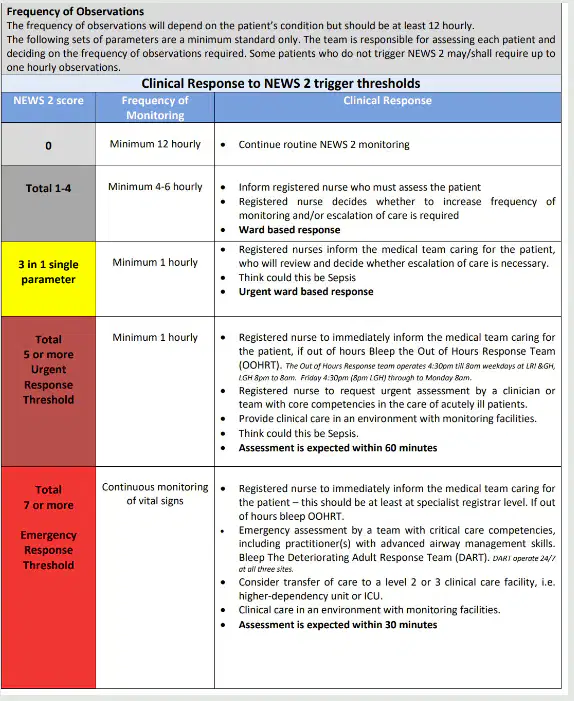
What is the minimum frequency of monitoring required for a patient with a NEWS 2 score of 0?
Minimum 12 hourly
Minimum 4-6 hourly
Minimum 1 hourly
Continuous monitoring of vital signs
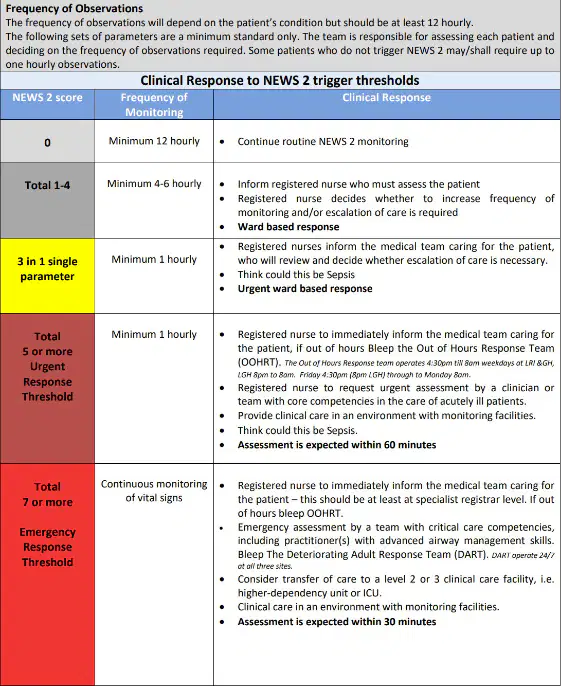
If a patient has a NEWS 2 score of 7 or more, what is the expected time frame for assessment?
Within 30 minutes
Within 60 minutes
Within 2 hours
Within 12 hours
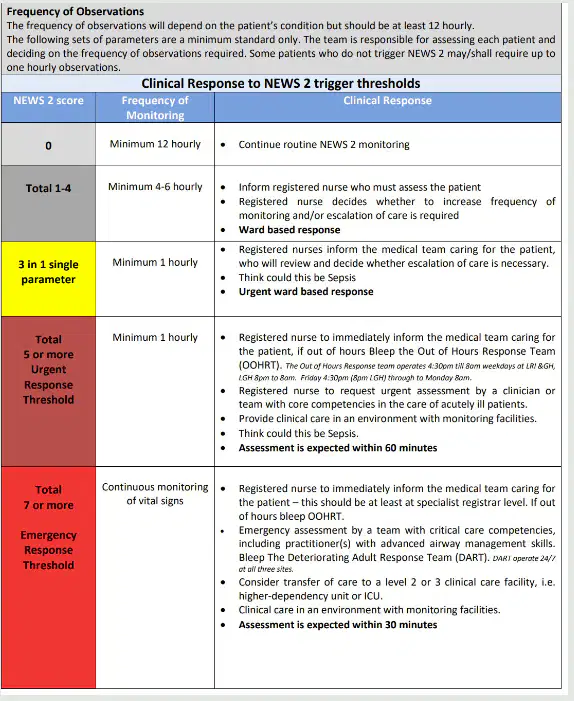
Which of the following is a possible clinical response for a patient with 3 in 1 single parameter on the NEWS 2 chart?
Think could this be Sepsis
No action required
Discharge the patient
Only continue routine monitoring
Why is it important to communicate effectively with your partner during observation practice?
To ensure accurate recording and understanding of observations
To avoid doing any work
To confuse your partner
To make the process longer
What chart should you review to refresh your knowledge about stool types?
Bristol stool chart
Glasgow coma scale
Apgar score chart
BMI chart

