
Font size
 Worksheets
Bio 1406 Unit 3 Review
Total questions: 65
Worksheet time: 1hrs 16mins
What is required for life to sustain itself?
Constant energy input
Cellular respiration
Oxidation reactions
Redox reactions
How are organisms classified based on energy acquisition?
Producers and Consumers
Autotrophs and Heterotrophs
Cellular and Non-cellular
Oxidizers and Reducers
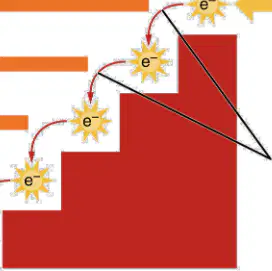
How is energy extracted from the food we eat?
Through photosynthesis
Through oxidation reactions
Through fermentation
Through reduction reactions
What is the process of losing electrons in a chemical reaction called?
Oxidation
Reduction
Dehydrogenation
Electronation
Which of the following is another electron carrier besides NAD+?
ATP
FAD
Glucose
Oxygen
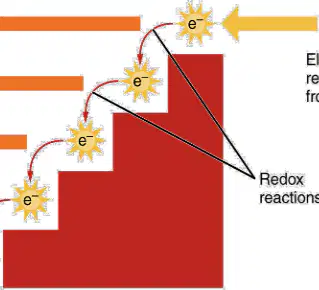
Why must electrons carry energy between molecules in stages during cellular respiration?
To prevent energy loss.
To speed up the reaction.
To produce more glucose.
To increase oxygen levels.
What is the central role of cellular respiration?
To produce glucose
To make ATP
To create oxygen
To synthesize proteins
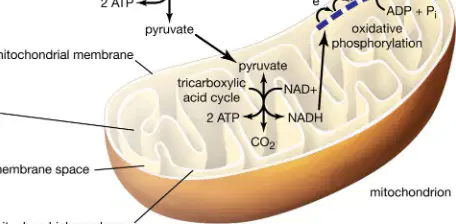
The diagram shows the basic overview of processes of ATP production, including glycolysis, citric acid cycle, and oxidative phosphorylation within the mitochondrion. Which process occurs in the cytoplasm?
Glycolysis
Citric acid cycle
Oxidative phosphorylation
Electron transport chain
Why does glucose oxidation occur in multiple enzyme-controlled steps?
To prevent the formation of ATP
To gradually release energy instead of in one explosive step
To increase the production of glucose
To reduce the production of CO2
What is the main product of glycolysis from one molecule of glucose?
Two molecules of pyruvate
One molecule of ATP
Two molecules of NADH
One molecule of fructose
What happens to glucose during the energy-requiring phase of glycolysis?
It is split into two molecules of pyruvate.
It is modified and becomes unstable, preparing to be split into two molecules of G3P.
It is converted directly into ATP.
It is stored as glycogen.
What is the role of NAD+ in glycolysis?
It acts as an energy source.
It is converted into NADH, which carries electrons.
It splits glucose into two molecules of G3P.
It directly generates ATP.
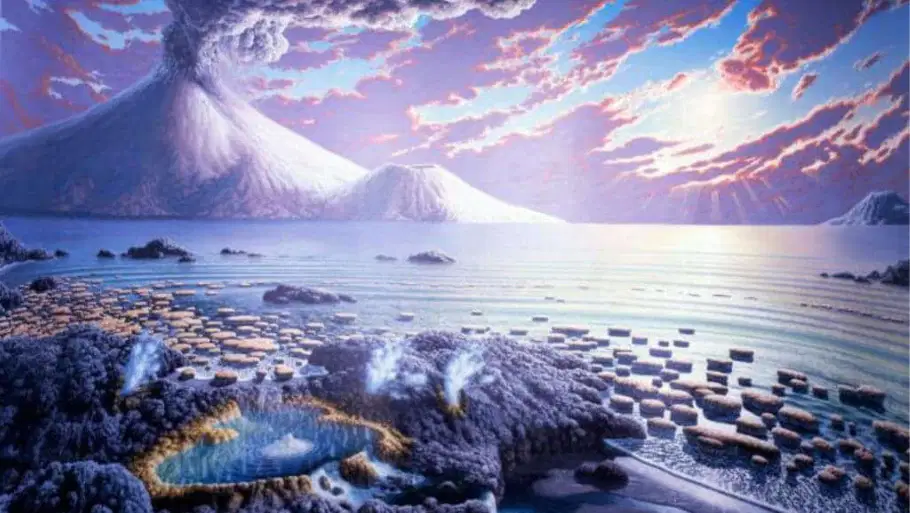
What is the primary energy-generating process that was used by heterotrophic organisms in the first billion years of life on Earth?
Glycolysis
Photosynthesis
Cellular respiration
Fermentation
What is the initial molecule that undergoes glycolysis in the process shown in the diagram?
Glucose
Pyruvate
Triose phosphate
NAD
What are the products of glycolysis?
Pyruvate, ATP, and NADH
Acetyl-CoA, CO2, and FADH2
Glucose, NAD+, and H2O
ATP, CO2, and FADH2
What happens if oxygen is not available for cellular respiration?
The Krebs cycle continues as normal
Fermentation occurs to regenerate NAD+
ATP production increases significantly
Pyruvate is converted into glucose
What is the final electron acceptor in the electron transport chain?
Carbon dioxide
Water
Oxygen
ATP
What is the chemical equation for photosynthesis?
6O2 + C6H12O6 --> 6CO2 + 6H2O
6CO2 + C6H12O6 --> 6O2 + 6H2O
6CO2 + 6H2O --> 6O2 + C6H12O6
6O2 + 6H2O --> 6CO2 + C6H12O6
What is reduced in photosynthesis?
Glucose is reduced into carbon dioxide
Carbon dioxide is reduced into glucose
Water is reduced into oxygen
Oxygen is reduced into water
What is oxidized in photosynthesis?
Glucose is oxidized into carbon dioxide
Carbon dioxide is oxidized into glucose
Water is oxidized into oxygen
Oxygen is oxidized into water
Which colors does chlorophyll reflect?
Red
Orange
Green
Blue
How does the chloroplast transform light energy into chemical energy? Select all that apply!
e- are donated to an e- acceptor
Excited e- produce light or heat
Resonance energy transfers within a photosystem
Light energy is stored in glucose molecules
Excited e- transfer energy to a central chlorophyll molecule
Which colors do carotenoids reflect? Select all that apply!
Red
Orange
Green
Blue
What are the products of the light reactions? Select all that apply!
Water
Oxygen
NADPH
Glucose
ATP
Light reactions occur in the _____ and the Calvin Cycle occurs in the _____.
Mito matrix ; inner mito membrane
Granum ; thylakoid membrane
Lumen ; stroma
Thylakoid membrane ; stroma
_____ replenishes the electrons lost by Photosystem II
Oxygen
e- from Photosystem I
Water
Glucose
Carbon dioxide
What is the final electron acceptor in the light reactions?
NAD+
NADP+
NADPH
Oxygen
Water
What connects Photosystem II and Photosystem I?
An enzyme that reduces NADP+
The Calvin Cycle
ATP synthase
An electron transport chain
What connects Photosystem II and Photosystem I?
An enzyme that reduces NADP+
The Calvin Cycle
ATP synthase
An electron transport chain
In which stage of the Calvin Cycle is the enxyme RUBISCO used?
Carbon fixation
Oxidation phase
Reduction phase
Regeneration phase
How many times must the Calvin Cycle proceed for one glucose molecule to be produced?
One
Two
Three
Six
Twelve
Which phases of the Calvin Cycle require ATP? Select all that apply!
Carbon fixation
Oxidation phase
Reduction phase
Regeneration phase
Glycolysis
Where do the light reactions occur?
Thylakoid space
Lumen
Thylakoid membrane
Grana
The light reactions of photosynthesis are akin to what process of cellular respiration?
Glycolysis
Pyruvate Oxidation
Citric Acid Cycle
Electron Transport Chain
What is the correct order for the Calvin cycle?
carbon fixation, RUBP regeneration, carbohydrate production
RUBP regeneration carbohydrate production, carbon fixation,
carbohydrate production, carbon fixation, RUBP regeneration,
carbon fixation, carbohydrate production, RUBP regeneration,
What is the primary product from the light independent reactions that are utilized as an energy source in the light dependent reactions?
ADP
NADPH
O2
CO2
True or false: photosynthesis is just cellular respiration in reverse
True
False
Where in plants does the Calvin cycle take place
Stroma
Stomata
Thylakoid space
Thylakoid membrane
When a signal molecule arrives at the appropriate G protein-coupled receptor, the receptor changes its conformation, a GTP binds to the alpha subunit, and the G protein alpha and beta/gamma subunits _____________ .
come together to form an alpha/beta/gamma complex
separate and are both active
are inactivated and then separate
bind to calcium Ca++ and open Calcium ion channels
Where does the ligand bind to initiate signal transduction?
glycolipids
nucleus
phosphorylation cascade
receptor
Which of the following is the order of steps for a signal transduction pathway?
Transduction -> Response
Reception -> Initiation -> Transduction -> Response
Reception -> Transduction -> Response
Transduction -> Reception -> Response
Insulin released from a pancreatic islet cell can travel through the blood stream to act on muscle and liver cells. This is an example of ______________signaling.
neuronal
endocrine
paracrine
autocrine
contact dependent
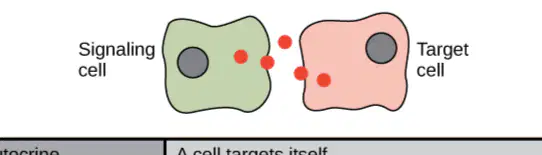
Paracrine signaling is
Local Signaling
Long distance signaling through the bloodstream
Signals sent to cells through gap junctions
a signal that cells send to themselves
Organize these options into the right categories
primary pigment
directly converts light energy to chemical energy
secondary pigment
found only in higher plants
found in plants and cyanobacteria
increases efficiency of photosynthesis
Organize these options into the right categories
responsible for the fall leaf colors
protective anti-oxidant functions
reflects green wavelengths of light
reflects yellow, orange, and red wavelenghts of light
converts light energy to chemical energy
pigment that breaks down in the autumn when light levels decrease
Organize these options into the right categories
performed in all organisms
does not require oxygen
2 ATP, 2 NADH, & 2 Pyruvates formed
occurs in cytoplasm
NAD+ is the electron acceptor
occurs in mitochondria
Produces NADH, CO2, and acetyl CoA
Pyruvate donates electron to NAD+
in mitochondrial matrix
CO2, NADH, FADH2, ATP produced
majority of ATP produced
involves electron transport chain
proton gradient created
ATP Synthase
Why is cellular respiration inhibited by high levels of ATP, NADH, and Citrate?
to not waste energy by overproducing ATP when its not needed
to make sure there is enough glucose for photosynthesis to occur
high amounts of these substrates can cause oxygen to be overproduced
to ensure the cell does not use too much energy for processes
Organize these options into the right categories
occurs first
occurs second
splits water
contains an electron transport chain
absorbs longer wavelengths of light
NADPH produced
Match the following
also known as the Calvin Cycle
Occurs in the stroma
inputs: CO2, ATP, & NADPH
products: glucose
carbon fixation, reduction, and regeneration of 5 carbon molecules
Occurs in thykaloid membrane
light energy captured by chlorophyll
water split into hydrogen, oxygen, and electrons
A metabolic process in plants that competes with photosynthesis, where the enzyme RuBisCO mistakenly binds to oxygen instead of carbon dioxide leading to a release of and a loss of energy. Occurs during times of drought or low carbon dioxide levels.
Ethanol Fermentation
Phosphorylation
Photosystem 3
Photorespiration
Match the following
The most common pathway, where CO2 is directly fixed by the enzyme RuBisCO into a 3-carbon molecule (3-PGA) in the Calvin cycle. Temperate climates with abundant water.
C3 Plants
Separation of carbon fixation (mesophyll cells) and the Calvin cycle allows for efficient photosynthesis with less water loss in dry, hot climates.
C4 Plants
During the day, stomata close to conserve water, but the stored acids are broken down to release CO2 for the Calvin cycle desert climates
CAM Plants
Place each into the correct category
broken down into amino acids
products are pyruvate, Acetyl CoA
broken down into fatty acids and glycerol
produces more energy than carbohydrates
Match the following
most abundant type of signaling molecule in animals
peptides
ligands are hydrophobic and can pass through membrane
intracellular receptors
Embedded in cell membrane and include G protein couple receptors
plasma membrane receptors
Can function as neurotransmitters, form peptide hormones
amino acids
Match the following
hormones travel through blood stream to reach receptor
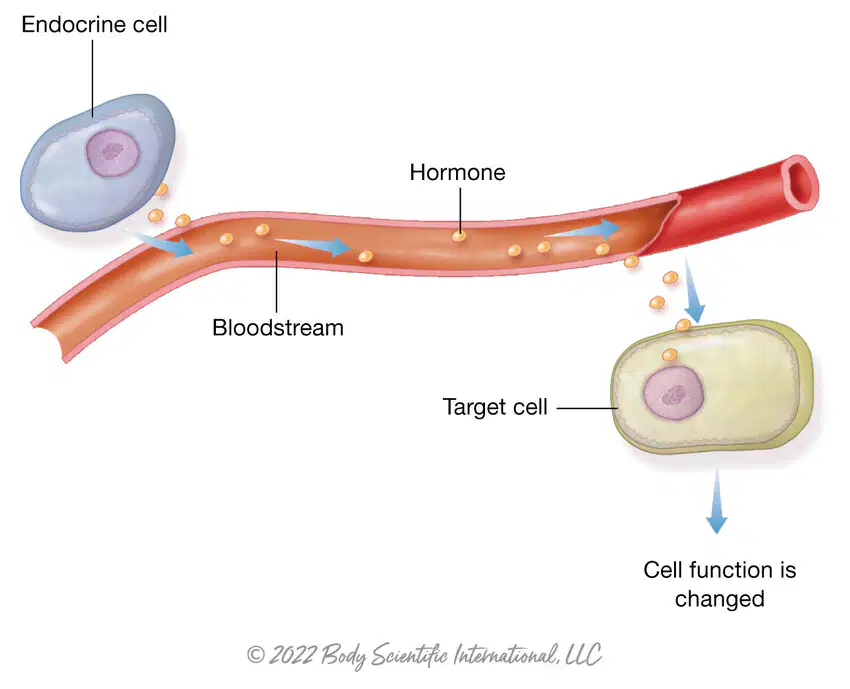
only found in animal nervous system
long lasting
gap junctions & plasmodesmata
allows for heart muscles to beat in synchrony
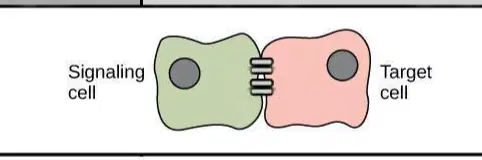
signal nearby cells
blood clotting or vasodilation
neuron to neuron
neurotransmitters
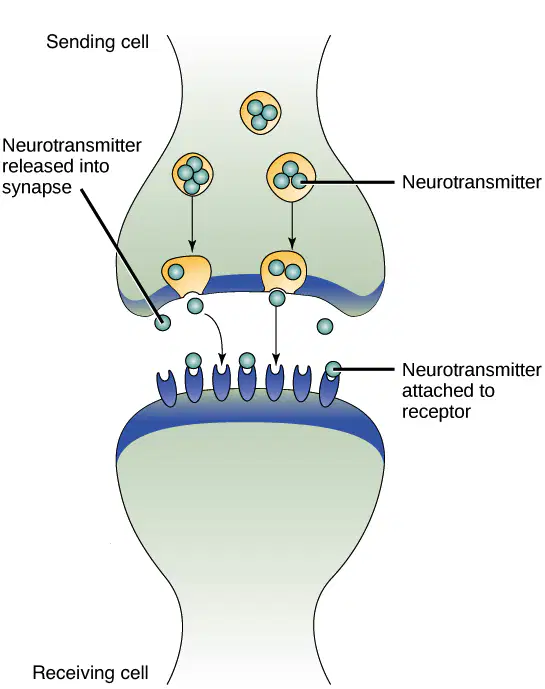
Which of theses statements is true?
Protein kinase removes phosphates
Phosphorylation acts as switch activating or deactivating proteins
Protein phosphorylation is not reversible
G protein coupled receptors store energy
Match the following
controls the flow of ions in and out of the cell
channel-linked receptors
transmembrane proteins that act as both signal receivers and enzymes
enzymatic receptors
Use G proteins as intermediates (in between the receptor & the enzyme)
G protein coupled receptors
Bind to DNA, switching genes on/off
intracellular steroid receptors
transmit signals from outside the cell to the inside
RTKs
Reorder the following steps in the activation of RTK
signaling molecules bind to the extracellular domain of the RTK
Dimerization occurs
Autophosphorylation occurs
signal is transmitted and cell responds
Due to its involvement in cell growth, division, and gene expression, when mutated it is often implicated in cancer development
G proteins
RTK
Acetyl CoA
MAP kinase

