
 Worksheets
WH.10 Western Europe in the Middle Ages Quiz
Total questions: 85
Worksheet time: 44mins
The Late Middle Ages is also known as which historical period?
Enlightenment
Renaissance
Industrial Revolution
Dark Ages
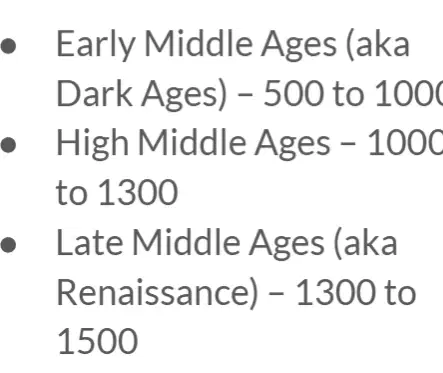
Arrange the three periods of the Middle Ages in chronological order from earliest to latest.
Early Middle Ages, High Middle Ages, Late Middle Ages
High Middle Ages, Early Middle Ages, Late Middle Ages
Late Middle Ages, Early Middle Ages, High Middle Ages
High Middle Ages, Late Middle Ages, Early Middle Ages
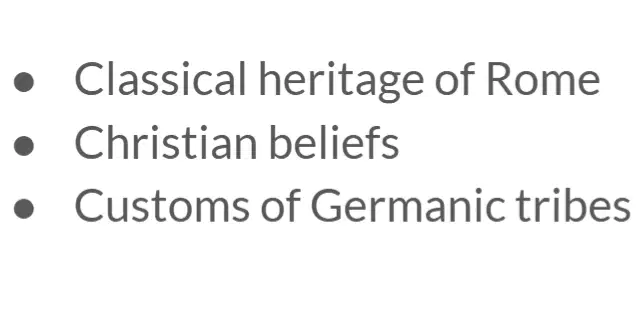
Which of the following was a foundation of early medieval society?
Classical heritage of Rome
Industrial Revolution
Renaissance art
Modern democracy
Which belief system contributed to the foundations of early medieval society?
Christian beliefs
Hindu beliefs
Buddhist beliefs
Islamic beliefs
The customs of which group were part of the foundations of early medieval society?
Germanic tribes
Greek philosophers
Egyptian pharaohs
Chinese dynasties
Explain how the combination of the classical heritage of Rome, Christian beliefs, and the customs of Germanic tribes shaped early medieval society.
They provided a blend of legal, religious, and cultural traditions that influenced laws, governance, and daily life.
They led to the decline of medieval society.
They caused the rise of modern technology.
They resulted in the spread of Renaissance art.

What role did the Church take on after the fall of the Roman Empire?
The Church acted as the government by creating laws and settling disputes.
The Church focused only on religious ceremonies.
The Church became a military force.
The Church stopped helping people altogether.
Why did the Church step in to help people after the Roman Empire collapsed?
Because the Roman Empire's government and military were absent.
Because the Church wanted to expand its territory.
Because the people asked for more religious holidays.
Because the Church was forced by foreign invaders.
How might the Church’s role in creating laws and settling disputes have affected society during the absence of the Roman Empire?
It provided stability and order in society.
It led to chaos and lawlessness.
It caused people to ignore all rules.
It made the Church less important to daily life.
Which kingdoms emerged as powerful forces after the collapse of the Western Roman Empire?
Germanic and Scandinavian kingdoms
Byzantine and Ottoman kingdoms
Egyptian and Persian kingdoms
Greek and Roman kingdoms
Explain how the collapse of the Western Roman Empire contributed to the rise of new powerful kingdoms in Europe.
It created a power vacuum that allowed Germanic and Scandinavian kingdoms to rise.
It led to the immediate formation of a unified European empire.
It resulted in the expansion of the Roman Empire into Asia.
It caused the decline of all European kingdoms.

Which group is associated with Scandinavia?
Vikings
Franks
Angles
Saxons
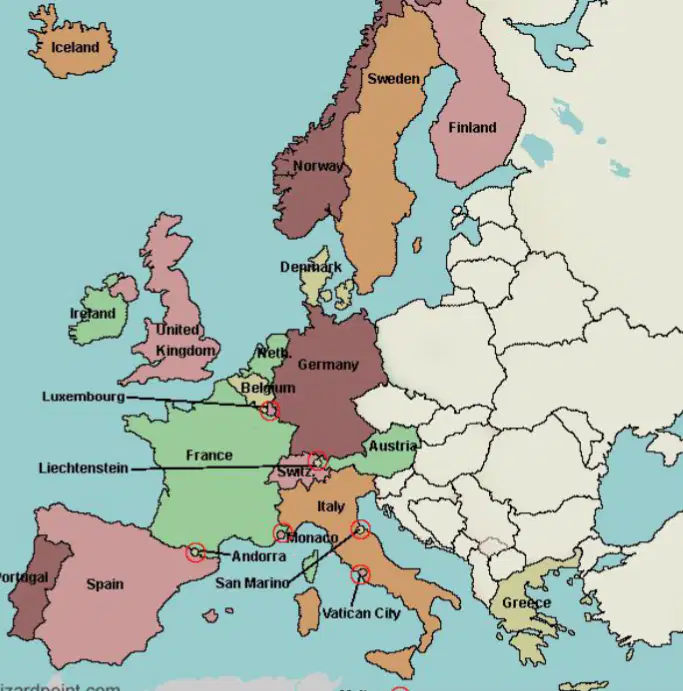
The Angles and Saxons are historically linked to which present-day country?
England
France
Germany
Norway
Which group is associated with present-day France and Germany?
Franks
Vikings
Angles
Saxons
Explain how the geographic locations of the Vikings, Angles and Saxons, and Franks might have influenced their interactions with other groups in Europe.
The Vikings, located in Scandinavia, had access to the sea, which allowed them to travel and raid distant lands; the Angles and Saxons in England were isolated by water, which influenced their culture; the Franks in France and Germany were centrally located, allowing for more land-based interactions.
The Vikings, located in France, traded mostly with the Angles and Saxons; the Angles and Saxons in Scandinavia were isolated; the Franks in England were isolated by water.
The Angles and Saxons in Scandinavia traded with the Franks in England; the Vikings in Germany were isolated by mountains.
The Franks in Scandinavia were isolated by water; the Angles and Saxons in France traded with the Vikings in England.
How did Frankish kings expand their territory?
By using military power
By trading goods
By forming alliances with neighboring tribes
By peaceful negotiations

Why might military power have been important for Frankish kings in expanding their territory? (DoK Level 2)
It allowed them to conquer new lands and control more resources
It helped them improve their farming techniques
It made their people happier
It allowed them to avoid conflicts with other kingdoms
Imagine you are a Frankish king. What strategic advantages might you gain by using military power to expand your territory? (DoK Level 3)
Access to new resources and increased influence
Loss of control over your own land
Decreased security for your people
Reduced ability to trade with others
What was one result of the alliance between Frankish kings and the Church in Western Europe?
It decreased papal authority and influence.
It increased papal authority and influence.
It led to the decline of the Frankish kingdom.
It caused the Church to lose power in Eastern Europe.
Why did the alliance between Frankish kings and the Church matter for the development of Western Europe?
It weakened the role of religion in society.
It led to the separation of church and state.
It strengthened the Church’s authority and influence.
It caused the Frankish kings to lose power.
Explain how the relationship between Frankish kings and the Church could have affected political and religious power in Western Europe.
It made the Church less important in politics.
It allowed the Church to gain more authority and influence.
It resulted in the Church being controlled by the Frankish kings.
It led to the end of papal authority in Europe.
Which group emerged as a force in Western Europe during the Age of Charlemagne?
Franks
Saxons
Vikings
Normans
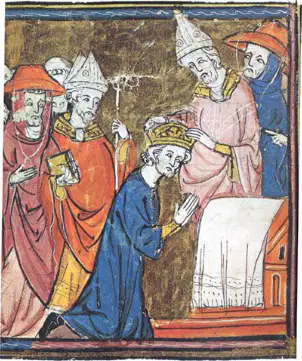
Who crowned Charlemagne emperor?
The Pope
The King of England
The Bishop of Milan
The Emperor of Byzantium
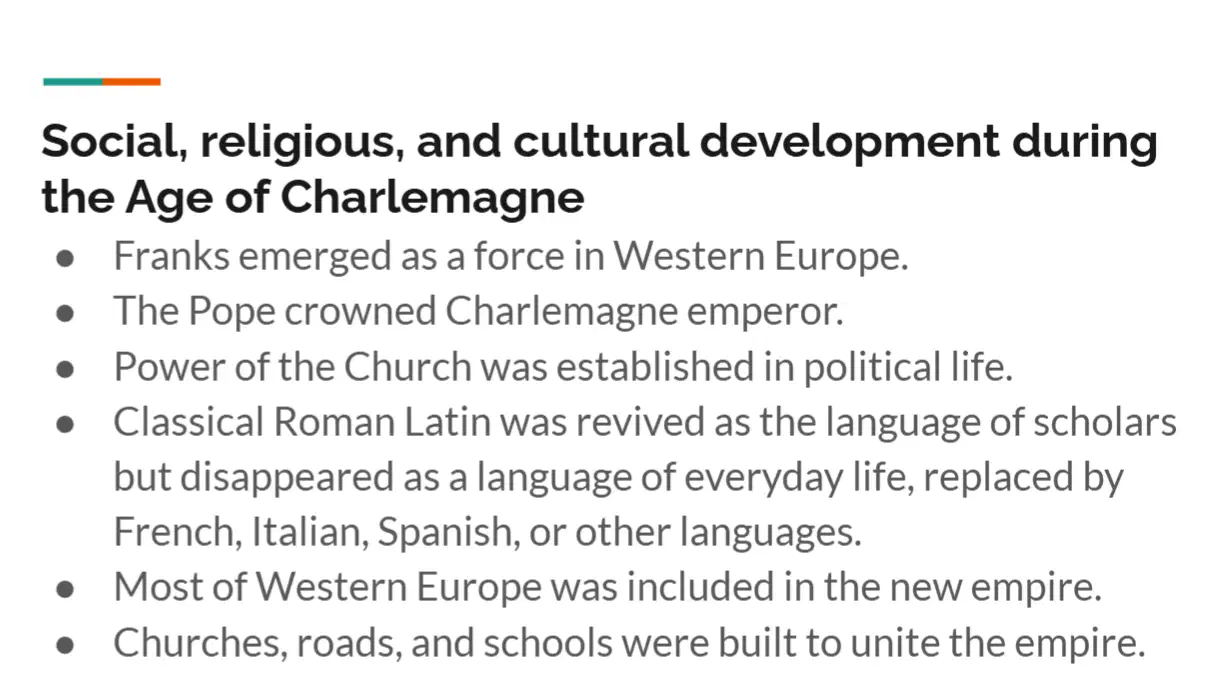
What was established in political life during the Age of Charlemagne?
Power of the Church
Power of the Nobility
Power of the Merchants
Power of the Peasants
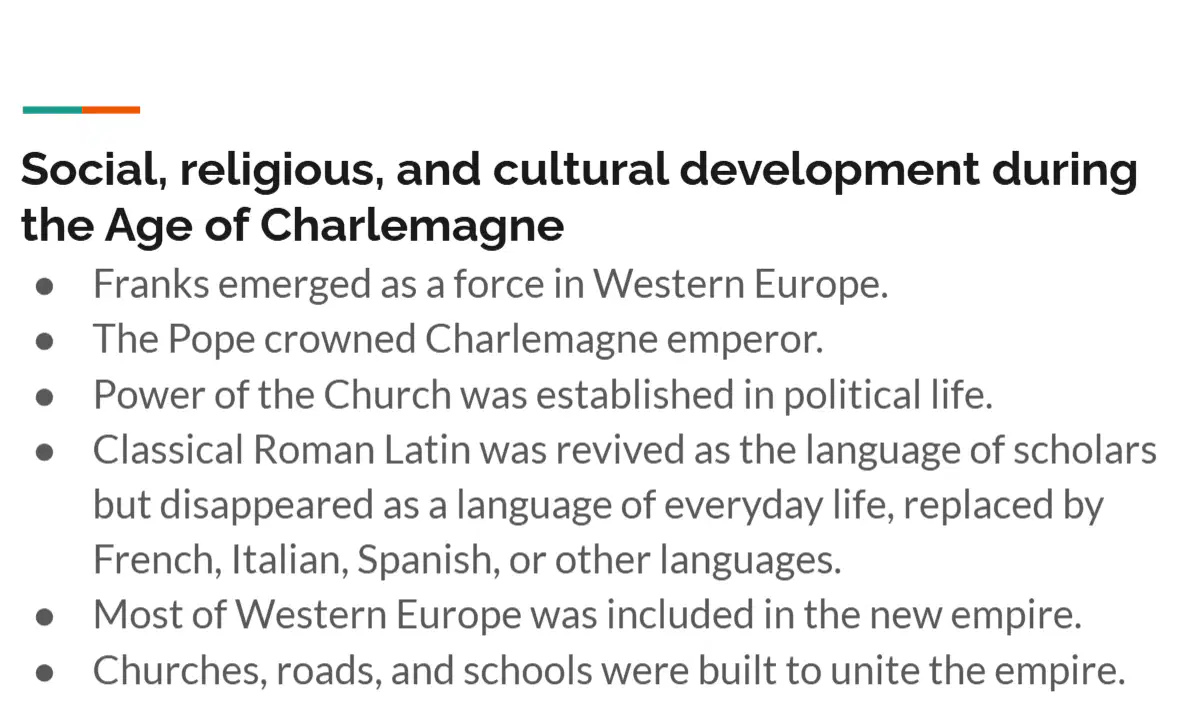
Which language was revived as the language of scholars during Charlemagne's reign, but later disappeared as a language of everyday life?
Classical Roman Latin
French
Greek
German
Most of which region was included in Charlemagne's new empire?
Western Europe
Eastern Europe
Northern Africa
Asia Minor
How did Charlemagne help unite his empire?
By building churches, roads, and schools
By conquering Asia Minor
By abolishing the Church
By banning education
Explain how the revival of Classical Roman Latin as the language of scholars influenced education during the Age of Charlemagne.
It promoted scholarly learning and preserved ancient texts.
It led to the decline of education.
It caused the spread of Greek language.
It made everyday communication easier.
What was the significance of the Pope crowning Charlemagne emperor in terms of the relationship between the Church and political power?
It demonstrated the Church's influence over political authority.
It separated the Church from politics.
It weakened the Church's role in society.
It ended the tradition of crowning emperors.
Analyze how the construction of churches, roads, and schools contributed to the unity of Charlemagne's empire.
They improved communication, education, and religious cohesion.
They caused division among the people.
They led to the decline of trade.
They isolated different regions of the empire.
Which groups invaded Europe and disrupted its social, economic, and political order?
Angles, Saxons, and Magyars
Romans, Greeks, and Egyptians
Vikings, Normans, and Franks
Huns, Mongols, and Persians
What was the impact of the invasions by Angles, Saxons, and Magyars on Europe?
They disrupted the social, economic, and political order.
They improved trade and stability.
They led to the spread of democracy.
They unified Europe under one ruler.
Explain how invasions by groups such as the Angles, Saxons, and Magyars could affect the social, economic, and political order of a region.
Invasions can cause instability, disrupt trade, and weaken government structures.
Invasions always lead to technological advancement.
Invasions have no effect on society or politics.
Invasions only affect the environment, not people.
Where did the Magyars migrate in the tenth century?
Central Europe
England
Asia
North Africa
Who led the tribal units during the period described?
Chieftains
Kings
Priests
Merchants
What was one major effect of invasions on towns during this period?
Towns declined
Towns prospered
Towns became capitals
Towns became more diverse
Which groups gradually converted to Christianity according to the text?
Angles, Saxons, and Magyars
Romans, Greeks, and Egyptians
Franks, Vandals, and Visigoths
Normans, Celts, and Slavs
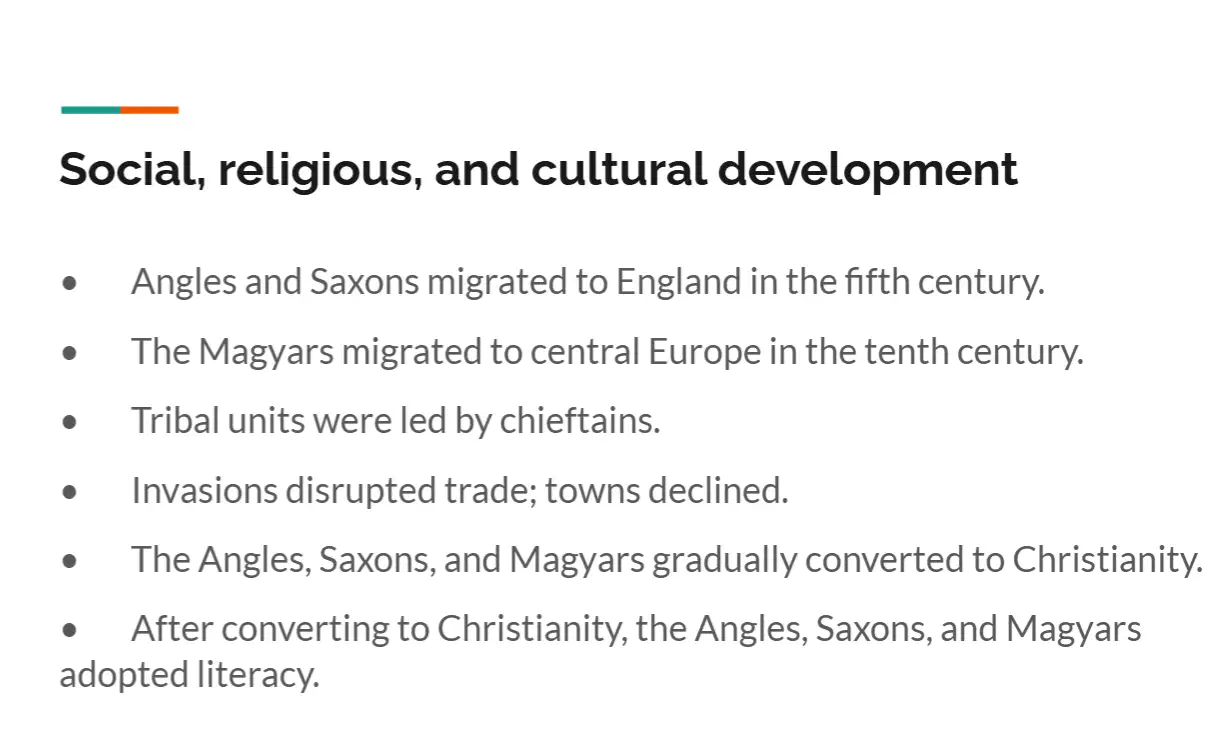
After converting to Christianity, what important cultural change did the Angles, Saxons, and Magyars adopt?
Literacy
Democracy
Feudalism
Trade routes
Explain how the conversion to Christianity influenced the social and cultural development of the Angles, Saxons, and Magyars.
It led to the adoption of literacy and new cultural practices.
It caused them to abandon their tribal leaders.
It resulted in the decline of their towns.
It made them migrate to new regions.
What effect did invasions have on Roman protection over the Empire?
Invasions strengthened Roman protection over the Empire.
Invasions had no effect on Roman protection over the Empire.
Invasions shattered Roman protection over the Empire.
Invasions improved Roman trade within the Empire.
What was the effect of the later invasions in Western Europe during the 9th and 10th centuries?
They led to the expansion of the Roman Empire.
They disrupted the social, economic, and political order of Europe.
They made Europe more peaceful.
They resulted in the unification of Europe.
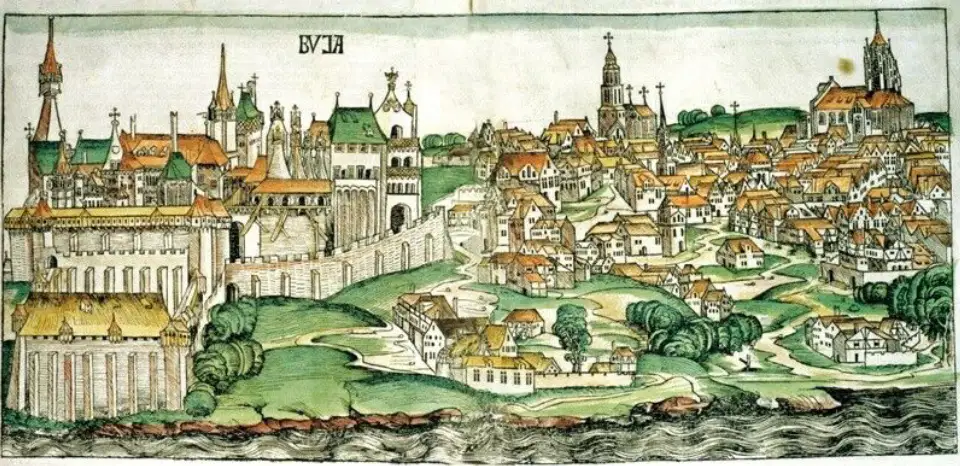
Which feature in the diagram is most likely to have helped protect the city during invasions in Western Europe?
Open fields
Fortified walls
Small houses
Rivers

Which of the following was disrupted in Europe due to Viking invasions?
Social, economic, and political order
Only the economic order
Only the religious order
Only the military order
Who led the tribal units among the Vikings?
Kings
Chieftains
Priests
Merchants
What was one major reason that led the Vikings to explore and invade other lands?
Lack of gold
Lack of arable land
Overpopulation
Desire for spices
How did Viking invasions affect trade and towns?
Trade flourished; towns grew
Trade was disrupted; towns declined
Trade remained unchanged; towns prospered
Trade improved; towns expanded
Which religion did the Vikings gradually convert to?
Islam
Judaism
Christianity
Buddhism
Viking attacks contributed to the collapse of which empire founded by Charlemagne?
Roman Empire
Byzantine Empire
Frankish Empire
Ottoman Empire
Explain how the lack of arable land influenced Viking society and their actions.
It led to the development of advanced farming techniques.
It caused the Vikings to remain isolated in Scandinavia.
It encouraged exploration and invasion of other territories.
It resulted in the Vikings abandoning agriculture altogether.
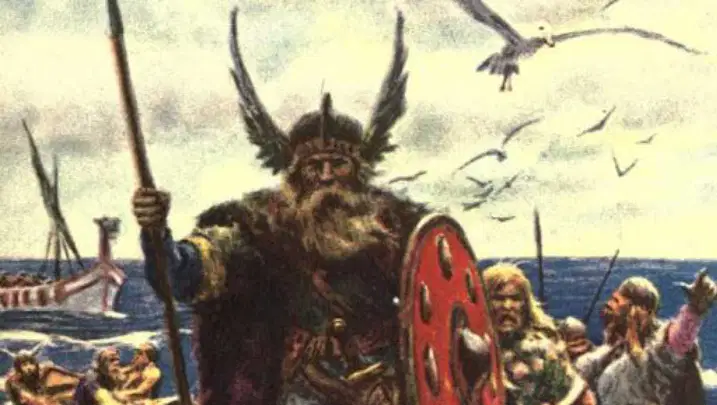
From which region did the Vikings migrate before settling in Russia?
Western Europe
Scandinavia
North Africa
Central Asia
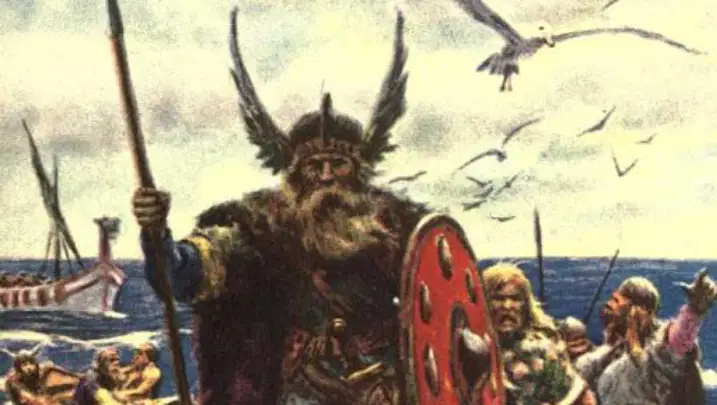
What type of religion did the Vikings practice before converting to Christianity?
Monotheistic
Polytheistic
Animistic
Atheistic
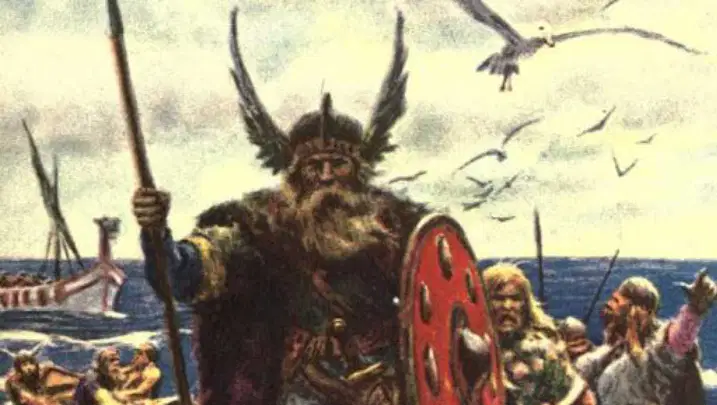
Explain how the Vikings’ religious beliefs changed after settling in Russia. Use evidence from the text to support your answer.
They remained polytheistic and did not change their beliefs.
They converted to Christianity after missionaries from the Byzantine Empire introduced them to the religion.
They adopted Islam after trading with the Middle East.
They developed a new monotheistic religion unique to Russia.
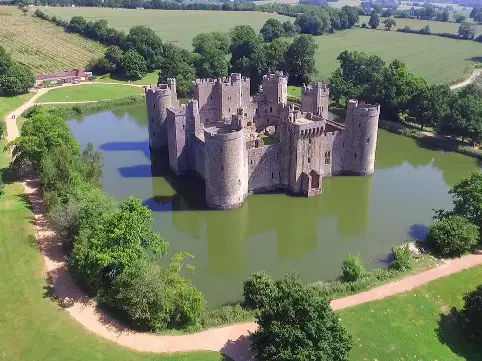
Why did most manors build castles during the time of later invasions?
To display wealth and power.
For protection from invasion.
To host royal events.
For agricultural purposes.
How did invasions reinforce the feudal system?
By encouraging democratic reforms.
By increasing trade between towns.
By making protection and loyalty to lords more necessary.
By abolishing the need for castles.
Explain how invasions affected the economic and social structure of towns during this period. Use evidence from the text to support your answer.
Invasions led to increased trade and urban growth.
Invasions caused towns to decline, disrupted trade, and reinforced the feudal system.
Invasions had no impact on towns or trade.
Invasions resulted in the abolition of the feudal system.
What was one consequence of the decline of Roman influence in Western Europe?
People had little protection against invasion
People gained more protection from the Roman army
Trade with Eastern Europe increased
The Roman Empire expanded further west
Explain how the decline of Roman influence led to the rise of feudalism in Western Europe. Use evidence from historical context to support your answer.
The lack of Roman protection made people seek security from local lords, leading to feudal agreements.
The Roman Empire encouraged feudalism as a new system of government.
Feudalism was already established before the decline of Roman influence.
People wanted to avoid invasions by moving to Eastern Europe.
During which period did feudalism gradually emerge in Europe?
Between the fall of the Western Roman Empire and the collapse of the Carolingian Empire
Between the rise of the Byzantine Empire and the fall of the Ottoman Empire
Between the Renaissance and the Industrial Revolution
Between the Age of Enlightenment and the French Revolution
Explain why the period between the fall of the Western Roman Empire and the collapse of the Carolingian Empire was significant for the emergence of feudalism.
It was a time of political instability that led to new social structures like feudalism.
It was a period of scientific advancement that led to feudalism.
It was a time of religious reform that led to feudalism.
It was a period of economic prosperity that led to feudalism.
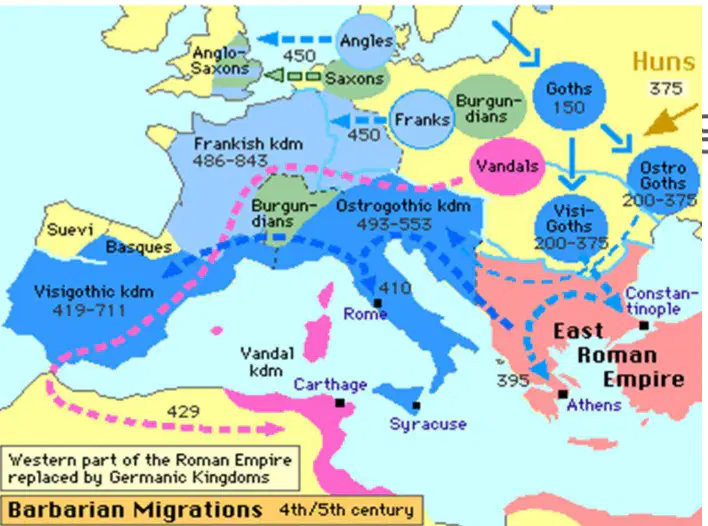
What happened to most of Western Europe toward the end of the Roman Empire?
It was invaded by barbaric Germanic tribes.
It became part of the Eastern Roman Empire.
It was united under a single ruler.
It remained peaceful and unchanged.
Why did many people of Western Europe move to the countryside during the end of the Roman Empire?
To escape the invasions.
To find better farmland.
To join the Germanic tribes.
To build new cities.
Explain how the invasions by Germanic tribes contributed to the development of feudalism in Western Europe.
The invasions caused instability, leading people to seek protection from local lords, which helped establish feudalism.
The invasions led to the creation of a strong central government.
The invasions encouraged trade and urbanization.
The invasions resulted in the spread of democracy.
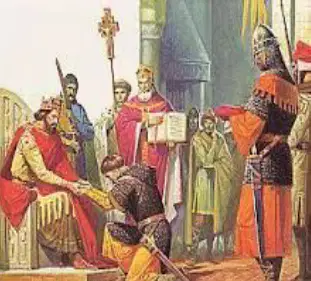
Why did Kings give large grants of land to Lords during medieval times?
To maintain control and power by securing loyalty
To reduce the amount of land they owned
To avoid paying taxes
To encourage trade with neighboring kingdoms
What did Lords promise to provide to the King in exchange for land?
An army to defend the kingdom
Gold and jewels
Religious services
Agricultural products
Who had authority over the land and the people living on it after the King granted land?
The Lords
The peasants
The merchants
The church
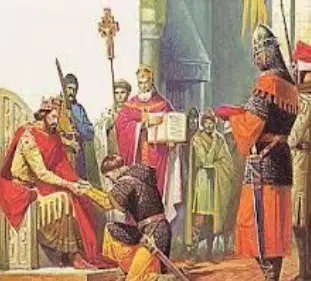
Explain how the relationship between Kings and Lords helped maintain stability in the kingdom.
By exchanging land for loyalty and military support, Kings ensured that Lords would help defend the kingdom and govern the land, creating a stable system of authority.
By allowing Lords to trade freely, Kings increased wealth in the kingdom.
By giving Lords religious power, Kings reduced conflict with the church.
By making Lords pay high taxes, Kings increased royal revenue.

Who were the lesser Lords who received grants of land from the Lords during medieval times?
Vassals (Knights)
Peasants
Merchants
Kings
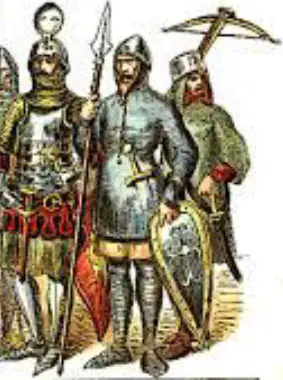
What did Vassals promise to the Lords in exchange for land?
Loyalty and military service
Freedom and independence
Trade and commerce
Religious devotion
Explain how the relationship between Lords and Vassals contributed to the structure of medieval society.
It created a system of mutual obligations that helped maintain order and stability.
It led to the rise of democracy and equal rights for all.
It eliminated the need for military forces.
It allowed peasants to own land freely.
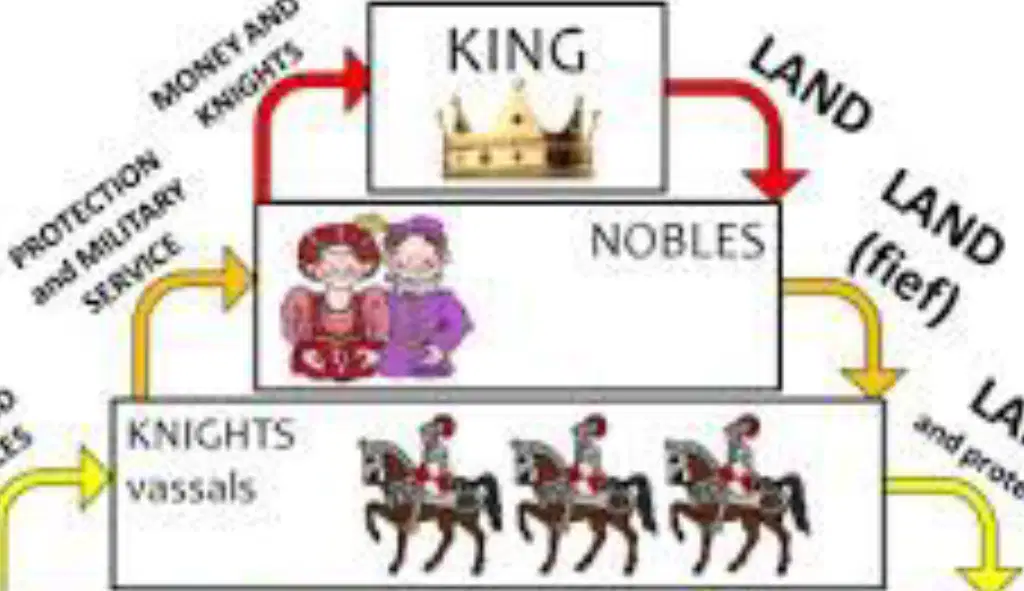
Which group was at the top of the feudal system hierarchy in this chart, even though the Pope is truly at the top?
Nobles
Knights
King
Peasants

What did peasants provide to knights in the feudal system?
Land
Money and knights
Food and services
Protection and military service
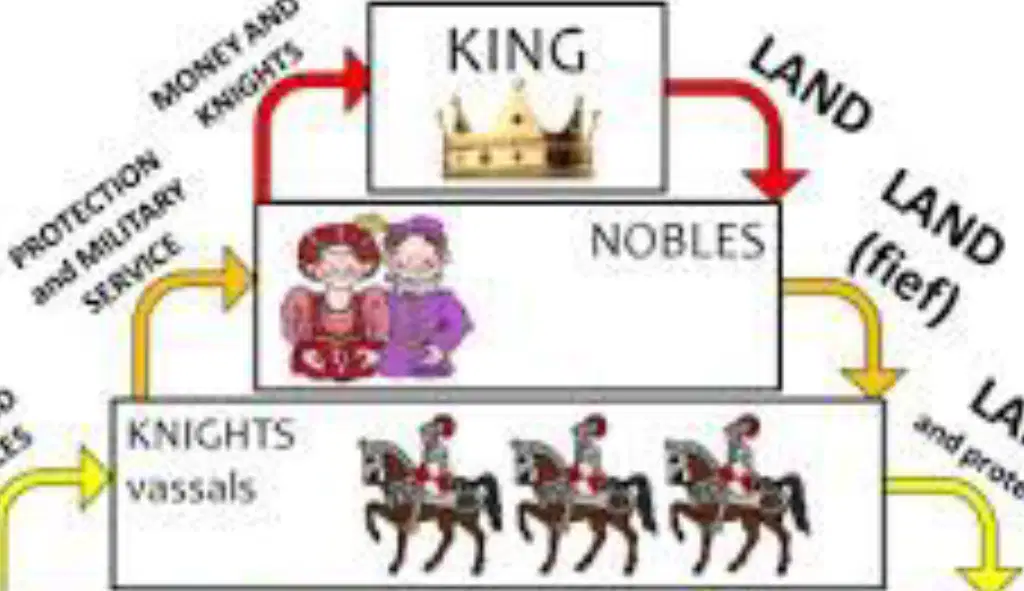
In the feudal system, what did nobles give to knights?
Food and services
Land (fief)
Money and knights
Protection and military service
Which group provided protection and military service to nobles?
Peasants
King
Knights
Nobles

Explain how land and services were exchanged between different levels of the feudal system. Use evidence from the diagram to support your answer.
Land was only given to peasants, and services were only provided by knights.
The king gave land to nobles, who gave land (fief) to knights, who provided land and protection to peasants. In return, peasants gave food and services to knights, knights gave protection and military service to nobles, and nobles gave money and knights to the king.
Nobles gave food to peasants, and peasants gave money to the king.
Knights gave land to the king, and peasants gave protection to nobles.
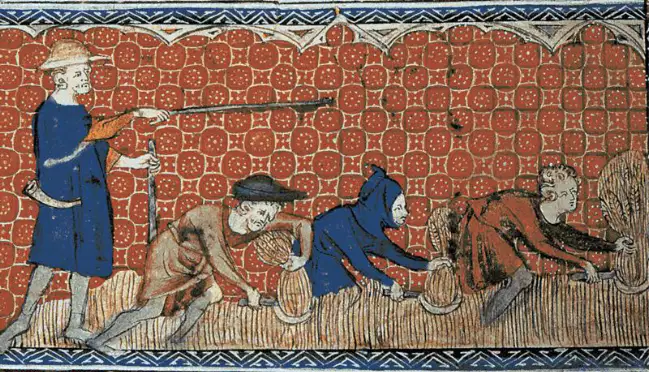
What was the main reason Vassals entered into feudal agreements with Serfs (peasants)?
To gain military support from Serfs
To have a labor force to work the land
To learn new farming techniques from Serfs
To avoid paying taxes themselves
What did Vassals promise to Serfs in exchange for working the land and paying taxes?
Freedom from all laws
Ownership of the land
Protection
Wealth and titles
Explain how the feudal agreement between Vassals and Serfs benefited both parties. Use evidence from the historical context.
Vassals received labor and taxes, while Serfs received protection.
Vassals received military training, while Serfs received education.
Vassals received land, while Serfs received money.
Vassals received food, while Serfs received entertainment.
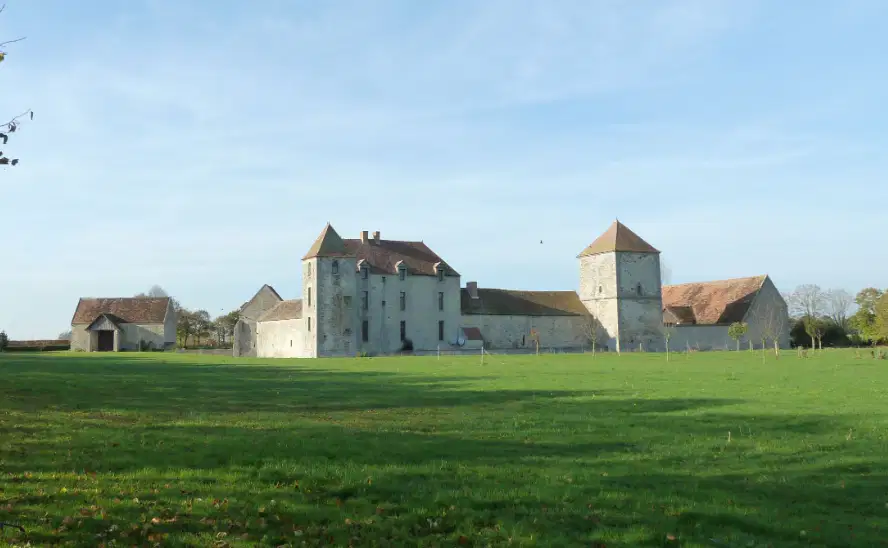
What were the grants of land given to Lords and Vassals called?
Fiefs
Estates
Manors
Castles
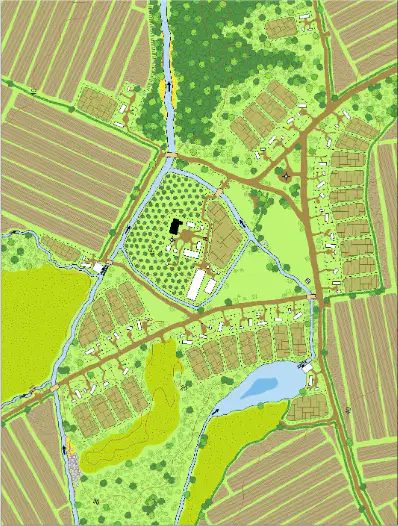
Why were Fiefs important in the relationship between Lords and Vassals during medieval times?
They provided land and resources in exchange for loyalty and service.
They were used only for farming.
They were places for religious ceremonies.
They were used as trading posts.
If a Lord received a grant of land known as a Fief, what responsibility did he typically have towards the person who granted it?
To provide military service and loyalty
To pay taxes only
To build castles for entertainment
To teach peasants to read
Which system provided the people of Europe with a government, military, and economic structure during the Middle Ages?
Feudalism
Capitalism
Democracy
Socialism
Label the feudal pyramid
serf
King
peasant
Match the definitions with each term
land granted by a lord to a knight
Fief
an estate owned by a noble that is worked by peasants and is self-sufficient
Manor
Capital city of the Byzantine Empire located at a crossroads
Constantinople
a peasant bound to the land and obligated to obey their lord
Serf
An economic and social system
Feudalism
What was manorialism?
The knights code of honor
The economic system of feudalism
The social structure of feudalism
The jobs done by groups of Christian monks


