
 Worksheets
Unit 1 Practice Quiz
Total questions: 68
Worksheet time: 41mins
The summary at the end of an experiment that explains the results.
conclusion
procedures
materials
responding variable
A list of the steps anyone could follow to conduct an experiment.
obervations
question/problem
materials
procedures
The scientific name for an organism is made from the:
class and family name
genus and species name
domain and kingdom name
kingdom and phylum name
The 8 levels of classification, most broad to most specific.
Domain, Genus, Family, Order, Class, Phylum, Kingdom, Species
Domain, Species, Kingdom, Genus, Phylum, Family, Class, Order
Domain, Kingdom, Phylum, Class, Order, Family, Genus, Species
Order, Kingdom, Species, Domain, Phylum, Family, Class, Genus
Cells that do not have a true nucleus are called....
eukaryote
prokaryote
unicellular
multicellular
Cells that have a true nucleus are called....
eukaryotes
prokaryotes
unicellular
multicellular
The science of describing, classifying, and naming living things is called:
Geology
Biology
Taxonomy
Chemistry
What kingdom do unicellular, prokaryotic organisms that live in extreme environments?
Animal
Archaea
Eubacteria
Plant
What type of macromolecule are enzymes?
Protein
Carbohydrate
Lipid
Nucleic Acid
What are the four macromolecules?
proteins, nucleic acids, carbohydrates, and lipids
monosaccharides, lipids, polysaccaharides, and proteins
RNA, DNA, proteins, and carbohydrates
proteins, DNA, RNA, and steroids
Which disease-causing agent could quickly multiply into colonies of billions of cells in the space of a drop of water?
fungi
viruses
bacteria
protists
Which organisms require a host cell to reproduce?
protozoans
bacteria
viruses
What do you call an organism that causes diseases
toxin
pathogen
microscopic
protozoa
Mushrooms are a type of what?
bacteria
virus
protozoa
fungi
Which characteristic do all microbes share?
They are all microscopic in size
They all need oxygen to survive
They all exist in similar conditions
Which of these is not a domain?
Archaea
Bacteria
Eukarya
Protista
Which of these is prokaryotic?
Animalia
Bacteria
Fungi
Protista
Which of the following are NOT found in all bacteria and archaeal cells?
Cytoplasmic membrane
Ribosome
Flagellum
Nucleoid
Which structure protects bacteria from being phagocytized by white blood cells?
slime layer
cell membrane
fimbriae
capsule
The outcome of the Gram stain is based on differences in the cell's
ribosomes
membrane.
inclusions
wall.
Bacterial endospores
are visualized using the acid fast stain.
are used for nutrient storage.
are easily inactivated by heat.
are mechanisms for survival.
The archaea lack which of the following that are normally found in gram-negative bacteria?
outer membrane
a complex peptidoglycan network
lack both outer membrane and complex peptidoglycan network
lack neither outer membrane or complex peptidoglycan network
The short, numerous appendages used by some bacterial cells for adhering to surfaces are called
flagella.
cilia.
fimbriae.
periplasmic flagella (axial filaments).
Gram-negative bacteria
are more susceptible to antibiotics that target peptidoglycan than gram-positive organisms.
are less susceptible to antibiotics that target peptidoglycan than gram-positive organisms.
stain purple in the Gram stain.
encompass all pathogens.
The function of bacterial endospores is
to convert gaseous nitrogen to a usable form for plants.
reproduction and growth.
protection of genetic material during harsh conditions.
storage of excess cell materials.
Bacteria are found in many different shapes. What are the 3 most common shapes of bacteria.
rod, sphere, spiral
square sphere, spiral
spiral, rectangle, sphere
Which cell type is larger, organized and has a nucleus?
prokaryotic
eukaryotic
Which of these is NOT caused by bacteria?
Flu
Food Poison
Lyme Disease
Which compound in the cell wall that causes a Gram positive bacteria stain purple in colour when it is treated with crystal violet dye?
Cellulose
Lipoprotein
Peptidoglycan
Lipopolysaccharide
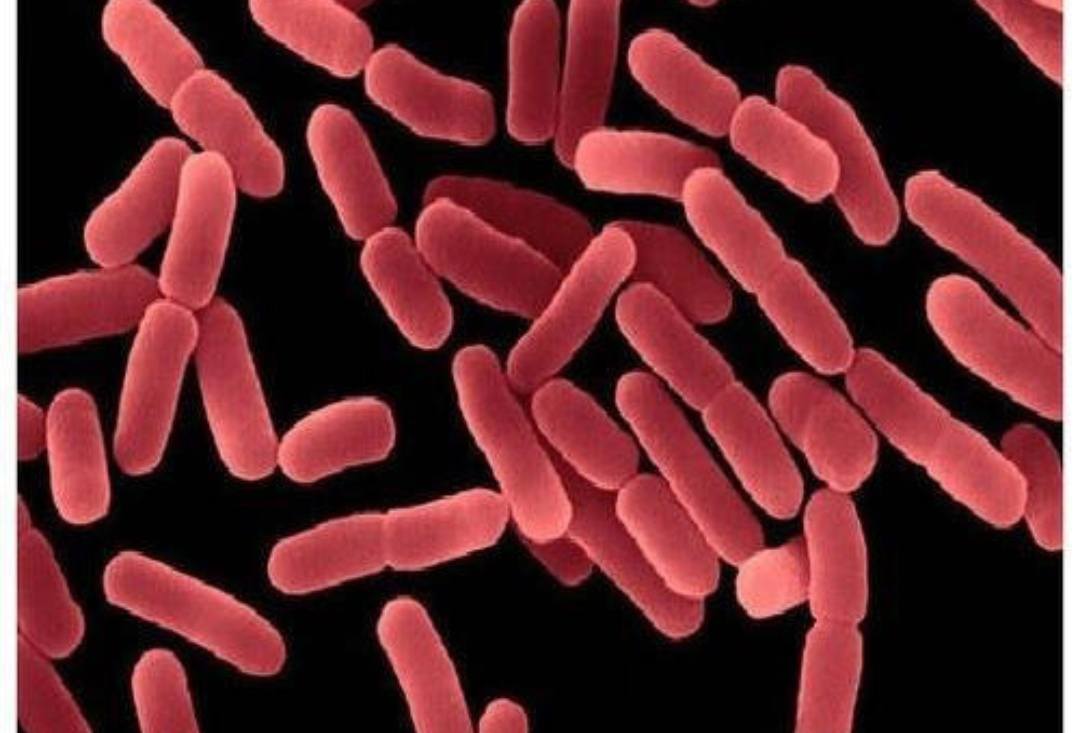
A rod-shaped bacteria is called
spiral
bacillus
coccus
vibrio
Which protist is a concern because of its ability to contaminate water supplies and cause diarrheal illness?
Plasmodium vivax
Toxoplasma gondii
Giardia lamblia
Trichomonas vaginalis
Mushrooms are type of which of the following?
condia
ascus
polar tubule
basidocarp
The fungus in a lichen is which of the following?
a basidiomycete
an ascomycete
a zygomycete
an apicomplexan
Chitin is a chemical component of the cell walls of
protozoa.
algae.
fungi.
bacteria.
An organelle that is a stack of flattened, membrananous sacs and functions to receive, modify and package proteins for cell secretion is the
mitochondria.
lysosome.
Golgi apparatus.
Endoplasmic Reticulum.
Filamentous fungi are called
pseudohyphae
septa
molds
dimorphic
Fungal infections are known as _____ and can be acquired from environmental or clinical sources.
secondary infections
vegatative infections
mycoses
saprobic infections
An amoeba is which type of microorganism?
a prokaryotic algae
a eukarytoic fungus
a eukaryotic protozoan
a prokaryotic bacterium
Protists live in
the ocean
the soil
the air
fresh water
What is the name for an organism that can produce its own food?
heterotroph
autotroph
amoeba
eukaryotic
A _____ is a temporary projection of cytoplasm that is used for locomotion.
pseudopod
flagella
cilia
trichocyst
The thread-like tubes that make up the bodies of multicellular fungi are called
spores
flagellum
hyphae
Cells that can grow into a new organism are called
molecules
spores
hyphae
Fungi are a type of decomposers
true
false
Which of the following is not caused by a virus?
Common Cold
Norovirus
Strep Throat
AIDS
What is a viruses only goal?
to kill
to breath
to harm
to reproduce
A virus can be classified by its type of
mitochondria
chromosomes
nucleic acid
carbohydrates

What part of the phage is the DNA?
A
B
C
D
What do viruses need to reproduce?
they need genetic material
They need a host cell
They need bacteria
They need insulin
When a virus invades a living cell, its _______
takes over the cell's functions.
outer coat
genetic material
core
cytoplasm
Which of the following is not associated with every virus?
envelope
capsomeres
capsid
nucleic acid
In general, most DNA viruses multiply in the host cell's___, while most RNA viruses multiply in the host cell's___.
nucleus, cytoplasm
cytoplasm, cell membrane
cell membrane, cytoplasm
cytoplasm, nucleus
Satellite viruses are
also called viroids.
dependent on other viruses for replication.
the cause of spongiform encephalopathies.
significant pathogens of plants.
Viruses contain the neccessary tools to invade and control a host cell. These tools may consist of a
nucleus, nucleic acids strands of DNA adn RNA, and enzymes.
capsid or envelope, nucleic acids strands of DNA or RNA, and enzymes.
nucleus, nucleic acid strands of RNA, capsid, and enzymes.
capsid or envelope, nucleic acid strands of DNA and enzymes.
Why should we administer an anti-viral drug within 24 hours when someone is diagnosed with the FLU?
Flu virus does not mutate
Flu virus lays dormant in cells
Flu virus replicates quickly
Flu is transmitted thru a vector (like a mosquito)
Label the steps of the lytic cycle
Attach
Insert
Replicate/Assemble
Release
Analyze the following diagram and complete the missing spaces on the Venn diagram.
*** Each label belongs in a specific place, read carefully.
Match the following
can be kill with antibiotics
bacteria
depend on a host cell to replicate
viruses
contains a nucleus
eukaryote
no nucleus
prokaryote
contains membrane bound organelles
eukaryote

