
 Worksheets
AI Foundation:Data and Algo
Total questions: 70
Worksheet time: 35mins
Why might 'Data, Algorithms, and Training' be considered technical foundations for Artificial Intelligence?
They are essential components for building and improving AI systems
They are unrelated to AI development
They are only used in traditional programming
They are only important for hardware design
What is the primary ability of Artificial Intelligence (AI)?
The ability of machines to perform tasks that require intelligence
The ability of machines to store large amounts of data
The ability of machines to connect to the internet
The ability of machines to display images
Which of the following best defines Machine Learning (ML)?
The algorithms that enable machines to learn from data
The process of storing data in databases
The ability to create computer hardware
The use of internet for communication
What distinguishes Rule-based AI from ML-based AI?
Rule-based AI makes decisions based on predefined rules, while ML-based AI relies on data and ML algorithms to make decisions
Rule-based AI uses only labeled data, while ML-based AI uses only unlabeled data
Rule-based AI is always faster than ML-based AI
Rule-based AI is used only for image recognition
Which type of learning involves finding patterns in data without correct answers (unlabeled data)?
Unsupervised learning
Supervised learning
Rule-based learning
Reinforcement learning
If an AI system is designed to make decisions solely based on a set of fixed instructions, which type of AI is it?
Rule-based AI
ML-based AI
Unsupervised learning
Supervised learning
Which of the following scenarios best illustrates unsupervised learning?
Grouping customers into segments based on purchasing behavior without knowing the categories in advance
Training a model to recognize handwritten digits using labeled images
Programming a robot to follow a set of instructions
Using a labeled dataset to predict house prices
Which of the following best describes intelligence?
The ability to think, learn, and solve problems well.
The ability to run fast and jump high.
The ability to memorize only numbers.
The ability to follow instructions without understanding.
How does intelligence help us in our daily lives?
By helping us understand things and make good decisions.
By making us physically stronger.
By allowing us to ignore problems.
By making us forget information quickly.
Which of the following is NOT typically included as part of intelligence?
Remembering facts
Thinking creatively
Understanding other people
Ignoring new information
A student uses what they know to solve a new type of math problem. Which aspect of intelligence are they demonstrating?
Using knowledge in smart ways
Memorizing random facts
Avoiding challenges
Copying answers without understanding
Imagine you are working in a group and need to understand your classmates' perspectives to solve a problem. Which part of intelligence are you using?
Understanding other people
Ignoring others' ideas
Only remembering facts
Refusing to communicate
which of the following is most likely a strength of humans compared to AI?
Emotional intelligence
High-speed calculation
Data storage
Pattern recognition
Which skill is AI most likely to excel at over humans?
Creativity
Empathy
Rapid computation
Moral judgment
Imagine a scenario where both a human and an AI are given a task to analyze a large dataset for patterns. Which would likely perform better and why?
Human, because of emotional intelligence
AI, because of data processing capabilities
Human, because of creativity
AI, because of moral judgment
Which of the following best describes Artificial Intelligence (AI)?
The ability of machines to perform tasks that require intelligence, such as learning, reasoning, or problem-solving.
The process of programming machines to follow fixed instructions.
The use of computers only for mathematical calculations.
The ability of machines to store large amounts of data.
What is Machine Learning (ML) primarily focused on?
Enabling machines to learn from data using algorithms.
Programming machines to play games.
Designing hardware for computers.
Storing information in databases.
Which statement is true regarding the relationship between AI and ML?
All ML applications are considered AI applications.
All AI applications are considered ML applications.
AI and ML are completely unrelated fields.
ML is broader than AI.
How does Machine Learning (ML) differ from general Artificial Intelligence (AI)?
ML is a subset of AI focused on learning from data, while AI encompasses all intelligent machine capabilities.
ML is broader than AI and includes all intelligent systems.
ML does not use data, while AI does.
ML is only used for robotics, while AI is used for computers.
Suppose you are designing a system that can recognize handwritten digits by learning from thousands of examples. Which field does this system most closely relate to?
Machine Learning (ML)
Database Management
Computer Networking
Hardware Engineering
Which of the following best describes Artificial Intelligence?
A technique which enables machines to mimic human behaviour
A subset of ML which makes multi-layer neural network computation feasible
A subset of AI technique which uses statistical methods to improve with experience
A technique which only focuses on data storage
What is Machine Learning ?
Subset of AI technique which use statistical methods to enable machines to improve with experience
A technique which enables machines to mimic human behaviour
Subset of ML which make the computation of multi-layer neural network feasible
A method for storing large amounts of data
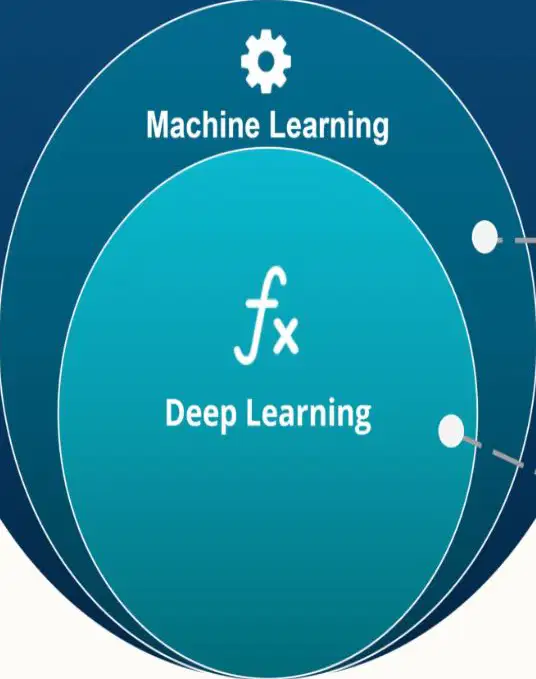
Deep Learning is a subset of which field?
Machine Learning
Artificial Intelligence
Data Science
Robotics
Which statement best explains why Deep Learning has become feasible?
It makes the computation of multi-layer neural networks feasible.
It uses only simple statistical methods.
It does not require any experience for improvement.
It is unrelated to neural networks.
Which of the following is an example of a rule-based AI application in daily life?
Smart light that turns on when it detects motion
A regular light bulb
Manual camera
Traditional traffic light with fixed timing
What is the main characteristic of a rule-based AI system?
It follows predefined rules to make decisions
It learns from experience without any rules
It uses random actions
It ignores input data
Which statement best describes a smart camera as mentioned in the context of rule-based AI?
A camera that adjusts focus and zoom when an object is detected
A camera that only records video
A camera that takes pictures at random intervals
A camera that cannot detect objects
A smart traffic light is an example of rule-based AI. What does it do?
Turns red and green based on traffic
Changes color randomly
Stays green all the time
Is controlled manually by a person
DoK Level 2: Which of the following would NOT be considered a logic-based (rule-based) AI application?
A smart thermostat that adjusts temperature based on time of day
A smart refrigerator that orders groceries automatically
A regular wall clock
A smart speaker that responds to voice commands
DoK Level 3: Imagine you are designing a new smart device for the home using rule-based AI. Which steps would you take to ensure it responds correctly to user actions? (Select the best answer)
Define clear rules for device behavior based on user input and data
Allow the device to act randomly
Ignore user input and only follow preset actions
Use no rules and let the device guess what to do
Which of the following is the primary source for machine learning (ML) algorithms?
Data
Human intuition
Random numbers
Computer hardware
In ML-based AI, who creates the rules for decision making?
The computer
Humans
External sensors
Government regulations
Which statement best describes how ML-based AI makes decisions?
It relies on data and ML algorithms.
It uses only human-created rules.
It ignores previous data.
It is based on random guessing.
Which of the following is a key input for Rule-based AI systems?
Actions
Rules
Models
Predictions
What is the main output of a Rule-based AI system?
Model
Action
Data
Rules
In ML-based AI, what is created from actions and data?
Action
Rule
Model
Prediction
Based on the Venn diagram, which statement is correct about the relationship between AI and ML?
ML is a subset of AI
AI is a subset of ML
ML and AI are completely separate fields
ML and AI are identical
Which of the following questions is NOT used by the computer program to differentiate between a tiger and a cheetah?
Does it have black spots?
Does it have black lines on its face?
Is it huge and muscular?
Does it have stripes on its tail?
What is the first question asked by the program to identify whether the animal is a tiger or a cheetah?
Is it huge and muscular?
Does it have black spots?
Does it have black lines on its face?
Is it fast?
If an animal has black spots and black lines on its face, and is huge and muscular, which animal is it according to the program?
Tiger
Cheetah
Leopard
Lion
Does the differentiation between a tiger and a cheetah require intelligence?
Yes, because it involves reasoning and decision-making.
No, because it is a random process.
Yes, because it requires physical strength.
No, because it is based on guessing.
Is the described program considered to be an AI system?
Yes, because it can make decisions based on input data.
No, because it does not use any computer.
Yes, because it is a physical robot.
No, because it only works for animals.
Is the described program considered to be an ML (Machine Learning) system? Why?
No, because it does not learn from data.
Yes, because it uses neural networks.
Yes, because it is a computer program.
No, because it is not written in Python.
Is every AI system considered an ML system?
No, not every AI system is an ML system.
Yes, all AI systems are ML systems.
Yes, if they use computers.
No, only if they are used for animals.
Does AI require intelligence where Machine Learning (ML) does not?
Agree
Disagree
Both require intelligence
Neither require intelligence
Which of the following best describes Artificial Intelligence (AI)?
A subset of Machine Learning used to achieve intelligence.
Machines showing human-like intelligence.
Systems that only learn from data.
A process that helps ML get smarter.
What is the main goal of Artificial Intelligence (AI)?
To find patterns in data.
To act intelligently.
To simulate human emotions.
To store large amounts of data.
How do Machine Learning (ML) systems primarily operate?
By simulating reasoning.
By learning from data and finding patterns.
By understanding questions and giving logical answers.
By acting intelligently without data.
A chatbot that understands questions and gives logical answers is an example of which concept?
Machine Learning
Artificial Intelligence
Data Mining
Computer Networking
Explain the relationship between Artificial Intelligence (AI) and Machine Learning (ML) using evidence from the text.
ML is a bigger concept than AI and includes AI as a subset.
AI is a subset of ML and is used to achieve intelligence.
ML is a subset of AI and is a method used to achieve intelligence.
AI and ML are unrelated fields.
Suppose you are designing an AI system to predict stock prices based on historical data. Which approach would be most suitable?
Machine Learning AI
Rule-Based AI
Heuristic AI
Expert System
Which of the following is an example of ML-based AI used for unlocking devices?
Face Unlock
Weather Forecast
Calculator
Alarm Clock
What is the main purpose of ad recommendations in ML-based AI?
To display random advertisements
To show ads based on your search behavior
To block unwanted ads
To increase device speed
Which application uses ML-based AI to recommend products based on your purchase history?
Shopping Apps
Music Players
Weather Apps
Calendar Apps
Which statement best describes the relationship between data quality and machine learning (ML) model quality?
Good data leads to a good ML model, while bad data leads to a bad ML model.
The quality of data does not affect the ML model.
Bad data always leads to a good ML model.
ML models do not require data to function.
Why do ML algorithms need data?
To create rules or models
To display graphics
To increase computer speed
To reduce memory usage
Suppose you are building a machine learning model to predict student grades. If you use incomplete or incorrect data, what is the most likely outcome?
The model will make inaccurate predictions.
The model will always predict perfectly.
The model will not be affected by the data quality.
The model will run faster.
Which of the following best describes "Accuracy" when collecting data for training AI models?
A. Data must be correct and reliable
B. Data must be evenly distributed
C. Data must cover different scenarios
D. Data must have no missing values
What does "Completeness" mean in the context of data collection for AI training?
A. Data must be in a uniform format
B. No missing or empty values
C. Data must be correct and reliable
D. Data must cover different users
Why is "Consistency" important when collecting data for AI training?
A. It ensures data is evenly distributed among classes
B. It ensures data is in a uniform format and structure
C. It ensures data is correct and reliable
D. It ensures data covers different scenarios
Which principle of data collection is violated if some classes have significantly more examples than others?
A. Accuracy
B. Completeness
C. Balance
D. Diversity
If a dataset only contains images of cats and no images of dogs, which principle is not being followed?
A. Accuracy
B. Diversity
C. Consistency
D. Completeness
A table of student scores contains a missing grade for one student. Which data quality principle is violated?
A. Consistency
B. Completeness
C. Balance
D. Diversity
Given a dataset with only images of one breed of cat, how could you improve its diversity for AI training?
A. Add more images of the same breed
B. Add images of different breeds and species
C. Remove some images
D. Change the image format
If a dataset contains student scores but some entries have missing grades, what is the best way to address this issue?
A. Ignore the missing values
B. Fill in the missing grades with correct values
C. Remove all entries
D. Change the score values
Why is it important for data used in AI training to cover different scenarios and users?
A. To ensure the data is correct and reliable
B. To make the AI model more generalizable and robust
C. To keep the data in a uniform format
D. To avoid missing values
Which of the following is a type of machine learning where the algorithm learns with clear labels?
Supervised learning
Unsupervised learning
Reinforcement learning
Semi-supervised learning
What is the main characteristic of unsupervised learning in machine learning?
Learning with clear labels
Learning by experience
Learning with no clear labels
Learning with human supervision
Which type of machine learning involves learning by experience?
Supervised learning
Unsupervised learning
Reinforcement learning
Transfer learning
Which type of machine learning involves learning from data that has correct answers (labels) to make predictions on new data?
Supervised learning
Unsupervised learning
Reinforcement learning
Deep learning

