
 Worksheets
Sports Med - Unit 2 Concept 1 - Anatomical Terms
Total questions: 43
Worksheet time: 22mins
Subject is in the standing position, with feet together and palms of hands facing forward.
anatomical position
abdominopelvic cavity
left hypochondriac region
Low Fowler's
Laying on the stomach.
left iliac (inguinal)
prone position
right hypochondriac region
abdominal cavity
Laying on the back.
deep
left iliac (inguinal)
ventral body cavity
supine position
Tilted so the head is lower than the feet.
Trendelenburg
epigastric region
anatomical position
abdominal cavity
Sitting at a 45-degree angle.
Fowler's Position
High Fowler's
hypogastric region
distal
Sitting at a 30-degree angle.
cranial
High Fowler's
Low Fowler's
left lumbar region
Sitting at a 90-degree angle.
posterior/dorsal
right lower quadrant
High Fowler's
cranial cavity
What term is used to describe the direction towards the front of the body?
transverse plane
anterior/ventral
umbilical region
left lumbar region
What term is used to describe the direction towards the back of the body?
distal
abdominal cavity
posterior/dorsal
right iliac (inguinal)
What term is used to describe the direction towards the head?
medial
posterior/dorsal
cranial
anterior/ventral
What term is used to describe the direction towards the tailbone?
frontal/coronal plane
left iliac (inguinal)
caudal
hypogastric region
What term is used to describe the direction towards the top or above?
cranial
superior
sagittal plane
left hypochondriac region
What term is used to describe the direction towards the bottom or below?
inferior
Fowler's Position
right upper quadrant
superior
What term is used to describe the direction towards the midline of the body?
caudal
spinal cavity
medial
posterior/dorsal
What term is used to describe the direction away from the midline of the body?
caudal
right upper quadrant
lateral
distal
What term is used to describe the direction closer to the point of attachment?
proximal
cranial
ventral body cavity
right lumbar region
Away from the point of attachment is referred to as:
spinal cavity
distal
Trendelenburg
ventral body cavity
On the surface is referred to as:
superficial
cranial
Low Fowler's
left iliac (inguinal)
Towards the inside is referred to as:
deep
ventral body cavity
thoracic cavity
anatomical position

Which plane divides the body into left and right portions?
sagittal plane
ventral body cavity
dorsal cavity
umbilical region
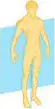
Which plane divides the body into front and back portions?
cranial cavity
umbilical region
right hypochondriac region
frontal/coronal plane
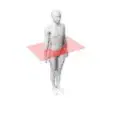
What plane divides the body into top and bottom portions?
Deep
Caudal
Transverse plane
Left lower quadrant
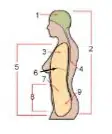
Which cavity includes the heart and lungs (#3 in the picture)?
Left lower quadrant
Abdominopelvic cavity
Thoracic cavity
Right upper quadrant
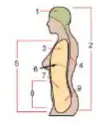
Which cavity includes the stomach and intestines (#7 in the picture)?
Abdominal cavity
Deep
Posterior/dorsal
Prone position
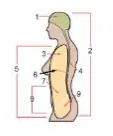
Which cavity includes the bladder and reproductive organs (#9 in the picture)?
Pelvic cavity
Supine position
Medial
Proximal
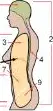
Abdominal and pelvic cavities combined are referred to as:
caudal
pelvic cavity
left hypochondriac region
abdominopelvic cavity
All body cavities towards the front of the body are referred to as:
superficial
anatomical position
frontal/coronal plane
ventral body cavity
The cavity that contains the brain is called:
lateral
right lower quadrant
cranial cavity
left lumbar region
The cavity that contains the spinal cord is called:
spinal cavity
right lumbar region
left iliac (inguinal)
epigastric region
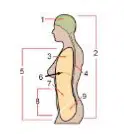
All body cavities towards the back (#2 in picture) are referred to as:
left lower quadrant
right lower quadrant
High Fowler's
dorsal cavity
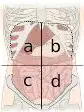
What is letter a in the diagram?
cranial
umbilical region
right upper quadrant
inferior
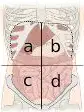
What is letter b in the diagram?
left lower quadrant
umbilical region
supine position
left upper quadrant
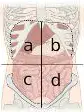
What is letter c in the diagram?
left upper quadrant
right upper quadrant
umbilical region
right lower quadrant
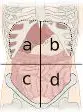
What is letter d?
cranial
Low Fowler's
right hypochondriac region
left lower quadrant
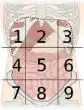
What is #5?
umbilical region
left iliac region
hypogastric region
spinal cavity
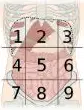
What is #2?
left hypochondriac region
epigastric region
supine position
left lumbar region
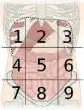
What is #8?
Low Fowler's
hypogastric region
superficial region
right lower quadrant
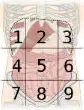
What is #1?
sagittal plane
right hypochondriac region
umbilical region
left upper quadrant
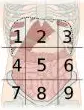
What is #3?
dorsal cavity
left hypochondriac region
right lumbar region
supine position
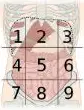
What is #4?
epigastric region
thoracic cavity
right lumbar region
left iliac (inguinal)
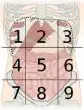
What is #6?
Trendelenburg
distal
right upper quadrant
left lumbar region
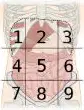
What is #7?
right lower quadrant
caudal
left lumbar region
right iliac (inguinal)
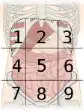
What is #9?
supine position
posterior/dorsal
distal
left iliac (inguinal)

