
Font size
 Worksheets
Hip Joint Anatomy Quiz
Total questions: 93
Worksheet time: 47mins
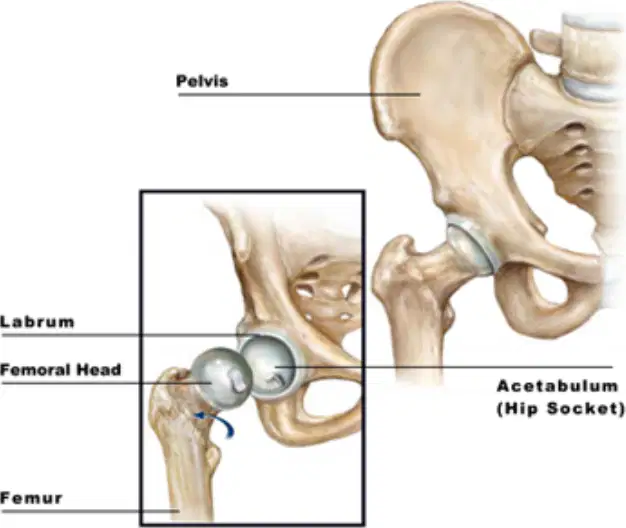
What type of joint is the hip joint?
A hinge joint
A ball and socket joint
A pivot joint
A saddle joint

With which structure does the head of the femur articulate in the hip joint?
The glenoid cavity
The concave acetabulum
The tibial plateau
The patella
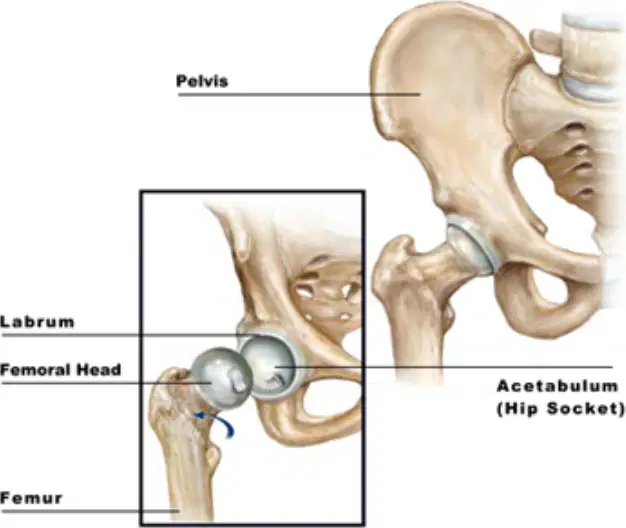
Which of the following contributes to the stability of the hip joint?
Bone structure
Cartilage thickness only
Synovial fluid volume
Joint capsule length
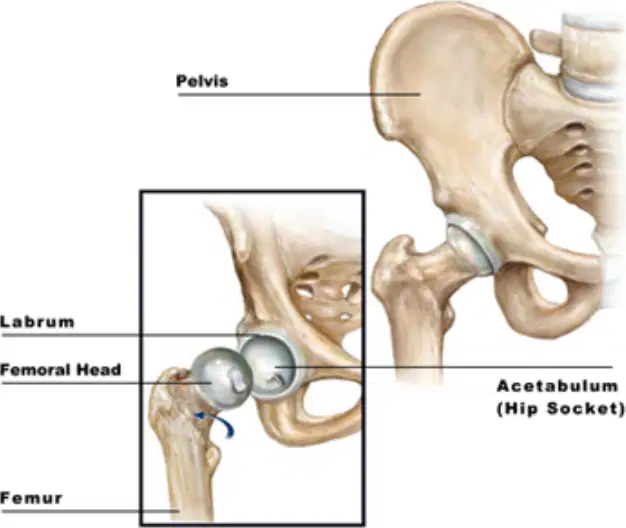
What is another factor, besides bone structure, that makes the hip joint stable?
Number and strength of muscles and ligaments crossing the joint
Amount of synovial fluid
Size of the joint capsule
Flexibility of the cartilage

Which ligament is visible in the posterior view of the hip?
Ischiofemoral ligament
Pubofemoral ligament
Iliofemoral (Y) ligament
Acetabular ligament
What is the main function of the strong ligaments crossing the hip joint?
To enhance the integrity of the hip
To allow free movement of the hip
To reduce blood flow to the hip
To weaken the joint
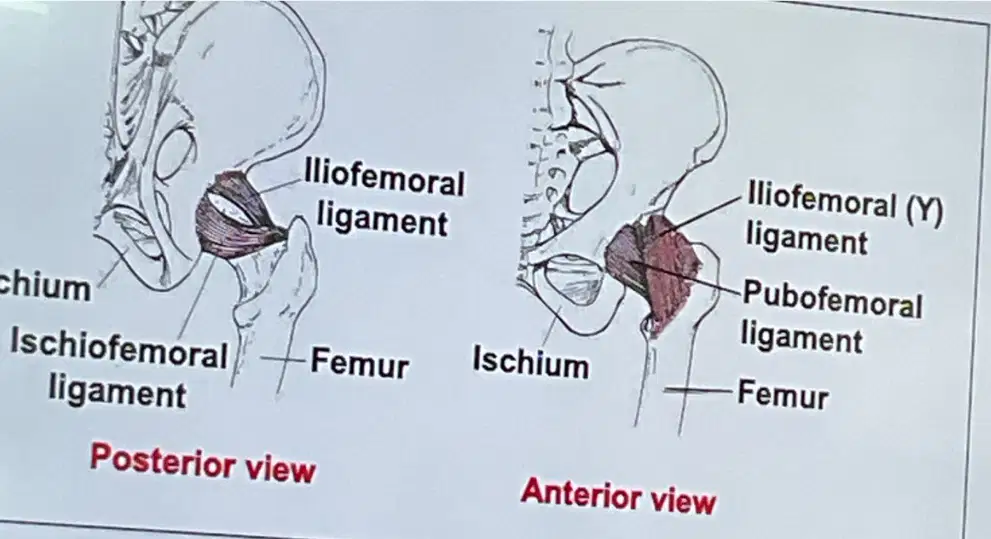
Which bone is labeled in both the anterior and posterior views of the hip structure?
Ischium
Tibia
Scapula
Humerus
Which ligament is specifically labeled in the anterior view of the hip?
Pubofemoral ligament
Ischiofemoral ligament
Acetabular ligament
Transverse ligament

Which bones are included in the pelvic girdle?
Two ilia and the sacrum
Femur and acetabulum
Pubis and ischium
Femoral head and sacrum
What movements can the pelvic girdle perform to optimize the positioning of the hip?
Forward, backward, and lateral rotation
Only forward rotation
Only backward rotation
Only lateral rotation
Which of the following is a direction of pelvic tilt?
Posterior
Medial
Superior
Inferior
Which hip joint movement is facilitated by pelvic tilt?
Flexion
Pronation
Supination
Elevation
Which of the following is NOT listed as a hip joint movement facilitated by pelvic tilt?
Rotation
Flexion
Extension
Abduction
Other hip joint movements include all of the following EXCEPT:
Inversion
Internal/external rotation
Horizontal ab/adduction
Circumduction
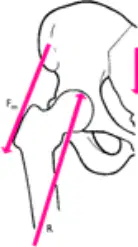
What is a major weight-bearing joint in the human body?
Hip
Elbow
Wrist
Ankle
Why is the total load on the hip joint greater than just the weight of the upper body?
Due to large muscles creating tension
Because of bone density
Because of joint lubrication
Due to cartilage thickness
During walking, loads of up to what percentage of body weight can be experienced by the hip joint?
238%
100%
50%
400%
The hip joint is well designed to:
Bear large loads
Allow only rotational movement
Minimize blood flow
Prevent all movement
Which of the following statements about the hip joint is true?
It is never fully unloaded during daily activities
It is only loaded during running
It is not a weight-bearing joint
It is always relaxed during sleep
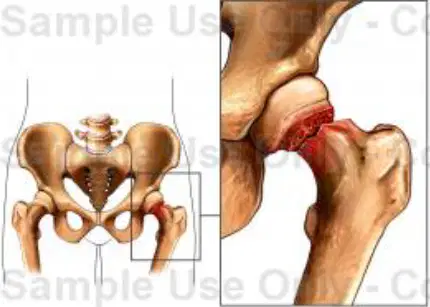
Which of the following is a type of hip fracture shown in the learning material?
Femoral neck fracture
Tibial plateau fracture
Clavicle fracture
Scaphoid fracture
What is a common injury at the hip in obese children as mentioned in the material?
Slipped cap of epiphyseal plate
Torn meniscus
Dislocated patella
Achilles tendon rupture
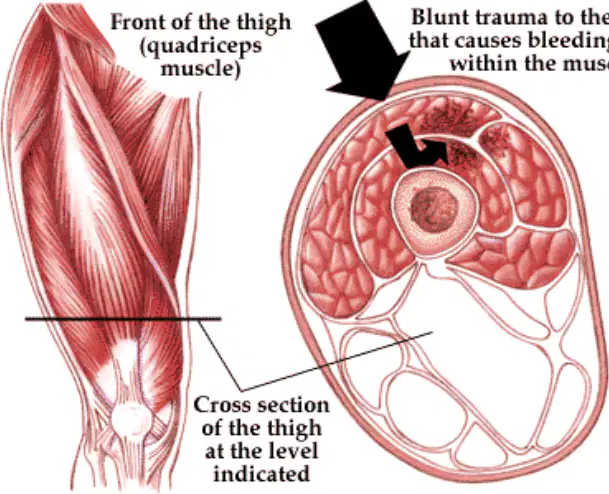
Blunt trauma to the thigh can cause which of the following?
Bleeding deep within the muscle
Fracture of the femur
Dislocation of the hip
Sprain of the ankle
Which muscle is located at the front of the thigh as shown in the material?
Quadriceps
Hamstring
Gastrocnemius
Gluteus maximus
Which of the following is NOT a type of hip fracture shown in the material?
Intertrochanteric fracture
Femoral neck fracture
Tibial shaft fracture
Slipped cap of epiphyseal plate
How many unique joints does the knee have?
1
2
3
4
Which of the following is NOT one of the unique joints of the knee?
Tibiofemoral joint
Patellofemoral joint
Humeroulnar joint
Both A and B
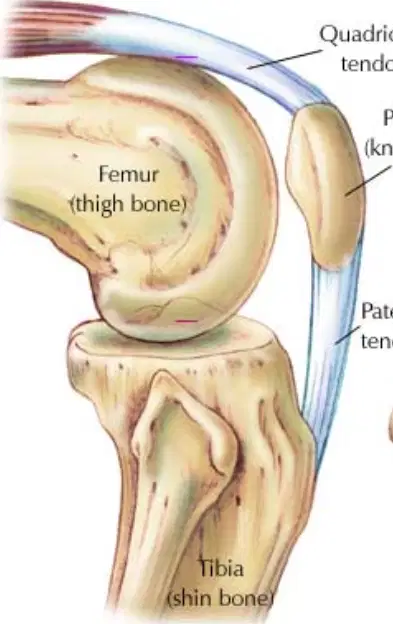
What are the names of the two unique joints found in the knee?
Tibiofemoral joint and Patellofemoral joint
Humeroradial joint and Tibiofemoral joint
Patellofemoral joint and Radiocarpal joint
Tibiofemoral joint and Glenohumeral joint

What is the largest type of joint in the human body?
Synovial
Cartilaginous
Fibrous
Ball-and-socket
The tibiofemoral joint connects two longest ________ in the body. What is the correct term to fill in the blank?
levers
muscles
ligaments
nerves
The tibiofemoral joint is also a major ________ ________ joint. What are the correct words to fill in the blanks?
weight bearing
movement controlling
fluid producing
shock absorbing
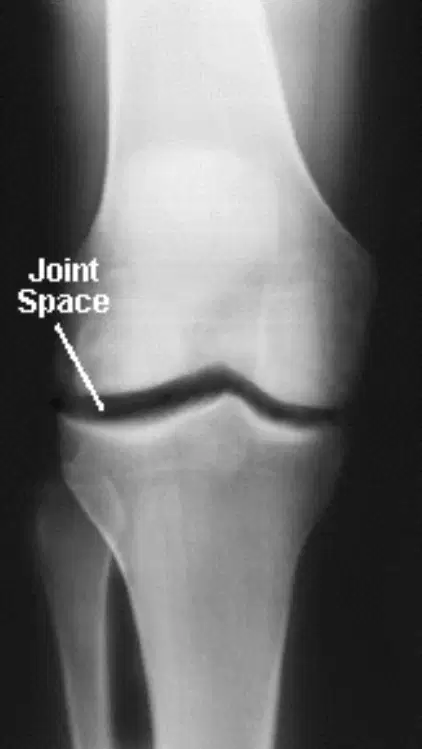
What structures fill the joint space on a radiograph of the knee?
Meniscus, synovial fluid, ACL, and PCL
Only bone tissue
Only blood vessels
Only muscle fibers
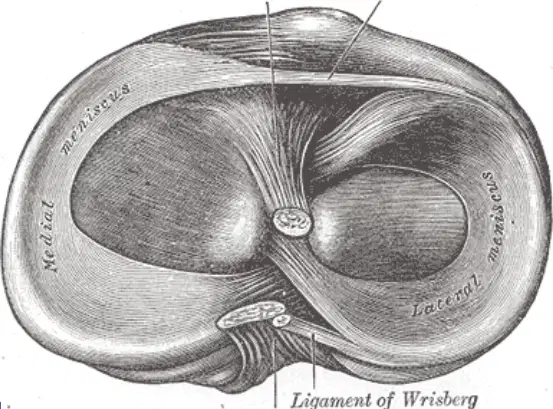
What are menisci in the knee?
Cartilaginous discs located between the tibial and femoral condyles
Muscles that move the knee joint
Ligaments connecting the femur and tibia
Bones forming the knee joint
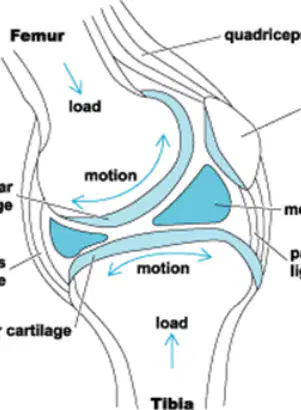
What is one function of the menisci in the knee?
Distribute the load at the knee over a large surface area
Produce synovial fluid
Attach muscles to bones
Prevent movement of the knee
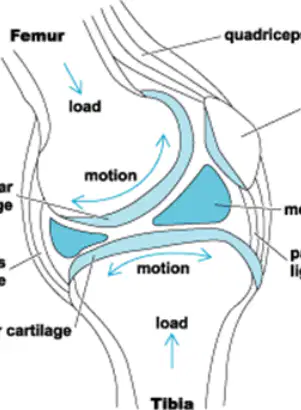
How do menisci help the knee during movement?
They absorb shock
They generate electrical impulses
They contract to move the joint
They fuse the bones together
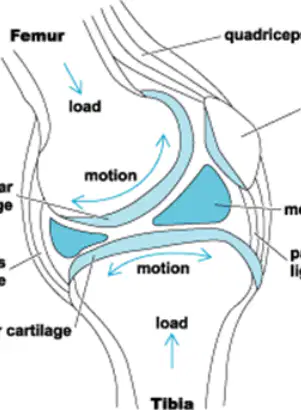
What additional role do menisci play in the knee joint?
Help circulate synovial fluid
Store calcium
Produce red blood cells
Connect muscles to bones
What is the formula for stress as described in the context of the knee structure?
Stress = Force × Contact Area
Stress = Force / Contact Area
Stress = Contact Area / Force
Stress = Force + Contact Area
If the contact area in the knee decreases due to a meniscectomy, what happens to the stress on the articular cartilage?
The stress decreases
The stress remains the same
The stress increases
The stress disappears
What could be a possible long-term consequence of increased stress on the articular cartilage after a meniscectomy?
Improved joint function
No change in the knee structure
Damage or degeneration of the cartilage
Increased flexibility
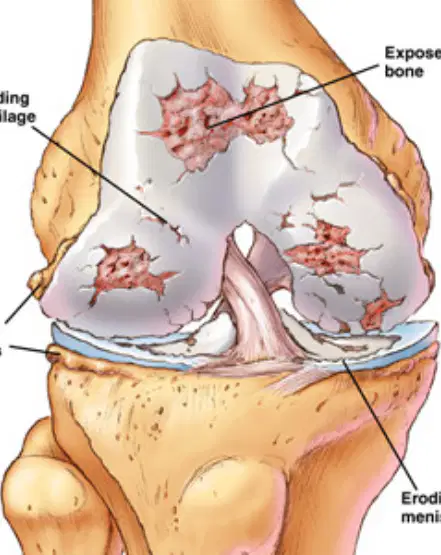
Which of the following is true about focal lesions in articular cartilage injuries of the knee?
They are typically traumatic in nature.
They are always caused by aging.
They are only found in overweight individuals.
They are always degenerative.
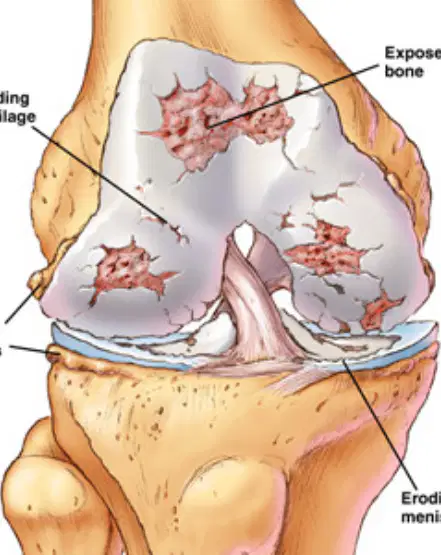
Degenerative lesions in the knee's articular cartilage could be caused by which of the following?
Aging, injury history, and osteoarthritis (OA)
Only traumatic events
Only specific sports
Only obesity
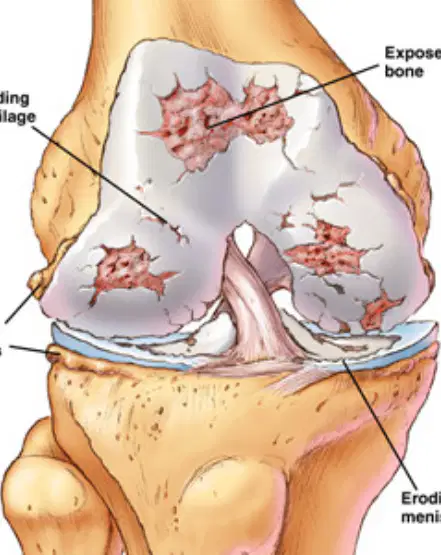
Which of the following is NOT listed as a risk factor for articular cartilage injuries in the knee?
High blood pressure
Obesity/overweight
Specific sports
Prior injury
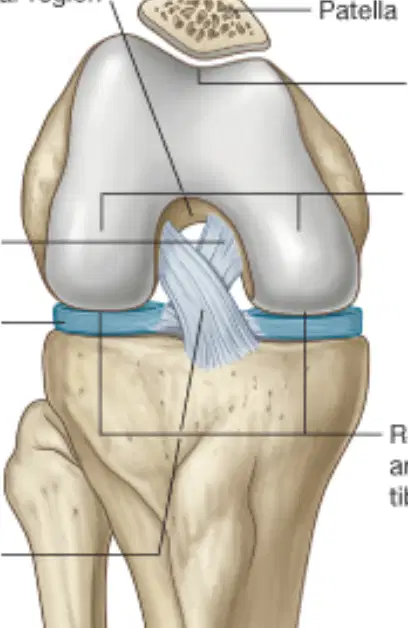
Which major ligaments cross the knee?
Cruciate ligaments
Collateral ligaments
Patellar ligament only
Meniscal ligaments
What does the ACL (anterior cruciate ligament) prevent?
Anterior translation of the tibia on the femur and hyperextension
Posterior translation of the tibia on the femur
Lateral movement of the knee
Flexion of the knee
What does the PCL (posterior cruciate ligament) prevent?
Posterior translation of the tibia on the femur
Hyperextension of the knee
Anterior translation of the tibia on the femur
Lateral movement of the knee

What are the major ligaments that cross the knee?
Collateral ligaments
Cruciate ligaments
Patellar ligaments
Meniscal ligaments
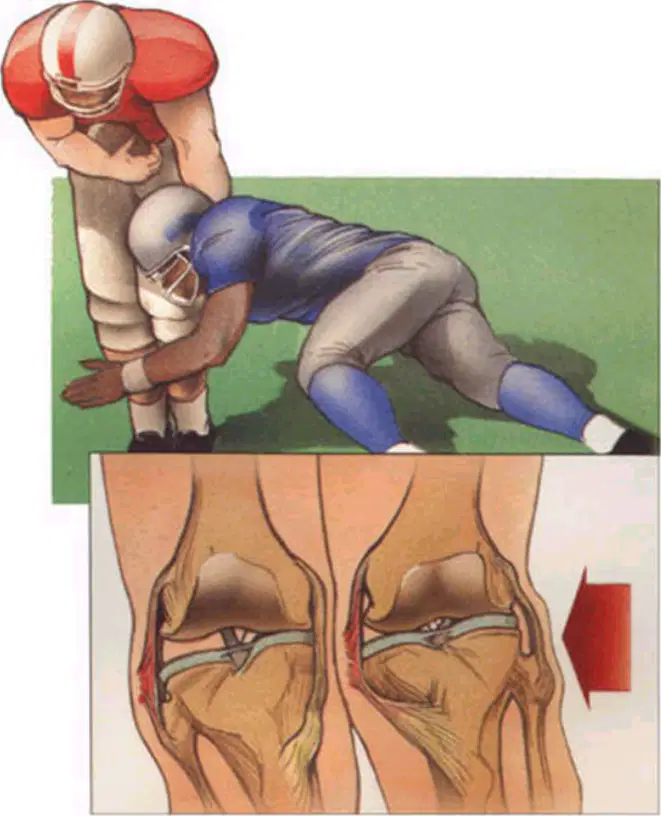
Which of the following is a major ligament that crosses the knee?
Collateral ligaments
Patellar tendon
Achilles tendon
Rotator cuff
What does the MCL (Medial Collateral Ligament) resist?
Knee abduction and anterior translation of the tibia on the femur
Knee adduction and posterior translation of the tibia on the femur
External rotation of the tibia on the femur and hyperextension
Flexion of the knee and internal rotation of the tibia
Which of the following is resisted by the LCL (Lateral Collateral Ligament)?
Knee abduction
Anterior translation of the tibia on the femur
External rotation of the tibia on the femur and hyperextension
Flexion of the knee
Which of the following is NOT a movement that occurs at the knee joint?
Flexion/extension
Internal/external rotation
Adduction/abduction
Circumduction
Which movement at the knee involves bending and straightening the leg?
Flexion/extension
Internal/external rotation
Adduction/abduction
Supination/pronation
What term describes the movement of the knee where the lower leg rotates inward or outward?
Flexion/extension
Internal/external rotation
Adduction/abduction
Elevation/depression
Adduction and abduction at the knee refer to movement in which direction?
Forward and backward
Rotational
Toward and away from the midline
Up and down
What does full knee extension create in the closed packed position?
Maximal bony congruence, ligamentous tautness, and large quad muscles
Minimal bony congruence and relaxed ligaments
Maximal muscle relaxation and joint instability
Minimal quad muscle activation and ligamentous laxity
What happens to the tibial tubercles during full knee extension?
They lodge in the intercondylar notch
They move away from the femur
They rotate laterally
They become less stable
Why is the closed packed position of the knee considered very stable?
Because of maximal bony congruence and ligamentous tautness
Because the muscles are completely relaxed
Because the joint is loose and flexible
Because the tibial tubercles are not engaged
What is a potential risk associated with the closed packed position of the knee?
Susceptibility to strain
Increased joint laxity
Reduced muscle activation
Decreased stability
What is the degree of knee flexion associated with the loose packed position?
25°
45°
90°
0°
Which of the following is NOT a characteristic of the loose packed position of the knee?
Minimal bony congruence
Ligaments lax
Maximal intra-articular pressure
25° of knee flexion
Why is the loose packed position relevant to injury?
It causes more stress and less strain
It results in more strain and less stress
It prevents all types of injuries
It increases bony congruence
What happens to the ligaments in the loose packed position of the knee?
They become tight
They become lax
They rupture
They shorten
What is the intra-articular pressure like in the loose packed position?
Maximal
Minimal
Moderate
Variable
What is the relationship described by adduction and abduction in anatomy?
Relationship of the distal segment relative to the midline of the proximal segment
Relationship of the proximal segment relative to the distal segment
Relationship of the muscle contraction to the bone length
Relationship of the joint angle to the muscle length
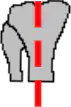
Which term describes movement of a limb toward the midline of the body?
ADDuction
ABDuction
Flexion
Extension
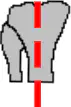
Which term describes movement of a limb away from the midline of the body?
ABDuction
ADDuction
Rotation
Supination
What is the relationship described by adduction and abduction in anatomical terms?
Relationship of the distal segment relative to the midline of the proximal segment
Relationship of the proximal segment relative to the midline of the distal segment
Relationship of the muscle contraction relative to the bone length
Relationship of the joint angle relative to the muscle strength
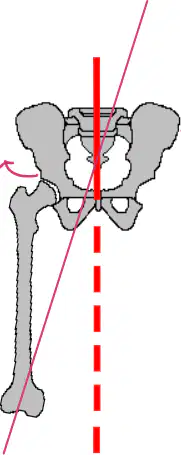
Which movement is also known as contralateral pelvic drop?
ADDuction
ABDuction
Flexion
Extension
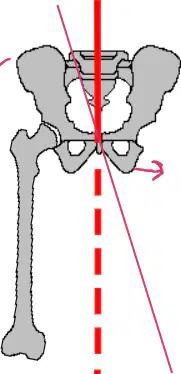
Which movement is also referred to as contralateral pelvic elevation?
ABDuction
ADDuction
Rotation
Supination
What does a "varus" deviation refer to in terms of body segment alignment?
Inward deviation from the proximal to the distal end
Outward deviation from the proximal to the distal end
Upward deviation from the distal to the proximal end
Downward deviation from the proximal to the distal end
Which term describes an outward deviation in alignment from the proximal to the distal end of a body segment?
Varus
Valgus
Adduction
Abduction
What do the terms "Varus" and "Valgus" describe?
Alignment of a body segment
Motion or position of a body segment
Muscle contraction
Joint flexibility
What do AD/Abduction describe in relation to body segments?
Alignment
Motion or position
Bone density
Muscle strength
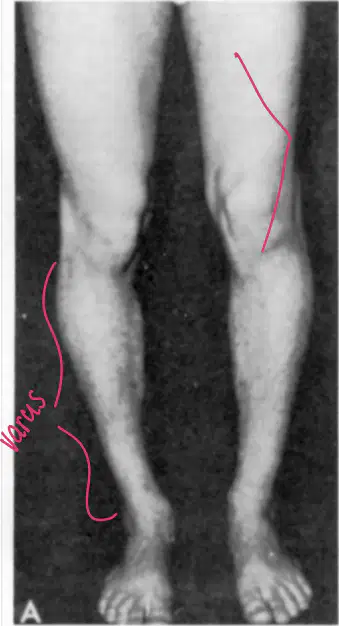
Which term describes the knee alignment where the knees are angled outward, away from the midline?
Genu Varum
Genu Valgum
Normal
Hallux Valgus
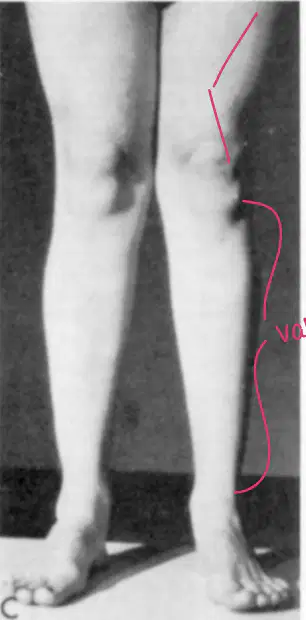
What is the correct term for the knee alignment where the knees are angled inward, towards each other?
Genu Varum
Genu Valgum
Normal
Hallux Valgus
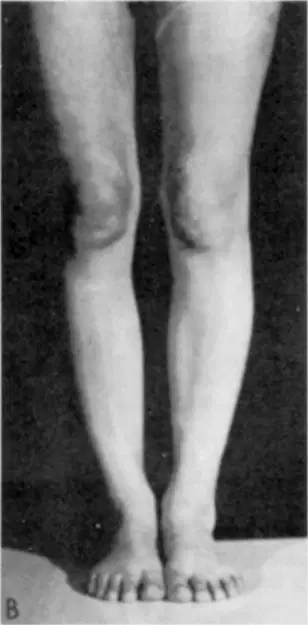
Which knee alignment is considered normal?
Genu Varum
Genu Valgum
Normal
Hallux Valgus
What does the term "Hallux Valgus" refer to?
Deviation of the big toe away from the midline
Outward angulation of the knees
Inward angulation of the knees
Normal knee alignment

What degree of varus in the femur is considered normal in adults?
2-3°
5-6°
0-1°
7-8°

Which group is more likely to have a slight varus of the femur?
Females
Males
Both equally
Children

Why are females more likely to have a slight varus of the femur compared to males?
Wider pelvis in women
Longer femur in women
Higher bone density in women
Narrower pelvis in women
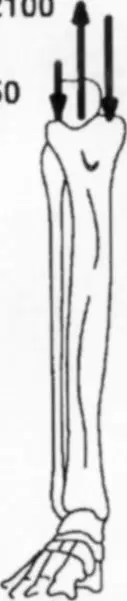
What is the term used to describe the condition where the legs are bowed outward?
Genu varum
Genu valgum
Scoliosis
Lordosis
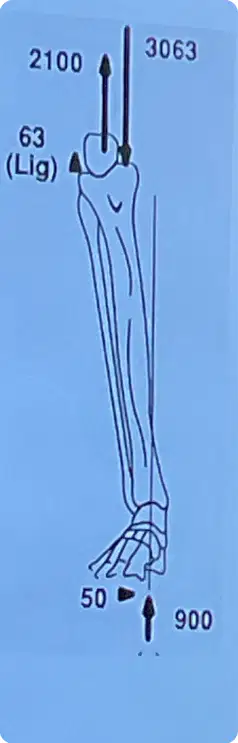
Which of the following is a possible implication of malalignment in the lower limbs?
Uneven force distribution across the joints
Improved joint stability
Decreased risk of injury
Enhanced muscle strength
In the context of lower limb alignment, what does the term "normal" refer to?
Legs aligned straight with even force distribution
Legs bowed outward
Legs bent inward
Spine curved to one side
What is a primary implication of malalignment in the knee joint?
Unicompartmental degenerative changes
Bilateral muscle hypertrophy
Increased synovial fluid production
Enhanced ligament flexibility
What percentage does the TF articular cartilage deform due to malalignment?
22-30%
10-15%
35-40%
5-10%
During gait, which compartment of the knee bears much of the load?
Medial compartment
Lateral compartment
Anterior compartment
Posterior compartment
What is the approximate load borne by the medial compartment during gait, expressed as a multiple of body weight (BW)?
2.25x BW
0.91x BW
1.5x BW
3.0x BW
What is the approximate load borne by the lateral compartment during gait, expressed as a multiple of body weight (BW)?
0.91x BW
2.25x BW
1.75x BW
3.5x BW
In knocked knees, how is the load distribution affected?
Increased medial, decreased lateral
Decreased medial, increased lateral
Equal medial and lateral
No change in load distribution
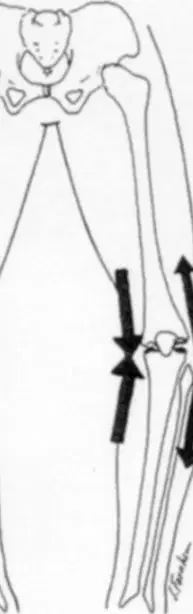
In bowlegged knees, how is the load distribution affected?
Decreased medial, increased lateral
Increased medial, decreased lateral
Equal medial and lateral
No change in load distribution
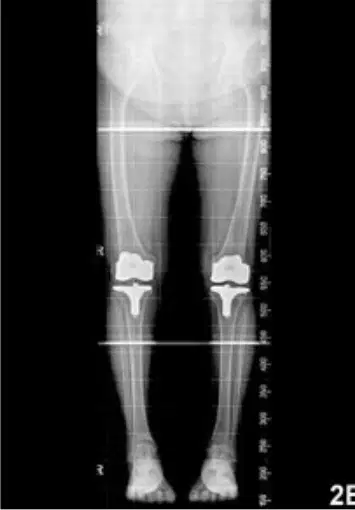
Which of the following is a surgical method used to reduce malalignment in the lower limb?
High tibial osteotomy
Spinal fusion
Hip replacement
Shoulder arthroscopy
The amount of reduction in surgical correction of malalignment depends on which of the following?
Level of anatomic realignment
Patient's age
Type of anesthesia used
Duration of surgery
Which of the following is NOT mentioned as a surgical option for reducing malalignment?
Distal femoral osteotomy
High tibial osteotomy
Spinal decompression
None of the above
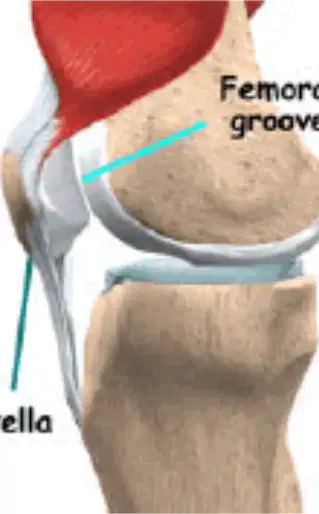
What bones are involved in the articulation of the patellofemoral joint?
Patella and femur
Tibia and fibula
Femur and tibia
Patella and fibula
What is the main purpose of the patella in the knee joint?
To provide mechanical advantage by increasing the lever and range of motion
To absorb shock during walking
To produce synovial fluid
To connect muscles to the femur

