
 Worksheets
Unit 2 Review-Atomic Structure, Atoms and Periodic Table
Total questions: 50
Worksheet time: 31mins
Which of the following is NOT a postulate in Dalton's atomic theory?
All matter consists of particles called atom that can be divided.
Atoms of the same elements are identical in mass and properties.
Atoms cannot be created or destroyed.
Compounds are formed by a combination of two or more different kinds of atoms.
What part of the atom was discovered as a result of JJ Thomson's cathode ray experiments?
Electron
Neutron
Proton
Nucleus
Which statement correctly explains the composition of the nucleus of Rubidium-87?
Rubidium-87 has 37 protons and 37 electrons.
Rubidium-87 has 37 protons and 37 neutrons.
Rubidium-87 has 37 protons and 50 electrons.
Rubidium-87 has 37 protons and 50 neutrons.
Hydrogen has three isotopes, which include hydrogen, deuterium, and tritium with atomic masses of about 1 amu, 2 amu, and 3 amu, respectively. Considering the average atomic mass of hydrogen that appears on the Periodic Table, which statement is correct?
The average atomic mass of an element is the mean of all the isotopes of that element.
The average atomic mass of an element is closest to that of the isotope with the highest atomic mass unit.
The average atomic mass of an element is usually closest to that of the isotope with the largest amount on earth.
The average atomic mass of an element is closest to that of the isotope with the lowest natural abundance.
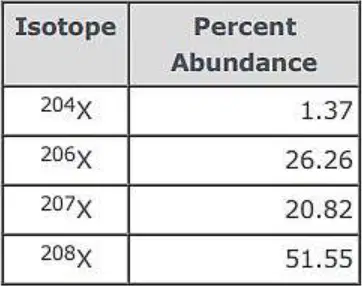
Calculate the atomic mass of the unknown element X described below. Isotope | Percent Abundance 204X | 1.37 206X | 26.26 207X | 20.82 208X | 51.55
204 amu
206 amu
207 amu
208 amu
Scientists, including Ernest Rutherford, started testing atomic structure theory in the early 1800’s. What did Rutherford use for his experiments?
A. Cathode Ray Tube
B. Gold Foil Experiment
C. Used sphere as his model
D. Used the Plum Pudding Model
The Bohr model contributes to the theory on the structure of the atom by stating that (a) .
Which of the following statements is most accurate regarding atoms?
Most atoms cannot combine with other atoms.
Chemical reactions divide atoms into smaller units.
Atoms of the same element may have different mass numbers.
Atoms only contain protons.
What does the following hyphen notation of Helium-3 mean?
An atom of Helium-3 has two protons, two electrons, and one neutron.
An atom of Helium-3 has one proton, two electrons, and three neutrons.
An atom of Helium-3 has two protons, two electrons, and three neutrons.
An atom of Helium-3 has two protons, two electrons, and two neutrons.
Which of the following describes the properties of noble gases?
They have high boiling points.
They are highly reactive.
They are generally unreactive.
They are solid at room temperature.
Which of the following atoms has the largest radius?
F
Cl
Br
I
The number of valence electrons in Group 2 elements is —
0
1
2
3
Which family correctly represents the elements in Group 1 on the Periodic Table?
Transition metals
Alkali metals
Lanthanide elements
Actinide series
The best explanation for the organization of Mendeleev's Periodic Table by atomic mass rather than atomic number is that —
atomic mass is unrelated to the chemical reactivity of elements
Mendeleev organized the table prior to the discovery of the atomic number
different isotopes of elements have different atomic masses
atomic numbers are not affected by the chemical reactivity of elements
Henry Moseley studied x-ray spectra of several elements in a row of the Periodic Table. He found that each element had one more proton than the element immediately to its left. Which statement best describes Moseley's contribution to the modern Periodic Table?
Recognizing that elements in the Periodic Table have similar properties
Grouping elements in the Periodic Table based on their physical properties
Predicting the properties of missing elements in the Periodic Table
Rearranged the Periodic Table according to increasing atomic number
Which of the following atoms has the highest ionization energy?
Sodium
Aluminum
Sulfur
Chlorine

Elements in a group of the periodic table are described below. Some Properties of a Certain Group of Elements: • Soft silvery-white color • Good conductor of thermal energy • Good conductor of electricity • Atoms contain a single valence electron These elements most likely belong to which group?
A Alkali metals
B Alkaline earth metals
C Halogens
D Noble gases
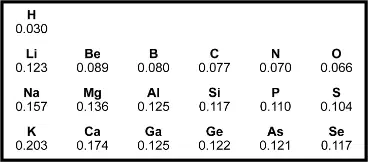
Which of the following conclusions is supported by the data on the above table?
Atomic radii cannot be measured for these elements.
Atomic radii increase from left to right.
Atomic radii decrease from left to right.
Atomic radii triple from top to bottom.
The trend of electronegativity in the Periodic Table is that it (a) .
The chemical properties of calcium are most similar to the chemical properties of —
Ar.
Mg.
K.
Sc.
Some physical properties of elements in a group of the Periodic Table are described below. -Poor conductor of electricity -Poor conductor of thermal energy -Atoms contain seven valence electrons -Brittle in the solid state -Low melting points and boiling points The elements described above belong to which group?
Alkaline earth metals
Noble gases
Alkali metals
Halogens
Neon is a noble gas. Which of the following describes neon?
Neon has a very low chemical reactivity.
Neon is highly electronegative.
Neon is a solid at room temperature.
Neon is a good conductor of heat.
Which two elements have the most similar chemical properties?
Ca and Br
Na and P
Be and Mg
Cl and Ar
Which element is an alkali metal?
Calcium
Hydrogen
Sodium
Zinc
Which list consists of elements that have the most similar chemical properties?
K, Ca, and Ga
Mg, Al, and Si
K, Al, and Ni
Mg, Ca, and Ba
Which of these elements has the highest electronegativity?
argon
chlorine
phosphorus
sulfur
Which of these statements is an accurate description of the ionization energies of elements in the periodic table?
The ionization energy of lithium is greater than that of potassium.
The ionization energy of iodine is greater than that of fluorine.
The ionization energy of magnesium is greater than that of sulfur.
The ionization energy of krypton is greater than that of neon.
The ionization energy of potassium is greater than that of —
magnesium
lithium
cesium
sodium
Which statement below accurately describes the elements in Group 16 of the Periodic Table as considered from top to bottom?
The atomic radii decrease and the ionization energies increase.
The atomic radii increase and the ionization energies decrease.
The atomic radii decrease and the ionization energies decrease.
The atomic radii increase and the ionization energies increase.
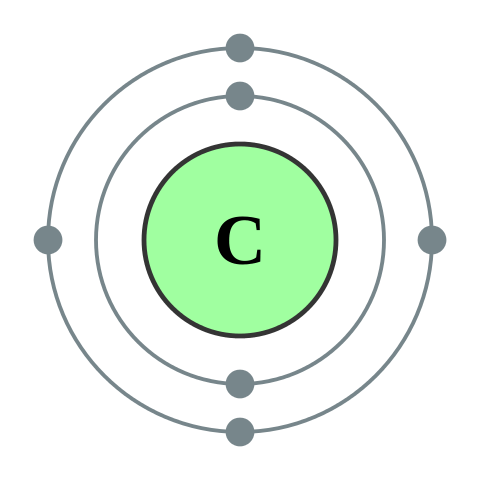
How many valence electrons does carbon have?
4
5
6
7


How many electrons does sulfur have
16
32
48
12


Elements in the same group or column have the same ...
# of valence electrons
# of shells
# of protons
Mass Number
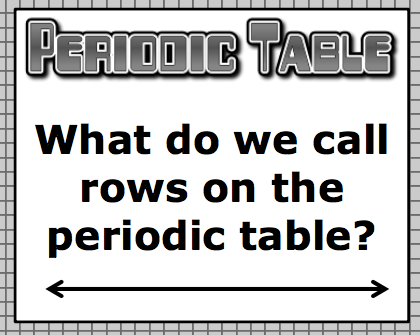
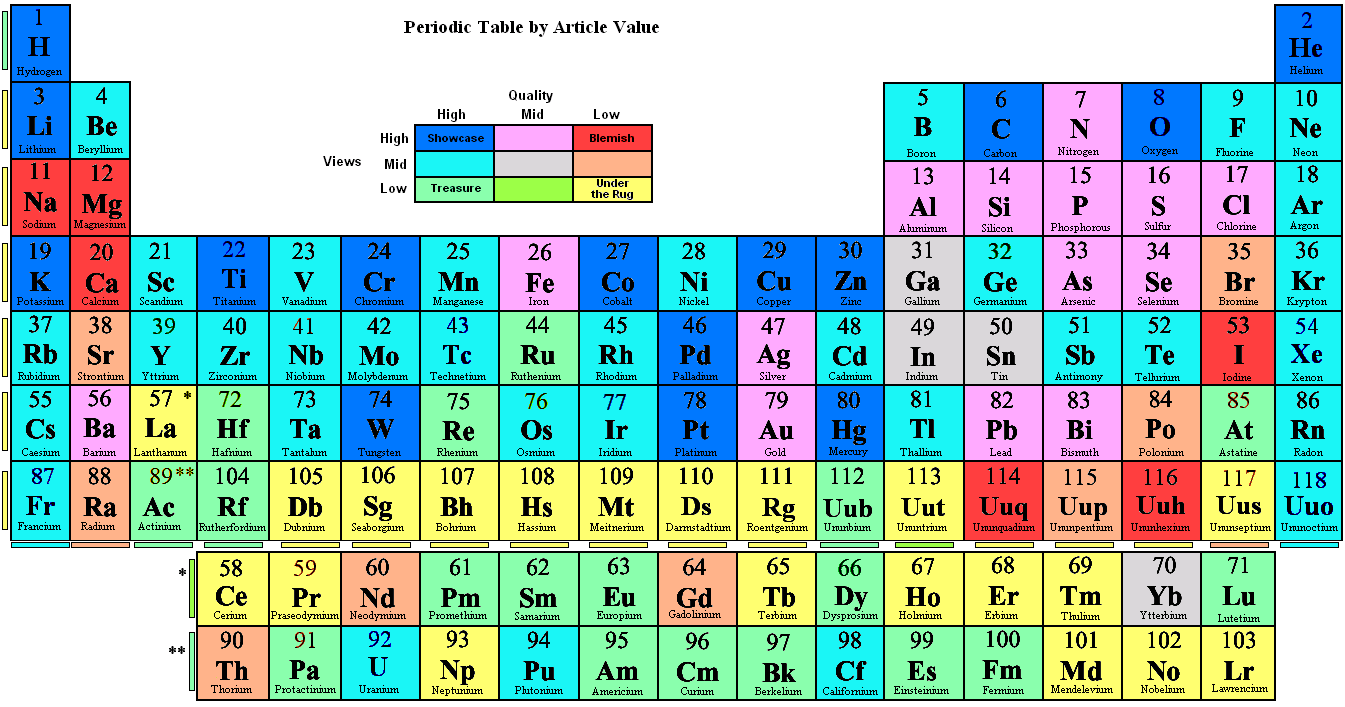
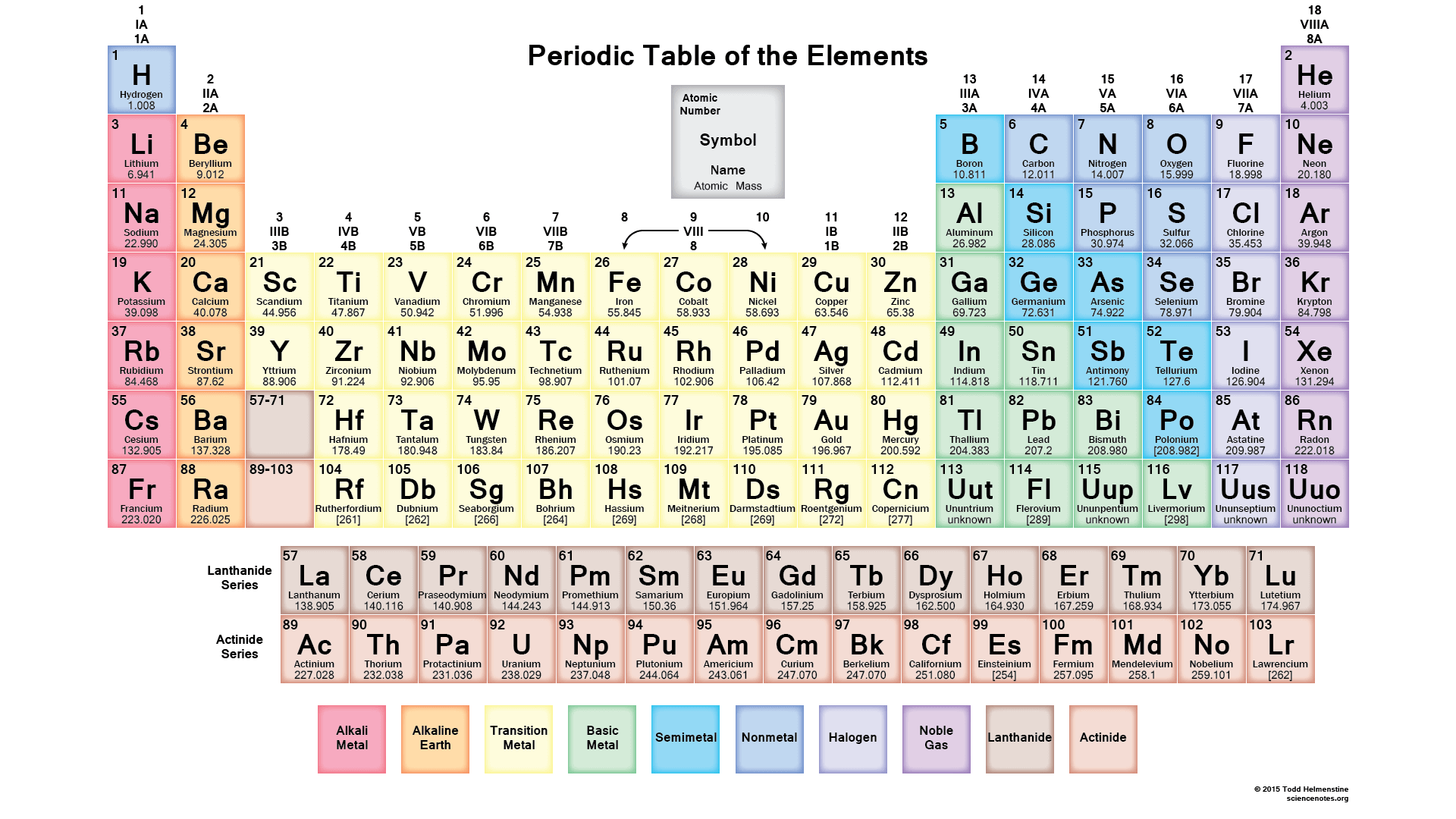


Which element is found in group 2, period 6?
Oxygen (O)
Barium (Ba)
Selenium (Se)
Carbon (C)


What group and period does this element belong in? *
period 1 and group 3
period 3 and group 1
period 2 and group 3
period 3 and group 2


Which of these elements has the greatest atomic radius?
H
N
Cl
Cs
The atom with the largest atomic radius is (a) .

The two groups on the Periodic Table that are the MOST reactive are (a) .

