
 Worksheets
Unit 2: Lessons 1-3
Total questions: 65
Worksheet time: 44mins

On a cold morning, Pierre observed that the grass looked wet. What did Pierre observe?
A. deposition
B. sublimation
C. evaporation
D. condensation

As water changes state, it either absorbs or releases energy. Which of these changes of state involves water absorbing energy?
A. condensation
B. deposition
C. evaporation
D. freezing

WRONG ANSWER
D. Wrong answer.
As water changes state, it either absorbs or releases energy. Which of these processes releases energy? RELEASE ENERGY MEANS GETTING COLDER- ABSORBING ENERGY MEANS GETTING WARMER.
A. wrong answer
B. snow melting
C. lake water freezing
D. ocean water evaporating

Water molecules are polar molecules. What is meant by the term 'polar molecule'?
A. a molecule that has an overall positive charge on one end and an overall negative charge on the other end
B. a molecule that has no charge on one end and either an overall negative or positive charge on the other end
C. a molecule that has an overall positive charge on one end, as well as an overall positive charge on the other end
D. a molecule that has an overall negative charge on one end, as well as an overall negative charge on the other end

On an island near the equator, the sun's energy causes ocean water to evaporate during the day. In the afternoon, heavy rains fall. This process is repeated during the summer months. What does this example best show?
A. how most water on Earth is in the form of water vapor
B. how land is the main source of water during the water cycle
C. how the sun is the main source of energy for the water cycle
D. how the ocean is large enough that it never runs out of water

Which property of water allows it to form droplets in liquid form?
A. adhesion
B. cohesion
C. nature as a solvent
D. specific heat

Which of the following is NOT a way that water reaches Earth’s atmosphere?
A. condensation
B. evaporation
C. sublimation
D. transpiration

Approximately what percentage of water on Earth is fresh water?
A. 0.5%
B. 3%
C. 7%
D. 18%

Which statement correctly identifies how solid water is different from liquid water?
A. In solid water, the molecules are farther apart.
B. Only in solid water are the molecules not polar.
C. In solid water, the molecules are closer together.
D. Only in solid water do the molecules lack spaces between them.
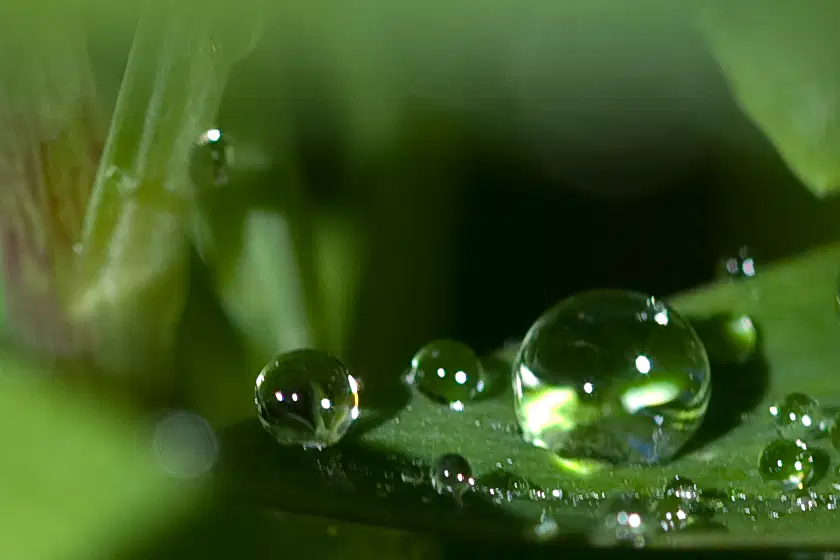
What explains why water has high cohesion?
A. Water molecules are attracted to other water molecules.
B. Water molecules are repelled by other water molecules.
C. Water molecules are attracted to molecules of other substances.
D. Water molecules are repelled by molecules of other substances.

Why does solid water (ice) float when placed in liquid water?
A. Ice does not float in liquid water.
B. Ice is less dense than liquid water.
C. Wrong Answer
D. Wrong Answer

Why is water considered the universal solvent?
A. Because all water molecules have a negative charge, so they repel each other.
B. Because water will not dissolve many substances.
C. Because water can dissolve many substances.
D. Because water molecules do not stick to any other water molecules.
Which of the following cannot become runoff?
A. river water
B. ocean water
C. precipitation
D. groundwater

Which of the following is the best example of how the water cycle carries out energy transfer?
A. a flooding river depositing silt on a floodplain
B. a warm ocean current warming the air above it
C. ocean water depositing sand particles on a shore
D. water seeping through the soil and dissolving salts
A certain percentage of water that falls to Earth’s surface as precipitation each year does not become surface water or groundwater and does not evaporate back into the atmosphere. Which of the following most likely explains what happens to this water?
A. Wrong answer
B. The water is stored as snow and ice on Earth’s surface.
C. wrong answer
D. The water is absorbed and used by plants.
What would happen if water molecules did not have a slight negative charge on one end and a slight positive charge on the other?
1. Wrong Answer
2. Wrong Answer
3. Water molecules would not clump together in droplets
4. Only saltwater, not freshwater, would exist on earth

The sum total of all the water on Earth and in its atmosphere is called the:
a. Biosphere
b. Terrasphere
c. Hydrosphere
d. Liquisphere

Which letters represent groundwater in the picture below?
A & E
B & C
D & E
E & C
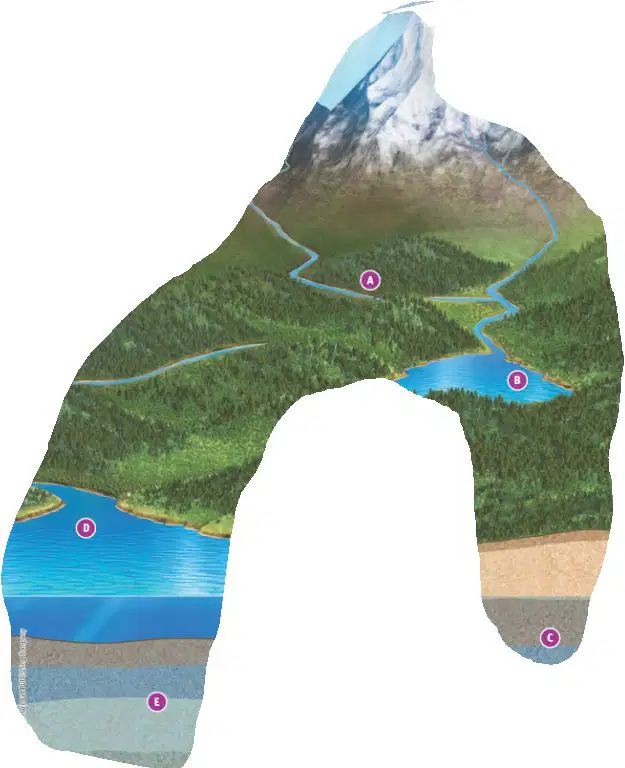
How does water get into the sections labeled E and C in the picture below? HINT HOW DOES WATER GET UNDERGROUND?
A. Evaporation
B. wrong answer
C. Infiltration
D. wrong answer

Through what process does a tree put water back into the atmosphere?
A. Evaporation
B. Sublimation
C. Condensation
D. Transpiration
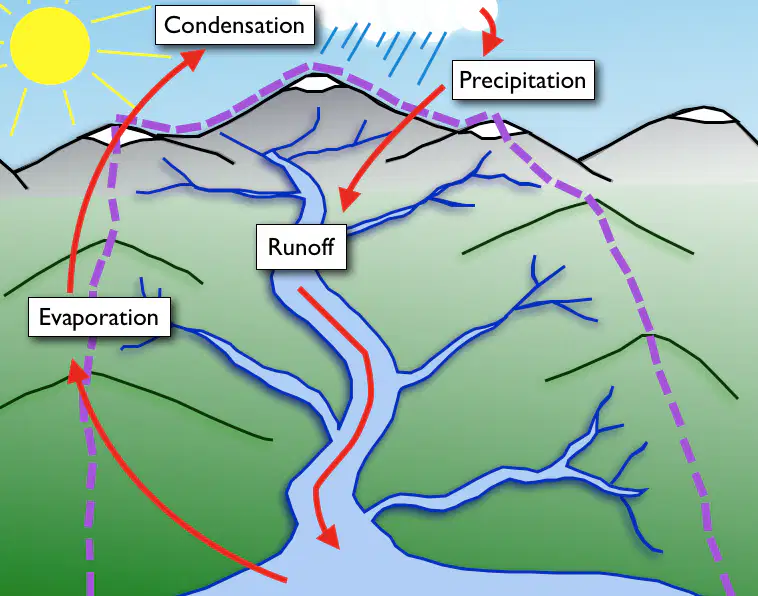
The dotted purple line is a boundary that separates
aquifer
divide
watershed
water table
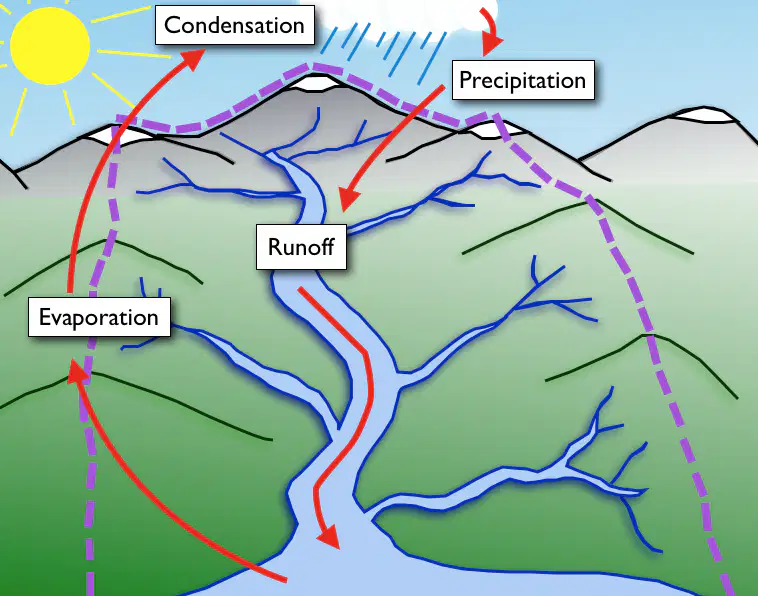
In the picture, which term describes the direction that the river takes?
aquifer
divide
tributary
channel
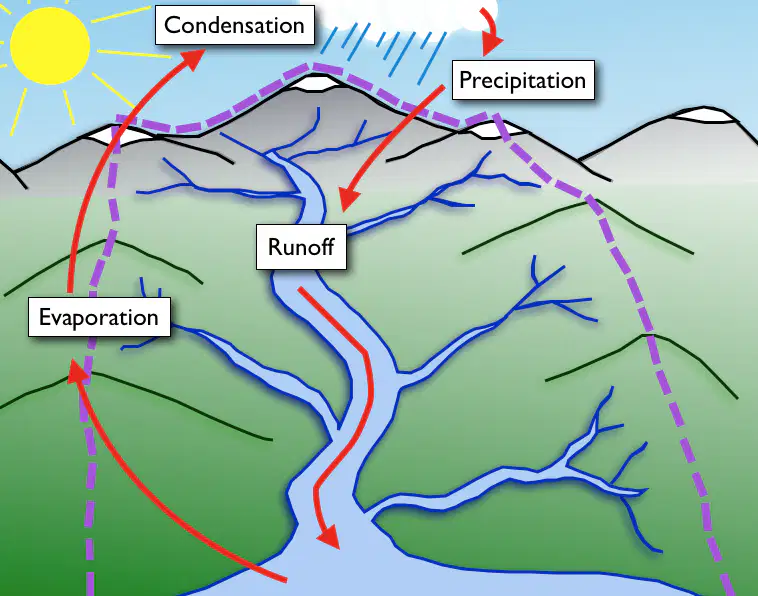
In the picture, what is the correct name for the smaller streams that feed into the larger stream or river?
aquifer
divide
Tributary
channel
The combined mass of all the water found on, under, and above the surface of the planet.
Lithosphere
Atmosphere
Hydrosphere
Biosphere
Which process in the water cycle is responsible for forming clouds?
C. Runoff
B. Condensation
D. Sublimation
A. Precipitation
What is the main reason that water can dissolve so many substances?
C. Water molecules are polar
B. Water has a high density
A. Water molecules are nonpolar
D. Water is always in a solid state
Which of the following best describes transpiration?
A. Water freezing into ice
B. Water evaporating from the surface of oceans
C. Water released into the atmosphere from plants
D. Water vapor condensing on a cold surface
Which process in the water cycle is responsible for the formation of clouds?
D. Sublimation
C. Infiltration
B. Condensation
A. Precipitation
What is the main source of energy that drives the water cycle?
A. The Moon
B. The Sun
C. Earth's Core
D. Wind
Which of the following best describes infiltration?
A. Water soaking into the ground
B. Water evaporating from the ocean
C. Water freezing into ice
D. Water forming clouds
The path that a stream follows is called
aquifer
channel
water table
stream load

What are the correct percentages of water on Earth?
Fresh water: 3%, Salt water: 97%, Fresh drinkable water: 1%
Fresh water: 1%, Salt water: 97%, Fresh drinkable water: 3%
Fresh water: 97%, Salt water: 3%, Fresh drinkable water: 1%

This feature separates one watershed from another.
a divide
a watershed
the water table

Materials carried by a stream are called...
aquifer
stream load
flow

A smaller stream that feeds into a river is called:
channel
tributary
aquifer

A tributary is larger than a river.
TRUE
FALSE

A measure of the change in elevation over a certain distance...
elevation
height
gradient

Percentage of rock that is composed of open space...
permeability
porosity

Dry ice in a glass is an example of...
Deposition
Evaporation
Precipitate
Sublimation

When heat is removed -- gas changes into a solid -- such as water vapor changing into frost. The liquid phase is skipped.
DEPOSITION IS THE CORRECT ANSWER
evaporation
freezing
deposition
condensation
When a solid turns directly to a gas.
condensation
clouds
sublimation
evaporation
Check all of the states of matter that water is found in on the Earth.
colloid
solid
gas
liquid

(Bonus) Check all of the changes in state of water that requires energy to be ABSORBED. CHOOSE 2
Water changes from a gas to a liquid.
Liquid water changes to water vapor.
Ice changes directly to water vapor.
Liquid water changes to solid ice.

In the process of transpiration (3) shown in the diagram,
energy is removed
energy is added
there is no phase change

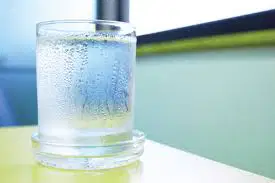
When heat is removed -- water vapor changes into water. Drops form on the outside of the glass.
evaporation
freezing
deposition
condensation

When matter changes from a solid to a liquid and from a liquid to a gas, the number of particles does not change because
heat was added
matter cannot be created or destroyed
it was a physical change
it was a chemical change
The water cycle is important for recycling the water on Earth. Which of these is the source of most of the water vapor in Earth’s atmosphere?
river flooding
glacier melting
ocean evaporation
plant transpiration
________________________ is the energy needed to heat a substance by a particular amount.
specific heat
specific temperature
Universal solvent
adhesion
Water plays many roles on Earth - choose the roles that water plays on Earth - choose all that apply. CHOOSE ALL 4 BOXES
influences weather
shapes Earth's surface
supports life
supports human activities

The ability of water molecules to stick to each other, creating surface tension is called:
Cohesion
Adhesion
Insulation
Ph

What property of water causes these Alka-Seltzer tablets to dissolve?
Universal Solvent
Expansion Upon Freezing
Cohesive Behavior
High Specific Heat

Transpiration is accomplished due to which two properties of water?
surface tension
cohesion
adhesion
high specific heat
What is the formula for water?
HO2
h2o
H2O
HO

How many atoms of Oxygen are in a water molecule?
1
2
0
3

Why does ice float on liquid water?
Ice does not float on liquid water.
It has a higher density than liquid water.
It floats because it has lower density than liquid water.
adhesion and cohesion
Why can fish survive winters in a pond? Hint- all ice can float on water because of its density.
ice is less dense than liquid water so it will be on the top of a lake or pond allowing fish to swim beneath it
Wrong answer
Wrong answer
Adhesion so ice will be on the top of a lake or pond allowing fish to swim beneath it
What is the definition of SURFACE WATER?
All the bodies of fresh water, salt water, ice, and snow that are found above the ground.
The change of state from a gas directly into a solid
A stream that flows into a lake or into a larger stream.
A streamlike movement of ocean water that follows a regular pattern.
What is the definition of AQUIFER?
Wrong Answer
The path that a stream follows.
Wrong Answer
A body of rock or sediment that stores groundwater and allows the flow of groundwater.

