
 Worksheets
Paediatric pharmacy attachment pre/post test
Total questions: 20
Worksheet time: 23mins
You receive an inquiry about IV augmentin dose for 2 weeks old baby boy, 4kg, cover for aspiration pneumonia. What would be your suggestion? (allowed to use references)
25mg/kg (100mg) BD
30mg/kg (120mg) TDS
30mg/kg (120mg) BD
1.2g TDS
Choose the correct statement(s) below regarding respiratory illness
Episodic wheeze and multiple trigger wheeze are two types of pre-school wheezing
In paediatrics, pneumonia is an indication to start inhaled corticosteroid to reduce lungs inflammation.
Patients with acute bronchiolitis may not require steroid or bronchodilators
Patients with bronchopulmonary dysplasia usually have atopic triad (eczema, allergic rhinitis and conjuctivitis)
Which of the following can be used for viral croup?
Oral/IV dexamethasone
IV hydrocortisone
Neb budesonide
Neb adrenaline
Oral prednisolone
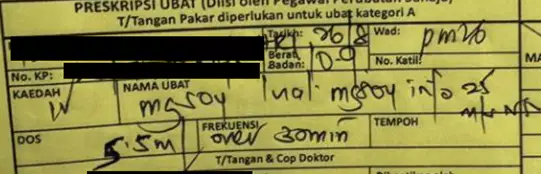
A child with acute exacerbation of multitrigger wheeze was given IV magnesium sulphate last night. What was the dose of magnesium sulphate given? (strength of MgSO4 in ward: 5g in 10ml)
100mg/kg, correct dose
100mg/kg, incorrect dose
50mg/kg, correct dose
50mg/kg, incorrect dose
Which of the following are correct regarding management of AGE patient in paediatrics?
10kg child should be given ORS 100ml per purge
Zinc oxide cream can be given to patients with AGE even though the child does not have nappy rash.
Normal saline should not be used for fluid resuscitation due to risk of hypernatremia.
Each sachet of oral rehydration salt should be reconstituted with approximately 8 ounce of water.
A patient was prescribed with zinc oxide cream, miconazole cream BD. How should you counsel on direction of use of both creams
To apply zinc oxide first, followed by miconazole cream on affected area, twice a day. This is to prevent miconazole being diluted by zinc oxide.
To apply zinc oxide and miconazole at separate time. E.g. To apply zinc oxide at 6am, 6pm while miconazole to be applied at 9am, 9pm.
To mix both creams and apply at the same time, twice a day. To allow homogenous distribution of both creams.
To apply zinc oxide generously on buttocks after each pampers change while miconazole to be applied twice daily on affected areas. Apply miconazole first, followed by zinc oxide.
11 year old girl, 35kg, 141cm, newly diagnosed nephrotic syndrome. Planned to be started with oral prednisolone. What dose would you suggest? (You are allowed to use reference)
30mg BD
40mg OD
40mg EOD
35mg BD
How to prepare 180ml of albumin 5% from albumin 20%?
Draw 135ml of albumin 20%, dilute with 45ml of normal saline
Draw 40ml of albumin 20%, dilute with 140ml of normal saline
Draw 140ml of albumin 20%, dilute with 40ml of normal saline
Draw 45ml of albumin 20%, dilute with 135ml of normal saline
Which of the following is true regarding nephrotic syndrome and glomerular nephritis?
Nephrotic syndrome has proteinuria while nephritis has haematuria.
Regular frusemide should used in nephrotic syndrome in paediatrics
Nephrotic syndrome can be treated with steroids while nephritis may not.
One of the characteristic of nephrotic syndrome is azotemia
Which of the following vaccine is/are live vaccine?
Mumps, Measle, Rubella (MMR)
Japanese Encephalitis (JE) vaccine (Immojev®)
Pneumococcal conjugate vaccine (Prevenar 13®)
BCG
Which of the following is the correct choice of antibiotic (May choose more than 1)
Amoxicillin for pneumonia to cover streptococcus in pre-school children
Azithromycin for pneumonia to cover atypical pathogens in school age children.
Cloxacillin can be used for skin infection
Vancomycin can be used to cover pseudomonas in hospital acquired pneumonia
What is/ are the concern of using ceftriaxone in neonate?
High risk of anaphylaxis reaction due to under-developed immunity in neonate
Risk of hyperbilirubinemia due to displacement of bilirubin from albumin by ceftriaxone
Risk of gasping syndrome due to the content of benzyl alcohol as preservative in ceftriaxone.
Risk of thrombopheblitis as ceftriaxone is a vesicant which may damage IV line in neonate.
Which of the following is/ are true regarding treatment of tuberculosis (TB) in paediatrics?
In a standard PTB treatment in children, intensive phase is usually 2 months, followed by 4 months of maintenance
Separate Anti-TB medications (e.g. 3-FDC and ethambutol) can be mixed and administered together
2-FDC contains isoniazid and pyrazinamide
A standard latent TB treatment in children consists of 3 months of 3-FDC
Which of the following is NOT true regarding doxycycline?
Doxycycline should be avoided in children less than 8 years old due to teeth discolourisation but it is not an absolute contraindication.
Doxycycline is one of the treatment options for leptospirosis.
Doxycycline is one of the alternative treatment in melioidosis as eradication phase.
Doxycycline should be prepared by using X-temp because it is not stable in syrup BP.
Which of the following is the empirical antibiotics for meningitis in paediatrics (>3 months)?
Ceftriaxone
Cefotaxime
Tazocin
Meropenem
Choose the correct antibiotics for different indications (May choose more than 1 answer)
Ceftazidime for intensive phase of melioidosis
Ceftriaxone for severe leptospirosis
Bactrim for eradication phase of melioidosis
Amoxicillin for mild leptospirosis
What is the usual administration duration of IVIG?
1g/kg (6h),
2g/kg (24h)
1g/kg (6h),
2g/kg (10h)
Within 4 hours regardless of dose
Within 6 hours regardless of dose
Which of the following statement is true regarding IVIG?
IVIG from pusat darah negara is preferred to be used in hand foot mouth disease
IVIG should be diluted prior to administration to avoid cardiac arrhythmia
IVIG provides active immunity to patients
Non-live vaccines should be delayed after IVIG administration
Which of the following is not mucolytics?
Oral N-acetyl cysteine
Salbutamol nebulization
Sodium chloride 3% nebulization
Bromhexine
Which of the following is not true about inhalers?
pMDI should be shaken before each puff
pMDI with aerochamber should not be used when child is sleeping
GINA 2024 recommends all children with asthma >6years old to be prescribed with inhaled corticosteroid (either given regular dose or when salbutamol is required)
Balance in pMDI can be estimated by shaking the cannister

