
 Worksheets
Upper Respiratory System Anatomy Review
Total questions: 83
Worksheet time: 28mins
What is another name for the common cold?
Acute viral rhinitis
Nasopharyngitis
Rhinopharyngitis
Acute coryza
The common cold is an inflammation of the ______ and upper respiratory tract.
nose
ear
eye
stomach
How long is the common cold contagious after symptoms first appear?
About 3 days
About 1 day
About 1 week
About 1 month
Colds are spread by ______ droplet sprays.
airborne
liquid
solid
chemical
A major goal in care for the common cold is the prevention of a secondary ______ infection.
bacterial
viral
fungal
parasitic
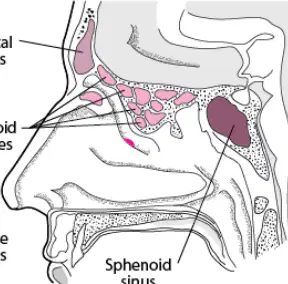
Which of the following is NOT a sinus shown in the diagram?
Frontal sinus
Ethmoid sinuses
Maxillary sinus
Parietal sinus
Sphenoid sinus
Virus that is spread by: ________ sprays from infected people during breathing, speaking, coughing, and sneezing.
Airborne droplet
Contaminated water
Direct skin contact
Insect bites
Virus that is spread by: Direct hand contact with a contaminated object and then contact between the hand and ________ membranes.
mucous
bone
hair
muscle
Which of the following is a sign or symptom of Upper Respiratory Infections & Rhinitis?
Mild sore throat
Chest pain
Skin rash
Abdominal pain
Fill in the blank: Nasal congestion with increased ________ is a symptom of Upper Respiratory Infections & Rhinitis.
secretions
temperature
pain
swelling
Which of the following is a symptom of Upper Respiratory Infections & Rhinitis?
Watery eyes
Blurred vision
Ear pain
Toothache
Fill in the blank: ________ is a common symptom of Upper Respiratory Infections & Rhinitis, often accompanied by a runny nose.
Sneezing
Headache
Fever
Cough
Which of the following describes a general feeling of discomfort or uneasiness associated with Upper Respiratory Infections & Rhinitis?
Malaise
Nausea
Dizziness
Vomiting
Fill in the blank: A ________ cough is a symptom of Upper Respiratory Infections & Rhinitis.
Nonproductive
Productive
Chronic
Wet
Which of the following is a symptom of Upper Respiratory Infections & Rhinitis?
Muscle aches
Joint swelling
Skin itching
Hair loss
Fill in the blank: ________ is a common symptom of Upper Respiratory Infections & Rhinitis, often causing discomfort in the head region.
Headache
Nausea
Rash
Diarrhea
Low grade or no temperature is a possible sign of Upper Respiratory Infections & Rhinitis.
True
False
Fill in the blank: The duration of symptoms for Upper Respiratory Infections & Rhinitis is typically ________ days, but may be up to 14 days until all symptoms are gone.
7-11
3-5
12-16
1-3
Which treatment is effective in limiting a cold’s duration?
Zinc lozenges
Vitamin C megadoses
Antibiotics
Aspirin
Echinacea supplements
Antihistamines should be used with caution in which groups of patients?
Elderly patients & patients with high BP
Young adults with no medical history
Children with no allergies
Athletes in peak physical condition
Which of the following is NOT listed as a treatment or nursing management for a cold?
Steroids
Decongestants
Antibiotics
Zinc lozenges
What is a possible effect of using nasal sprays for more than three days?
Rebound effect
Increased appetite
Improved vision
Weight loss
Saline nasal spray decreases congestion without side effects.
True
False
Which practice is important for preventing the spread of infection according to the list?
Hand hygiene
Skipping meals
Wearing dirty clothes
Sharing personal items
Increasing fluids and rest is recommended for managing a cold.
True
False
Name one complementary or alternative therapy mentioned for cold treatment.
Complementary and alternative therapies
Antibiotics
Vaccination
Surgery
Which of the following is a method to prevent complications during treatment and nursing management?
Prevention of a secondary bacterial infection
Increasing sugar intake
Reducing fluid intake
Avoiding rest
Fruit juices help boost immunity because they contain _________.
Vitamin C
Sugar
Fat
Caffeine
Which of the following analgesics are recommended in treatment and nursing management?
Acetaminophen (Tylenol)
Ibuprofen (Motrin)
Both A and B
Aspirin
Rest is an important part of treatment and nursing management.
True
False
Contact with others should be avoided during treatment and nursing management because:
it helps prevent the spread of infection.
it speeds up recovery for the patient.
it reduces the need for medication.
it ensures better nutrition for the patient.
Name one fruit juice that helps boost immunity during treatment and nursing management.
Orange juice
Grape soda
Cola
Lemonade
What is one major area of concern for older adult care? (Fill in the blank)
Immune function
Increased bone density
Improved vision
Enhanced muscle mass
Older Adult Care Points: Which of the following is a major area of concern for older adult care?
Nutrition
Secondary infections
Physical activity
Social isolation
Why should aspirin not be given to children younger than 18 years of age?
It is associated with Reye's syndrome
It causes headaches
It is not effective
It is too expensive
Aspirin should not be given to children younger than ____ years of age.
18
10
12
5
What is a potential effect of adults taking anticoagulants or nonsteroidal anti-inflammatory drugs with aspirin?
It will prolong clotting time
It will shorten clotting time
It will cause fever
It will cure Reye's syndrome
Sinusitis is an inflammation of the mucosal lining of the _______.
sinuses
lungs
kidneys
stomach
Which of the following can cause sinusitis?
Infection
Allergies
Both A and B
None of the above
A deviated septum or nasal polyps can contribute to blockage of the _______.
nasal passages
ear canal
trachea
esophagus
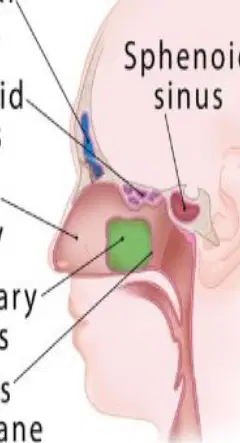
Which sinus is located above the eyes as shown in the diagram?
Frontal sinus
Maxillary sinus
Sphenoid sinus
Ethmoid sinus
Sinusitis can be caused by allergies.
True
False
Two factors that can contribute to blockage of the nasal passages are:
Swelling of the nasal lining and excess mucus production
High blood pressure and dry skin
Low blood sugar and muscle cramps
Increased heart rate and blurred vision
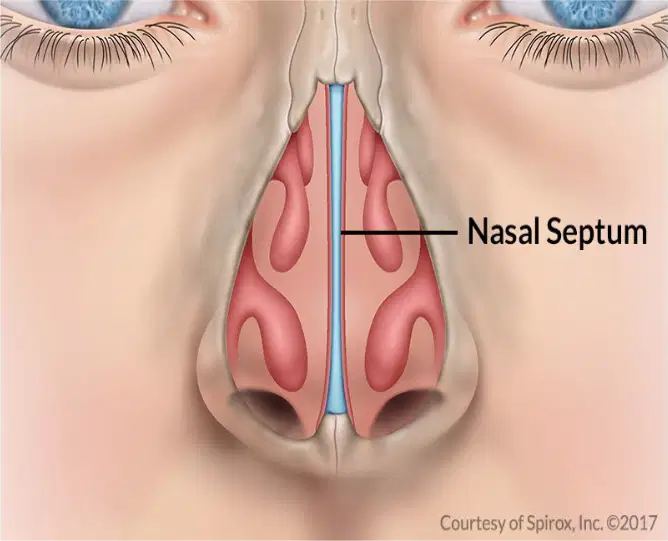
Look at the diagram labeled 'Sinusitis'. Which part is labeled as 'Nasal Septum'?
The blue line in the center
The red structures on the sides
The outer skin
The eye
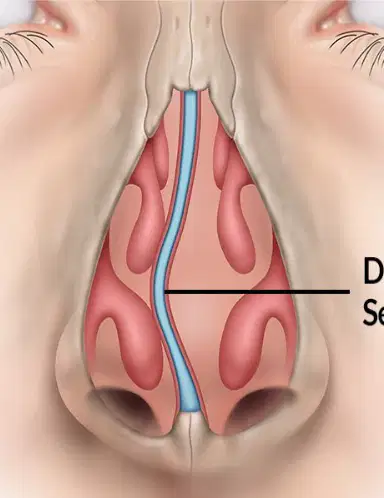
In the diagram labeled 'Sinusitis', what is the difference between the left and right images? The right image shows a ________ septum.
deviated
straight
inflamed
perforated
Which of the following is a symptom of sinusitis?
Headache
Rash
Sore throat
Vomiting
Which of the following is a symptom of sinusitis?
Fever
Diarrhea
Nausea
Dizziness
Which of the following is a symptom of sinusitis?
Tenderness over the sinuses
Back pain
Ear ringing
Blurred vision
Which of the following is a symptom of sinusitis?
Malaise
Insomnia
Weight loss
Skin itching
Which of the following is a symptom of sinusitis?
Purulent drainage from the nose
Chest pain
Swollen ankles
Hair loss
Which of the following is a symptom of sinusitis?
Sometimes a nonproductive cough
Abdominal cramps
Night sweats
Joint stiffness
Which of the following is a symptom of sinusitis?
The upper teeth may become painful
Blurred vision
Loss of appetite
Swollen feet
Which medications are recommended to relieve pain in sinusitis treatment?
Tylenol, Motrin
Amoxicillin, Clarithromycin
Cetirizine, Loratadine
Salbutamol, Ipratropium
Which of the following methods are used to promote sinus drainage in sinusitis treatment?
Irrigations
Neti-pots
Saline flushes
All of the above
What is used to control infection in sinusitis treatment?
Antibiotics
Antacids
Analgesics
Antihistamines
Preventing recurrence is a part of sinusitis treatment.
True
False
What type of packs are recommended to be placed over the sinus area in sinusitis treatment?
Hot, moist packs
Cold, dry packs
Ice packs
Electric heating pads
Inhaling moist steam thins secretions and helps to promote ________ in sinusitis treatment.
drainage
infection
swelling
blockage
Sinusitis Treatment: Medications are prescribed to reduce ______ and promote drainage.
swelling
pain
temperature
appetite
Sinusitis Treatment: Infection may be treated with an ______ if bacterial.
antibiotic
antiviral
antifungal
analgesic
Sinusitis Treatment: Rest, reduced stress, a balanced diet, and control of ______ can help prevent recurrence.
allergies
exercise
hydration
medication
Sinusitis Treatment: ______ are given for pain.
Analgesics
Antibiotics
Decongestants
Antihistamines
Fluid intake should be increased, and ______ product intake lowered to decrease the thickness of secretions.
dairy
meat
fruit
grain
What is a common cause of epistaxis (nosebleed)?
Crusting, cracking, or irritation of mucous membranes
High blood sugar
Broken leg
Tooth decay
Fill in the blank: One step in the management of epistaxis (nosebleed) is to sit forward and apply direct pressure by pinching the nose just below the _____
bone
nostril
septum
bridge
Which of the following is used in the management of epistaxis (nosebleed)?
Hot compress
Cold compress
Warm towel
Ice bath
Fill in the blank: Management of epistaxis (nosebleed) may require _____, packing, or balloon.
cauterization
intubation
defibrillation
dialysis
Fill in the blank: After bleeding from epistaxis (nosebleed) is controlled, check _____
BP (blood pressure)
temperature
respiratory rate
blood sugar
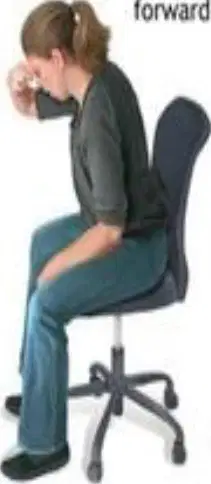
What is the first step you should take when experiencing a nosebleed according to the diagram?
Lie down flat
Sit and lean forward slightly
Tilt your head back
Stand up quickly
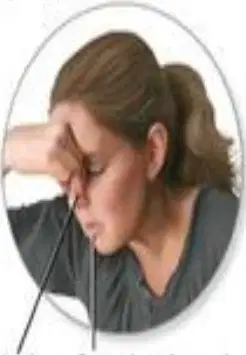
When managing a nosebleed, you should ______ your nostrils as shown in the diagram.
pinch
pull
scratch
tap
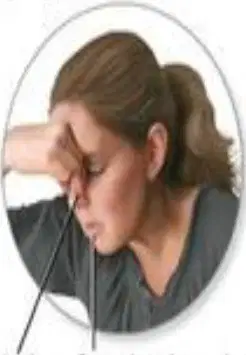
According to the diagram, when you have a nosebleed, you should breathe through your ______.
mouth
nose
ears
hands
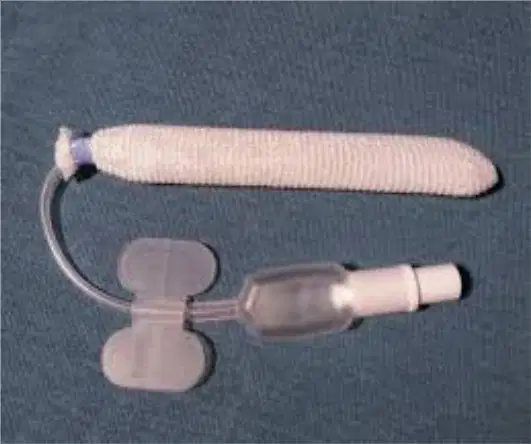
What is the medical device shown in the image called?
Nasal Packing
Endotracheal Tube
Catheter
Stent
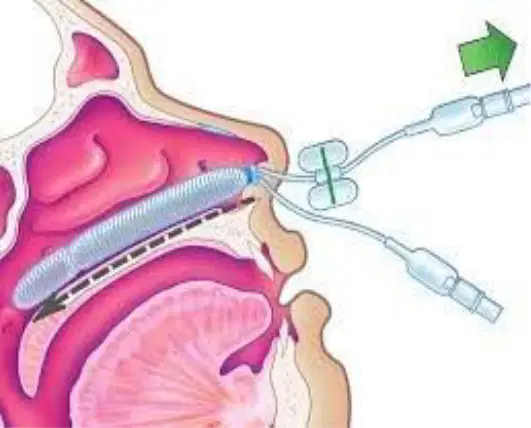
The device shown in the image is used for controlling ________ in the nasal cavity.
bleeding
swelling
infection
pain
What is pharyngitis?
Inflammation of the pharynx
Swelling of the liver
Infection of the lungs
Blockage of the arteries
Pharyngitis is usually called a ________.
sore throat
headache
stomach ache
fever
The inflammation in pharyngitis may be caused by which of the following?
Virus
Bacteria
Fungus
All of the above
Most cases of pharyngitis are caused by:
Virus
Bacteria
Fungus
Parasite
Acute follicular pharyngitis is also known as ________.
Strep throat
Tonsillitis
Laryngitis
Sinusitis
Strep throat is caused by beta-hemolytic ________ infection.
streptococcal
staphylococcal
pneumococcal
meningococcal

Which image shows Streptococcal Pharyngitis?
The left image
The right image
Pharyngitis: Laryngitis occurs when infection progresses into the _______.
larynx
pharynx
trachea
bronchi
Pharyngitis: What is a symptom of inflammation of the larynx?
Diminished voice or hoarseness
Fever
Rash
Cough
Pharyngitis: If the inflammation extends to the epiglottis, _______ occurs.
epiglottitis
laryngitis
tonsillitis
sinusitis

