
Font size
 Worksheets
History 1 , Test 2 lesson 1-8 (units 1-2)
Total questions: 100
Worksheet time: 3600secs
The Paleolithic Age is best known for:
Domestication of animals
Use of bronze weapons
Writing and record-keeping
Hunting and gathering lifestyle
Iron smelting and trade
The Mesolithic Period was a time of:
First stone tool creation and transition to copper
Early farming and herding
Written law and government
Transition to large-scale urban settlement
Transition from hunting to agriculture
The Neolithic Revolution marked:
The start of the Ice Age
Human migration to Africa
The shift to agriculture and villages
The invention of writing
The rise of iron weaponry
The Pleistocene Epoch is most associated with:
Repeated Ice Ages
First metal smelting
Beginning of written records
Spread of empires
Use of bronze and iron
The Holocene Epoch began:
2.6 million years ago
After the fall of Rome
Before the first Ice Age
With the extinction of dinosaurs
10,000 years ago
The Chalcolithic period refers to:
The copper age
The first use of iron
The stone tool revolution
The bronze weapon era
The introduction of writing
The Bronze Age began when:
Humans began agriculture and searching for resources
Stone tools replaced metal that was failing
Copper was mixed with tin to make bronze
Iron tools were invented to replace bronze
The Ice Age ended and we had a period of super hot weather
Archaeology focuses on studying:
Human behavior today and how we see history
Living animal fossils that have been found
Artifacts and ruins from the past
Modern written records
Chemical analysis of soil
Anthropology primarily studies:
Human societies and cultures
Fossils of extinct animals
Ancient architecture only
Modern computer history
Geological formations
Paleontology is the study of:
Ancient human artifacts
Stone tools only
Ancient trade systems
Historical writings
Ancient life and fossils
History differs from prehistory because:
It starts with oral traditions only
It begins with the invention of writing
It deals with the start of the discovery of fossils
It excludes human activity and begins with dinosaurs
It starts in the Ice Age as the glaciers start to melt
BC means:
Before Civilization
Before Counting
Before Chronology
Before Creation
Before Christ
BCE is a non-religious version of:
AD
CE
BC
BP
BCE itself
AD stands for:
After Death
Anno Domini
After Domination
Ancient Day
After Discovery
BP means:
Before Pharaohs
Before Past
Before Present
Before Progress
Before People
The first writing system was:
Hieroglyphics
Latin
Cuneiform
Sanskrit
Greek
Cuneiform was written using:
Feather pens and pillows
Clay tablets and stylus
Papyrus scrolls and ancient dyes
Stone chisels into ancient rocks
Ink on parchment
The Epic of Gilgamesh originated from:
Egypt
Greece
Mesopotamia
Persia
China
The Code of Hammurabi was:
A religious hymn
A set of ancient laws
A book of poetry
A farming manual
A trade contract between Egypt and allies
Sumeria is famous for:
Ironworking and advanced knowledge
The first cities and writing
Stone tools
Pyramids and hieroglyphics
Alphabetic script
Sargon of Akkad created:
The first democracy
The first empire
The first written alphabet
The first library
The first calendar
The Akkadian Empire united:
Egypt and Nubia
Sumerians and Akkadians
Persia and Babylon
India and China
Crete and Mycenae
The Assyrian Empire was known for:
Peaceful diplomacy
Advanced mathematics
Military strength and conquest
Farming and irrigation only
Bronze production
The Bronze Age Collapse involved:
The rise of empires
Widespread destruction and decline
Start of iron smelting and inventiveness
End of written history and a total restart
First Ice Age returns to claim the lives of millions
Hieroglyphics were used by:
Babylonians
Sumerians
Egyptians
Persians
Phoenicians
The Nile River was vital because:
It provided gold mines that emerged from the sands
It formed deserts that defended Egypt
It linked Greece to Egypt through trade
It supplied fertile soil through floods
It prevented trade
The Pyramids at Giza were built during:
Middle Kingdom
New Kingdom
Old Kingdom
Persian Period
Roman Period
Polytheism means:
Belief in many gods
Belief in one god
Belief in no gods
Worship of ancestors
Study of the afterlife
The Flood Myth in Mesopotamia was recorded in:
The Epic of Gilgamesh
The Code of Hammurabi
The Book of the Dead
The Rosetta Stone
The Iliad
Narmer (Menes) is known for:
Building the pyramids that we know today
Founding Memphis only
Writing hieroglyphs
Uniting Upper and Lower Egypt
Inventing papyrus
Upper Egypt refers to:
The Nile Delta
The southern region
The Mediterranean coast
The northern kingdom
The desert plateau
The Old Kingdom is best remembered for:
Expansion into Nubia
Bronze tools
Pyramid construction
Trade with Greece
Iron production
The New Kingdom featured:
First use of copper tools
Egypt’s greatest power and expansion
Earliest mummification and religious sacrifice
Rise of the pyramids and construction of the biggest ones
Start of agriculture
Ramses III is remembered for:
Writing laws
Stopping Sea People invasions
Inventing hieroglyphs
Founding Thebes
Building the Step Pyramid
Hatshepsut was notable because:
She ruled as a female pharaoh
She founded monotheism
She built the pyramids
She invaded Mesopotamia
She ended mummification
Akhenaten is best known for:
Defeating the Hittites
Worshipping the sun disk Aten
Building the Great Pyramid
Writing hieroglyphs
Ruling after Cleopatra
Tutankhamun is famous for:
Intact tomb
Inventing papyrus
Creating new laws
Building the pyramids
Founding Thebes
The Hittites were important because:
They pioneered ironworking
They developed writing
They built pyramids
They invented papyrus
They worshipped Ra
Imhotep is remembered as:
A general and conqueror
A warrior and pharaoh
A merchant and scribe
A farmer and priest
An architect and healer
The Hyksos were:
Foreign rulers who invaded Egypt
Builders of the pyramids
Greek colonists who landed in Egypt
Priests of Amun
Egyptian nobles
Ptolemaic Egypt ended with:
The fall of Memphis
The rule of Ramses III
The rise of Akhenaten
The death of Cleopatra
The unification by Narmer
Carbon dating measures:
The amount of iron in tools
The purity of gemstones
The chemical makeup of metals
The speed of erosion
The age of organic remains
The Beer Before Bread Hypothesis proposes:
Wine was made before farming
Beer inspired early farming
Bread was made before beer
Writing began before agriculture
Trade came before crops
Tigris and Euphrates are located in:
Egypt
Mesopotamia
Greece
Persia
Crete
The Minoan civilization developed mainly on:
The island of Crete
The Peloponnesus peninsula
The island of Cyprus
The coast of Anatolia
The city of Corinth
The Palace of Knossos was the center of:
Mycenaean politics
Minoan culture
Spartan training
Athenian democracy
Trojan trade routes
The Minoans were famous for:
Their iron weapons
Their stone pyramids
Their sea trade and art
Their nomadic warfare
Their mountain fortresses
The Mycenaean civilization arose on:
The island of Crete
The island of Rhodes
The coast of Egypt
The plains of Troy
Mainland Greece
The Mycenaeans are best remembered for:
Peaceful trade with Egypt
Inventing iron weapons
Building democratic systems
Teaching writing to the Minoans
Warlike kings and palaces
The Greek Dark Age followed:
The fall of the Mycenaeans
The Persian invasions
The reign of Alexander
The rise of democracy
The Dorian conquest
During the Greek Dark Age, Greeks:
Invented writing
Built the Parthenon
Lost writing and trade
Expanded into Persia
Created new city-states
The Iliad and Odyssey were:
Law codes
Religious hymns
Political speeches
Mathematical treatises
Epic poems about heroes
The Archaic Period began with:
The fall of Troy
The rise of city-states
Alexander’s empire
The Persian invasion
The Peloponnesian War
A polis was:
A Greek god
A city-state
A warship
A public market
A royal palace
The agora was:
A temple to Athena
A fortified wall
A public marketplace
A royal palace
A theater building
Democracy in Athens meant:
Rule by kings
Rule by the people
Rule by priests
Rule by soldiers
Rule by philosophers
Oligarchy is best defined as:
Rule by one
Rule by slaves
Rule by the people
Rule by few
Rule by religion
A tyrant in ancient Greece was:
A popular leader who seized power
A cruel ruler by nature
A democratically elected official
A foreign invader
A philosopher-king who ruled forever
The phalanx formation consisted of:
Rows of archers that could not be avoided
Ships in battle formation
Soldiers with shields and spears
Chariots in pairs that rotated
Cavalry in columns that had companions
A hoplite was:
A foot soldier
A philosopher
A priest of Zeus
A ship captain
A slave laborer
The trireme was:
A type of spear
A three-rowed warship
A religious building
A siege tower
A Spartan camp
The First Persian War ended with:
Greek victory at Marathon
Persian victory at Salamis
Athenian defeat at Plataea
Spartan invasion of Persia
The fall of Athens
The Battle of Marathon proved that:
Persia could not be defeated
Athens was weak and divided
Naval forces were useless
Greek infantry could win
Sparta betrayed the alliance
The Second Persian War was led by:
Xerxes I
Darius I
Cyrus the Great
Artaxerxes II
Cambyses II
The Battle of Thermopylae is remembered for:
Spartan heroism and sacrifice
Greek naval victory
Athenian betrayal of Sparta
Persian retreat and surrender
The death of Xerxes
The Battle of Salamis was a:
Land battle near Athens
Roman alliance war
Persian victory in Egypt
Siege of Sparta
Naval victory for Greece
The Battle of Plataea:
Ended Persian invasion
Destroyed Athens’ navy
Began the Peloponnesian War
Marked Xerxes’ triumph
Created the Delian League
The Golden Age of Athens occurred under:
Solon
Cleisthenes
Alexander
Xerxes
Pericles
During the Golden Age, Athens built:
The Great Library
The Temple of Artemis
The Colossus
The Lighthouse of Rhodes
The Parthenon
The Peloponnesian War was between:
Athens and Persia
Troy and Mycenae
Sparta and Macedon
Greece and Rome
Athens and Sparta
One cause of Athens’ defeat was:
The Persian invasion
The Sicilian expedition failure
Spartan plague outbreak
Macedonian rebellion
Loss of bronze weapons
The Delian League was led by:
Athens
Sparta
Corinth
Thebes
Delphi
Thucydides wrote about:
The Persian Wars
The Peloponnesian War
The Trojan War
The Hellenistic Age
The rise of Macedon
Herodotus is considered:
The first philosopher
The inventor of logi
The last Athenian general
The father of history
The poet of Troy
Homer’s works focused mainly on:
Science and geography
Trade and colonization
Law and democracy
Politics and philosophy
Myths and epic heroes
Hubris means:
Courage in battle
Love of knowledge
Loyalty to gods
Wisdom and restraint
Excessive pride
The Rise of Macedon occurred under:
Alexander the Great
Darius
Pericles
Solon
Philip II
Philip II’s goal was to:
Conquer Egypt
Create democracy
Build a naval empire
Defeat Rome
Unite all Greek city-states
Alexander the Great began his rule in:
500 BCE
480 BCE
336 BCE
310 BCE
250 BCE
Alexander’s empire stretched from Greece to:
Italy
India
Spain
Egypt
Gaul
One of Alexander’s most famous battles was:
Marathon
Gaugamela
Thermopylae
Plataea
Corinth
Hellenistic culture combined:
Greek, Persian, Egyptian ideas
Greek and Roman art only
Persian and Chinese traditions
Egyptian and Phoenician myths
Indian and Celtic customs
Socrates is known for:
Writing The Republic
Leading Sparta’s army
Building the Parthenon
Teaching through questioning
Inventing geometry
Plato founded:
The Lyceum
The Academy
The Amphitheater
The Acropolis
The Parthenon
Aristotle was the tutor of:
Socrates
Alexander the Great
Pericles
Leonidas
Thucydides
Sparta was known for:
Its naval power
Its trade and art
Its democratic rule
Its military discipline
Its large colonies
Athens was known for:
Its land army in the millions
Its Persian allies
Its desert temples
Its massive bronze mines
Its cultural and political life
Helots were:
Free citizens of Athens
Foreign merchants
Priests of Zeus
Greek philosophers
Slaves owned by Sparta
The Oracle of Delphi was believed to:
Heal the sick and wounded
Teach philosophy
Record city laws
Lead armies in war
Deliver divine messages
The legacy of Alexander includes:
The end of Greek influence
The spread of Greek culture
The rise of Roman kings
The fall of Egypt’s pyramids
The return of city isolation
Match the following

Historian

Archaeologist

Paleontologist

Anthropologist
Match the following

Flood Myth

Sargon of Akkad

Stylus

Tektites

Epoch
Match the following
Recorded history and epics like the Epic of Gilgamesh
Cuneiform
New Stone Age
Neolithic
Old Stone Age
Paleolithic
Softer metal but could be shaped
Copper Age
Mixed copper and tin
Bronze Age
Organize these options into the right categories
BCE (Before Common Era)
BC (Before Christ)
CE (Common Era)
AD (Anno Domini)
Before 1950
BP (Before Present)
Firsthand record from the time studied, like artifacts or documents.
Primary Source
Work that interprets or analyzes primary sources, like history books.
Secondary Source
Match the following
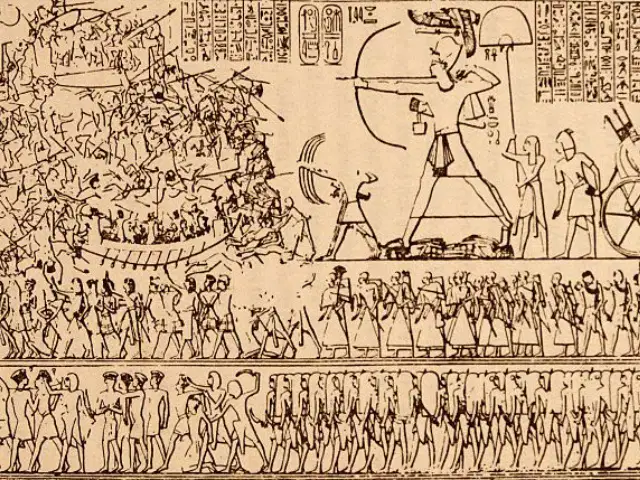
Inscription at Ramses III Temple

Narmer Palette

Unified Crown
To the North
Lower Egypt
To the South
Upper Egypt
Matching
Leader of the Delian League; strong navy
Athens
Leader of the Peloponnesian League; strong army
Sparta
Athens’ alliance for defense against Persia
Delian League
Sparta’s alliance of southern Greek city-states
Peloponnesian League
Athenian leader during the early war period
Pericles
Match each to their category
Pericles, Phidias, The Parthenon
Architecture
Sophocles, Euripides, Aristophanes
Drama
Socrates, Plato, Aristotle
Philosophy
Herodotus, Thucydides
History
Democracy, Civic Pride
Politics
Compare and contrast the philosophical methods of Socrates, Plato, and Aristotle. How did each philosopher approach the search for knowledge?
Taught through questioning; focused on ethics and self-knowledge.
Socrates
Student of Socrates; founded the Academy; wrote The Republic.
Plato
Student of Plato; studied logic, science, and politics; taught Alexander.
Aristotle
Founder of Cynicism; lived simply and rejected material wealth.
Diogenes
Match the following
Alexander’s father; united Greece under Macedon
Philip II
Alexander’s teacher; taught philosophy and science
Aristotle
Conqueror of the Persian Empire
Alexander the Great
City founded by Alexander in Egypt
Alexandria
Battle where Alexander defeated Darius III
Battle of Gaugamela
Match the following
Battle where Darius III fled and lost his family
Issus
Era of Greek culture spreading across Asia
Hellenistic Age
Where Alexander died in 323 BCE at age 32
Babylon
Persian king defeated twice by Alexander’s forces
Darius III
Alexander’s first major victory against Persia
Granicus

