
 Worksheets
Astronomy Unit Test 1 Review | NYSSLS Earth and Space Science
Total questions: 72
Worksheet time: 42mins
Which observation most directly supports that the universe is expanding?
Seasonal constellations
Parallax of nearby stars
Redshift of distant galaxy spectra
Lunar phases
The Cosmic Microwave Background (CMB) is best described as:
Radio noise from the Sun
Leftover radiation from the hot early universe
X-rays from black holes
Infrared from dust clouds
According to Hubble’s Law, more distant galaxies:
Move away faster
Move toward us faster
Have identical velocities
Do not move
Which instrument separates starlight into its component wavelengths to reveal spectral lines?
Photometer
Spectrometer
Calorimeter
Seismometer
A star’s absorption lines are shifted toward shorter wavelengths. This indicates the star is:
Rotating faster
Approaching Earth
Moving away from Earth
Cooling rapidly
Which combination of evidence supports the Big Bang Theory?
Plate tectonics + tides
Redshift + CMB + Hubble’s Law
Meteor impacts + seasons
Parallax + eclipses
On the H–R diagram, main sequence stars show that as temperature increases, luminosity generally:
Decreases
Increases
Stays constant
Becomes random
A star’s color most directly indicates its:
Age
Surface temperature
Distance
Chemical age of its planets
Which star type typically has the shortest lifespan?
Red dwarf
Blue giant
Sun-like yellow star
White dwarf
Red giants are typically:
Hot and dim
Cool but very luminous
Cool and very dim
Hot and faint due to small radius
White dwarfs are generally found in which region of the H–R diagram?
Upper right
Lower left
Upper left
Middle main sequence
Which property is the primary determinant of a star’s lifespan?
Distance from Earth
Mass
Apparent magnitude
Rotation rate
The Sun’s most likely evolutionary path is:
Main sequence → red giant → white dwarf
Main sequence → supernova → neutron star
Protostar → black hole
White dwarf → red giant
In stellar cores, nuclear fusion primarily:
Splits heavy nuclei
Converts hydrogen into helium
Converts iron into nickel releasing energy
Produces electricity directly
Fusion stops at iron in massive stars because iron fusion:
Requires more energy than it releases
Is too cold to occur
Is forbidden by gravity
Creates immediate black holes
Elements heavier than iron (e.g., Au, U) are mainly formed during:
Planetary nebula ejection
Supernova explosions
Main sequence burning
Solar wind condensation
Which statement about spectral “fingerprints” is correct?
Different elements share identical lines
Each element has a unique set of spectral lines
Spectral lines occur only in visible light
Lines cannot reveal composition
The Doppler effect applied to starlight allows astronomers to determine a star’s:
Radius
Motion toward/away from Earth
Age
Metal content directly
Which EM band best reveals star-forming regions behind cool dust?
Ultraviolet
Infrared
Gamma ray
Visible green
Which wavelengths are mostly blocked by Earth’s atmosphere, requiring space telescopes?
Visible
Radio
Ultraviolet and X-ray
A larger redshift in a galaxy’s spectrum generally implies:
Smaller distance
Greater recessional velocity
Lower mass
Older star population
Which best describes an absorption spectrum?
Bright lines from hot, thin gas
Dark lines where specific wavelengths are removed
Even brightness at all wavelengths
Broken bands from cold solids
Emission spectra are produced by:
Hot, thin gas emitting light at discrete wavelengths
A cool gas in front of a continuum
Solids at low temperature
Light scattered by dust
A star’s peak emission shifts to shorter wavelengths. What does this indicate?
The star cooled
The star heated up
The star slowed down
The star gained mass
Compared to the Sun, Barnard’s Star is most likely:
Hotter and more luminous
Cooler with a longer lifespan
Same mass and temperature
More massive but dimmer
During the red giant phase of a Sun-like star, luminosity increases mainly because:
Radius decreases greatly
Mass increases
Core temperature falls
Rotation stops
Which observation confirms a star’s chemical composition?
Proper motion
Unique spectral line pattern
Parallax angle
Apparent magnitude
Which sequence shows massive-star fusion before core collapse?
He → H → C → Fe
H → He → C/O → Fe
H → Fe → He → C
Fe → Ni → H → He
After a core-collapse supernova, the compact remnant could be:
White dwarf
Neutron star or black hole
Protostar
Red giant
Which is true of the EM spectrum and the atmosphere?
All wavelengths pass equally
Visible and some radio pass; much IR/UV/X-ray are absorbed
Only IR passes
Only gamma passes
Which pair best probes black hole accretion disks?
Radio + microwave
X-ray + gamma ray
Visible + radio
Infrared + AM radio
Which is the best evidence that the universe began hot and dense?
Parallax of stars
Uniform CMB with tiny fluctuations
Solar cycles
Earth’s magnetic field
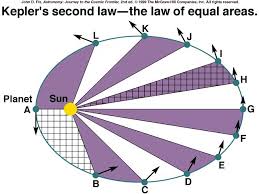
Kepler’s 2nd Law implies that a planet moves fastest when it is:
At aphelion
At perihelion
Crossing the ecliptic
Behind Jupiter
According to Kepler’s 3rd Law, planets farther from the Sun have:
Shorter orbital periods
Longer orbital periods
Identical orbital periods
Constant orbital speeds
Which factor increases gravitational force between two bodies?
Increasing distance
Decreasing mass
Increasing mass
Removing atmospheres
For satellites orbiting Earth, stronger gravity occurs:
Farther from Earth
Closer to Earth
Only at geosynchronous altitude
Only above the poles
Compared to the Moon’s distance, HST is much closer to Earth. Therefore HST’s orbital period is:
Longer than the Moon’s
Equal to the Moon’s
Shorter than the Moon’s
Unrelated to gravity
Which condition produces a more eccentric (stretched) ellipse?
Decreasing distance between the two foci
Increasing distance between the two foci
Constant orbital speed
Circularizing the path
Which statement about Mercury and Venus aligns with Kepler’s Laws?
Both move at constant speed
Mercury moves faster near perihelion than at aphelion
Venus has no eccentricity
Mass determines their speeds directly
Planets beyond Mars generally have:
Warmer surfaces
Higher densities
Longer periods of revolution
Shorter periods of rotation

The Andromeda Galaxy is best classified as a:
Spiral galaxy
Elliptical galaxy
Irregular galaxy
Dwarf spheroidal only
Which two variables most directly determine the gravitational pull between the Milky Way and Andromeda?
Ages of stars and CMB
Masses and distance
Star temperatures and luminosities
Disk thickness and dust color
About how old is the universe according to current models?
4.6 billion years
7 billion years
9 billion years
13.8 billion years
Which list shows stars in order of increasing luminosity?
Procyon B → Sun → Sirius → Betelgeuse
Spica → Rigel → Deneb → Betelgeuse
Polaris → Deneb → 40 Eridani B → Proxima Centauri
Barnard’s Star → Alpha Centauri → Rigel → Spica
Which force sorted solar system materials by density during formation?
Magnetism
Gravity
Coriolis
Friction only
Two planets orbit between Mercury and Venus. Which has the greater average orbital speed?
The one closer to the Sun
The one farther from the Sun
Both the same
Depends on mass
Why would the innermost Kepler-62 planet have the shortest period?
It is most massive
It is closest to the star
It is tidally locked
It has the least eccentricity
Why place telescopes in space?
To eliminate gravity
To avoid atmospheric absorption and distortion
To decrease cost


What color is the longest wavelength?
Green
Yellow
Blue
Red

What is the name of the cloud that a star is formed in?
Nebula / Stellar Nursery
Supernova
Main Sequence
Dwarf

When a Red Giant runs out of fuel, it become a:
Supernova
Nebula
White Dwarf
Main Sequence Star

What is a protostar?
A star that has died
A smaller than average star
A big, blue star that is on the main sequence of the HR diagram
A contracting mass of gas which represents an early stage in the formation of a star

The Milky Way galaxy is thought to be a(n)
spiral galaxy
a galaxy far far away
elliptical galaxy.
irregular galaxy.
The Solar System is a part of the Milky Way Galaxy.
True
False
Rank the stars colors in order from hottest to coolest
blue, white, yellow, orange, red
white, blue, yellow, orange, red
red, orange, yellow, white, blue
white, blue, orange, yellow, red
Put the life cycle stages of a small/medium mass star in order from beginning to end.

protostar

main sequence

red giant

planetary nebula

white dwarf



