
 Worksheets
Transport Infrastructure & Highways
Total questions: 41
Worksheet time: 21mins
Which transport mode commonly links local and national locations including towns, cities, airports, and docks?
Roads
Rail
Air
Water
Rail transport primarily links which of the following?
Villages to rural farms
Major towns and cities to docks and airports
International destinations directly
Only local neighborhoods
Historically, which water-based infrastructure was used to transport goods before railways and is now mainly used for leisure?
Estuaries
Canals
Reservoirs
Lakes
Modern ports are described as deep water to accommodate large ships and tankers. What is a primary function mentioned?
Tourism cruises only
Transporting raw materials and goods internationally
Hosting small fishing boats
Providing local ferry services only
A/Trunk roads can be which of the following carriageway configurations?
Only single carriageways
Only dual carriageways
Both single and dual carriageways
Triple carriageways
B and unclassified roads most commonly serve which areas?
International hubs
Smaller towns and villages
Large metropolitan centers exclusively
Airports only
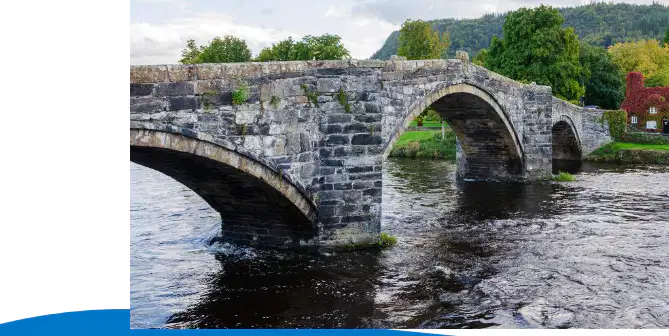
Identify the bridge type commonly characterized by curved openings that transfer loads into abutments. Refer to the left image showing stone arches over a river.
Beam bridge
Suspension bridge
Arch bridge
Truss bridge
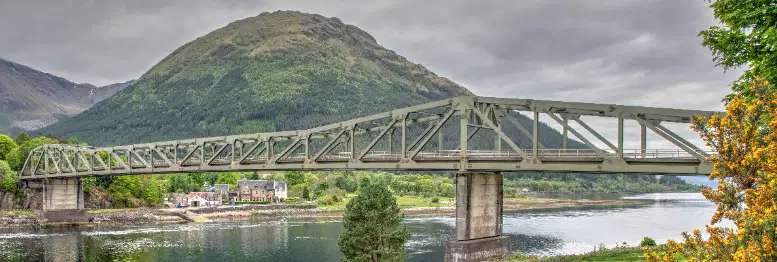
Which bridge type uses a framework of interconnected members forming triangles, as shown in the top image crossing a loch?
Cantilever bridge
Truss bridge
Beam bridge
Arch bridge
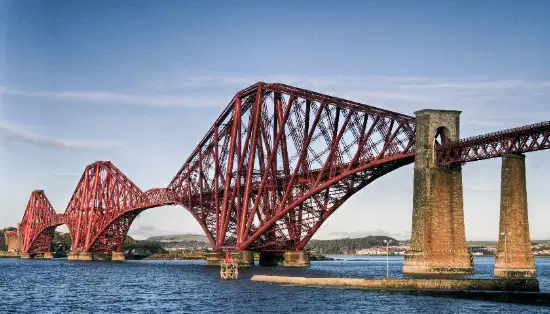
The Forth Bridge is cited as an example of which construction method?
Suspension
Beam
Cantilever
Arch
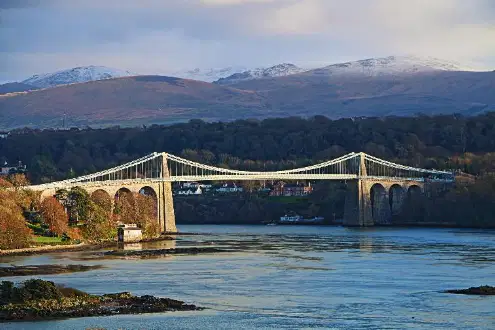
Which bridge type supports the deck using cables hung from main cables draped over towers, as seen in the bottom-left image?
Suspension bridge
Beam bridge
Arch bridge
Cantilever bridge
Which statement distinguishes a beam bridge from an arch bridge?
Beam bridges rely on curved arches to carry loads into abutments; arch bridges use straight beams on piers.
Beam bridges use straight spans supported by piers, while arch bridges use curved arches to transfer loads.
Both primarily use suspension cables over towers.
Both are defined by triangular truss frameworks.
Which statement best defines a viaduct?
An underground passage used to avoid obstacles
A long bridge-like structure with a series of arches that carries a road or railway across a valley or gorge
A prefabricated concrete tube sunk under water
A channel that transports water
What is the primary function of an aqueduct?
Carry vehicles across a valley
Transport water from a source to a distribution point
Provide ventilation for tunnels
Support railway tracks over a gorge
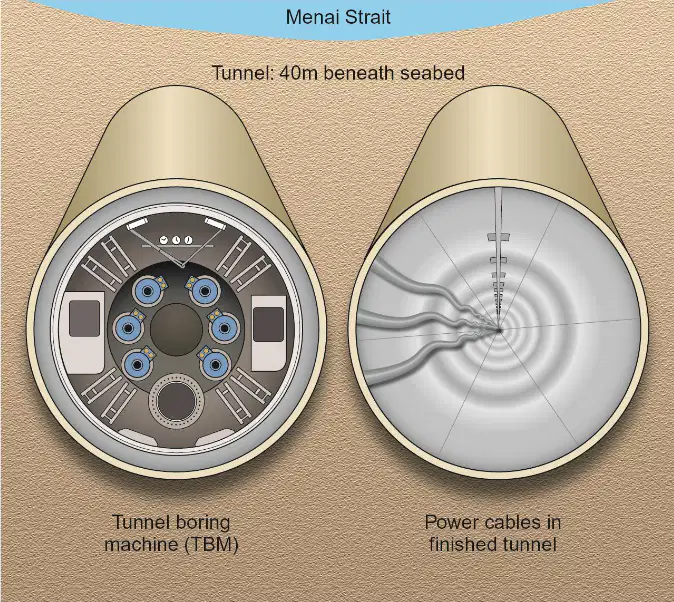
In the example of a bored tunnel, what machine is shown creating the tunnel?
Pile driver
Tunnel boring machine (TBM)
Excavator
Roadheader
Which structure would most likely be used by a canal to cross a valley in the same way a viaduct is used by a road or railway?
Aqueduct
Underpass
Flyover
Causeway
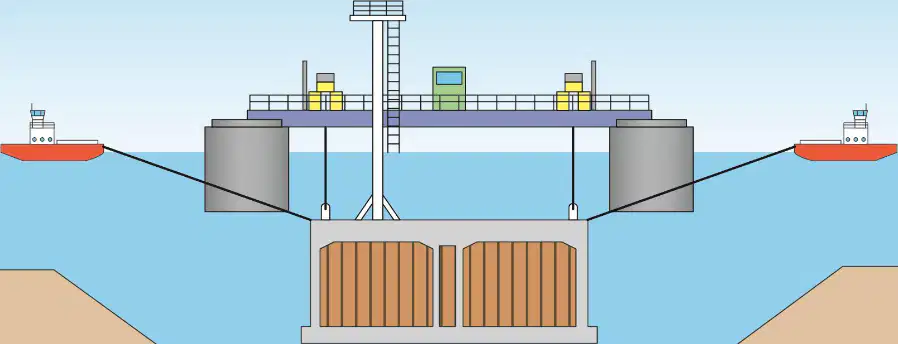
Which statement best describes the process depicted in the diagram of an immersed tunnel?
A bored tunnel is being drilled through rock using a TBM.
Prefabricated tunnel sections are lowered by a floating platform into a prepared seabed trench, with tugboats stabilising the operation.
A bridge pier is being driven into the riverbed with pile hammers.
A cut-and-cover trench is being excavated on land by bulldozers.
Which statement best describes how essential services are transported across a country to homes and businesses?
Only electricity is carried by overground pylons; all other services are local.
A network of underground or overground pipes and cables carries gas, electricity, water and telecommunications.
Services are delivered solely through wireless transmission without physical infrastructure.
Gas and water are transported exclusively by road tankers.
What do pylons primarily carry according to the material?
Low voltage electricity for domestic use
High voltage electricity from power stations to local substations
Gas for industrial plants
Telecommunications signals between mobile phones
High voltage transmitted on pylons is often stepped down to approximately what voltage for domestic properties?
12 volts
110 volts
240 volts
765,000 volts
Which statement about the voltage carried by pylons is accurate?
It is typically less than 240 volts.
It often exceeds 765,000 volts.
It is exactly 110 volts.
It is only used for street lighting.
Mobile phone towers act as though they are large antennae. What is their main function?
To store electricity for local substations
To transmit and receive radio waves to a radio base station
To pump water through underground mains
To convert gas into electricity
After a mobile phone tower communicates with a radio base station, how can the call be routed according to the material?
Only through copper twisted-pair cables
Via a fibre optic cable or forwarded to another base station via a satellite link
Directly to the recipient’s phone without any network equipment
Through the national power grid
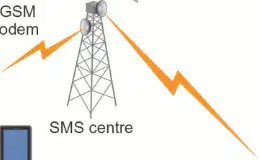
Which device types are examples of recipients that can receive messages via the mobile network as shown?
PDA, pager, laptop with SMS gateway
Domestic electricity meter, water pump, gas boiler
Overground pole, underground pipe, pylon
Power station turbine, transformer, substation
Which statement best describes the primary purpose of dams in flood management?
To increase river erosion
To regulate water flow and form reservoirs, also generating hydroelectricity
To create natural levees
To permanently block rivers
Flood plains are best described as:
High ground that never floods
Artificial embankments built by engineers
Natural low-lying areas that flood when rivers burst their banks after heavy rainfall
Small dams built across rivers
A weir primarily serves to:
Store drinking water
Prevent earthquakes
Regulate the flow of water to help prevent erosion
Create flood plains
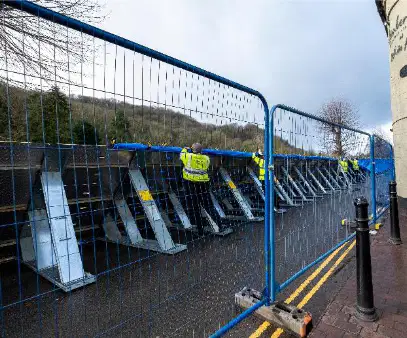
Which temporary measure is shown being installed in Ironbridge to manage flooding?
Permanent levee
Temporary flood barrier
Underground culvert
Hydroelectric turbine
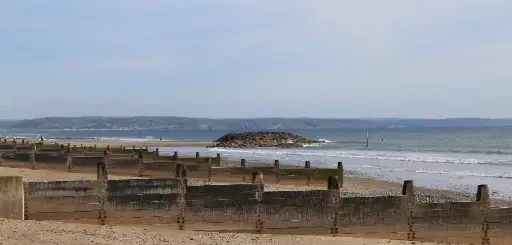
Groynes primarily help prevent which issue on beaches?
Sand dunes forming
Beaches drifting or washing away
Saltwater intrusion into groundwater
Storm surge height increases
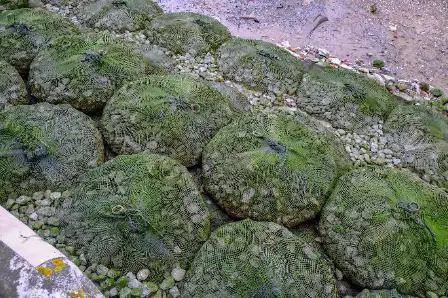
What best describes gabions as used in coastal erosion protection?
Solid concrete blocks that reflect wave energy
Cages filled with bricks or stones that allow water to flow through
Metal sheets driven into the seabed to trap sediment
Timber slats that create windbreaks
Why do gabions reduce erosion effectively?
They completely block water movement
They increase the velocity of water
They allow water to flow through while decreasing its velocity
They redirect waves to adjacent areas
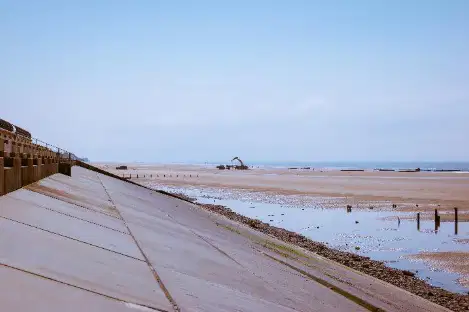
Revetments are typically constructed from which materials?
Timber, rocks, concrete blocks or paving
Glass panels and steel cables
Compact clay and geotextiles only
Plastic sheets and sand
Which statement best describes revetments?
Vertical barriers built far offshore
Sloping structures along shorelines that absorb wave energy to prevent erosion
Mesh cages placed inland to store floodwater
Curved walls designed to reflect all wave energy
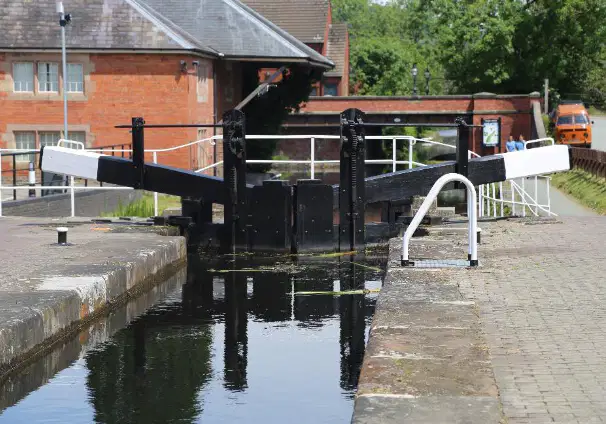
Which statement best describes the function of canal locks?
They store coal for industrial cities.
They raise and lower boats between stretches of water at different levels.
They provide living quarters for canal workers.
They divert water away from towns during floods.
In the context of canal construction, what economic benefit was highlighted?
Tourism increased in seaside towns.
Goods and building materials could be cheaply transported across the border.
Fishing yields improved due to lock systems.
Electricity generation from canals replaced coal.
Which structure is specifically drained to allow work on a ship and then re-flooded so the ship can sail out again?
Pier
Quay
Dry dock
Warehouse
Which structure most commonly extends from the shore into the sea and is now mainly used for recreational purposes?
Dry dock
Pier
Quay
Canal lock
Solar farms primarily generate electricity from which source?
Flowing rivers
Sunlight
Wind pressure
Biogas
Industrial biomass boilers typically use which fuel to replace fossil fuels in electricity production?
Crude oil
Coal
Wood pellets or timber
Natural gas
Which statement best explains why renewable energy production is becoming more important?
It is cheaper than all fossil fuels in every situation.
Global warming and depletion of fossil fuels increase the need for renewables.
Renewables require no maintenance.
Fossil fuels are banned worldwide.
Which listed technology is most associated with sustainable electricity through combustion of organic material?
Wind farms
Solar farms
Industrial biomass boilers
Tidal movement
Which option is NOT a renewable energy technology described in the material?
Wind farms
Solar farms
Industrial biomass boilers
Diesel generators

