
 Worksheets
Principles of Cardiac Hemodynamics: Introduction
Total questions: 150
Worksheet time: 1hrs 15mins
Which statement best defines cardiac hemodynamics as introduced in this section?
The study of electrical conduction in the heart
The study of blood flow, pressure, and resistance within the circulatory system
The measurement of endocrine responses to exercise
The analysis of respiratory gas exchange only
According to the circulation overview, which pairing correctly matches component with role?
Heart as the vehicle; blood as the pump
Vessels as conduits; heart as the pump; blood as the vehicle
Blood as conduits; vessels as the vehicle
Heart as the conduit; vessels as the pump
Which principle of physics is emphasized in the definition of hemodynamics?
Flow = resistance × pressure
Flow = pressure/resistance
Pressure = flow/resistance
Resistance = flow × pressure
Which learning objective focuses on using the Wiggers diagram?
Explain calcium’s role in excitation–contraction coupling
Describe pressure and volume changes during the cardiac cycle and correlate them with heart sounds (S1, S2, S3) using the Wiggers diagram
Define key hemodynamic parameters related to cardiac output and preload/afterload
Identify compensatory mechanisms to hemodynamic imbalances
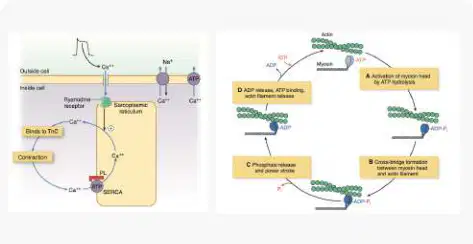
Excitation–contraction coupling in cardiac muscle primarily highlights the role of which ion in initiating contraction?
Sodium (Na+)
Potassium (K+)
Calcium (Ca2+)
Chloride (Cl−)

The cardiac cycle consists of alternating periods of systole and diastole. Which pairing correctly describes these phases?
Systole: relaxation and filling; Diastole: contraction and emptying
Systole: contraction and emptying; Diastole: relaxation and filling
Systole: depolarization only; Diastole: repolarization only
Systole: passive filling; Diastole: active ejection
Which statement aligns with the focus of cardiovascular hemodynamics?
How the lungs ventilate to exchange gases
How the heart and blood vessels work together to deliver oxygen and nutrients efficiently to tissues
How skeletal muscles utilize ATP during exercise
How neurons transmit signals across synapses

Which point on the pressure–volume loop corresponds to end-diastolic volume (EDV) just before isovolumetric contraction begins?
After aortic valve opens
After mitral valve closes
At isovolumetric relaxation
At peak systolic pressure

Cardiac output (CO) is defined as the volume of blood pumped by each ventricle per minute. Which equation correctly expresses CO?
CO = SV ÷ HR
CO = HR × SV
CO = MAP ÷ TPR
CO = EDV − ESV

Which autonomic input decreases heart rate according to the heart rate diagram?
Increased sympathetic activity
Increased parasympathetic activity
Decreased parasympathetic activity
Epinephrine release

Stroke volume (SV) is the volume ejected with each systolic contraction. Which pair correctly identifies the two volumes used to calculate SV?
End-diastolic volume and end-systolic volume
End-diastolic pressure and mean arterial pressure
Venous return and cardiac output
Preload and afterload
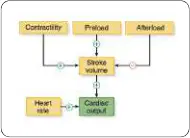
Which of the following is NOT listed as a major determinant of stroke volume?
Preload
Afterload
Contractility
Heart rate

Preload is best defined as which of the following?
The pressure the ventricle must overcome to eject blood
The stretch on the heart before it pumps, determined by end-diastolic volume
The contractile strength independent of loading conditions
The volume ejected per beat

According to the Frank–Starling relationship depicted, increasing preload within physiological limits leads to which effect on cardiac output?
Decreased cardiac output
No change in cardiac output
Increased cardiac output
Variable effect unrelated to preload

Using the provided example values, what is the approximate cardiac output when heart rate is 70 bpm and stroke volume is 70 mL/beat?
4.0 L/min
4.9 L/min
5.0 L/min
5.6 L/min

Which statement best defines afterload in cardiac physiology?
The volume of blood in the ventricle at end-diastole
The force that must be overcome for the ventricle to eject its contents
The intrinsic ability of the myocardium to contract at any given preload
The rate of electrical impulses through the heart

Increasing afterload primarily has which effect on ventricular ejection?
Enhances stroke volume by lowering resistance
Makes it easier for the heart to pump more blood
Creates higher resistance so the heart pumps less blood per beat
Has no effect on stroke volume

Contractility is defined as:
Strength of contraction at any given preload
Amount of venous return to the heart
Pressure in the aorta during systole
Resistance in arterioles

Which factor directly increases contractility according to the material?
Higher end-diastolic volume (preload)
Muscle health and catecholamine signals
Lower afterload
Increased blood viscosity

Which compensatory mechanism describes how increased end-diastolic volume enhances stroke volume?
Neurohormonal stimulation
Frank–Starling mechanism
Baroreceptor fatigue
Myocardial ischemia

Neurohormonal stimulation as a compensatory mechanism most likely causes which immediate effect?
Decreased heart rate and vasodilation
Increased sympathetic activity with vasoconstriction
Reduced venous return
Lower contractility
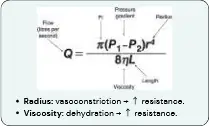
Total Peripheral Resistance (TPR) is primarily due to which vascular factor?
Friction in vessels, mainly arterioles
Compliance of large veins
Capillary hydrostatic pressure only
Cardiac output alone

According to the relationship provided, blood pressure (BP) can be calculated as:
BP = SV × HR
BP = CO × TPR
BP = EDV − ESV
BP = MAP ÷ CO
Which statement best defines valve stenosis in the context of cardiac hemodynamics?
Backflow of blood due to incomplete valve closure
Narrowing of a valve that creates a pressure gradient during forward flow
Inflammation of valve leaflets causing murmur
Complete obstruction of a valve eliminating blood flow
In aortic stenosis, which pressure is markedly higher during left ventricular ejection compared with normal?
Aortic pressure
Left atrial pressure
Left ventricular pressure
Pulmonary capillary wedge pressure
Aortic stenosis alters the pressure curves across the cardiac cycle. Which combination shows the primary pressures involved?
Right ventricular pressure, pulmonary artery pressure, right atrial pressure
Left ventricular pressure, aortic pressure, left atrial pressure
Systemic venous pressure, capillary pressure, pulmonary artery wedge pressure
Coronary perfusion pressure, mean arterial pressure, central venous pressure
Which consequence of aortic stenosis on the left ventricle is most directly related to the increased pressure load?
Systolic dysfunction due to reduced contractility
Dilated cardiomyopathy with increased compliance
Concentric hypertrophy leading to decreased compliance and diastolic dysfunction
Immediate ventricular rupture
During aortic stenosis, elevated LVEDP causes blood to travel back into the left atrium and pulmonary veins. Which pressure increases as a result?
Right atrial pressure
Pulmonary capillary wedge pressure
Aortic diastolic pressure
Coronary venous pressure
On a pressure–volume loop for aortic stenosis, which change is most characteristic?
Marked rightward shift due to increased preload
Reduced stroke volume with higher systolic LV pressures
Lower afterload with increased ejection fraction
Complete absence of isovolumetric phases
Mitral valve stenosis primarily impairs which phase of left ventricular function?
Ventricular systolic ejection
Isovolumetric relaxation
Ventricular diastolic filling from the left atrium
Aortic valve opening
Which hemodynamic change is expected in mitral stenosis due to high resistance across the valve?
Decreased left atrial pressure during diastole
Increased left atrial pressure that transmits to elevated LV pressure during diastolic filling
Lower pulmonary venous pressure with enhanced preload
Increased aortic diastolic pressure due to regurgitant flow
Reduced ventricular filling (preload) in mitral stenosis decreases stroke volume primarily through which mechanism?
Bowditch effect
Frank–Starling mechanism
Anrep effect
Fick principle
In aortic regurgitation, which pattern of arterial pressures is most typical according to the instructional material?
Low systolic and high diastolic pressure causing narrow pulse pressure
Elevated systolic with low diastolic pressure causing widened pulse pressure
Equal systolic and diastolic pressures
Consistently low arterial pressure throughout the cycle
What is the immediate cause of regurgitant valve disease described in the material?
Valve leaflets fused open during systole
Abnormal coaptation of valve leaflets during valve closing
Excessive chordae tendineae tension during diastole
Papillary muscle hypertrophy preventing opening
In aortic regurgitation, when does backward flow into the LV occur and what is its preload consequence?
During systole; decreases LVEDV
During diastole; increases LVEDV
During systole; increases LVEDV
During diastole; decreases LVEDV
During mitral regurgitation, which chamber directly receives blood back from the LV in systole and shows pressure elevation throughout the cardiac cycle?
Right atrium
Left atrium
Pulmonary artery
Aorta
Which statement best contrasts the primary hemodynamic disturbance between aortic stenosis and mitral stenosis?
Aortic stenosis increases forward flow while mitral stenosis decreases afterload
Aortic stenosis creates a systolic pressure gradient across the aortic valve; mitral stenosis impedes diastolic filling from LA to LV
Both conditions primarily cause diastolic murmurs
Mitral stenosis increases LV systolic pressure significantly compared to aortic stenosis
Which statement best defines regurgitation valve disease in the context of cardiac hemodynamics?
Backward flow of blood due to valve not closing properly
Forward obstruction of blood due to valve not opening fully
Autoimmune inflammation of cardiac valves
Calcific stiffening that increases afterload
Turbulent flow generated by valve regurgitation most commonly produces which bedside finding?
Gallop rhythm
Murmur
Pericardial rub
Silent precordium
In isolated aortic regurgitation, which immediate hemodynamic effect occurs during diastole?
Regurgitant volume fills the left atrium
Regurgitant volume returns from aorta into left ventricle
Right-to-left shunt increases systemic venous return
Pulmonic valve closes prematurely preventing LV filling
Which change best characterizes mitral regurgitation during systole?
Blood ejects solely into aorta, increasing afterload
Blood leaks back into left atrium, increasing atrial volume and pressure
No change in left atrial pressure occurs
Right ventricular preload increases directly
How does chronic aortic or mitral regurgitation typically affect left ventricular end-diastolic volume (LVEDV)?
Decreases due to reduced preload
Remains unchanged
Increases due to added regurgitant volume and compensatory dilation
Becomes zero in severe disease
Which pairing correctly matches the valve lesion with its primary direction of regurgitant flow?
Aortic regurgitation: LV to aorta during diastole
Mitral regurgitation: LA to LV during systole
Aortic regurgitation: aorta to LV during diastole
Mitral regurgitation: LV to LA during diastole
An increase in LVEDV from valve regurgitation most directly leads to which preload-related consequence?
Reduced stroke volume by Frank–Starling mechanism
Enhanced preload that initially augments stroke volume
Immediate pulmonary hypertension resolution
Complete normalization of wall stress
Which statement best defines systolic blood pressure during manual auscultatory measurement?
The pressure at which the first Korotkoff sounds disappear
The peak arterial pressure during ventricular contraction, noted at the first appearance of Korotkoff sounds on cuff deflation
The average arterial pressure computed from oscillation amplitudes
The lowest pressure recorded during the night on ambulatory monitoring
In the context of measuring blood pressure, what do Korotkoff sounds represent?
Electrical activity of the heart detected by ECG
Turbulent blood flow sounds heard over the brachial artery during cuff deflation
Oscillation amplitudes calculated by automated devices
Respiratory sounds used to time measurements
Which scenario describes white-coat hypertension?
BP below diagnostic threshold in office but above threshold at home or ambulatory settings
BP above diagnostic threshold in office but below threshold at home or ambulatory settings
BP consistently elevated on 24‑h ABPM and home measurements
BP elevated only during nighttime
What is the recommended patient preparation before office BP measurement?
Measure immediately after exercise to capture peak response
Ensure the patient has rested comfortably for at least 5 minutes, avoided caffeine/tobacco for ≥30 minutes, emptied bladder if needed, and is seated with back and legs supported
Ask the patient to cross legs to stabilize posture
Place the arm unsupported to avoid isometric effects
Regarding BP cuff selection, which is correct?
Any cuff size works if tightened firmly
Bladder length should be 75%–100% and width 35%–50% of arm circumference; an undersized cuff can falsely elevate BP
Place the cuff over the wrist for all patients
Cuff should be positioned at the forearm to avoid arterial fossae
During manual auscultatory BP measurement, how many readings and how should the final BP be reported?
One reading is sufficient; report the single value
Two readings, averaged only if they differ by <5 mmHg
Three readings taken 1–2 minutes apart; report the average of the last two readings
Five readings; report the highest value
Which statement differentiates office, home, and ambulatory BP measurement approaches?
Office BP must be measured only manually and never with automated devices
Home BP (HBPM) is measured by patients using validated upper‑arm oscillometric monitors; ambulatory BP (ABPM) uses automated oscillometric devices over 24 hours
ABPM is performed only during clinic hours
HBPM always requires a healthcare professional present
Which threshold set aligns with ambulatory daytime (awake) hypertension criteria noted in the summary diagram?
≥135/85 mmHg for daytime ABPM
≥140/90 mmHg for daytime ABPM
≥120/70 mmHg for daytime ABPM
≥160/100 mmHg for daytime ABPM
Which phenomenon describes elevated blood pressure readings in a clinical setting that are not present in everyday life?
Masked hypertension
White-coat hypertension
Orthostatic hypotension
Inter-arm difference
What term refers to a clinically significant difference in blood pressure readings between a patient’s left and right arms?
Postural hypotension
Inter-arm difference
Ambulatory measurement discrepancy
Auscultatory gap
Which condition involves a drop in blood pressure upon standing and is assessed with postural measurements?
Masked hypertension
Orthostatic hypotension
White-coat hypertension
Essential hypertension
Which blood pressure measurement modality continuously records BP over 24 hours to capture daytime and nighttime values?
Office BP measurement
Home BP measurement
Ambulatory BP measurement
Auscultatory BP measurement
Which technique uses Korotkoff sounds detected with a stethoscope to determine systolic and diastolic pressures?
Oscillometric technique
Photoplethysmographic technique
Auscultatory technique
Tonometric technique
For accurate office blood pressure measurement, which patient preparation step is most appropriate?
Measure immediately after brisk walking
Ensure the patient is seated quietly for several minutes
Ask the patient to hold their breath during measurement
Use a finger cuff for convenience
Which scenario best exemplifies masked hypertension?
Elevated office BP with normal out-of-office BP
Normal office BP with elevated home or ambulatory BP
BP drop upon standing from supine position
Persistent inter-arm difference >20 mmHg
When selecting a BP cuff, which factor is most critical to ensure accuracy?
Color of the cuff
Cuff bladder width and length relative to arm circumference
Brand name
Presence of digital display
Which measurement approach helps distinguish white-coat hypertension from sustained hypertension?
Single office reading with a manual sphygmomanometer
Repeat measurements in the same visit only
Home or ambulatory blood pressure monitoring
Measuring BP in the ankles
In oscillometric BP devices, the primary signal used to estimate blood pressure is due to what?
Sound waves from turbulent flow
Oscillations in cuff pressure caused by arterial volume changes
Electrical activity of the heart
Infrared light absorption changes
Which condition is categorized under high cardiovascular (CV) risk due to established clinical atherosclerotic disease?
Heart failure with preserved ejection fraction
Atherosclerotic cardiovascular disease (ASCVD)
Healthy aging without comorbidities
Isolated systolic hypertension in young adults
According to high CV risk conditions, which chronic kidney disease (CKD) threshold indicates high risk?
eGFR ≥90 mL/min/1.73 m²
eGFR 60–75 mL/min/1.73 m²
eGFR <45 mL/min/1.73 m²
eGFR 45–59 mL/min/1.73 m²
Which risk modifier increases cardiovascular risk independently of blood pressure and should be considered in stratification?
High salt sensitivity
Regular physical activity
Low LDL cholesterol
Absence of family history of ASCVD
In the hypertension screening workflow, which tool is indicated to estimate 10-year risk of CV disease in adults without prior ASCVD?
Framingham Risk Score
SCORE2
CHA2DS2-VASc
HAS-BLED
Which routine test is recommended in the initial work-up of a patient with elevated blood pressure to assess secondary causes such as primary aldosteronism?
Echocardiogram
Plasma aldosterone and renin
Spirometry
Serum troponin
What defines resistant hypertension in current guidance?
BP remains uncontrolled despite lifestyle measures alone
BP controlled with one antihypertensive agent
Uncontrolled BP despite ≥3 antihypertensive drugs of different classes (including a diuretic) at optimal doses
White-coat hypertension with normal ambulatory BP
Which factor may cause pseudo-resistance to blood pressure-lowering treatment and should be excluded before diagnosing true resistant hypertension?
Low dietary sodium intake
Adherence to medication
Incorrect BP measurement technique
Use of combination therapy
Which secondary cause of hypertension is commonly associated with obstructive sleep apnoea (OSA) and should prompt screening when suggestive signs are present?
Primary hypothyroidism
Cushing’s syndrome
Obesity with daytime somnolence and loud snoring
Rheumatoid arthritis

Which lifestyle modification is recommended to reduce cardiovascular risk in hypertension management?
Increase sodium intake
Increase physical activity
Reduce potassium intake
Start smoking
Which dietary approach is specifically promoted to help stop hypertension?
Keto diet
Mediterranean diet
DASH diet
Carnivore diet

According to recommendations, what is the initial management for non-elevated blood pressure (<130/85 mmHg) with low cardiovascular risk?
Start dual pharmacotherapy
Initiate lifestyle measures only
Refer for secondary hypertension work-up
Immediate hospitalization

In the hypertension screening algorithm, what is the next step after confirming elevated BP with repeat measurements?
Begin lifestyle modification and risk assessment
Skip to resistant hypertension protocol
Order emergent imaging
Discontinue all medications

Which class is listed among approved blood pressure–lowering drugs requiring caution due to hyperkalemia risk, especially with CKD?
Calcium channel blockers
Thiazide diuretics
ACE inhibitors/ARBs
Alpha blockers
Resistant hypertension is most appropriately defined as blood pressure remaining above target despite what intervention?
Any single agent at low dose
Lifestyle change alone
Three antihypertensive drugs of different classes including a diuretic
Placebo treatment
Which routine test is commonly recommended when evaluating a patient with newly elevated blood pressure?
Genetic sequencing
Echocardiography for all patients
Basic laboratory tests including electrolytes and kidney function
PET-CT scan

When initiating treatment for confirmed hypertension (≥140/90 mmHg), what general strategy is recommended?
Assess overall cardiovascular risk and consider pharmacotherapy with lifestyle measures
Delay treatment until symptoms appear
Use beta-blocker monotherapy in all patients
Avoid salt restriction
Which lifestyle modification is a core non-pharmacological approach to lowering blood pressure in hypertension management?
Increasing sodium intake
Adopting the DASH diet
Avoiding all carbohydrates
High-protein ketogenic dieting
The DASH diet primarily emphasizes which combination to support blood pressure control?
High sodium, low potassium
Fruits, vegetables, and low-fat dairy with reduced saturated fat
Processed meats and refined sugars
Exclusive animal-based proteins
A patient asks about expected benefits from lifestyle changes like the DASH diet, weight control, and reduced sodium. Which outcome is most directly supported?
Rapid curing of hypertension within 24 hours
Sustained reduction in systolic and diastolic blood pressure
Elimination of the need for medical follow-up
Increase in LDL cholesterol
Which non-pharmacological strategy is best aligned with evidence-based blood pressure reduction?
Sedentary behavior to conserve energy
Regular aerobic physical activity and reduced dietary sodium
Daily consumption of energy drinks
Intermittent extreme fasting
When counseling a patient with stage 1 hypertension and no compelling indications, which initial plan reflects non-pharmacological management principles?
Start dual antihypertensive therapy immediately without lifestyle advice
Implement DASH eating pattern, limit sodium, increase physical activity, and monitor BP
Advise unrestricted salt use and rely on herbal supplements
Recommend high-caffeine intake to boost metabolism
In pregnancy, acute onset of severe hypertension is considered a hypertensive emergency when systolic BP is ≥160 mmHg and/or diastolic BP is ≥110 mmHg for ≥15 minutes. Which threshold pair best defines this emergency?
SBP ≥140 mmHg and/or DBP ≥90 mmHg for ≥30 minutes
SBP ≥150 mmHg and/or DBP ≥100 mmHg for ≥10 minutes
SBP ≥160 mmHg and/or DBP ≥110 mmHg for ≥15 minutes
SBP ≥180 mmHg and/or DBP ≥120 mmHg for ≥5 minutes
Women with severe hypertension in pregnancy are at increased risk of what class of outcomes, prompting urgent BP‑lowering treatment?
Electrolyte imbalances
Life‑threatening complications
Benign headaches
Transient visual blur
According to trial data in severe hypertension of pregnancy, which oral drug achieved BP control within 6 hours more often than methyldopa?
Labetalol
Nifedipine
Hydralazine
Atenolol
Which statement best reflects guidance on managing mild hypertension in pregnancy (office BP 140–159/90–109 mmHg)?
Start BP‑lowering drugs in all cases because they improve maternal outcomes universally.
Consider BP‑lowering medication in women with pre‑existing hypertension; some agents are contraindicated or not recommended due to adverse fetal or maternal outcomes.
Avoid all beta‑blockers in pregnancy due to high risk of fetal growth restriction.
Diuretics are the most effective and safest first‑line agents in mild hypertension of pregnancy.
Which of the following BP‑lowering drug classes includes agents commonly considered compatible with breastfeeding according to the reference table?
ACE inhibitors only
Calcium channel blockers only
Beta‑blockers only
Multiple classes, including ACE inhibitors, calcium channel blockers, beta‑blockers, diuretics, and others
Which definition best describes nocturnal hypertension according to 24-hour ambulatory blood pressure monitoring (ABPM)?
Night-time BP >120 mmHg systolic and/or >70 mmHg diastolic
Night-time BP >140 mmHg systolic and/or >90 mmHg diastolic
Daytime BP >135 mmHg systolic and/or >85 mmHg diastolic
Office BP >140/90 mmHg
Nocturnal hypertension can present as which of the following patterns?
Day–night sustained hypertension or isolated nocturnal hypertension
Isolated daytime hypertension only
White coat hypertension
Masked hypotension
Isolated nocturnal hypertension is characterized by which daytime ABPM threshold?
Daytime BP <135/85 mmHg
Daytime BP >140/90 mmHg
Daytime BP <120/80 mmHg
Daytime BP >160/100 mmHg
Which night-time dipping pattern shows a nocturnal increase in BP (night-to-day ratio >1.0)?
Inverse dipper (riser)
Non-dipper
Normal dipper
Extreme dipper
Which description corresponds to a non-dipping pattern?
Reduced night-time BP dip of <10% (or night-to-day ratio of >0.9 and ≤1.0)
Fall in night-time BP of >10% and <20%
Marked fall in night-time BP of ≥20% (or night-to-day ratio of <0.8)
Nocturnal increase in BP
Extreme dipping is defined by which characteristic?
Marked fall in night-time BP of ≥20% (night-to-day ratio <0.8)
Night-time BP increase (ratio >1.0)
Reduced BP dip <10%
No change between day and night
Normal dipping typically reflects which night-to-day BP ratio?
0.8 to 0.9
>1.0
>0.9 and ≤1.0
<0.8
Which condition is more common in older persons and may include obstructive sleep apnea as a contributor?
Masked hypertension
White coat hypertension
Isolated systolic hypotension
Orthostatic hypotension
Masked hypertension is defined by which measurement pattern?
Normal office BP (<140/90 mmHg) with elevated daytime ABPM (≥135/85 mmHg)
Elevated office BP with normal 24-h ABPM
Night-time BP <120/70 mmHg with daytime BP >160/100 mmHg
Office BP and ABPM both normal
White coat hypertension typically presents as elevated BP in which circumstance?
Only in the presence of a healthcare worker
Only at night
Only during home monitoring
Only after exercise
In the ESC guideline table, hypertension is defined in the office as systolic BP and/or diastolic BP meeting which thresholds?
Systolic ≥140 mmHg and/or diastolic ≥90 mmHg
Systolic ≥130 mmHg and/or diastolic ≥80 mmHg
Systolic ≥160 mmHg and/or diastolic ≥100 mmHg
Systolic ≥150 mmHg and/or diastolic ≥95 mmHg
According to blood pressure physiology, BP is the product of which two primary factors?
Cardiac output (CO) and total peripheral resistance (TPR)
Stroke volume (SV) and heart rate (HR)
Systolic BP and diastolic BP
Preload and afterload
Cardiac output (CO) is determined by which relationship?
CO = SV × HR
CO = BP × TPR
CO = preload ÷ afterload
CO = HR ÷ SV
Systolic blood pressure is best described as which of the following?
Peak pressure when the heart is pumping blood out of the body
Pressure between heart pumps when blood is circulating (resting)
Average 24-hour BP
Pulse pressure
Which of the following statements about nocturnal hypertension prevalence and associations is supported by the material?
It is common in up to half of patients with hypertension and is associated with increased LVH and impaired renal function
It affects fewer than 1% of hypertensive patients and is benign
It occurs only with extreme dipping
It is unrelated to diabetes mellitus
Which statement best reflects the global burden of hypertension emphasized in the key messages?
Hypertension is rare and limited to older adults
Hypertension affects a significant proportion of the global population and contributes to major cardiovascular morbidity and mortality
Hypertension primarily causes mild symptoms without long-term effects
Hypertension is confined to high-income countries
When evaluating treatment adherence in hypertension management, which approach is most appropriate?
Assume adherence if blood pressure is controlled
Use structured assessment methods that may include patient interviews, pill counts, pharmacy refill checks, or biochemical assays
Rely solely on clinician judgment without verification
Discontinue therapy if adherence is uncertain
Which category describes individuals with blood pressure above normal but below the threshold for hypertension diagnosis, warranting lifestyle interventions and careful follow-up?
Hypertensive crisis
Elevated BP
Stage 2 hypertension
Normotension
What is the primary benefit of BP-lowering drugs highlighted in the section?
They cure hypertension permanently
They reduce the risk of cardiovascular events such as stroke, heart failure, and myocardial infarction
They eliminate the need for lifestyle changes
They only benefit patients with secondary hypertension
Which statement about on-treatment BP targets is most accurate according to the key messages?
Targets should be individualized based on patient risk, tolerability, and evidence-based guidelines
Targets must be the same for all adults regardless of comorbidities
Targets are unnecessary if symptoms improve
Targets should be higher in younger patients
A patient with persistently elevated BP despite prescribed therapy is found to miss doses frequently due to complex regimens. Which action best aligns with evaluating and improving adherence?
Increase the number of medications
Simplify the regimen and provide adherence support, such as reminders or fixed-dose combinations
Ignore adherence and order more diagnostic tests
Switch immediately to parenteral therapy
Which physiological relationship best explains arterial blood pressure in the systemic circulation?
BP = CO × TPR
BP = HR × SV
BP = SV × MAP
BP = CO ÷ TPR
Systolic blood pressure primarily reflects which cardiac phase?
Isovolumetric relaxation
Ventricular ejection
Atrial systole
Diastolic filling
According to common guideline categories, which term describes elevated clinic BP with normal ambulatory or home readings?
White coat hypertension
Masked hypertension
Essential hypertension
Secondary hypertension
Which statement best distinguishes essential from secondary hypertension?
Essential hypertension is due to a single renal artery stenosis
Secondary hypertension has an identifiable underlying cause
Essential hypertension always requires three drugs
Secondary hypertension is defined by normal BP on ambulatory monitoring
ESC hypertension guidance emphasizes target-organ damage risk. Which organ-system complication is classically linked to long-standing hypertension as left ventricular hypertrophy?
Renal system
Retina
Heart
Peripheral nerves
Which vascular complication is directly associated with hypertension in the aorta and peripheral vasculature?
Deep vein thrombosis
Aortic aneurysm or dissection
Pulmonary embolism
Raynaud phenomenon

Hypertensive crisis is defined in many sources as SBP ≥180 mmHg or DBP ≥110 mmHg. Which branch indicates absence of acute target-organ damage?
Hypertensive emergency
Malignant hypertension
Hypertensive urgency
Pre-eclampsia

Which characteristic is typical of malignant hypertension in classic descriptions?
Elevated BP with bilateral retinal hemorrhages with/without papilledema
Elevated BP with ankle edema only
Normal BP with papilledema
Low BP with retinal pallor

In hypertensive emergencies, the general aim for initial BP reduction is most commonly which of the following?
Reduce MAP by 10% within 24 hours
Reduce MAP by 20–25% within minutes to 2 hours
Normalize BP to <120/80 within 30 minutes
Increase SBP to improve cerebral perfusion
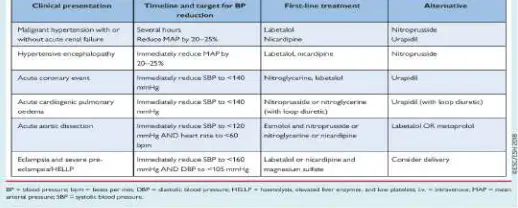
Which IV medication is a first-line option in many hypertensive emergency scenarios?
Oral hydrochlorothiazide
Labetalol
Aspirin
Atorvastatin

Which pregnancy-related hypertension category indicates development after 20 weeks of gestation and usually resolves within 6 weeks postpartum?
Pre-existing hypertension
Gestational hypertension
Pre-eclampsia
Eclampsia

Pre-eclampsia is best characterized by which feature?
Hypertension before 20 weeks without proteinuria
Gestational hypertension with significant proteinuria (>0.3 g/24 h)
Hypertension that resolves immediately after delivery without proteinuria
Isolated edema without hypertension
For nonpharmacologic treatment of hypertension, which intervention is consistently recommended as first-line across BP grades?
Immediate IV therapy
Lifestyle advice (diet, exercise, sodium reduction)
Routine anticoagulation
High-protein supplementation
Which lifestyle pattern is specifically promoted to reduce blood pressure and cardiovascular risk?
Ketogenic diet
High-sodium diet
DASH diet
Zero-carbohydrate fasting
Which of the following best describes essential (primary) hypertension?
Hypertension caused by a single identifiable endocrine disorder
Hypertension with no specific secondary cause and multifactorial origins
Hypertension exclusively due to renal artery stenosis
Transient elevation of blood pressure during acute stress only
A patient with obstructive sleep apnea presents with persistent hypertension. This condition most appropriately falls under which category?
Essential hypertension
Secondary hypertension due to renal disease
Secondary hypertension due to endocrine or sleep-related causes
Hypertensive emergency
Which target organ is commonly damaged by long-standing hypertension, leading to complications such as left ventricular hypertrophy and heart failure?
Liver
Heart
Pancreas
Skin
Which complication of chronic hypertension is MOST directly associated with small vessel damage in the brain?
Hepatic cirrhosis
Lacunar stroke
Pancreatitis
Deep vein thrombosis
Hypertensive urgency is best defined as:
Severely elevated blood pressure with acute target-organ damage
Severely elevated blood pressure without acute target-organ damage
Mildly elevated blood pressure with anxiety
Blood pressure elevation due to pain that resolves with analgesia
Hypertensive emergency requires which immediate management step?
Outpatient lifestyle counseling only
Rapid but controlled blood pressure reduction in a monitored setting
No treatment unless symptoms persist for 24 hours
Oral therapy over weeks without monitoring
Which finding characterizes malignant hypertension?
Sustained systolic BP 140–159 mmHg without symptoms
Presence of retinal hemorrhages/exudates with papilledema and rapidly progressive organ damage
Isolated diastolic BP elevation <90 mmHg
Hypertension limited to pregnancy
Which of the following is a common secondary cause of hypertension related to the kidneys?
Pheochromocytoma
Renal parenchymal disease
Hyperthyroidism
Cushing syndrome
In pregnancy, new-onset hypertension with proteinuria after 20 weeks’ gestation most strongly suggests:
Gestational hypertension without proteinuria
Preeclampsia
Chronic hypertension predating pregnancy
Eclampsia only when seizures occur without hypertension
Which strategy is most appropriate to reduce long-term risk of target-organ damage in essential hypertension?
Ignore mild elevations and reassess annually
Initiate and titrate evidence-based antihypertensive therapy and lifestyle modification
Use short bursts of high-dose therapy only during stress
Focus solely on diuretic therapy without lifestyle change
Which non-pharmacological approach is specifically recommended for hypertension management and emphasizes fruits, vegetables, whole grains, and low sodium intake?
Ketogenic diet
DASH Diet
Intermittent fasting
High-protein paleo diet
In hypertension treatment planning, which strategy most appropriately aligns with initial lifestyle modification before medications?
Start dual therapy immediately for all patients
Recommend the DASH Diet and sodium restriction
Avoid physical activity to reduce blood pressure variability
Encourage high-sodium intake to maintain plasma volume
Which guideline source is commonly cited for evidence-based hypertension treatment recommendations?
USDA MyPlate
AHA/ACC Hypertension Guidelines
DSM-5
WHO Malaria Treatment Protocol
A patient with stage 1 hypertension asks for dietary guidance. Which advice best reflects DASH Diet principles to lower blood pressure?
Increase processed meats and canned soups
Choose low-fat dairy, add more potassium-rich foods, and limit sodium
Eliminate all carbohydrates while increasing saturated fats
Use herbal supplements instead of changing diet
On a standard chest X-ray, which statement best describes the effect of inadequate inspiration on image quality?
The lungs appear overexpanded with diaphragm flattened
The heart size appears reduced and lung markings are decreased
The diaphragm is elevated and pulmonary vasculature appears more prominent
Bones become excessively dark with loss of soft tissue detail
Which chest X-ray positioning or quality factor is assessed by checking whether the spinous processes are centered between the medial ends of the clavicles?
Inspiration
Penetration
Rotation
Beam angulation
Underpenetrated chest X-rays typically show which feature?
Vertebral bodies clearly seen through the heart
Lung fields excessively dark with loss of markings
Mediastinum and heart appear too white with obscured retrocardiac structures
Clavicles asymmetric due to patient rotation
Which imaging modality provides cross-sectional views and is particularly useful for detailed cardiac and mediastinal anatomy beyond a plain radiograph?
Chest X-ray
Echocardiography
Computed Tomography (CT)
Fluoroscopy
In interstitial edema on chest X-ray, which description matches the classic perihilar pattern often referred to as "bat-wing" distribution?
Fluid in alveolar spaces causing peripheral opacities
Kerley A lines: long, unbranched lines extending to the hilum
Kerley B lines: short, horizontal lines at the costophrenic angles
Diffuse soft, reticular form due to interstitial fluid
Which statement correctly differentiates inadequate inspiration from underpenetration on a chest X-ray?
Inadequate inspiration makes vertebral bodies invisible through the heart; underpenetration elevates the diaphragm
Inadequate inspiration elevates the diaphragm and crowds vascular markings; underpenetration makes mediastinal structures appear overly white
Both result in excessive lung darkness
Both only affect clavicle symmetry
Which structure is located in the middle mediastinum and is commonly visible as the central silhouette on a chest radiograph?
Thymus
Heart
Thoracic aorta
Vertebral bodies
On a standard posteroanterior (PA) chest X-ray, which measurement is used to estimate cardiac size?
Cardiothoracic ratio (CTR)
Cardiopulmonary index
Left ventricular ejection fraction
Pulmonary capillary wedge pressure
Which statement best describes how to calculate the cardiothoracic ratio (CTR) on a PA chest radiograph?
Sum of the maximal right and left cardiac silhouettes divided by the maximal internal thoracic diameter
Maximal cardiac height divided by lung height
Left ventricular diameter divided by right ventricular diameter
Cardiac area divided by thoracic area
Which CTR value is generally considered the upper limit of normal on a PA chest X-ray in adults?
>0.60
≤0.50
≤0.40
Between 0.55 and 0.65
Which view best complements the PA chest X-ray to assess cardiac chamber enlargement and anterior–posterior relationships?
Apical view
Lateral chest X-ray
Oblique chest X-ray
Supine anteroposterior (AP) view
In left atrial enlargement, which radiographic sign is classically expected on a PA chest X-ray?
Splaying of the carinal angle with double density along the right heart border
Marked bulge of the main pulmonary artery segment
Increased convexity of the right heart border alone
Elevation of the diaphragm
Which feature on lateral chest X-ray supports left atrial enlargement?
Posterior displacement of the esophagus by a barium swallow
Anterior displacement of the heart
Increased retrosternal air space
Diaphragmatic flattening

