wayground logo

Free Printable Worksheets

Font size

S
M
L
XL
Worksheets

G8 Unit 3 Review

Total questions: 27

Worksheet time: 16mins
Name
Class
Date
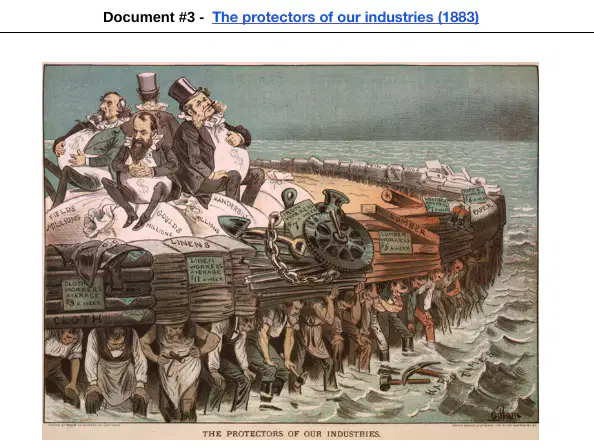
1.
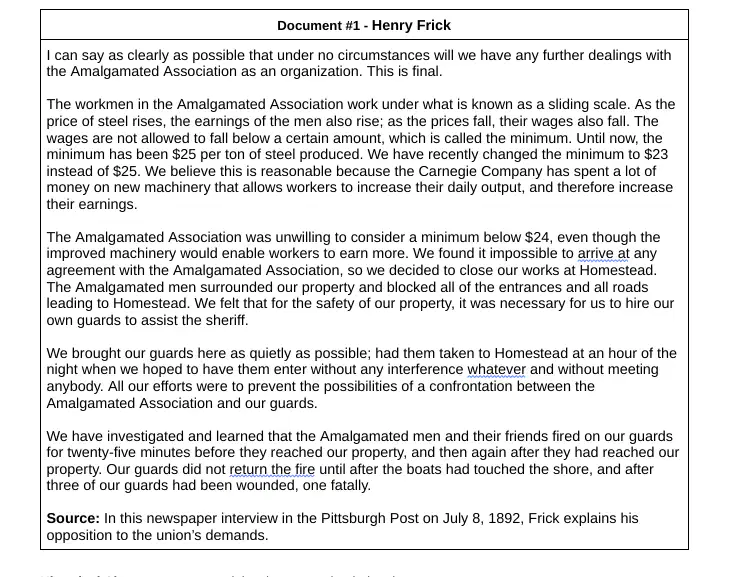
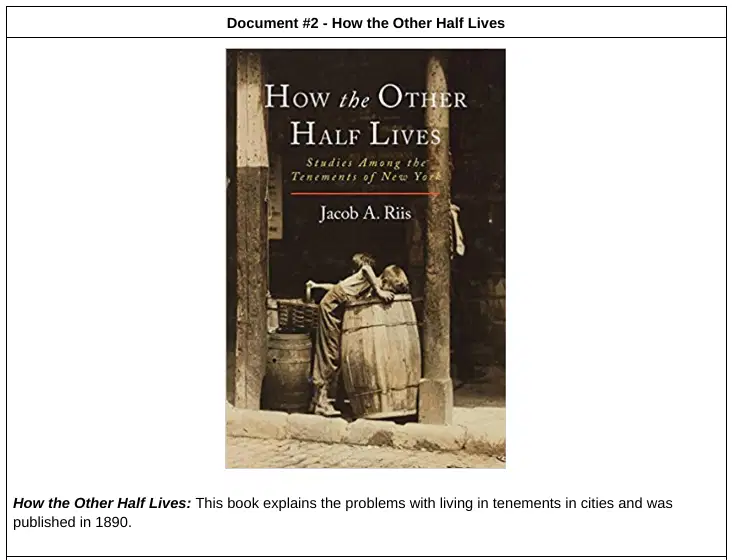
Which claim related to the economic situation in the United States in the late 1800's is most directly supported by the document below?
a)
the influx of immigrants, industrialization, and urbanization allowed for the decrease of wealth of industrialists.
b)
industrialists were so wealthy while the majority of people lived in slums and could barely afford to live.
c)
The Homestead Strike in Pennsylvania was a part of a series of strikes showing the strength of labor unions
d)
The Hull House helped women gain jobs.
2.
A historian would use the following document to study which topic?
a)
Westward Expansion
b)
The Gilded Age
c)
The Civil War
d)
Reconstruction
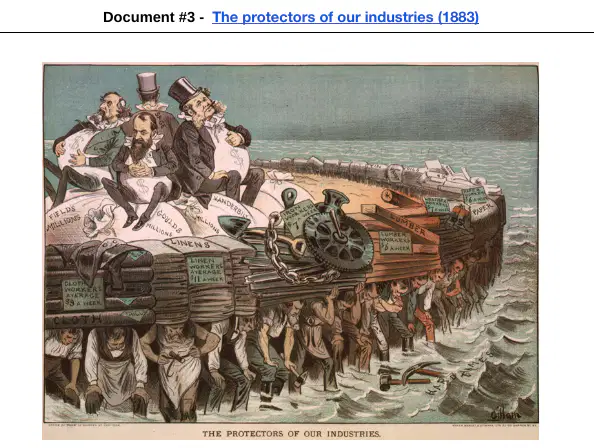
3.
What events led to the creation of this political cartoon?
a)
the Populist Party was happy about the cost of train prices.
b)
lack of government control over businesses and monopolies.
c)
Reconstruction ended and the military was removed from the South.
d)
Wages were continuing to improve for laborers.
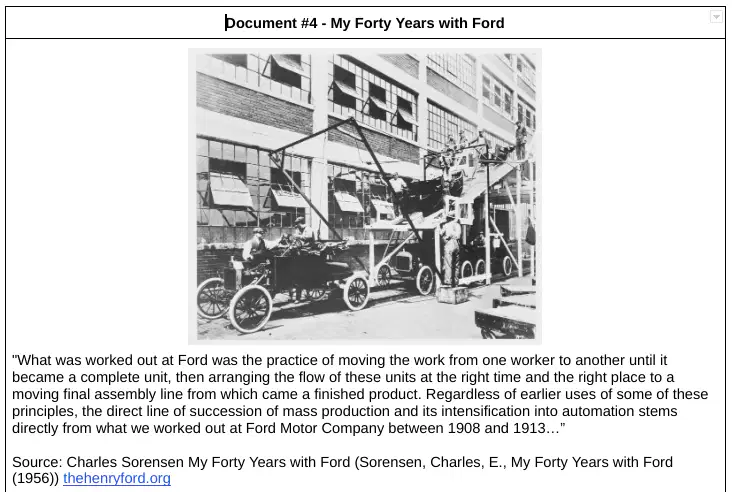
4.
What changed as a direct result of the events described in the passage?
a)
The use of steam engines increased the rate at which goods could be transported up and down the Erie Canal.
b)
The mass production of cars and various other goods improved in efficiency due to the assembly line.
c)
The use of a cotton gin improved the way that textiles could be produced.
d)
The passage of the 14th Amendment.
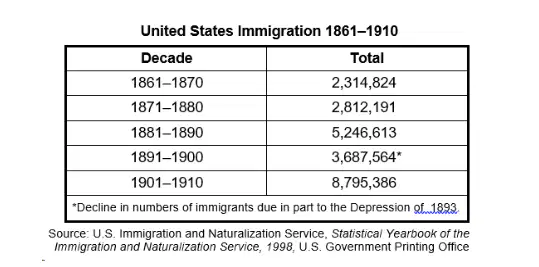
5.
What was a result of the events described in the chart?
a)
The Gilded Age was unable to produce enough goods and business owners went out of business.
b)
Immigrants made up a large portion of the work force.
c)
Rockefeller was able to undercut his competitors in order to have a monopoly over the oil industry in the United States.
d)
The Chinese Exclusion Act of 1882 was passed.
6.
Based on the document below, what did immigrants experience when coming to the United States?
a)
Immigrants were easily able to enter the United States in the late 1800's early 1900's with few laws.
b)
Immigrants experienced harsher laws in the late 1800's and early 1900's.
c)
The United States government left all laws about immigrants up to states.
d)
Immigrants did not want to come to the United States.
7.
Explain the historical circumstances that led to the writing of this article. Historical Circumstances - explains the events that led to the event
4 lines
8.
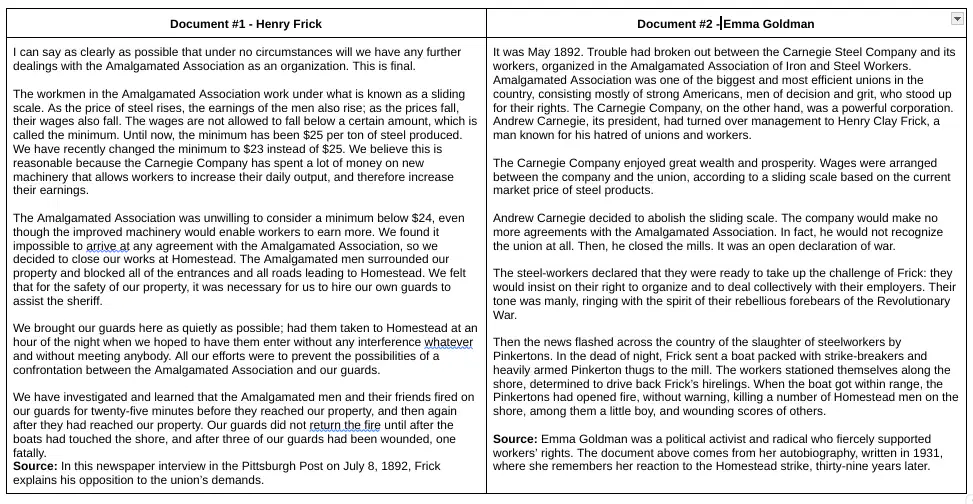
Explain the purpose for the passage written by Emma Goldman. Purpose - explains why a source was created.
4 lines
9.
Using Document #1 and Document #2 and your knowledge of social studies: a. Explain a similarity or a difference between Document #1 and Document #2. b. Give evidence from Document #1 and Document #2 to prove the similarity or difference. Similarity - explains how 2 things are alike. Difference - explains how 2 things are not alike.
4 lines
10.

Which factor contributed most to the rise of monopolies during the Gilded Age?

a)

The end of westward expansion.

b)

A decrease in industrial production.

c)

The lack of antitrust laws and oversight.

d)

Strict government regulations on business practices.

11.

How did industrialization in the late 1800s affect urban populations in the United States?

a)

It led to a decline in city populations.

b)

It caused a significant increase in urbanization and overcrowding.

c)

It resulted in fewer job opportunities for immigrants.

d)

It eliminated the need for labor unions.

12.

What was one major challenge faced by laborers during the Gilded Age?

a)

Unsafe working conditions and low pay.

b)

High wages and short working hours.

c)

Government support for labor strikes.

d)

A lack of immigration to fill jobs.

13.

During the ​ (a)   , employees who felt they were mistreated formed ​​ (b)   .

Choose from the below words
Gilded Age
labor unions
Progressive Era
Cold war
social clubs
local militias
14.

What does this image say about the need for labor unions?

a)

labor unions were desirable because the workers were being crushed by difficult living conditions and poor pay.

b)

Labor unions decreased nativism

c)

Labor unions helped big business keep control of the workers

d)

Labor unions helped reduce the length of the work day

15.
Industry caused urbanization because...
a)
people moved out of cities in order to find jobs
b)
people moved to cities because that's where jobs were
c)
cities were very appealing to people who grew up in rural areas
d)
the railroad allowed people to move East easier
16.

Between 1860 and 1900, a primary cause of migration from rural to urban areas was ____.

a)

inflationary pressure on crop prices

b)

lack of rural housing as building slowed

c)

increasing economic opportunity in cities

d)

government resettlement policies

17.

How did Cornelius Vanderbilt build his wealth?

a)

Automobile Industry

b)

Railroad and Shipping Industry

c)

Oil Industry

d)

Steel Industry

18.

What is Andrew Carnegie known for?

a)

Oil Company

b)

Steel Company

c)

Automobile Company

d)

Railroad Company

19.

What company did John D. Rockefeller start that made him an industrial capitalist?

a)

Premium Oil

b)

Rockefeller Oil

c)

American Oil

d)

Standard Oil

20.

What is a monopoly?

a)

A company that has no competition

b)

A game that takes a long time to play

c)

A company that goes out of business

d)

A company that lays off workers

21.
migration of people from rural areas to cities
a)
urbanization
b)
Americanization Movement
c)
tenement
d)
settlement house
22.

What does this image say about the control of Stand Oil?

a)

Standard Oil is a monster trying to control the entire USA

b)

Standard Oil is trying to save government from political bosses

c)

Standard Oil is trying to keep government on the right track to benefit laborers

d)

Stand Oil had control over many aspects of government

23.
complete control of a product or service; the elimination of fair competition
a)
Robber Barons
b)
Bessemer Process
c)
Monopoly
d)
Philanthropy
24.

Most people that immigrated from Western European countries entered the U.S. through which immigration station?

a)

Angle Island

b)

Ellis Island

c)

New Mexico

d)

St. Lawrence Seaway

25.

What were the main reasons for the passage of the Chinese Exclusion Act? (choose all that apply)

a)

Increased nativist feelings in the U.S.

b)

Increased immigration into the U.S.

c)

Increased economic prosperity

d)

Low job availability in the U.S.

26.

The majority of Immigrants in the late 1800's in New York were from?

a)

Ireland & Italy

b)

Norway & Sweden

c)

China & Japan

d)

Mexico & South America

27.

Boss Tweed's true form of keeping power was through

a)

Voter Fraud & Extortion

b)

Terrorism

c)

Education

d)

Military Force