
NEW
Font size
 Worksheets
Stress Management Quiz
Total questions: 32
Worksheet time: 16mins
How can stress sometimes have a positive outcome?
By helping you avoid difficult situations.
By motivating you to perform better in challenging tasks.
By making you feel overwhelmed and anxious.
By encouraging you to avoid all stressful situations.
What are the stages of the stress response?
Alarm, resistance, exhaustion
Happiness, sadness, anger
Relaxation, tension, recovery
Excitement, fear, calmness
What is the difference between good stress and bad stress?
Good stress motivates, bad stress overwhelms
Good stress is physical, bad stress is emotional
Good stress is temporary, bad stress is permanent
Good stress is caused by work, bad stress is caused by relationships
Which of the following is a stress management strategy?
Ignoring the problem
Practicing relaxation techniques
Overworking yourself
Avoiding social interactions
What happens when you experience stress?
Situations, events, or people make demands on your body and mind.
You feel completely relaxed and calm.
You lose the ability to think or act.
You experience no change in your mental or physical state.
How can moderate levels of stress affect your performance?
It can improve your ability to concentrate and perform at your best.
It can make you feel completely overwhelmed and unable to act.
It can lead to a complete loss of focus and productivity.
It has no impact on your performance.
What happens when stress exceeds moderate levels?
It begins to take a negative toll on performance.
It enhances your ability to perform even better.
It has no effect on your performance.
It makes you feel completely relaxed and calm.
What is the term for 'good stress' that motivates us to grow and improve?
Distress
Eustress
Chronic stress
Acute stress
Which type of stress overwhelms us or exceeds our current capacity to cope?
Eustress
Acute stress
Distress
Chronic stress
What is an example of acute stress?
Misplacing your phone
Family problems
Academic pressure
Bullying
What is traumatic stress?
A physical response to exercise
A psychological and physical response to a terrifying event that threatens one's sense of safety and control
A mild reaction to everyday stressors
A response to positive life changes
Which of the following is an example of a traumatic event?
Winning a competition
Natural disasters
Watching a movie
Attending a party
Which of the following best describes the psychological impact of traumatic stress?
It leads to a sense of safety and control
It causes anxiety, fear, and flashbacks
It improves mental clarity
It reduces emotional sensitivity
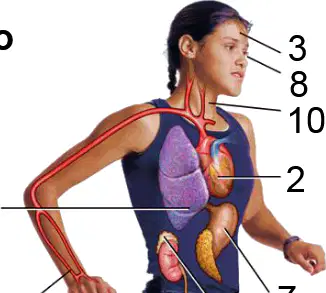
What hormone is released into the blood during the alarm stage of stress response?
Insulin
Adrenaline
Dopamine
Serotonin
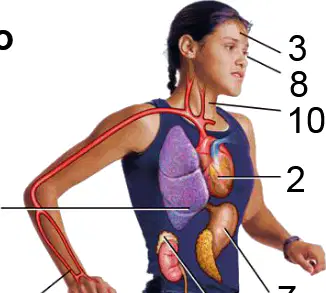
Which of the following is a physiological effect of the alarm stage of stress response?
Decrease in heart rate
Increase in breathing rate
Increase in digestion speed
Reduction in blood sugar levels
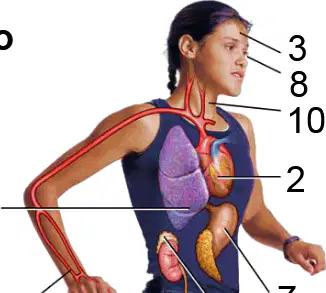
What happens to the digestive system during the alarm stage of stress response?
Digestion speeds up
Flow of blood to the digestive system increases
Digestion slows, and more stomach acid is produced
The digestive system remains unaffected
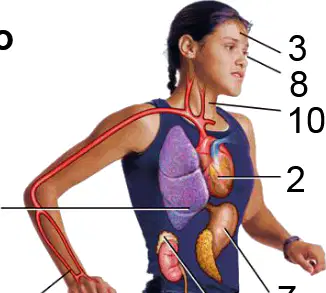
What happens to pupils during the alarm stage of stress response?
Pupils open wide
Pupils close partially
Pupils remain unchanged
Pupils shrink
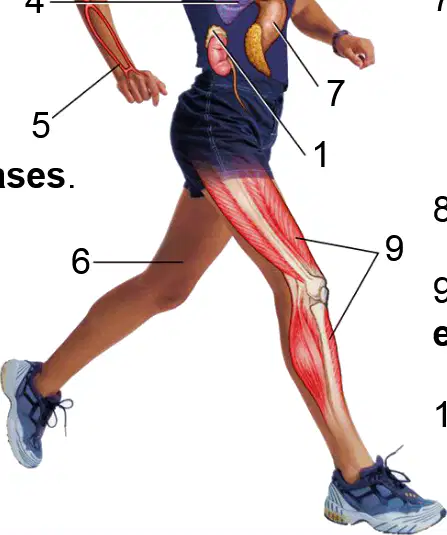
What is the effect of stress on sugar levels in the blood during the alarm stage?
Sugar levels decrease
Sugar levels remain constant
More sugar is released into the blood
Sugar is absorbed by the muscles
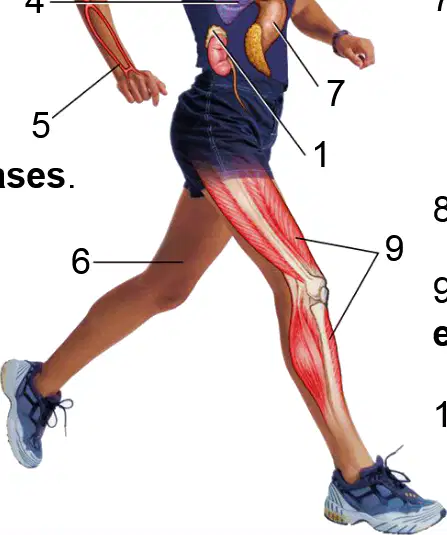
What happens to muscles during the alarm stage of stress response?
Muscles relax completely
Muscles tense, and more energy is produced by cells
Muscles shrink and lose energy
Muscles remain unaffected
What happens to your body during the resistance stage of stress?
Your body adapts to the continued presence of the stressor.
Your body becomes completely immune to stress.
Your body stops using energy to deal with stress.
Your body eliminates all stressors immediately.
What is a possible consequence of the resistance stage of stress?
Increased energy levels and better stress management.
Feeling tired, irritable, and less able to handle added stress.
Complete elimination of stress from the body.
Enhanced ability to multitask under stress.
What happens to the body during the exhaustion stage of stress?
The body becomes stronger to handle stress.
Physical and emotional resources are depleted.
Stressors are eliminated immediately.
The body enters a state of relaxation.
Under what condition does exhaustion occur during stress?
When a stressor lasts for a short period of time.
When a stressor continues for weeks, months, or years.
When the body is well-rested.
When stress is completely absent.
Which section of the learning material discusses the exhaustion stage of stress?
Section 1.1
Section 2.3
Section 3.2
Section 4.1
What happens in the body during the Alarm stage?
The body enters a state of relaxation.
The body prepares to fight or flee.
The body shuts down completely.
The body begins to heal from stress.
What happens during the Resistance stage of stress?
The body adapts and tries to cope with the stressor.
The body shuts down due to exhaustion.
The body ignores the stressor completely.
The body enters a state of panic.
Which stage only occurs after weeks, months, or even years of prolonged stress?
Alarm stage.
Resistance stage.
Exhaustion stage.
Recovery stage.
What determines if a stressor results in eustress or distress?
The type of stressor itself
The individual's perception and response to the stressor
The duration of the stressor
The environment in which the stressor occurs
Can two different people experience the same stressor and have different results? Why or why not?
No, stressors always affect people in the same way
Yes, because people have different perceptions and coping mechanisms
No, stressors are universally experienced the same way
Yes, because stressors are always positive for some people
Why is it important to identify your priorities?
To focus on what truly matters to you.
To spend more time on unimportant tasks.
To avoid making decisions.
To increase the number of tasks you do daily.
What is mental rehearsal?
Practicing an event physically multiple times.
Practicing an event in your mind without actually doing it.
Watching someone else perform an event.
Writing down steps to perform an event.
How does physical activity help in reducing stress?
It provides a healthy outlet for built-up energy
It eliminates all stressors
It distracts you from responsibilities
It increases your stress tolerance

