
 Worksheets
Cells, Tissues, and Basic Bacteria
Total questions: 150
Worksheet time: 1hrs 15mins
Which statement best defines a cell according to the material?
The largest unit of life
The smallest unit of life
A group of like cells completing a function
An extracellular matrix component
What is a tissue as described in the section?
A single cell that carries out all life processes
A group of like cells completing some function and the extracellular material binding them together
Only the extracellular material surrounding cells
A cluster of different organs working together
Which statement correctly distinguishes unicellular and multicellular organisms?
Unicellular organisms have tissues; multicellular organisms lack tissues
Unicellular organisms have exactly one cell and no tissues; multicellular organisms have more than one cell and have tissues
Both unicellular and multicellular organisms have tissues
Multicellular organisms always have exactly one cell type
Form fits function in cells and tissues. Which example from the material illustrates this principle?
Bone cells contain chloroplasts to capture light
Adrenal cells have high quantities of ER and Golgi to facilitate hormone secretion
Muscle cells have large vacuoles to store water
Neurons lack filament proteins to prevent movement
Bacteria are classified as which type of cell?
Eukaryotic
Prokaryotic
Archaeal only
Multicellular eukaryotic
Which bacterial shape is correctly matched to its description?
Bacillus: sphere-shaped
Coccus: rod-shaped
Spirochete: spiral-shaped
Spirochete: cube-shaped
According to the material, which statement about bacterial nutrition is accurate?
All bacteria are strictly autotrophic
Bacterial mode of nutrition is variable and most diverse
Bacteria cannot use organic molecules
Bacterial nutrition is identical across all species
In the arrangement term "staphylo-", what is typical of the cells observed?
Usually bacillus in single chains
Usually only coccus and clustered together
Only spirochetes in linear forms
Cocci arranged strictly in pairs
Which pairing correctly identifies the linear forms shown with Gram designations?
Streptobacillus (Gram +) on the left; Streptococcus (Gram -) on the right
Streptococcus (Gram +) on the left; Streptobacillus (Gram -) on the right
Streptobacillus (Gram -) on the left; Streptococcus (Gram +) on the right
Both images show Gram + streptococci
Which major cellular feature noted for bacteria consists of small circular DNA?
Chromosomes in the nucleus
Plasmids
Mitochondrial genomes
Ribosomal RNA
Which test distinguishes Gram-positive from Gram-negative bacteria based on their cell wall properties?
Catalase test
Gram stain test
Oxidase test
Coagulase test
In Gram-positive bacteria, which material forms the outermost layer of the cell wall?
Lipopolysaccharides and proteins
Peptidoglycan
Cellulose
Chitin
According to the diagram contrasting cell walls, which statement correctly describes Gram-negative bacteria?
They have fewer layers and stain darker purple.
They have more layers; the outermost layer is lipopolysaccharides and proteins and they stain pink.
They have more layers with peptidoglycan on the outside and stain purple.
They have fewer layers and no peptidoglycan.
Why is distinguishing Gram-positive from Gram-negative clinically important, according to the material?
It determines oxygen requirements.
It helps select medications, as some antibiotics work better for Gram-positive or Gram-negative infections.
It indicates whether the organism is eukaryotic.
It reveals mutation rates.
Which domain is described as prokaryotic, unicellular, and including extremophiles?
Eukarya
Archaea
Protista
Bacteria
What modes of nutrition are reported for Archaea?
Autotrophic only
Heterotrophic only
Heterotrophic or autotrophic
Photosynthetic only
Protists in the described section are classified as which type of cell?
Prokaryotic
Eukaryotic
Both prokaryotic and eukaryotic
Neither
Which pairing correctly matches protist groups with their characterization?
Algae: animal-like; Protozoa: plant-like
Molds: plant-like; Algae: fungi-like
Algae: plant-like; Molds: fungi-like; Protozoa: animal-like
Protozoa: fungi-like; Molds: animal-like
Which locomotion structure consists of one or two tail-like appendages?
Cilia
Pseudopod
Flagellum
Fimbriae
A temporary extension of the cytoplasm used in amoeboid movement is called what?
Cilium
Spore
Pseudopod
Flagellum
Which statement best describes amoeboid movement as presented?
Beating of hairlike extensions to propel the cell
Rotation of flagella caused by motor proteins
Progressive extension of a pseudopod driven by unidirectional streaming of cytoplasm
Contraction of actin rings forming cleavage furrows
In amoebas, contractile vacuoles primarily function to do what?
Digest ingested bacteria
Export water to prevent lysis, especially in hypotonic solutions
Store pigments for photosynthesis
Move the cell via ciliary beating
Euglena exhibits which combination of traits according to the material?
Cilia for motion and no chlorophyll-like pigments
Flagellum for motion and eyespots that detect light; capable of both heterotrophy and photosynthesis
Pseudopods for motion and lacks eyespots
Flagellum and two nuclei (macro and micro)
Which feature is specific to Paramecium as described?
Pseudopods and chlorophyll
Eyespots and a single nucleus
Cilia for movement and two nuclei (macro and micro), with only the macronucleus visible
Flagellum and contractile vacuoles only
Which statement correctly classifies fungi by their cell type?
Prokaryotic
Eukaryotic
Archaean
Virion-based
Fungi are described as heterotrophic. Which explanation best matches this mode of nutrition?
They produce their own food via photosynthesis.
They obtain nutrients by ingesting and absorbing organic matter.
They fix nitrogen directly from the atmosphere.
They synthesize sugars from inorganic carbon without enzymes.
Identify the relationship type when a fungus forms a positive association with another organism and penetrates plant roots.
Parasitic
Mutualistic
Saprophytic
Commensal
Which feature best describes hyphae?
Organelles that store genetic material
Extensions of a fungus that release digestive enzymes and absorb nutrients
Protective spores formed during harsh conditions
Pigments that enable photosynthesis
What is the primary substance composing the fungal cell wall?
Cellulose
Peptidoglycan
Chitin
Lignin
In yeast budding, which statement correctly differentiates the cells involved?
The large cell is the daughter cell; the small extension is the parent cell.
Both cells are equal in size and function.
The small extension is the daughter cell; the large cell is the parent cell.
Budding is sexual reproduction producing two gametes.
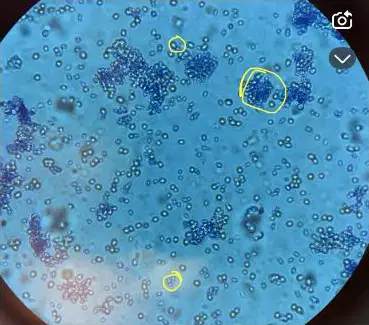
In a lab procedure using methylene blue on yeast, what outcome would you expect?
Stains chloroplasts bright green
Outlines the chitin cell wall and dyes dead yeast solid blue
Dissolves the cell wall entirely
Causes live yeast to fluoresce red
Which statement best describes the general function of epithelial tissue?
Supports other tissues and holds cells together
Covers the exterior of organisms and lines internal organs
Stores energy in adipose cells
Transmits electrical signals between cells
Which feature is characteristic of epithelial tissues according to the material?
Abundant blood vessels within the tissue
Cells widely spaced by extensive extracellular matrix
Always supported by a basement membrane
Cells are multinucleate and motile

In the labeled micrograph of the intestine, what is the primary role of goblet cells?
Absorb nutrients into capillaries
Secrete mucus to lubricate the intestine
Provide structural support via collagen
Generate action potentials
Which epithelial cell shape is described as vertically tall rectangles?
Squamous
Cuboidal
Columnar
Transitional
Which epithelial shape resembles a "fried egg" and is flat?
Cuboidal
Squamous
Columnar
Pseudostratified
Which arrangement of epithelial cells consists of a single layer?
Stratified
Simple
Transitional
Keratinized
Pseudostratified epithelium refers to which of the following?
Multiple true layers of squamous cells
A single layer of columnar cells that appears to have two or more layers
A single layer of cuboidal cells
Multiple layers of columnar cells with equal nuclei height
Which of the following is NOT listed as a feature of epithelial tissues?
Tightly packed with little intercellular space
Presence of many blood vessels
Free exposed surface
Support by basement membrane
Which example is a connective tissue mentioned in the material?
Simple columnar epithelium
Stratified squamous epithelium
Cartilage
Goblet cells
What is the common structural feature of connective tissues described?
Cells form continuous sheets with tight junctions
Cells embedded in a lot of extracellular matrix
Cells arranged in a single layer
Cells contain cilia for movement
Connective tissue is characterized in the notes as "cellular glue." What function does this phrase emphasize?
Transporting nutrients across epithelia
Supporting other tissues and holding cells together
Forming protective coverings of organs
Initiating immune responses
In hyaline cartilage, what term refers to the small pocket surrounding chondrocytes?
Matrix
Lacuna
Basement membrane
Axon
Which component of hyaline cartilage is correctly paired with its description?
Matrix — made of collagen
Chondrocyte — extracellular protein fiber
Nucleus — clear vacuole within the matrix
Lacuna — entire tissue region outside cells
Which statement about animal cells provided in the material is accurate?
Animals are prokaryotic and unicellular
Animals are eukaryotic and multicellular
Animals are autotrophic and digest after absorbing light
Animals lack distinct tissues
Which mode of nutrition is specified for animals in the notes?
Autotrophic (produce then digest)
Heterotrophic (ingest then digest)
Chemosynthetic
Parasitic only
Which is the primary function of muscle tissue described in the material?
To facilitate movement
To secrete hormones
To store genetic information
To provide immune defense
Striations in muscle tissue are regions caused by which protein filaments?
Tubulin and keratin
Actin and myosin
Collagen and elastin
Dynein and kinesin
Which muscle type is characterized by involuntary movement, absence of striations, and one nucleus per cell?
Skeletal muscle
Cardiac muscle
Smooth muscle
Connective muscle
Cardiac muscle allows the heart to pump and circulate blood. Which additional features listed in the material also describe cardiac muscle?
Voluntary movement and multinucleated
Involuntary movement, striations, uninucleated, and branched tissue
No striations, multinucleated, and unbranched
Voluntary movement, no striations, and branched tissue
According to the diagrammatic summary, which muscle type is associated with the esophagus and digestive tract?
Skeletal muscle
Cardiac muscle
Smooth muscle
Bone muscle
The material explains that multinucleated muscle cells enable easier protein production for striations. Which muscle type is commonly multinucleated?
Smooth muscle
Cardiac muscle
Skeletal muscle
Heart muscle
Which pairing correctly matches muscle type with control (voluntary/involuntary) as presented?
Skeletal—involuntary; Cardiac—voluntary
Smooth—voluntary; Cardiac—involuntary
Skeletal—voluntary; Smooth—involuntary
Cardiac—voluntary; Smooth—involuntary
A microscope image shows long, thin fibers with visible striations and multiple nuclei along the fibers. Based on the text, which tissue is most consistent with this description?
Smooth muscle tissue
Cardiac muscle tissue
Skeletal muscle tissue
Cartilage tissue
Which distinguishing structural feature separates cardiac muscle from skeletal muscle in the material?
Cardiac muscle is unbranched; skeletal muscle is branched
Cardiac muscle is branched; skeletal muscle is unbranched
Both are branched
Neither shows branching
Which statement best describes the primary function of nervous tissue?
Conduct electrical signals to allow for communication
Store calcium for muscle contraction
Produce hormones for systemic regulation
Transport oxygen to tissues
In a neuron, which structure sends electrical signals away from the cell body?
Dendrites
Axon
Nucleus
Myelin sheath
Which pairing correctly matches the neuron part with its role?
Soma: protective layer around axon
Myelin sheath: sends electrical signals
Dendrites: receive signals
Nucleus: releases neurotransmitters
Glial cells primarily function to:
Conduct electrical signals
Insulate neurons and provide nutrients
Store neurotransmitters in the synapse
Initiate muscle contraction
What cellular component helps maintain plant cell shape by storing water?
Chloroplast
Large central vacuole
Mitochondrion
Amyloplast
Which feature of chloroplasts involves movement around the cytoplasm in a circular motion to allow equal access to light?
Cyclosis (cytoplasmic streaming)
Binary fission
Pinocytosis
Chemotaxis
Elodea cells are described as having which distinctive features?
Rigid cell wall and dark green chloroplasts
Flexible cell wall and no chloroplasts
No cell wall and colorless chloroplasts
Thick myelin sheath and nucleus
Which statement best defines a pathogen as used in cell biology?
A microbe that causes disease
A beneficial gut bacterium
Any eukaryotic cell that divides by mitosis
A protein that triggers immune memory
What is one primary purpose of mitosis in somatic cells?
Formation of gametes
Asexual reproduction in many unicellular organisms
Horizontal gene transfer
Increasing genetic diversity via crossing over
Which process describes prokaryotic cell division resulting in identical daughter cells?
Meiosis
Mitosis
Binary fission
Endocytosis
During binary fission, which event happens first?
Cell splits into daughter cells
DNA replicates
DNA is pulled to opposite sides
Cell wall dissolves
In eukaryotic cells, where is DNA found prior to mitosis?
Free in the cytoplasm
Bound within a membrane (nucleus)
Attached to the cell wall
Inside ribosomes
What are sister chromatids?
Two different chromosomes paired during meiosis
Two copies of each chromosome made by a cell
A chromosome and its centromere
Uncoiled chromatin strands
Which structure keeps sister chromatids attached until cell division?
Telomere
Centromere
Spindle fiber
Nucleolus
According to the material, how many chromosomes are present per human somatic cell?
23
24
46
92
Which statement about chromosome number across the eukaryotic cell cycle is correct?
Chromosome number halves during S phase
Chromosome number doubles during mitosis
The number of chromosomes you start with equals the number you end with
Chromosome number is random after cytokinesis
Which interphase stage is specifically identified as the DNA synthesis phase that leads to doubling of chromosomal material?
G0
G1
S
G2
Which statement best describes interphase in the cell cycle?
A brief pause between mitosis and cytokinesis
The phase when DNA replication and organelle duplication occur, comprising most of a cell’s life
The step where sister chromatids separate to form daughter chromosomes
The reformation of the nuclear envelope
During prophase, which event occurs as mitotic spindle formation begins?
Nuclear envelope reforms
Chromosomes decondense
Centrosomes move toward opposite poles of the cell
Cleavage furrow forms
What is the role of kinetochore microtubules during metaphase?
They connect directly to chromosomes and align them at the metaphase plate
They push opposite sides of the cell apart to lengthen the cell
They reform the nuclear envelope
They condense chromatin into chromosomes
The metaphase plate is best described as which of the following?
A physical plate that anchors chromosomes
An imaginary line where chromosomes line up during metaphase
A protein complex at the centromere
A ring of microfilaments that pinches the cell
Which statement about centrosomes in interphase is correct?
There is one centrosome per cell in interphase
Two centrioles plus a network of proteins form a centrosome, and there are 2 per cell in interphase
Centrosomes disappear during interphase
Centrosomes are made of microfilaments and actin
Which event marks anaphase?
Chromosomes align at the equatorial plane
Sister chromatids separate to become daughter chromosomes as kinetochore microtubules shorten
Nuclear envelope breaks down
Cleavage furrow forms
Nonkinetochore microtubules primarily function to do what during mitosis?
Attach to centromeres to pull chromatids apart
Connect to microtubules from the opposite pole and push opposite sides of the cell away, helping the cell lengthen
Reform the nuclear envelope
Condense chromatin
Which pairing correctly matches phase with a defining event?
Prophase: chromosomes decondense
Metaphase: microtubules pull chromosomes into a line at the metaphase plate
Anaphase: nuclear envelope reforms
Telophase: chromosomes condense
Cytokinesis in animal cells involves which structure?
Cell plate
Cleavage furrow formed by a contracting ring of microfilaments
Spindle checkpoint complex
Kinetochore
In plant cells, cytokinesis proceeds by formation of which feature?
Cleavage furrow from microfilaments
Cell plate formed from vesicles containing cell wall material
Nuclear envelope breakdown
Centrosome duplication
Which phase is the exact opposite of prophase, featuring nuclear envelope reformation and chromosome decondensation?
Interphase
Metaphase
Anaphase
Telophase
Which sequence correctly orders the stages of mitosis described?
Interphase → Prophase → Metaphase → Anaphase → Telophase/Cytokinesis
Prophase → Interphase → Metaphase → Telophase → Anaphase
Metaphase → Prophase → Telophase → Anaphase → Cytokinesis
Anaphase → Metaphase → Prophase → Telophase → Interphase
The image labeled Prophase shows condensed chromatin within an intact nucleus. Which hallmark best identifies prophase in microscopy?
Chromosomes aligned at the cell equator
Nuclear envelope disappearing and chromosomes condensing
Sister chromatids separating toward poles
Formation of two distinct daughter nuclei
In the Metaphase micrograph, chromosomes appear arranged across the center of the cell. What structure ensures their alignment at this stage?
Contractile ring
Spindle apparatus microtubules
Nucleolus
Golgi complex
Which checkpoint occurs between metaphase and anaphase and prevents progression until chromosomes are correctly aligned and microtubule connections are robust?
G1 checkpoint
G2 checkpoint
M checkpoint
S-phase checkpoint
A cell that does not meet checkpoint requirements will:
Skip directly to cytokinesis
Be allowed to reach the next phase anyway
Be halted and not allowed to reach the next phase
Immediately undergo apoptosis
Which checkpoint ensures correct DNA replication and absence of mutations before entering M phase?
G1 checkpoint
G2 checkpoint
M checkpoint
Telophase checkpoint
Growth factors initiate a signaling cascade by first doing which of the following?
Entering the nucleus directly
Binding to a receptor protein at the plasma membrane
Degrading cyclins
Phosphorylating kinases independently
During signal transduction, what is the primary process occurring inside the cell?
Direct transcription of target genes without intermediates
Sequential activation of intracellular proteins passing the signal from one molecule to another
Fusion of vesicles with the plasma membrane
Deactivation of all cyclin-kinase complexes
Cyclin (a protein) and cyclin-kinase (an enzyme) work together to control checkpoints. What is their combined role best described as?
They dismantle the spindle to end mitosis
They regulate progression through cell cycle phases
They replicate DNA during S phase
They form the contractile ring for cytokinesis
In the image labeled Telophase, two clusters of chromosomes are present and new nuclei form. Which event typically accompanies telophase in many cells?
Chromosomes condense further
Nuclear envelopes re-form around daughter chromosomes
Sister chromatids begin to separate
Chromosomes align at the metaphase plate
A researcher observes robust and correct connections of microtubules to chromosomes. Which immediate transition is permitted by the checkpoint controls?
G1 to S
G2 to M
Metaphase to Anaphase
Telophase to G1
Which formula is used to calculate the percentage of the cell cycle spent in a given stage during the lab?
(Total number of cells counted ÷ Number of cells in given stage) × 100
(Number of cells in given stage ÷ Total number of cells counted) × 100
(Number of fields viewed ÷ Total magnification) × 100
(Minutes per stage ÷ 960 minutes) × 100
Based on the table of counts (grand total 279 cells), what is the mitotic index for prophase?
68%
16%
9%
5%
Using the provided totals, which stage had the highest proportion of cells observed?
Prophase
Metaphase
Interphase
Telophase
A cell cycle averages 960 minutes. Using the given percentages, approximately how many minutes are spent in metaphase?
672 minutes
155 minutes
86 minutes
48 minutes
Convert the time spent in interphase (672 minutes) to hours and minutes using the provided conversions.
10 hours 12 minutes
11 hours 12 minutes
12 hours 0 minutes
11 hours 24 minutes
Which statement best defines meiosis according to the material?
Cell division that produces diploid somatic cells through one nuclear division
Cell division for germ line cells forming haploid cells from diploid cells by two successive nuclear divisions
Process of DNA replication during S phase of the cell cycle
Random assortment of chromosomes during mitosis
Gametogenesis results in the production of which cells?
Only somatic cells
Egg or sperm cells
Diploid zygotes
Haploid spores in plants
Match each process to its product. Select the option that correctly pairs oogenesis and spermatogenesis.
Oogenesis—sperm cell (n = 23); Spermatogenesis—egg cell (n = 23)
Oogenesis—egg cell (n = 23); Spermatogenesis—sperm cell (n = 23)
Oogenesis—diploid egg (2n = 46); Spermatogenesis—haploid sperm (n = 23)
Oogenesis—zygote (2n); Spermatogenesis—gamete (2n)
In humans, what is the haploid chromosome number (n)?
11
23
46
92
Which statement best defines a diploid organism according to the material?
Contains one set of chromosomes
Contains two sets of chromosomes with portions from each parent
Contains three sets of chromosomes
Contains two identical sets from one parent only
Which chromosomes are labeled as sex chromosomes in a human karyotype?
Pairs 1–22
Pair 23 (X and Y or X and X)
Pairs 20–22 only
Pair 1 only
Which characteristic does NOT define a homologous pair, based on the description?
Same length
Same centromere position
Same gene loci
Identical alleles at every locus
What does a tetrad consist of during meiosis I?
Two chromosomes total
Two sister chromatids total
Four chromosomes total
Four chromatids from one chromosome
According to the diagram caption "Karyotype," which of the following is true about autosomes?
They are pair 23 only
They are pairs 1–22 and decrease in size
They determine male/female exclusively
They are not shown in karyotypes
During interphase prior to meiosis I, which event occurs?
Nuclear envelope breaks down
DNA has been doubled
Homologous chromosomes form tetrads
Sister chromatids separate
Which event is specifically listed for prophase I of meiosis?
Tetrads line up on the metaphase plate
Kinetochore microtubules attach at the centromere
Nuclear envelope breaks down and mitotic spindle forms
Centrosomes move to opposite ends after cytokinesis
In metaphase I, what lines up on the metaphase plate according to the diagram and text?
Sister chromatids
Individual chromosomes
Tetrads
Centromeres only
Which label correctly pairs with its structure in the chromosome figure: centromere, sister chromatids, pair of homologous chromosomes?
Centromere is the entire chromosome; sister chromatids are different chromosomes; homologous pair is two chromatids
Centromere is the constricted region where chromatids join; sister chromatids are identical copies; homologous pair is two chromosomes of similar length and loci
Centromere is a gene locus; sister chromatids are paternal and maternal chromosomes; homologous pair is four chromatids of one chromosome
Centromere is the nuclear envelope; sister chromatids are spindle fibers; homologous pair is centrosomes
During Anaphase 1 of meiosis, which event occurs?
Sister chromatids separate at their centromeres
Tetrads are pulled apart while sister chromatids remain attached
Nuclear envelope reforms around chromosomes
DNA replicates for the second time
Which type of microtubules shorten to pull sister chromatids away during Anaphase 1?
Nonkinetochore microtubules
Kinetochore microtubules
Spindle microtubules that attach to each other
Intermediate filaments
In Telophase 1 and cytokinesis, chromosomal reduction has taken place. What does the notation N = 3 indicate in this context?
The cell now has three pairs of homologous chromosomes
The haploid number of chromosomes is three
There are three sister chromatids per chromosome
Three centrosomes are present in each cell
Which statement best describes changes to microtubules during Anaphase 1?
Kinetochore microtubules lengthen and nonkinetochore microtubules shorten
Both kinetochore and nonkinetochore microtubules shorten
Kinetochore microtubules shorten while nonkinetochore microtubules lengthen
Nonkinetochore microtubules detach from centrosomes
What happens to the nuclear envelope in Telophase 1?
It disappears completely
It begins to reform
It fragments and stays in the cytoplasm
It attaches to the kinetochore
Which statement about Meiosis 2 is correct based on the overview?
DNA replicates again before Prophase 2
Cells must wait before entering Prophase 2
DNA does not replicate again before Prophase 2
Centrosomes are absent during Meiosis 2
What key event characterizes Prophase 2?
Homologous chromosomes pair to form tetrads
Nuclear envelope disappears and chromatin condenses to chromosomes
Chromosomes align at the metaphase plate
Cleavage furrow forms
Which structure attaches to centrosomes during Metaphase 2?
Nonkinetochore microtubules only
Kinetochore microtubules
Nuclear envelope fragments
Spindle microtubules that attach to each other
In Anaphase 2, which event leads directly to genetic material separation?
Tetrads are pulled apart
Kinetochore microtubules shorten and sister chromatids separate
Nonkinetochore microtubules shorten causing homologs to split
Nuclear envelope reforms
Which statement explains the role of nonkinetochore microtubules during Anaphase 2?
They lengthen to elongate the cell
They shorten to pull chromatids to poles
They attach chromosomes to the membrane
They condense chromatin
Which statement best describes the outcome of oogenesis in humans?
It produces four equally sized haploid ova.
It produces one mature ovum and multiple polar bodies.
It produces two mature ova per cycle.
It produces one diploid ovum without polar bodies.
During female development, the primary oocyte is arrested at which specific stage until puberty?
Metaphase II of meiosis II
Prophase I of meiosis I
Anaphase I of meiosis I
Metaphase I of meiosis I
What is the ploidy of the secondary oocyte described in the oogenesis process?
Diploid
Triploid
Haploid
Tetraploid
Which event triggers completion of meiosis II in the secondary oocyte?
Release of the first polar body
Ovulation
Entry/contact of a sperm
Formation of the cleavage furrow
The first polar body is produced during which phase and is characterized by which feature?
Produced by telophase I; receives minimal cytoplasm and organelles
Produced by prophase I; rich in cytoplasm
Produced by metaphase II; contains equal cytoplasm
Produced by telophase II; becomes a mature ovum
What immediate products are formed when the secondary oocyte completes meiosis II after sperm contact?
Two diploid ova
A second polar body and a haploid ovum
Four haploid ova
A diploid zygote and a polar body
Which sequence correctly orders key stages described: primary oocyte arrest, secondary oocyte arrest, and final outcome after fertilization?
Metaphase I arrest → Prophase I arrest → Diploid zygote
Prophase I arrest → Metaphase II arrest → Diploid zygote
Prophase I arrest → Metaphase I arrest → Haploid ovum
Metaphase II arrest → Prophase I arrest → Haploid ovum
Which process is required for sexual reproduction and produces haploid daughter cells (n)?
Mitosis
Binary fission
Meiosis
DNA replication
During metaphase I of meiosis, what key event contributes to genetic variation?
Sister chromatids separate
Homologous chromosomes align as tetrads
Cytokinesis occurs
Chromosome duplication
Which statement best distinguishes the outcomes of mitosis versus meiosis?
Mitosis produces haploid cells; meiosis produces diploid cells identical to the parent
Mitosis produces diploid cells identical to the parent; meiosis produces haploid gametes
Both produce haploid gametes
Both produce diploid cells for growth
Independent assortment is described as the random mixing of maternal and paternal chromosomes during which stage?
Prophase II
Metaphase I
Anaphase II
Telophase I
Using the formula 2n for possible chromosome combinations in gametes, how many combinations are possible when n = 3?
3
6
8
23
Which event specifically occurs during prophase I and involves physical exchange of genetic information between homologous chromosomes?
Independent assortment
Crossing-over
Nondisjunction
Chromosome duplication
What term refers to the point of contact between homologous chromosomes where crossing-over occurs?
Centromere
Chiasma
Kinetochore
Spindle pole
A diploid human cell has 2n = 46. According to the material, approximately how many different chromosome combinations can a gamete have due to independent assortment?
46
223 (about 8 million)
2^46 (about 70 trillion)
23
When diploid zygotes form from random fertilization of gametes, the total number of possible combinations is estimated by which calculation provided?
2n
n!
8 million × 8 million ≈ 64 million
46 × 23
Which process is associated with growth, tissue repair, and asexual reproduction, producing daughter cells identical to the parent (2n)?
Meiosis
Mitosis
Crossing-over
Independent assortment
Which statement best defines nondisjunction in meiosis?
The correct separation of chromatids during mitosis
The failure of chromosomes to separate correctly
The addition of extra ribosomes to cells
The replication of DNA before cell division
During meiosis I nondisjunction, what is the outcome for the resulting gametes?
All gametes are normal
Gametes are n or 2n
Resulting gametes are n+1 or n−1
Gametes contain extra mitochondria but normal chromosomes
In meiosis II nondisjunction, what proportion of gametes are normal?
0%
25%
50%
100%
What condition results when a gamete with n+1 is fertilized by a normal gamete?
Haploid zygote
Diploid is 2n+1
Triploid organism
Tetraploid organism
Which human condition is characterized by three copies of chromosome 21?
Turner syndrome
Klinefelter syndrome
Trisomy 21 (Down syndrome)
Cri-du-chat syndrome
Which of the following is listed as a feature associated with Trisomy 21?
Tall stature
Thicker neck
Absence of heart defects
Resistance to Alzheimer’s disease
Which statement regarding sex chromosome abnormalities is noted?
They are always fatal
They can have additions and deletions but are not always fatal
They never occur
They result exclusively in sterility
What is the primary model bacterium used in science in the section?
Staphylococcus aureus
E. coli
Bacillus subtilis
Mycobacterium tuberculosis
E. coli replicates by which process?
Mitosis
Meiosis
Binary fission
Budding
Why do antibiotics like streptomycin not harm human cells according to the material?
Human cells lack ribosomes
Human ribosomes and DNA differ in protein composition (30S/50S vs 40S/60S), so antibiotics target bacterial components
Antibiotics cannot enter human cells
Human cells rapidly degrade antibiotics
Which consequence of streptomycin action leads to rapid bacterial lysis?
Excess protein accumulation
Lack of proteins prevents formation of cell wall
Overproduction of ribosomes
Enhanced translation efficiency

