
 Worksheets
Unit 2 Test Review
Total questions: 101
Worksheet time: 1hrs 19mins
What biological molecule is living things main source of energy and used for structural purposes?
Carbohydrates
Lipids
Proteins
Nucleic Acids
What biological molecule is used to store energy?
Carbohydrates
Lipids
Proteins
Nucleic Acids
What biological molecule is used to store and transmit hereditary, or genetic, information?
Carbohydrates
Lipids
Proteins
Nucleic Acids

What are the biological molecules in the image?
Carbohydrates
Lipids
Proteins
Nucleic Acids

What are the biological molecules in the image?
Carbohydrate
Lipid
Protein
Nucleic Acid

What are the biological molecules in the image?
Carbohydrates
Lipids
Proteins
Nucleic Acids

What are the biological molecules in the image?
Carbohydrates
Lipids
Proteins
Nucleic Acids
What atoms are found in all four major groups of organic compounds?
Carbon, Hydrogen, and Oxygen
Carbon, Hydrogen, Oxygen, and Nitrogen
Carbon, Hydrogen, Oxygen, Nitrogen, and Phosphorous
A general rule is that the more carbon atoms in a molecule the more energy a molecule can provide. What molecule can provide the most energy to an organism?
Carbohydrates
Lipids
Proteins
Nucleic Acids
Used to transmit genetic information.
Carbohydrate
Protein
Nucleic Acid
Lipid
Used to speed up chemical reactions (enzymes).
Carbohydrate
Protein
Nucleic Acid
Lipid
The biological role of water ... (click all that apply)
helps digest food
is a good insulator
is a source of energy
is a solvent.
Which category of carbon-based molecules includes sugars and starches?
unsaturated fatty acids
phospholipids
proteins
carbohydrates
Giant molecules that contain carbon and are the main components of organisms.
monomer
polymer
macromolecule
micromolecule
What is the function of carbohydrates in organisms?
Provide structural support
Store and provide energy
Transmit genetic information
Speed up chemical reactions

The most abundant molecule in most living things is
hydrogen
carbon
carbon dioxide
water
Which of the following pairs is unrelated
Sugar and carbohydrate
Amino acid and protein
Fat and lipid
Glycogen and nucleic acid
Water is polar which means that
Both ends of the molecule have a positive charge
Both ends of the molecule have a negative charge
One end of the molecule has a positive charge, while the other end has a negative charge
The molecule is neutral
Which of the following best describes water and the relation to specific heat capacity?
Water has a high specific heat capacity meaning it requires very little energy to change temperature
Water has a low specific heat capacity meaning it requires very little energy to change temperature
Water has a high specific heat capacity meaning it requires a lot of energy to change temperature
Water has a low specific heat capacity meaning it requires a lot of energy to change temperature
Which of the following represents the correct ranking of terms from smallest to largest
Polymer→monomer→carbon atom
Carbon atom→polymer→monomer
Monomer→carbon atom→polymer
Carbon atom→monomer→polymer
The term "Disaccharides" means
sugar that contains one glucose
Sugar that contains two glucose
Sugar that contains more than two glucose.
2 monomers joined together
A macromolecule is composed of smaller units called
Cells
Monomers
Isomers
Polymers
Carbohydrate's monomer is
monosaccharide
amino acid
fatty acid
Nucleotide
Lipid's monomer is
monosaccharide
amino acid
fatty acid
Nucleotide
Nucleic acid's monomer is
monosaccharide
amino acid
fatty acid
Nucleotide
Carbohydrate's function is
makes membranes
controls chemical reactions
provides energy
contains genetic material

Lipids with fatty acid chains that have double bonds are considered
saturated
unsaturated

This molecule is a
monosaccharide
disaccharide
lipid
starch
glycogen

Which are true about starch molecules? Check all that apply.
They are found in plant cells
They are found in animal cells
They provide immediate energy for cells
They are energy storage molecules
Humans can digest them (break them down with enzymes)
Provides structural support for plants
cellulose
starch
glycogen
triglyceride
disaccharide
Short-term energy storage in plants
cellulose
starch
glycogen
triglyceride
disaccharide
Long, straight-chained polymer in plant cells
cellulose
starch
glycogen
triglyceride
disaccharide
Short-term energy storage in animals
cellulose
starch
glycogen
triglyceride
disaccharide
Highly branched polysaccharide found in animals
cellulose
starch
glycogen
triglyceride
unsaturated fat

What biomolecule is shown here?
cellulose
starch
triglyceride
disaccharide
The main storage form of glucose in the body is:
Mucin
Iron
Glycogen
Salt
Structural proteins
form structures needed in the body
are enzymes
are fats
are not needed for humans to live
Which of the following are structural proteins? (choose all that apply)
keratin
elastin
collagen
insulin
What structural protein makes up hair, nails, skin, feathers, beaks, hooves, horns and fur?
elastin
collagen
keratin
hemoglobin
Which proteins give structure to skin, tendons, and ligaments?
collagen & elastin
activation energy
nucleotides and lipids
water and hemoglobin
Which of the following are functional proteins? (check all that apply)
antibodies
amylase
insulin
keratin
Most enzyme names end in which 3 letters?
-ase
-ate
-ose
-ion
What are catalysts?
chemicals that change the rate of chemical reactions
DNA
RNA
Punnett Squares

What are the reactants in the above chemical equation?
oxygen and carbon dioxide
oxygen and glucose
carbon dioxide and glucose
ATP and water
What are the products in the above chemical equation?
carbon dioxide, water, ATP
oxygen and glucose
carbon dioxide and glucose
ATP and oxygen
The amount of energy needed for a chemical reaction to occur is called
amino energy
polypeptide bonds
activation energy
denaturation


The process by which protein conformation is lost or broken down is
dehydration synthesis
translation
denaturation
hydrolysis

The diagram shows a bond forming between two amino acids. What is the name of this reaction?
Dehydration Synthesis
Hydrolysis
Pepysis
Oxidation
Which category of carbon-based molecules includes sugars and starches?
Unsaturated fatty acids
Phospholipids
Proteins
Carbohydrates

Which of the following is a molecule of glucose?
A
B
C
D

What is the chemical formula for this polysaccharide?
A. C6H12O6
B. C18H36O18
C. 3C6H12O6
D. C18H32O16
Which of the following refers to the process of hydrolysis?
A. In hydrolysis, a molecule of water is released when two molecules are joined together.
B. The end result of hydrolysis is a chain of molecules such as a polysaccharide.
C. Water is needed for hydrolysis to take place.
D. Hydrolysis is the process in which plants and animals create complex molecules such as carbohydrates and proteins.

Which of the following best describes the formation of the bond shown in Figure 1 ?
A. An ionic bond is formed between a carbon atom of one amino acid and the nitrogen atom of the other amino acid.
B. An ionic bond is formed when the negative charge of an OH
group is balanced by the positive charge of a hydrogen ion.
C. A covalent bond is formed between a carbon atom and a nitrogen atom along with the formation of H2O.
A covalent bond is formed that replaces the hydrogen bond between the OH group and the H atom.
Subatomic particles with a negative charge
Electrons
Neutrons
Protons
Quarks

Which part of the diagram represents the proton?
a
b
c
d
The substance being dissolved is called the ________
solvent
solid
solute
solvate
The most common lipid in foods and the body is:
Sterols
Phospholipids
Triglycerides
How do atoms achieve an octet in triple covalent bonds?
One atom completely loses six electrons to the other atom in the bond
Two atoms share six pairs of electrons
Two atoms share six electrons
Two atoms share two electrons
A bond formed between two bromine atoms is likely to be
Ionic
Coordinate covalent
Polar
Nonpolar
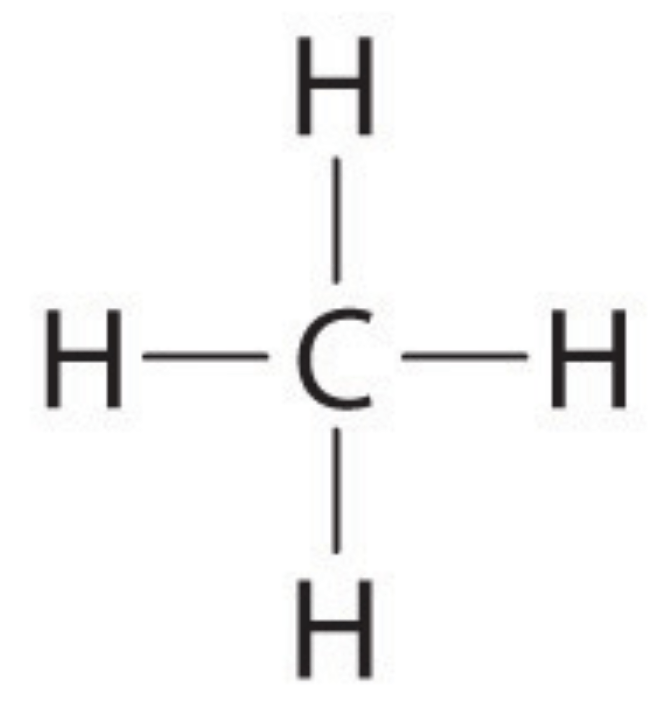
Classify the following molecule.
polar
nonpolar

Classify the following molecule.
polar
nonpolar





The ability of water molecules to stick to each other, creating surface tension is called:
Cohesion
Adhesion
Insulation
Ph

Which of the following is the weakest acid?
bananas (pH 5)
tomatoes (pH 4)
cheese (pH 6)
orange juice (pH 3)
Which of the following pH values represents the greatest concentration of -OH ions?
3
6
9
1
Which of the following pH values represents the greatest concentration of H+ ions?
3
6
9
1
The purpose of a buffer is to ___________.
Neutralize an acid or base and maintain pH.
Make your car's new wax look shiny.
Add volume to your hair.
All of the above.

The amount of energy needed for a reaction to occur.
Transition state
Catalyst
Activation energy
Reaction energy

