
Font size
 Worksheets
Chemistry Chapter 3 Review
Total questions: 71
Worksheet time: 36mins
Use each of the terms below just once to complete the passage: amplitude, energy, frequency, hertz, light, wave, wavelength, speed. Electromagnetic radiation is a kind of (1) ________ that behaves like a(n) ________ as it travels through space. Choose the best term for blank (1).
energy
light
wave
speed
Use each of the terms below just once to complete the passage: amplitude, energy, frequency, hertz, light, wave, wavelength, speed. Electromagnetic radiation is a kind of energy that behaves like a(n) (2) ________ as it travels through space. Choose the best term for blank (2).
wave
energy
wavelength
frequency
Use each of the terms below just once to complete the passage: amplitude, energy, frequency, hertz, light, wave, wavelength, speed. (3) ________ is one type of electromagnetic radiation. Choose the best term for blank (3).
light
amplitude
hertz
speed
Use each of the terms below just once to complete the passage: amplitude, energy, frequency, hertz, light, wave, wavelength, speed. All waves can be characterized by their wavelength, amplitude, frequency, and (4) ________. Choose the best term for blank (4).
speed
hertz
energy
wavelength
Use each of the terms below just once to complete the passage: amplitude, energy, frequency, hertz, light, wave, wavelength, speed. The shortest distance between equivalent points on a continuous wave is called a(n) (5) ________. Choose the best term for blank (5).
wavelength
amplitude
frequency
hertz
Use each of the terms below just once to complete the passage: amplitude, energy, frequency, hertz, light, wave, wavelength, speed. The height of a wave from the origin to a crest or from the origin to a trough is the (6) ________. Choose the best term for blank (6).
amplitude
wavelength
speed
light
Use each of the terms below just once to complete the passage: amplitude, energy, frequency, hertz, light, wave, wavelength, speed. (7) ________ is the number of waves that pass a given point in one second. Choose the best term for blank (7).
frequency
speed
amplitude
energy
Use each of the terms below just once to complete the passage: amplitude, energy, frequency, hertz, light, wave, wavelength, speed. The SI unit for frequency is the (8) ________, which is equivalent to one wave per second. Choose the best term for blank (8).
hertz
wavelength
light
energy
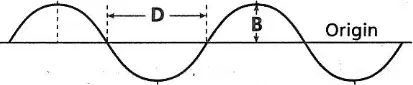
Use the figure of a sinusoidal wave labeled A, B, C, and D relative to an origin line to answer: Which letter(s) represent the amplitude?
A
B
C
D
A(n) _____ is the minimum amount of energy that can be lost or gained by an atom.
valence electron
electron
quantum
Planck's constant
According to Planck's theory, for a given frequency, ν , matter can emit or absorb energy only in
units of hertz.
whole-number multiples of hν .
entire wavelengths.
multiples of 21hν , 41hν , and so on.
The _____ is the phenomenon in which electrons are emitted from a metal's surface when light of a certain frequency shines on it.
quantum
Planck concept
photon effect
photoelectric effect
Which equation would you use to calculate the energy of a photon?
Ephoton=hν× Planck's constant
Ephoton=hν
Ephoton=21hν
c=λν
Like the visible spectrum, an atomic emission spectrum is a continuous range of colors.
True
False
Each element has a unique atomic emission spectrum.
True
False
A flame test can be used to identify the presence of certain elements in a compound.
True
False
The fact that only certain colors appear in an element's atomic emission spectrum indicates that only certain frequencies of light are emitted.
True
False
Atomic emission spectra can be explained by the wave model of light.
True
False
The neon atoms in a neon sign emit their characteristic color of light as they absorb energy.
True
False
When an atom emits light, photons having certain specific energies are being emitted.
True
False
Use each of the terms below to complete the statement: atomic emission spectrum; electron; frequencies; ground state; higher; energy levels; lower. The lowest allowable energy state of an atom is called its ______.
ground state
higher
lower
electron
Use each of the terms below to complete the statement: atomic emission spectrum; electron; frequencies; ground state; higher; energy levels; lower. Bohr’s model of the atom predicted the ______ of the lines in hydrogen’s atomic emission spectrum.
frequencies
energy levels
ground state
electron
Use each of the terms below to complete the statement: atomic emission spectrum; electron; frequencies; ground state; higher; energy levels; lower. According to Bohr’s atomic model, the smaller an electron’s orbit, the ______ the atom’s energy level.
lower
higher
ground state
electron
Use each of the terms below to complete the statement: atomic emission spectrum; electron; frequencies; ground state; higher; energy levels; lower. According to Bohr’s atomic model, the larger an electron’s orbit, the ______ the atom’s energy level.
higher
lower
ground state
atomic emission spectrum
Use each of the terms below to complete the statement: atomic emission spectrum; electron; frequencies; ground state; higher; energy levels; lower. Bohr proposed that when energy is added to a hydrogen atom, its ______ moves to a higher-energy orbit.
electron
ground state
frequencies
energy levels
Use each of the terms below to complete the statement: atomic emission spectrum; electron; frequencies; ground state; higher; energy levels; lower. According to Bohr’s atomic model, the hydrogen atom emits a photon corresponding to the difference between the ______ associated with the two orbits it transitions between.
energy levels
frequencies
ground state
atomic emission spectrum
Use each of the terms below to complete the statement: atomic emission spectrum; electron; frequencies; ground state; higher; energy levels; lower. Bohr’s atomic model failed to explain the ______ of elements other than hydrogen.
atomic emission spectrum
ground state
electron
energy levels
If you looked closely, could you see the wavelength of a fast-moving car?
No; its de Broglie wavelength is far too small to see.
Yes; macroscopic objects have large wavelengths that are visible.
No; cars do not have wavelengths at all.
Using de Broglie’s equation, λ=mvh , which would have the larger wavelength: a slow-moving proton or a fast-moving golf ball?
A slow-moving proton
A fast-moving golf ball
Both would have the same wavelength
Match each item in Column A with the correct item in Column B. Column A: - The modern model of the atom that treats electrons as waves - States that it is impossible to know both the velocity and the position of a particle at the same time - A three-dimensional region around the nucleus representing the probability of finding an electron - Originally applied to the hydrogen atom, it led to the quantum mechanical model of the atom Column B: - Heisenberg uncertainty principle - Schrödinger wave equation - quantum mechanical model of the atom - atomic orbital
The modern model of the atom that treats electrons as waves
quantum mechanical model of the atom
States that it is impossible to know both the velocity and the position of a particle at the same time
Heisenberg uncertainty principle
A three-dimensional region around the nucleus representing the probability of finding an electron
atomic orbital
Originally applied to the hydrogen atom, it led to the quantum mechanical model of the atom
Schrödinger wave equation
How do the Bohr model and the quantum mechanical model of the atom differ in how they describe electrons?
Bohr: electrons move in fixed circular orbits; quantum mechanical: electrons are described by probability distributions (orbitals) with wave behavior, not fixed paths
Both models place electrons at exact positions and velocities around the nucleus at all times
Bohr: electrons behave as waves in standing-wave orbitals; quantum mechanical: electrons are particles moving in fixed paths
Bohr: electrons are located inside the nucleus; quantum mechanical: electrons orbit within the nucleus
Atomic orbitals (do, do not) have an exactly defined size.
do
do not
Each orbital may contain at most (two, four) electrons.
two
four
All s orbitals are (spherically shaped, dumbbell shaped).
spherically shaped
dumbbell shaped
A principal energy has ( n , n2 ) energy sublevels.
n
n2
The maximum number of (electrons, orbitals) related to each principal energy level equals 2n2 .
electrons
orbitals
There are (three, five) equal energy p orbitals.
three
five
Hydrogen’s principal energy level 2 consists of (2s and 3s, 2s and 2p) orbitals.
2s and 3s
2s and 2p
Hydrogen’s principal energy level 3 consists of (nine, three) orbitals.
nine
three
Use the word bank (Aufbau principle; electron configuration; ground-state electron configuration; Hund's rule; lowest; Pauli exclusion principle; spins; stable) to complete the statement: The arrangement of electrons in an atom is called the atom's _____.
electron configuration
spins
ground-state electron configuration
Hund's rule
Use the word bank (Aufbau principle; electron configuration; ground-state electron configuration; Hund's rule; lowest; Pauli exclusion principle; spins; stable) to complete the statement: Electrons in an atom tend to assume the arrangement that gives the atom the _____ possible energy.
lowest
stable
spins
Aufbau principle
Use the word bank (Aufbau principle; electron configuration; ground-state electron configuration; Hund's rule; lowest; Pauli exclusion principle; spins; stable) to complete the statement: This arrangement of electrons is the most _____ arrangement.
stable
lowest
spins
Hund's rule
Use the word bank (Aufbau principle; electron configuration; ground-state electron configuration; Hund's rule; lowest; Pauli exclusion principle; spins; stable) to complete the statement: This arrangement is called the atom's _____.
ground-state electron configuration
electron configuration
Pauli exclusion principle
Aufbau principle
Use the word bank (Aufbau principle; electron configuration; ground-state electron configuration; Hund's rule; lowest; Pauli exclusion principle; spins; stable) to complete the statement: The _____ states that each electron occupies the lowest energy orbital available.
Aufbau principle
Pauli exclusion principle
Hund's rule
electron configuration
Use the word bank (Aufbau principle; electron configuration; ground-state electron configuration; Hund's rule; lowest; Pauli exclusion principle; spins; stable) to complete the statement: The _____ states that a maximum of two electrons may occupy a single atomic orbital, but only if the electrons have opposite _____.
Pauli exclusion principle
Hund's rule
Aufbau principle
ground-state electron configuration
Use the word bank (Aufbau principle; electron configuration; ground-state electron configuration; Hund's rule; lowest; Pauli exclusion principle; spins; stable) to complete the statement: A maximum of two electrons may occupy a single atomic orbital only if they have opposite _____.
spins
lowest
stable
electron configuration
Use the word bank (Aufbau principle; electron configuration; ground-state electron configuration; Hund's rule; lowest; Pauli exclusion principle; spins; stable) to complete the statement: _____ states that single electrons with the same spin must occupy each equal-energy orbital before additional electrons with opposite spins occupy the same orbitals.
Hund's rule
Aufbau principle
Pauli exclusion principle
ground-state electron configuration
Complete the table: For Helium, the electron configuration shown is 1s2 . What is the atomic number of Helium?
2
4
6
10
Complete the table: The row with atomic number 7 corresponds to which element?
Nitrogen
Oxygen
Fluorine
Carbon
What is the ground-state electron configuration for an atom with atomic number 7?
1s2 2s2 2p3
1s2 2s2 2p4
1s2 2s1 2p4
1s2 2s2 2p5
For Neon, which electron configuration matches the filled 2p orbitals shown in the table's orbital diagram?
1s2 2s2 2p6
1s2 2s2 2p5
1s2 2s1 2p6
1s2 2s2 2p4
What is the atomic number of Neon?
8
10
12
18
What is germanium's atomic number? How many electrons does germanium have?
32; 32 electrons
34; 34 electrons
14; 14 electrons
28; 28 electrons
What is noble-gas notation, and why is it used to write electron configurations?
It uses the symbol of the nearest noble gas in brackets to represent inner-shell electrons, simplifying the configuration.
It lists only the valence electrons without any core electrons so the atom appears neutral.
It replaces electron configurations with atomic masses to make trends easier to see.
It names orbitals by color instead of quantum numbers to avoid exponents.
Write the ground-state electron configuration of a germanium atom, using noble-gas notation.
[Ar] 3d10 4s2 4p2
[Kr] 4s2 4p2
[Ne] 3s2 3p2
[Ar] 4s2 4p4
The electrons in an atom's outermost orbitals are called
electron dots
quantum electrons
valence electrons
noble-gas electrons
In an electron-dot structure, the element's symbol represents the
nucleus of the noble gas closest to the atom in the periodic table
atom's nucleus and inner-level electrons
atom's valence electrons
electrons of the noble gas closest to the atom in the periodic table
How many valence electrons does a chlorine atom have if its electron configuration is [Ne]3s2 3p5?
3
21
5
7
Given boron's electron configuration of [He]2s2 2p1, which of the following represents its electron-dot structure?
B with three dots around the symbol
B with two dots around the symbol
B with one dot next to the symbol
B with four dots around the symbol
Given beryllium's electron configuration of 1s2 2s2, which of the following represents its electron-dot structure?
Be with two dots around the symbol
Be with three dots around the symbol
Be with one dot next to the symbol
Be with four dots around the symbol
Which electrons are represented by the dots in an electron-dot structure?
valence electrons
inner-level electrons
only s electrons
both a and c
Match each definition from Column A (items 1–5) with the correct term from Column B.
The set of frequencies of the electromagnetic waves emitted by the atoms of an element
atomic emission spectrum
The minimum amount of energy that can be lost or gained by an atom
quantum
A form of energy that exhibits wavelike behavior as it travels through space
electromagnetic radiation
A three-dimensional region around the nucleus of an atom that describes an electron’s probable location
atomic orbital
The shortest distance between equivalent points on a continuous wave
wavelength
Match each definition from Column A (items 6–9) with the correct term from Column B.
The lowest allowable energy state of an atom
ground state
A particle of electromagnetic radiation with no mass that carries a quantum of energy
photon
The emission of electrons from a metal’s surface when light of a certain frequency shines on it
photoelectric effect
A figure indicating the relative sizes and energies of atomic orbitals
principal quantum number
Describe how the pair is related: frequency, amplitude. Choose the statement that best explains their relationship.
Frequency measures the number of wave cycles per second, while amplitude measures the wave’s height (or maximum displacement).
Frequency and amplitude are the same quantity and always increase together.
Amplitude is the distance between consecutive crests, while frequency is the time for one cycle.
Frequency equals wavelength multiplied by amplitude.
Describe how the pair is related: valence electron, electron-dot structure. Choose the statement that best explains their relationship.
An electron-dot structure represents only core (nonvalence) electrons as dots around an element’s symbol.
An electron-dot structure represents an atom’s valence electrons as dots around the element’s symbol.
Valence electrons are shown as pairs of arrows in an electron-dot structure.
Electron-dot structures list all electrons by principal quantum number.
Describe how the pair is related: principal energy levels, energy sublevels. Choose the statement that best explains their relationship.
Each principal energy level (n) contains one or more energy sublevels (such as s, p, d, f).
Energy sublevels contain several principal energy levels within them.
Principal energy levels and energy sublevels are unrelated concepts.
Energy sublevels determine the number of protons in a nucleus.
Quantum Mechanics says that electrons
can act as both a particle and a wave
can neither act as both a particle and a wave
are a pure form of a wave only
are particles only
When an electron emits light
the electron gets "excited" and "jumps out" away from the nucleus
the electron gets "excited" and "drops back down" closer to the nucleus
the electron "calms down" and "jumps out" away from the nucleus
the electron "calms down" and "drops back down" closer to the nucleus
Which subatomic particle is not found in the nucleus of an atom?
Proton
Neutron
Electron
All of the above are found in the nucleus
What is the charge of a proton?
Negative
Positive
Neutral
Variable
Which of the following is true about isotopes?
They have different atomic numbers but the same mass number
They have the same atomic number but different mass numbers
They have different numbers of electrons but the same number of protons
They are always ions

