
 Worksheets
BIG REVIEW QUIZ LIGHT ELECTRICITY
Total questions: 54
Worksheet time: 34mins
All of the following are examples of refraction EXCEPT _________.
plant stem that looks bent in a jar of water
words on a page that are being magnified with a magnifying glass
people looking at themselves in a mirror
light passing through a hand lens
Sometimes you can see an image of yourself in the window; this happens because the window -
Blocks light
Absorbs light
Reflects light
Refracts light
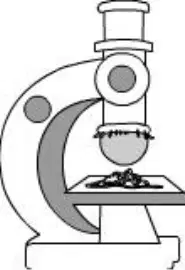
Light traveling through a microscope is ______________.
absorbed
refracted
reflected
transparent
Eyeglasses correct vision problems because they are made of –
Lenses that bend the light
Lenses that reflect the light
Mirrors that bend the light
Mirrors that reflect the light
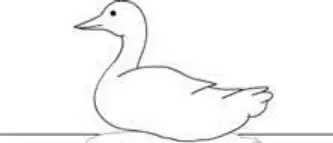
Which statement below BEST explains why the image of the bird can be seen in the water?
A. Light is refracted through the water.
B. Light is absorbed by the water.
C. Light goes through the bird to the water.
D. Light is reflected off the surface of the water.
Which two properties must an object have for it to be reflective?
A. Smooth and shiny
B. Dull and smooth
C. Rough and shiny
D. Clear and flat
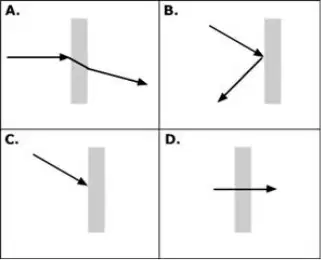
Which of these pictures correctly represents reflection of light?
A. Picture A
B. Picture B
C. Picture C
D. Picture D
Which of the following objects refract light?
A. A mirror
B. A lamp
C. A camera
D. An electric circuit
When parallel rays of light pass through a convex lens, they ______.
A. converge at a point
B. diverge away from each other
C. continue in parallel
D. scatter randomly
All the following use lenses except __________.
A. telescopes
B. cameras
C. eye glasses
D. a mirror
Which of these objects is transparent?
A. Clear Glass
B. Window Shade
C. Wood Door
D. Mirror
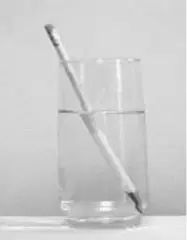
Look at the picture below. Why does the pencil appear broken?
reflection
transmission
absorption
refraction
Max is going to do an experiment about reflection of light. He is going to use a flashlight to shine light at a mirror, a window, and a piece of wood. Which of the following would be the best hypothesis?
The mirror will reflect light best.
Wood will reflect light best.
The window will reflect light best.
The mirror will let light pass through it.
What happens to a beam of light when it passes through a prism?
nothing
light refracts making a rainbow
light reflects
light bounces off the object
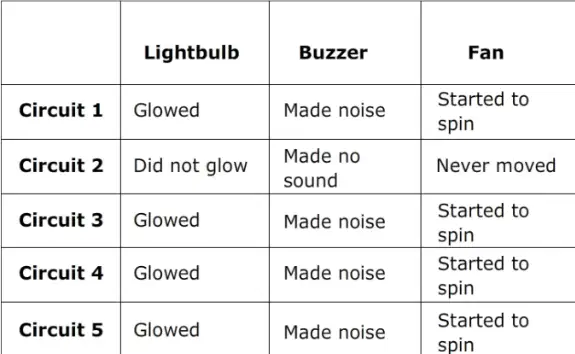
Jenny and Marcus tested a lightbulb, a buzzer, and a fan on five different circuits. They recorded their observations on the chart shown. Which statement is a logical conclusion based on the information in the chart?
An electric current is flowing through all five circuits.
An electric current is not flowing through Circuit 2.
An electric current is not flowing through Circuits 1, 3, 4, and 5.
The electric current in all five circuits is being transformed into a temporary magnet.
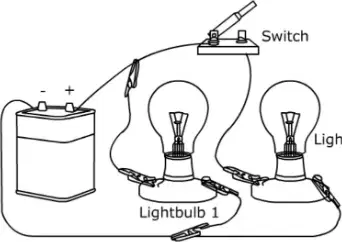
A student built the set up shown below. Which of the following two predictions are most likely to be correct? Select two correct answers.
Lightbulb 1 makes a complete circuit, but Lightbulb 2 does not.
Both bulbs will be in complete circuits if the switch is closed.
Lightbulb 1 and Lightbulb 2 both make a complete circuit.
Lightbulb 2 makes a complete circuit but Lightbulb 1 does not.
Neither Lightbulb 1 or Lightbulb 2 make a complete circuit.
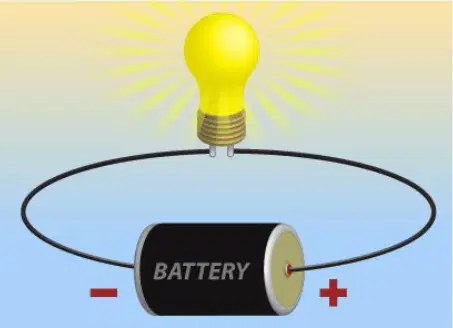
It is possible to power a small light bulb using a simple battery. Which of the following explains what is happening in the picture below?
Light energy in the bulb is changed to electrical energy in the battery.
Electrical energy from the battery is changed to light and heat energy.
Heat energy from the light bulb is changed to mechanical energy in the battery.
Electrical energy in the battery is changed to mechanical energy in the light bulb.
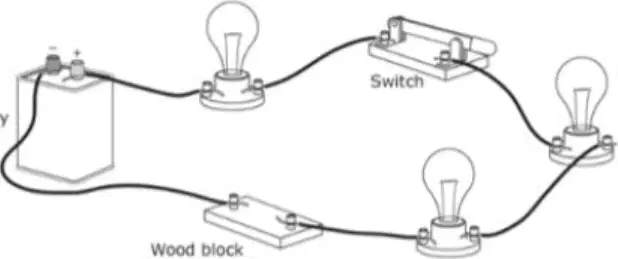
The circuit below does not work. Which procedure would most likely allow the bulbs to light?
Open the switch and then connect the two wires that are attached to the wood block.
Switch the positions of the two wires that are connected to the battery and then open the switch.
Move the switch closer in the circuit to the battery.
Connect the two wires that are attached to the wood block.
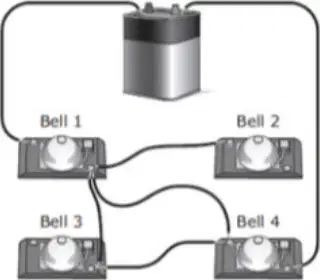
When the student connects the wires as shown, which of the bells will ring?
Bell 1 only
Bells 1 and 4 only
Bells 3 and 4 only
Bells 1, 2, 3, and 4
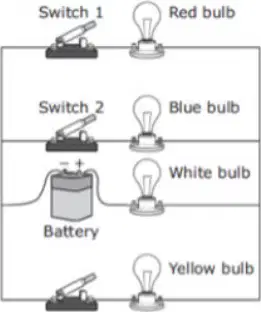
What will happen if Switch 2 is closed and the other switches are left open?
Only the white bulb will operate.
None of the bulbs will operate.
Only the white and blue bulbs will operate.
Only the red and white bulbs will operate.
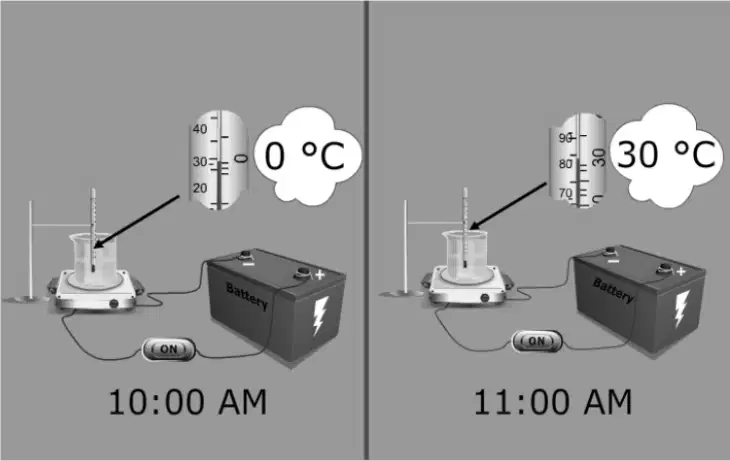
Which two conclusions are supported by the information shown in the diagram? Select two correct answers.
The battery in the circuit is not working.
The circuit is not complete, so the electric current is passing through the circuit.
The electric current that is passing through the circuit is producing heat.
The heat that is passing through the circuit is producing electricity.
An electric current is passing through the circuit, so the circuit must be complete.
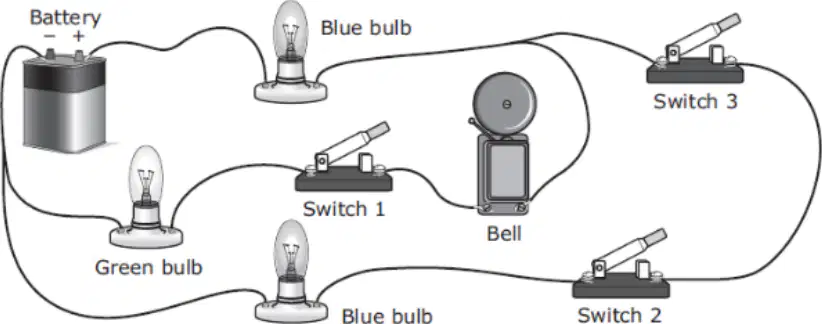
Which procedure will result in only the blue lightbulbs operating?
Close Switches 1 and 2 and leave Switch 3 open
Close Switch 3 and leave Switches 1 and 2 open
Close Switches 2 and 3 and leave Switch 1 open
Close Switch 2 and leave Switches 1 and 3 open

A student placed a pencil in a cup of water. The pencil appears broken because light
always travels in a straight line.
bends when it passes through water.
makes the water in the glass evaporate.
reflects the pencil on the water's surface.


Which of the following is not an electricity C word?
Current
Circuit
Closed
Condensation
Why do electricians always wrap wires in plastic?
Plastic comes in many different colors
Plastic is a good electrical conductor
Plastic makes the wires easy to bend
Plastic is a good electrical insulator
Which of these materials is a good conductor of electricity?
Rubber
Metal
Newspaper
Glass
The student conducted an experiment with circuits. Why was the bulb bright when he closed the switch?
The switch produced an electric current
Closing the switch broke the circuit
Closing the switch completed the circuit
The switch did not make a difference
A penny is an example of
An insulator
an electron
a proton
a conductor


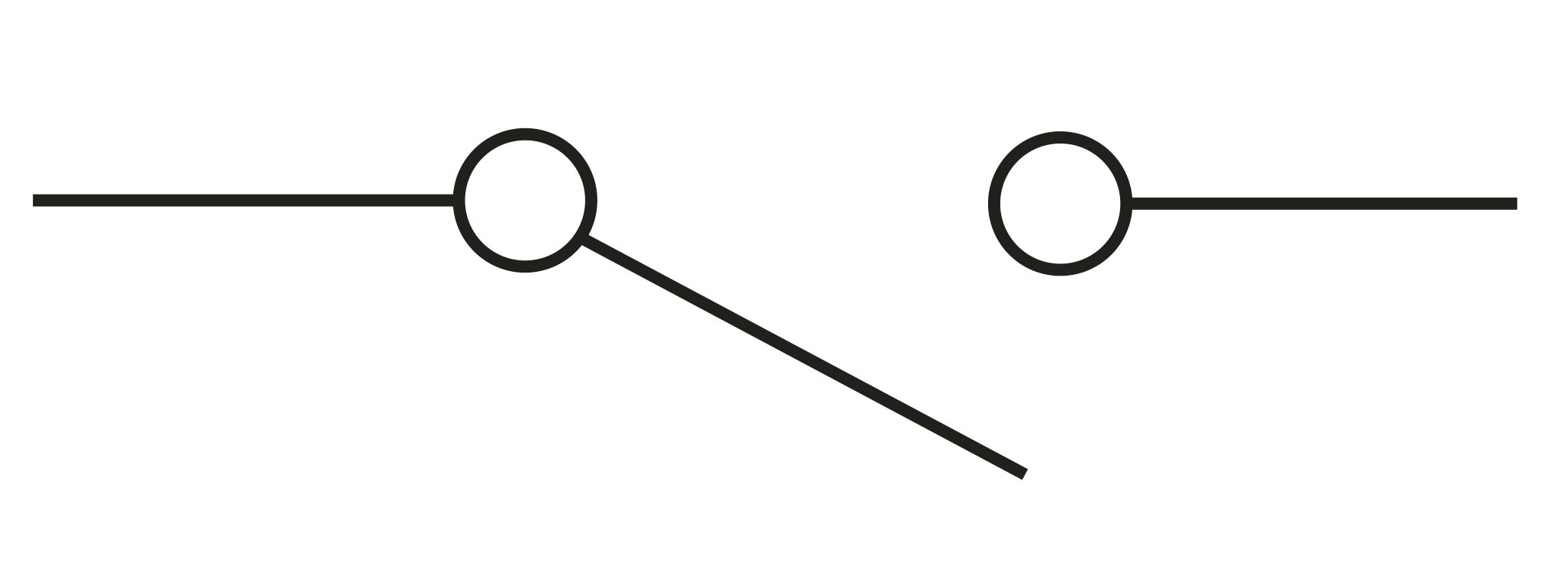

If I disconnect 1 light bulb in a SERIES circuit, then the other light bulbs.....
stay on
turn off
get brighter

What type of circuit does the picture represents?
Series Circuit
Parallel Circuit

What type of circuit does the picture represents?
Series Circuit
Parallel Circuit

What type of circuit does the picture represents?
Series Circuit
Parallel Circuit

