
 Worksheets
Units 1-4
Total questions: 57
Worksheet time: 29mins
Which of the following was a major cause of the Civil War?
Building of the Transcontinental Railroad
Expansion of slavery into the newly formed states and territories
Bimetallism (Free-Silver coinage) Populist Party and William Jennings Bryan
The major shift from an agrarian to an urban society in the late 1800's
How did Abraham Lincoln, Andrew Johnson, and the Radical Republicans differ in handling Reconstruction? (hint: Reconstructions is the time period following the Civil War.)
Whether or not states should continue expansion westward.
How much confederate money would be allowed into the U.S. economy (balancing the U.S. and Confederate dollar)
If slavery would continue, but only in northern U.S. states.
Federal policies regarding the Reunification and treatment of Southern States and Leaders (former confederacy)
How did Abraham Lincoln, Andrew Johnson, and the Radical Republicans differ in handling Reconstruction? (hint: Reconstructions is the time period following the Civil War.)
Whether or not states should continue expansion westward.
How much confederate money would be allowed into the U.S. economy (balancing the U.S. and Confederate dollar)
If slavery would continue, but only in northern U.S. states.
Federal policies regarding the Reunification and treatment of Southern States and Leaders (former confederacy)
Black Codes and Jim Crow Laws...
Were the rules established that under the Treaty of Versailles outlawing chemical weapons
Restricted African Americans freedom, labor, activity and civil rights in the south
Restricted the southern landowners from employing sharecropping tactics
Led to Democratic leaders being elected across the south.
Black Codes and Jim Crow Laws...
Were the rules established that under the Treaty of Versailles outlawing chemical weapons
Restricted African Americans freedom, labor, activity and civil rights in the south
Restricted the southern landowners from employing sharecropping tactics
Led to Democratic leaders being elected across the south.
What did the Grange Movement, Farmer Alliance (which formed the Populist Party) try to accomplish in the 1800s?
Federal Government regulation to lower railroad shipping and storage costs (i.e. Interstate Commerce Act)
Push for the Chinese Exclusion Act (1800s Nativism in U.S. banned Immigrants from China)
Rights for Workers and the Urban Poor (Progressive Movement involving the Labor Movement and Social Gospel Movement)
What did the Grange Movement, Farmer Alliance (which formed the Populist Party) try to accomplish in the 1800s?
Federal Government regulation to lower railroad shipping and storage costs (i.e. Interstate Commerce Act)
Push for the Chinese Exclusion Act (1800s Nativism in U.S. banned Immigrants from China)
Rights for Workers and the Urban Poor (Progressive Movement involving the Labor Movement and Social Gospel Movement)
Which was a negative effect of the 2nd Industrial Revolution (in the U.S., think Lassie Faire Economics, Business Monopolies, Political Machines.
Widespread corruption and dishonest practices in Business, Politics, and the Economy,
Loss of farm land leading to widespread famine and food-insecurity in the U.S.
Far less jobs in urban areas. A decrease in city populations due to loss of factory jobs.
Less immigration to the United States from Europe.
Which was a negative effect of the 2nd Industrial Revolution (in the U.S., think Lassie Faire Economics, Business Monopolies, Political Machines.
Widespread corruption and dishonest practices in Business, Politics, and the Economy,
Loss of farm land leading to widespread famine and food-insecurity in the U.S.
Far less jobs in urban areas. A decrease in city populations due to loss of factory jobs.
Less immigration to the United States from Europe.
Describe the shift from Agrarian to Urban
African Americans moved in mass numbers from the south to the north to escape Jim Crow Laws and gain employment in the north
More Americans moved from small towns and farming communities to cities (Cities grew exponentially)
There were fewer jobs for Women due to American Men returning from WWI (World War 1)
More Americans moved from cities to small towns and farming communities (Cities decreased exponentially)
Describe the shift from Agrarian to Urban.
African Americans moved in mass numbers from the south to the north to escape Jim Crow Laws and gain employment in the north
More Americans moved from small towns and farming communities to cities (Cities grew exponentially)
There were fewer jobs for Women due to American Men returning from WWI (World War 1)
More Americans moved from cities to small towns and farming communities (Cities decreased exponentially)
What treaty ended the Spanish American War and granted the U.S. gain authority over the Cuba and the Philippines (Cuba was returned to Cubans with U.S. serving in oversight role)
Treaty of Paris, ending the Spanish-American War and selling Philippines to U.S. for 20 million
Treaty of Versailles, officially ending WWI (World War 1) granted control of Philippines to U.S.
Treaty of Portsmouth, ended the Russo-Japanese War and granted control of Philippines to the U.S.
What treaty ended the Spanish American War and granted the U.S. gain authority over the Cuba and the Philippines (Cuba was returned to Cubans with U.S. serving in oversight role)
Treaty of Paris, ending the Spanish-American War and selling Philippines to U.S. for 20 million
Treaty of Versailles, officially ending WWI (World War 1) granted control of Philippines to U.S.
Treaty of Portsmouth, ended the Russo-Japanese War and granted control of Philippines to the U.S.
Slavery and ____________ were two major reasons leading to the Civil War.
Argument about the role of the Federal Government vs. State Government
Whether the U.S. should continue to expand westward.
The rise in public fear over supposed communist infiltration throughout the U.S. (Red Scare)
Bimetallism (the support for free coinage of silver) to help economically disadvantaged farmers in the late 1800's
Slavery and ____________ were two major reasons leading to the Civil War.
Argument about the role of the Federal Government vs. State Government
Whether the U.S. should continue to expand westward.
The rise in public fear over supposed communist infiltration throughout the U.S. (Red Scare)
Bimetallism (the support for free coinage of silver) to help economically disadvantaged farmers in the late 1800's
What were the 3 goals of the Populist Party (farmers of the late 1800's) to address economically disadvantages?
Relocation of Native Americans (Indians) off their land to reservations, building boarding schools and passing the Dawes Act to accomplish Americanization/ assimilation,
Immediate emancipation (free slaves in U.S. and its territories), Coalition building between African American groups and the U.S. government, land ownership by the "freedmen"
Bimetallism (Free Silver Coinage), Interstate Commerce Act (charging fair railroad transportation rates), Public ownership of the Railroads
What were the 3 goals of the Populist Party (farmers of the late 1800's) to address economically disadvantages?
Relocation of Native Americans (Indians) off their land to reservations, building boarding schools and passing the Dawes Act to accomplish Americanization/ assimilation,
Immediate emancipation (free slaves in U.S. and its territories), Coalition building between African American groups and the U.S. government, land ownership by the "freedmen"
Bimetallism (Free Silver Coinage), Interstate Commerce Act (charging fair railroad transportation rates), Public ownership of the Railroads
This is one thing that led to increased food security (more food being grown and produced) in the late 1800s
Mechanization (tractors and machines to help agricultural production)
Emancipation (freeing) of the slaves from forced labor and the abolition of slavery (13th amendment)
A widespread decrease in the number of American Farms across the U.S.
A decline in immigration to the U.S. in the late 1800s from Europe. (Europeans decided they were better off staying Europe)
This is one thing that led to increased food security (more food being grown and produced) in the late 1800s
Mechanization (tractors and machines to help agricultural production)
Emancipation (freeing) of the slaves from forced labor and the abolition of slavery (13th amendment)
A widespread decrease in the number of American Farms across the U.S.
A decline in immigration to the U.S. in the late 1800s from Europe. (Europeans decided they were better off staying Europe)
First federal law that made Monopolies illegal. It helped in stopping the unfair or corrupt actions of John D. Rockefeller and his Monopoly, Standard Oil.
Volstead Act
18th Amendment
Sherman Antitrust Act
13th Amendment
First federal law that made Monopolies illegal. It helped in stopping the unfair or corrupt actions of John D. Rockefeller and his Monopoly, Standard Oil.
Volstead Act
18th Amendment
Sherman Antitrust Act
13th Amendment
Which industries benefited the most from Andrew Carnegie's Steel Mills (steel producing factories) and the Bessemer Process.
Skyscrapers, Large Bridges, Trains (railroad industry), Factories
Cottage Industry (Hand-Built), Small Farms, Local Communities
Sharecropping, Debt Peonage, Southern State Black Codes and Laws penalizing the freedmen
Which industries benefited the most from Andrew Carnegie's Steel Mills (steel producing factories) and the Bessemer Process.
Skyscrapers, Large Bridges, Trains (railroad industry), Factories
Cottage Industry (Hand-Built), Small Farms, Local Communities
Sharecropping, Debt Peonage, Southern State Black Codes and Laws penalizing the freedmen
Why was the Nobel Peace Prize awarded to Teddy Roosevelt for the Treaty of Portsmouth?
For his brave actions in the Battle of San Juan Hill, during the Spanish-American War.
Promoting Jingoism (Nationalistic Views and support for warlike policy)
Promoting Peace and ending the Russo- Japanese War
Because of continued work with Progressive groups such-as the Labor Movement and Suffrage Movement, and passing Progressive legislation (Meat inspection Act, Pure food and Drug Act)
Why was the Nobel Peace Prize awarded to Teddy Roosevelt for the Treaty of Portsmouth?
For his brave actions in the Battle of San Juan Hill, during the Spanish-American War.
Promoting Jingoism (Nationalistic Views and support for warlike policy)
Promoting Peace and ending the Russo- Japanese War
Because of continued work with Progressive groups such-as the Labor Movement and Suffrage Movement, and passing Progressive legislation (Meat inspection Act, Pure food and Drug Act)
A negative name for industrialists (Monopoly Owners of the Gilded Age - late 1800s). Stole patents, abused workers, corrupted government and practiced ruthless business tactics.
Robber Barrons
Carpet Baggers
Captains of Industry
Populists
This was a key aspect of the 2nd industrial revolution and led to increased labor force during the Gilded Age.
The “Dot-Com” Economy
Large immigrant population to work in factories.
The Cottage Industry (hand built, in the home)
Thomas Newcomen inventing the steam engine.
The Bessemer Process resulted in which?
Steel became cheaper to produce, increasing industrialization.
Boarding schools being built to assimilate Native Americans.
Federal law prohibiting Chinese laborer’s from entering the U.S.
Adding Silver Coinage to the gold standard (Bimetallism)
Which helped combat the economic problems during the 2nd Industrial Revolution (Gilded Age, 1870s-1900s)? (Hint: 1st federal law intended to regulate a type of business)
Unemployment Benefits (created under Social Security Act of 1935)
Bimetallism (adding Silver Coinage to the gold standard)
Unemployment Benefits (created under Social Security Act of 1935)
The Interstate Commerce Act (regulating railroad monopolies)
Describe the 1st Industrial Revolution.
Trains, Cottage Industry, Steam Engines, Coal
Horses, Exploration, Feudalism, Human/Animal Power
Automobiles, Mass Production, Oil, Electricity
Rockets, Mass Production, Keynesian Economics, Nuclear Energy
Describe the 2nd Industrial Revolution.
Rockets, Mass Production, Keynesian Economics, Nuclear Energy
Automobiles, Mass Production, Oil, Electricity
Trains, Cottage Industry, Steam Engines, Coal
Horses, Exploration, Feudalism, Human/Animal Power
Henry Flager created the Florida East Coast Railway importing tourism (Hotels) and exporting agriculture and "connecting" Florida to the rest of the U.S.
True
False
Which statement is true about “political machines?
They fought to establish minimum wage laws.
Boss Tweed wished to put an end to these systems.
hey were an improvement on democracy.
Controlled political and economic activity in their district / city.
The Missouri Compromise, Compromise of 1850 and Kansas-Nebraska Act resulted in...
Outlaw of slavery leading to the 13th Amendment
Tariffs on most imported goods leading to the recession of 1861.
Sectionalism (growing tensions) between the northern and southern states
Which key pieces of legislation (laws) were passed by Radical Republicans after the Civil War during the Reconstruction period?
13, 14, 15 Amendments and Civil Rights Legislation
reparations for former slave (freedmen) were given and southerners were granted full pardons
executive authority abolished and the judicial branch was added
Explain the 14th Amendment
Granted all American men (including African Americans) the right to vote
Granted American citizenship to all persons born or naturalized in the U.S.
Ended (abolished) slavery/ forced labor
Legalized segregation (Separate but Equal)
What happened during the Nadir (low point in the south- Jim Crow, Segregation) in race relations?
A northern enforcement agency was established to police southern states
Desegregation was enforced in the south, starting with public schools
Federal Government didn't enforce African Americans civil rights in south
Southern politicians changed their views in order to win black votes
Which one describes sharecropping?
Freedmen bought land from ex-plantation owners
Freedmen rented land + tools (equipment) in exchange for a portion of crops
Farmers would "share" in regional profits
Freedmen rented land and tools in exchange for cash
During Progressivism, Settlement Houses such as the Hull House...
...exerted corrupt political control of a cities and districts.
...reiterated the Monroe Doctrine. U.S. would intervene in Latin-America.
...provided social services to immigrants and the urban poor.
Theodore Roosevelts foreign policy. Strong military displays, to achieve American goals.
Open Door Policy
Teddy Bear Policy
Dollar Diplomacy
Big Stick Diplomacy
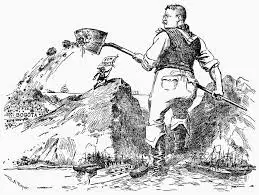
Yellow Fever, mudslides and dangerous working conditions were all obstacles faced during which event.
The Treaty of Portsmouth
The annexation of the Philippines
Boxer Rebellion
Construction of the Panama Canal
Yellow Fever, mudslides and dangerous working conditions were all obstacles faced during which event.
The Treaty of Portsmouth
The annexation of the Philippines
Boxer Rebellion
Construction of the Panama Canal
What did the Womens' Suffrage Movement lead to?
The 17th Amendment
Abolition of Alcohol 18th Amendment
The 19th Amendment
The Spanish-American War
Upton Sinclair's book the Jungle...
Revealed unsanitary conditions in food-processing.
supported laissez-faire policies
Recommended immigration laws.
Social Reformers addressed issues of the Gilded Age during the late 1800s by…
Increasing taxes on the poor.
Supporting extended protections for religious minorities.
Increasing military spending
Creating organizations for workers and the poor, and passing Progressive legislation (laws)
How did Yellow Journalism influence U.S. foreign policy?
Built support for the Spanish-American war
By promoting isolationist views.
Supported territorial conquest
Encouraged changes to immigration policy
The Clayton Antitrust Act outlawed unethical business practices and...
...restricted immigration of Chinese and of Asians
...protected Labor Unions (Strike and Picket)
...addressed the unsanitary conditions in food processing. Meat Inspection Act
Which best describes the major goal of the Progressive Movement?
Unregulated Capitalism and Laissez Faire
Social Services and Reforms (laws passed to fix Society's problems)
Emancipation and Racial Equality
Explain the Roosevelt Corollary (reiteration of the Monroe Doctrine)
U.S. may Annex Latin-American countries
U.S. will trade openly with China
U.S. may assert itself in domestic affairs of Latin-American countries.
Latin-American countries could not increase size of military.
Describe was Kellogg-Briand Pact?
U.S. led coalition to stop the spread of Communism throughout Western Europe and the U.S.
International (multiple countries around the world) defensive alliance that formed after WWI although the U.S. never joined.
Agreement between France and U.S. (27 countries eventually join) to renounce war as an instrument of national policy
Describe was Kellogg-Briand Pact?
U.S. led coalition to stop the spread of Communism throughout Western Europe and the U.S.
International (multiple countries around the world) defensive alliance that formed after WWI although the U.S. never joined.
Agreement between France and U.S. (27 countries eventually join) to renounce war as an instrument of national policy
What was the purpose of the Washington Naval Conference following WWI?
Boost economic development in underdeveloped countries.
Avoid future situations that could lead to war.
Create a naval museum and name it after the 1st U.S. President George Washington
Return territory that was taken by Germany after WWI, as per the War Guilt clause of the treaty of Versailles
What was the purpose of the Washington Naval Conference following WWI?
Boost economic development in underdeveloped countries.
Avoid future situations that could lead to war.
Create a naval museum and name it after the 1st U.S. President George Washington
Return territory that was taken by Germany after WWI, as per the War Guilt clause of the treaty of Versailles
Which best describes the Washington Naval Conference and the Kellogg-Briand Pact?
A national (1 country) agreement to promote racial equality
International (many countries) attempts to create future peace
Proposed plan for the U.S. to buy the Philippine Islands
Agreement for free trade and eliminate trade barriers
Which best describes the Washington Naval Conference and the Kellogg-Briand Pact?
A national (1 country) agreement to promote racial equality
International (many countries) attempts to create future peace
Proposed plan for the U.S. to buy the Philippine Islands
Agreement for free trade and eliminate trade barriers
Describe the Dawes Act and Native American (American Indian) Assimilation
Pre-Civil War Movement to abolish slavery (Uncle Tom's Cabin, The Underground Railroad, Raid on Happer's Ferry)
Law passed to grant control of the Annexed southern U.S. (previously controlled by Mexico) for purpose of Native American relocation.
Strip Native Americans of their Culture and Traditions and "Amercanize" them. (Native American Boarding Schools, Relocation and Private Land Ownership)
Describe the Dawes Act and Native American (American Indian) Assimilation
Pre-Civil War Movement to abolish slavery (Uncle Tom's Cabin, The Underground Railroad, Raid on Happer's Ferry)
Law passed to grant control of the Annexed southern U.S. (previously controlled by Mexico) for purpose of Native American relocation.
Strip Native Americans of their Culture and Traditions and "Amercanize" them. (Native American Boarding Schools, Relocation and Private Land Ownership)

