
 Worksheets
Cells CFA Worksheet
Total questions: 36
Worksheet time: 17mins
Which structures carry out life functions within cells?
organ systems
organelles
organs
tissues
As the basic units of life, cells are living systems that carry out all of the functions needed to sustain life. Which process is common to all cells?
All cells get nutrients from the air.
All cells need and use energy.
All cells make their own food.
All cells allow organisms to move.
Unlike animal cells, plant cells contain a
nucleus to perform photosynthesis.
cellulose-based cytoplasm that makes these cells sturdy.
cellulose-based cell wall that makes these cells sturdy.
mitochondrion to perform photosynthesis.
Which best describes how the function of the cell membrane differs in plant and animal cells?
In animal cells, the cell membrane is the outermost layer of the cell, while in plant cells, the cell membrane separates the cell wall from everything inside the cell.
In plant cells, the cell membrane is the outermost layer of the cell, while in animal cells, the cell membrane separates the cell wall from everything inside the cell.
In animal cells, the cell membrane controls what comes in and out of the cell, while in plant cells, the cell membrane houses all the genetic material.
In plant cells, the cell membrane is made of a gel-like material that is green, while in animal cells, the cell membrane is made of a gel-like material that is red.
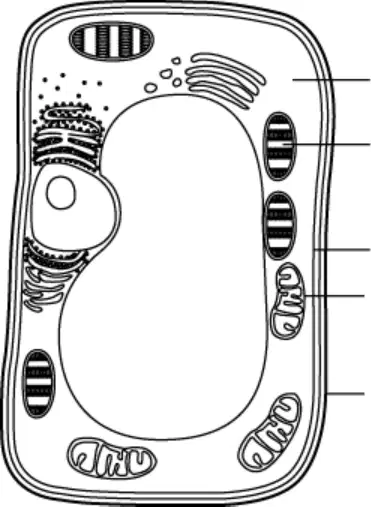
What are M and O?
M is a chloroplast, and O is a mitochondria.
M is the nucleus, and O is the cytoplasm.
M is a mitochondria, and O is a chloroplast.
M is the cytoplasm, and O is the nucleus.
Why do all plant cells contain chloroplasts?
Chloroplasts are necessary for cellular respiration.
Chloroplasts are necessary for photosynthesis.
Chloroplasts are necessary for reproduction.
Chloroplasts are necessary for growth.
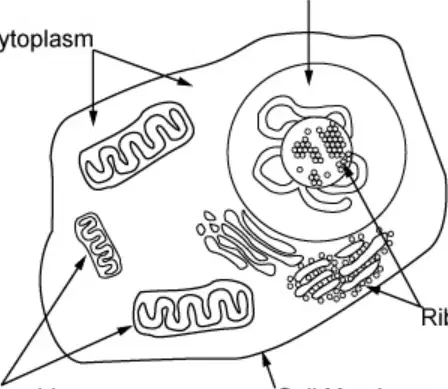
What type of organism might contain this type of cell?
algae
animal
bacterium
plant
If cells were a school building, the cell membrane would most likely be represented by which of the following?
intercom
lockers
teachers and students
walls and doors
Which organelle is responsible for taking in nutrients, breaking them down, and creating energy rich molecules?
the mitochondrion
the Golgi apparatus
the nucleus
the vacuole
Cells are specialized to do certain jobs. For instance, muscle cells are in constant motion and require a lot of energy to work. Muscle cells contain more of which organelle?
cell wall because it produces energy for the cell
chloroplasts because they produce energy for the cell
cell membrane because it produces energy for the cell
mitochondria because they produce energy for the cell
Mitchell is creating a model of a plant cell. Mitchell wants to include organelles that are involved in energy production for the cell. Which organelles should Mitchell include?
Mitchell should use mitochondria to store energy and cytoplasm to release energy from food.
Mitchell should include the nucleus to transform light energy and chloroplasts to store energy.
Mitchell should include cytoplasm to store energy and lysosomes to release energy from food.
Mitchell should include chloroplasts to transform light energy and mitochondria to release energy from food.
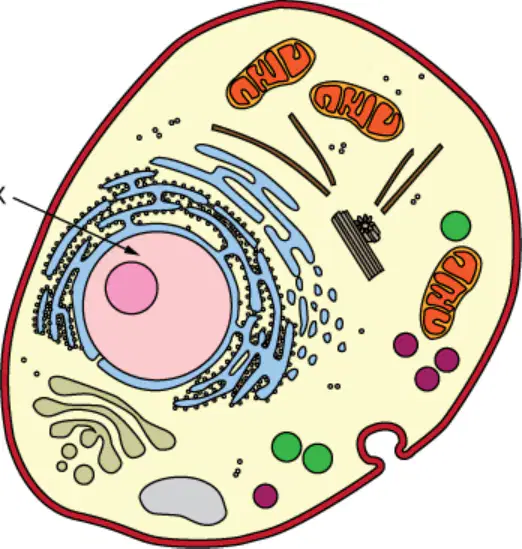
Which organelle is labeled with an X, and what is its function?
the lysosome, which creates protein for the cell
the mitochondrion, which excretes wastes for the cell
the nucleus, which houses the genetic material for the cell
the chloroplast, which produces most of the energy for the cell
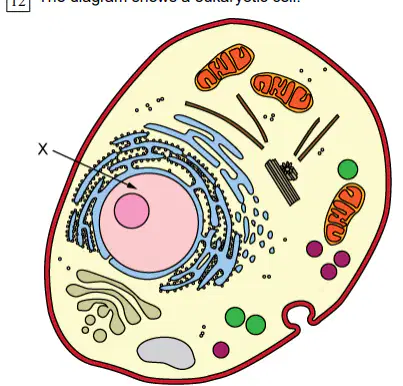
The organelle labeled X in the diagram can be identified as which of the following?
Lysosome
Mitochondrion
Nucleus
Chloroplast

What error did Mercedes make when creating her table?
Mercedes switched the functions of the cytoplasm and the cell membrane.
Mercedes switched the functions of the mitochondria and the chloroplast.
Mercedes switched the functions of the nucleus and the cell membrane.
Mercedes switched the functions of the chloroplast and the nucleus.
If a cell were compared to a school, which part of the school would represent the cell's nucleus?
the classroom walls because they give the structure to the school
the cafeteria cooks because they make food for the entire school
the principal because he or she controls all the activity in the school
the fence because it controls what enters and exits the school
What structures do both plant cells and animal cells contain?
cell membranes and cell walls
nuclei and mitochondria
vacuoles and chloroplasts
cell walls and chromosomes
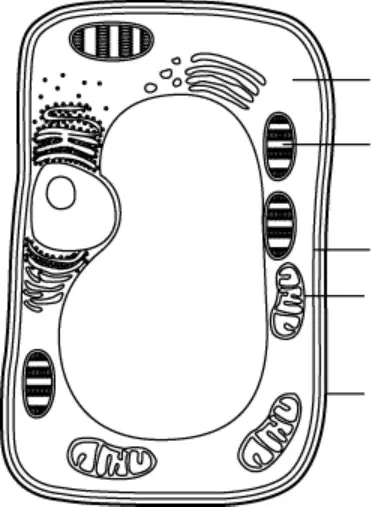
What are P and L?
P is a chloroplast, and L is the nucleus.
P is a mitochondrion, and L is the cell membrane.
P is the cytoplasm, and L is the cell wall.
P is the cell membrane, and L is the cytoplasm.
Cells produce the energy they need to survive through the process of
cellular respiration.
cellular specialization.
cellular differentiation.
cellular transport.
The cell membrane of an animal cell was damaged, preventing the cell from performing one of its functions. Which cell function would be lost, and how would this loss affect the cell?
The cell would no longer be able to provide the first barrier around the cell wall, causing the cell wall to expand.
The cell would no longer be able to take in nutrients and excrete wastes, preventing it from making needed materials.
The cell would no longer be able to maintain the necessary genetic material, preventing it from making copies of itself and dividing.
The cell would no longer be able to use sunlight to create energy, preventing it from getting the energy it needs to grow and reproduce.
Which process moves water molecules across the membrane of a cell?
diffusion
endocytosis
exocytosis
osmosis
Reproduction is important to the growth of organisms because it allows an organism to
change genetic material.
prevent cell death.
stop unnecessary functions.
increase its number of cells.
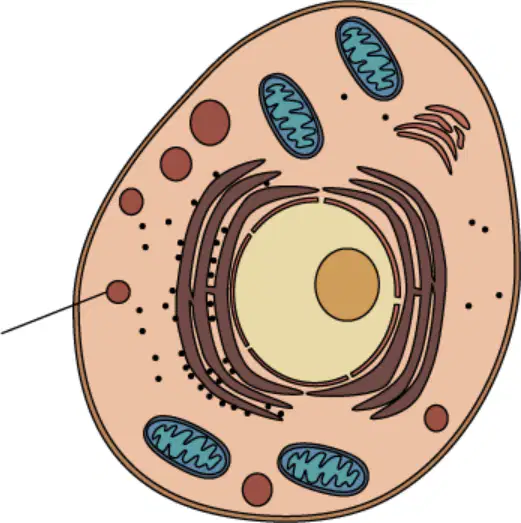
What structure is labeled by the letter X?
The letter X represents a lysosome that aids in cellular digestion.
The letter X represents a ribosome that aids in protein production.
The letter X represents a mitochondrion that produces energy for the cell.
The letter X represents a nucleus that makes genetic material for the cell.
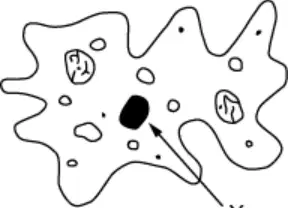
The structure labeled X on a single-celled organism is most similar to the
skin of a multi-celled organism.
brain of a multi-celled organism.
veins of a multi-celled organism.
stomach of a multi-celled organism.
A student wants to develop a model of a plant cell and a model of an animal cell. Plant and animal cells are both eukaryotic and share many common characteristics. Which list BEST describes the characteristics that should be included in both of the models?
a nucleus, cytoplasm, organelles, and a cell membrane that controls the movement of substances into and out of the cell
a nucleus, cytoplasm, lysosomes, and a cell wall that strengthens the cell
a nucleus, cytoplasm, ribosomes, and chloroplasts that absorb light energy
a nucleus, cytoplasm, mitochondria, and a permanent vacuole that can hold large amounts of cell fluid


Euglena are unicelled organisms that live in pond water. They move around using a flagella and can perform photosynthesis when needed. They contain many organelles . What type of cells are they?
Animal Cell
Prokaryotic Cell
Eukaryotic Cell
Plant Cell

Prokaryotic cells are usually _______ and do not contain a ______
Multicellular, Nucleus
Unicellular, Nucleus

Students use a microscope to look for structures present in four different cells. The students placed an 'X' for each structure they saw in each cell.
Which cell that was viewed was most likely a prokaryote?
Cell W
Cell X
Cell Y
Cell Z


Where does photosynthesis occur?
vacuole
chloroplast
mitochondria
nucleus

