
Font size
 Worksheets
Natural Resources & Sedimentary Rock
Total questions: 76
Worksheet time: 1hrs 14mins
Are fossil fuels renewable or non renewable?
renewable
non renewable
Coal was formed ______.
under ancient seas.
in swamps and marshes.
in caves.
under oceans.
Natural gas and petroleum were both formed _____.
in swamp lands.
under ancient seas.
on the surface of the oceans.
underground.
Fossil fuels were formed from ____.
the remains of once living organisms.
the earth.
solids, liquids, and gases, made millions of years ago.
sun and water.
Which of the following is NOT TRUE of fossil fuels?
They are non-renewable.
They produce harmful pollution.
They can easily be replaced as they are used.
They are inexpensive.
The gas form of fossil fuels is ____.
petroleum
natural gas
coal
heat
The liquid form of fossil fuels is ___.
coal
petroleum
natural gas
gasoline
Fossil Fuels are
pieces of rock that have been compacted many times
rock that contains 50% plant and animal remains
metamorphic rock
fuels that form from the remains of plant and other organisms that were buried and altered over million of years

Trees are renewable resources.
True
False

Look closely at answer choices- TRICKY!
Sedimentary rocks take _______________ to form
millions of years
hundreds of years
a few years
a few months
Sedimentary rocks form in
crystal shapes
a large mixture of different sediments
layers of sediments stacked on top of each other
Sedimentary rocks are formed because of
compaction and cementation
compaction and compression
compression and pressure
heat and cementation

Sediments are falling into the layers. What is NOT needed to make sedimentary rocks?
millions of years
organic matter
layers of sediment
compaction and cementation
Which diagram models the process of compaction leading to the formation of sedimentary rock? (5.7A)


The diagram below shows the sequence of the processes that turn solid rock into sandstone. Which two processes best complete this diagram?
Melting and cooling
Erosion and compaction
Compaction and cementation
Evaporation and dissolving


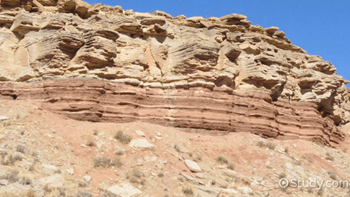
What factors can lead to the formation of a sedimentary rock?
melting and solidification
extreme heat and pressure
compaction and cementation

All of these are related to the formation of natural gas and oil EXCEPT....
decomposed animals
decayed plants
sedimentary rock
active volcanoes
Small pebbles, pieces of other rock, and sand are called?
weathering
sediment
erosion
deposition
cementation
deposition
weathering
compaction
Which order do most sedimentary rocks form in?
weathering, cementation, compaction, deposition, erosion
erosion, compaction, cementation, deposition, weathering
weathering, erosion, deposition, compaction, cementation
cementation, compaction, deposition, erosion, weathering

Weathering
Erosion
Deposition
Compaction
Pieces of sediment come to rest on a surface
Movement of sediment
Breaking down of sediment
When sediments stick together
weathering, erosion, deposition
erosion, weathering, deposition
weathering, deposition , erosion
deposition, erosion, weathering

Sedimentary
Igneous
Metamorphic
Any living thing- plants, animals, and bacteria
organism
erosion
Sedimentary Rock
weathering
the waste and remains of plants and animals.
organic matter
Sedimentary Rock
weathering
sediments
A type of rock that forms in layers when sediments from a weathered rock were eroded and deposited in the ocean, where the compaction and cementation turned them into a new rock.
weathering
Sedimentary Rock
organic matter
sediments
the breaking down of rocks
erosion
deposition
sediments
weathering
small pieces of rock, soil, and other materials.
deposition
sediments
erosion
organism
carrying away of sediments
weathering
compaction
erosion
cementation
dropped off of sediments in new locations
compaction
deposition
cementation
erosion
the process by which sediments are pressed together (squeeze) under water and layers of other sediments (pressure).
compaction
cementation
fossils
Sedimentary Rock
the process by which dissolved minerals in the water glue particles of sediment together into one rock.
fossils
compaction
cementation
weathering
The 5 processes that lead to the formation of Sedimentary Rock- Weathering, Erosion, Deposition, Compaction and Cementation.
W.E.D.C.C
fossil fuels
fossils
weathering
non-renewable forms of energy that we use to meet our needs- Coal, Oil and Natural Gas (CONG).
W.E.D.C.C.
fossil fuels
sedimentary rock
cementation
materials made by nature that are used by living things
non-renewable
coal
natural resources
oil
a solid fossil fuel that forms underground millions of years ago from dead plant material by the heat underground and pressure of the layers above it.
coal
fossils
sedimentary rock
non-renewable
a liquid fossil fuel formed from marine(sea) organisms that were buried and over time heat and pressure from underground turned them into a fuel.
fossil
oil
natural gas
sedimentary rock
a gas fossil fuel that formed from marine(sea) organisms that were buried and over time heat and pressure from underground turned them into a fuel.
abundant
coal
natural gas
conserve
to save by using wisely and carefully
conserve
natural resource
renewable
non-renewable

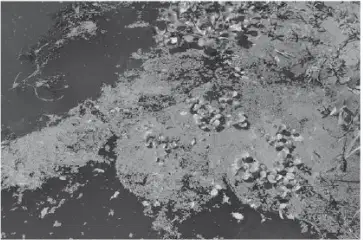
This photograph shows plants growing on the surface of a pond. How do plants like these form fossil fuels?
The dead plants sink to the bottom of the pond and get buried by sediment for millions of years.
The dead plants get buried for millions of years and form fossils that attract carbon.
The dead plants sink to the bottom of the pond and are consumed by decomposers.
The dead plants produce carbon that is consumed by fish, which form fossils.
Which of these are examples of how we can conserve natural resources?
Reduce
Reuse
Recycle
Using fossil fuels

Solar
Renewable resource
Nonrenewable resource

Wind
Renewable resource
Nonrenewable resource

Hydropower (water)
Renewable resource
Nonrenewable resource

Fossil Fuels
Renewable resource
Nonrenewable resource

Geothermal energy
Renewable resource
Nonrenewable resource

Oil
Renewable resource
Nonrenewable resource

Coal
Renewable resource
Nonrenewable resource

Natural Gas
Renewable resource
Nonrenewable resource

Renewable Resources
is a natural substance that is not replenished with the speed at which it is consumed.
is a resource which can be used repeatedly and replaced naturally.

Nonrenewable Resources
is a natural substance that is not replenished with the speed at which it is consumed.
is a resource which can be used repeatedly and replaced naturally.
Advantage
a positive thing
not a positive thing
Disadvantage
a positive thing
not a positive thing

