
 Worksheets
Quizizz 9
Total questions: 38
Worksheet time: 38mins

Does this picture accurately show the Law of Conservation of Mass?
Yes
No

How many grams of OXYGEN would be needed to show conservation of mass in the example below?
100 g
93 g
7 g
0 g

How many grams of coal were present at the start of the chemical change?
Unknown
100 g
200 g
50 g

How many grams of CHOCOLATE POWDER are shown in the example of conservation of mass below?
450 g
465 g
0 g
15 g

How many grams of LIQUID WATER are shown in the example of conservation of mass?
0 g
50 g
100 g
200 g
Mass is neither created nor ______________.
made
destroyed
changed

True or False: The mass of the reactants is equal to the mass of the products?
True
False

How many kilograms of SMOKE are shown in the example of conservation of mass?
1 kg
30 kg
28 kg
3 kg
If a reaction starts with a total 54g of reactants it should produce
a total of 54g of products
O + H2 → H2O
32 g of Oxygen completely reacts with 8 g of Hydrogen to produce _____ g of water.
8
12
24
40
Mg + F → MgF
24 g of magnesium reacts with 38 g of fluorine to produce _____ g magnesium fluoride.
Substances present at the start of a chemical reaction are called ____.
Substances that form as the result, or at the end, of a chemical reaction are called ____.
Transformed, rearranged
Label the reactants and products of the chemical reaction shown.
Reactants
Products
Label the reactants and products in the chemical equation shown.
Reactants
Products

What are the reactants in this chemical equation?
6 CO2 + 6 H2O
H2O
C6H12O6
C6H12O6 + O2
What are the products in this chemical equation?
CO2 + H2O
H2O
C6H12O6
C6H12O6 + O2
How many atoms of hydrogen are in
C6H12O6
6
12
18
2
What does the number 3 represent in 4NH3?
Subscript
Superscript
Coefficient

In the equation shown, what are the reactant(s)?
N2 + H2
NH3
In the equation shown, what are the product(s)?
N2 + H2
NH3

Anthony is performing an experiment. He adds 0.25 grams of baking soda to 5 grams of water and stirs. Anthony watches as the baking soda dissolves in the water. If Anthony weighs the water and baking soda solution, what will its mass be?
4.75 grams
5.25 grams
5.0 grams
7.5 grams

Which of the models of a chemical reaction best represents the Law of Conservation of Mass?
A
B
C
D
Q.
True or False
The mass of the reactants in a chemical equation must equal the mass of the products.
TRUE
FALSE


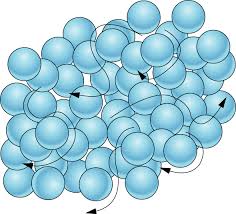
What state of matter?
Solid
Liquid
Gas
Plasma
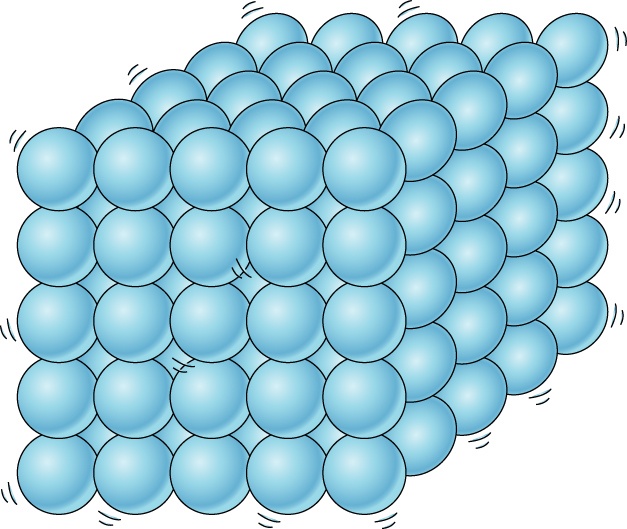
What state of matter?
Solid
Liquid
Gas
Plasma!!!
Which of the following can be signs that a chemical change has occurred?
color change
formation of a gas (bubbles)
energy change
All of the above
Which process is a sign of a chemical change?
a rotting potato gives off a bad smell
a melting block of ice leaves a large puddle
a cloud quickly changes shape when blown by the wind
a plaster statue breaks when it falls on the floor
Students observed a piece of iron change from shiny to rusty. What caused this change?
a chemical reaction
a heat reaction
a cold reaction
a physical reaction



