
 Worksheets
MICR210 - Progress Test 2 (LO4-6)
Total questions: 39
Worksheet time: 20mins
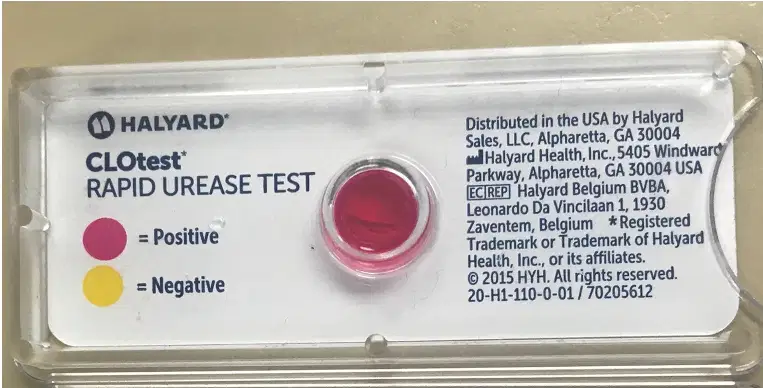
What bacteria is this test used to identify?
Campylobacter jejuni
Vibrio cholerae
Helicobacter pylori
Aeromonas hydrophila
A key symptom associate with this disease is 'rice water stool'.
Vibrio cholerae
Yersinia enterocolitica
Plesiomonas shigelloides
Shigella sonnei

What can you determine from this triple sugar iron slant?
The organism produced H2S gas
The organism fermented glucose
The organism fermented sucrose or lactose
The organism produced gas
A patient hooked their finger with a fish hook. Swelling and discharge appeared the next day and the wound was cultured.
BA: grey NH
Gram: Gram-negative bacilli
Oxidase: positive
What can you presume is the identification of this organism?
Campylobacter jejuni
Plesiomonas shigelloides
Vibrio cholerae
Enterotoxigenic E.coli
A technologist reported Escherichia coli based on the following test results.
Gram: gnb
Oxidase: negative
TSI: A/A gas
Motility = pos
Indole = pos
Lysine = pos
Urea = pos
Citrate = neg
What test needs to be repeated for this ID to be valid?
Indole
Lysine
Urea
Citrate
What culture media from a stool culture is incubated at 42°C?
CIN
STEC
CAMP
XLD
Which of the following colonial morphologies is suggestive of Proteus mirabilis?


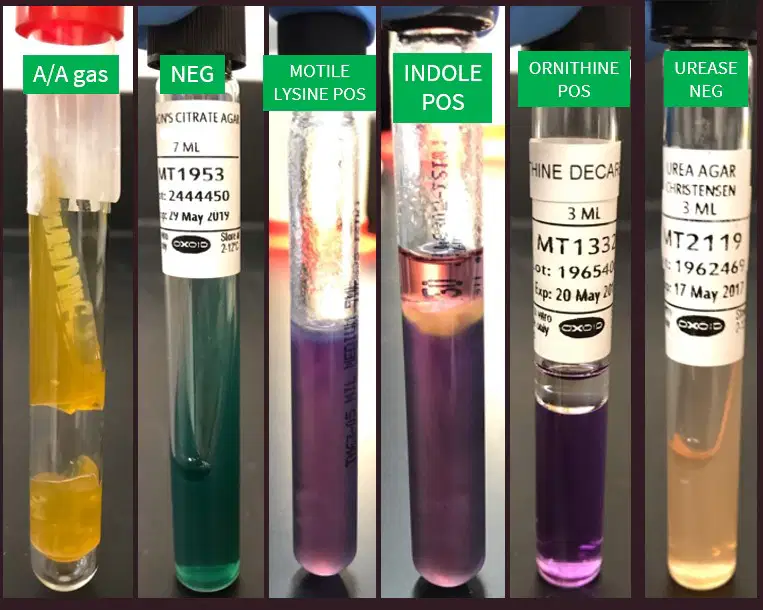
Identify the bacteria based on the biochemical reactions:
Escherichia coli
Proteus mirabilis
Klebsiella pneumoniae
Citrobacter freundii

What member of Enterobactericeae would have this biochemical reaction?
Citrobacter freundii
Klebsiella oxytoca
Yersinia enterocolitica
Morganella morganii
Which of the following organisms will be motile at 37°C?
Klebsiella pneumoniae
Shigella sonnei
Yersinia enterocolitica
Enterobacter freundii

What would the O-F Glucose test result be for an organism with this TSI result?


Serratia marcescens is described as pigmented, making it impossible to determine lactose fermentation. What biochemical test can be used to determine its ability to ferment lactose?
O:F test
ONPG
VP
Indole
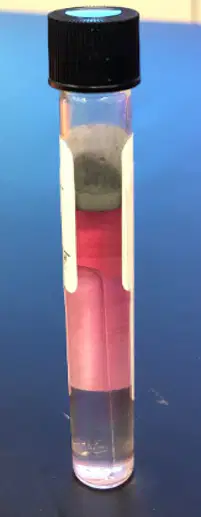
Interpret this nitrate reductase test.
Note; Sulfanilic acid, a-napthylamine and zinc dust were added to the tube)
Nitrate negative
Nitrate positive
Nitrite positive
Invalid
A shiny grey BH bacteria is growing on the BA and has a grape-like odor. What is the expected oxidase result?
positive
negative
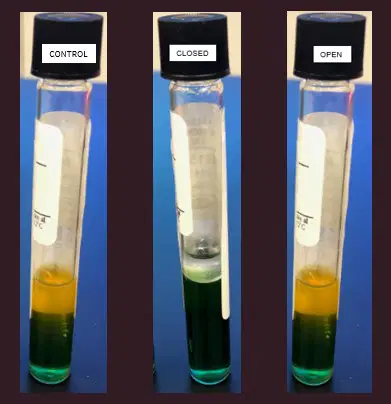
Interpret this OF test result for Stenotrophomonas maltophlia.
Oxidizer
Non-Utilizer
Fermenter
Invalid
What is the treatment of choice for Stenotrophomonas maltophilia?
Penicillin
Metrodidazole
Nitrofurantoin
Sulfamethoxazole trimethoprim
Which Gram stain most closely resemble Acinetobacter baumannii?
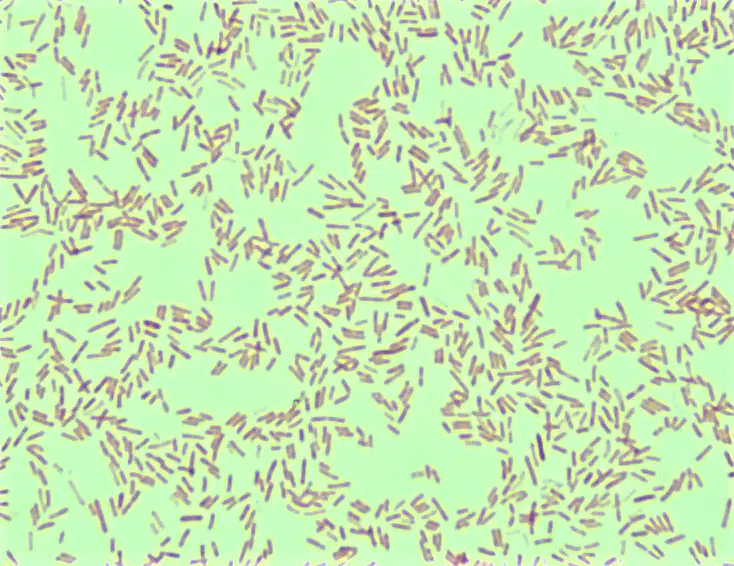
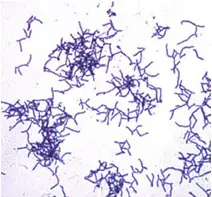
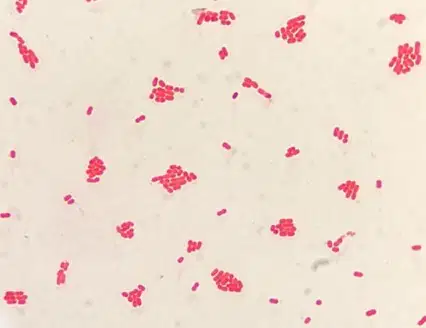
A 5-year-old female is bit by her cat and presents to emergency with swelling and pus in the right index finger. What is the most likely pathogen for this source?
Proteus mirabilis
Pasteurella multocida
Achromobacter xylosoxidans
Haemophilus influenzae
What test is used to differentiate between Haemophilus influenzae and Haemophilus parainfluenzae?
BA with staph streak
Oxidase
Porphyrin
Cefinase
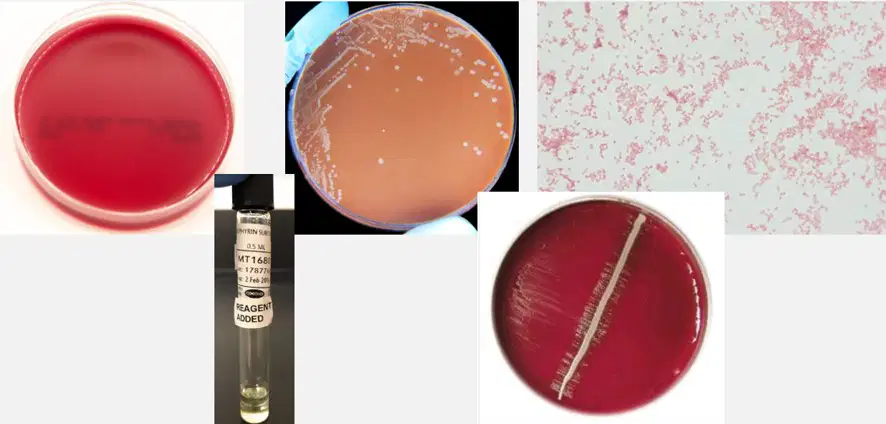
What is the identity of this organism that was isolated from a 3-month old baby that was unvaccinated?
Neisseria gonorrhoeae
Haemophilus influenzae
Streptococcus agalactiae
Moraxella catarrhalis
An anaerobic bacteria growing on the VITK fluoresces chartreuse. What is the most likely identification of this organism?
Prevotella sp.
Porphyromonas sp.
Bacteroides fragilis group
Fusobacterium sp.
Name the organism.
BA: no growth
CHOC: sm grey
Gram: Gram negative diplococci
Oxidase: positive
Carbohydrate Utilization: glucose pos; maltose neg; lactose neg; sucrose neg
Neisseria meningitidis
Neisseria lactamica
Neisseria gonorrhoeae
Moraxella catarrhalis
Interpret the following aerotolerance test:
CHOC: sm grey
VITK: sm grey
Gram: Gram positive cocci
Strict aerobe
Strict anaerobe
Facultative anaerobe
Capnophile
A Gram-negative cocci organism is Butyrate esterase positive. What is the likely identification.
Haemophilus influenzae
Neisseria gonorrhoeae
Moraxella catarrhalis
Pasteurella multocida

Interpret the MIL
Motility: pos
Indole: pos
Lysine: neg
Motility: neg
Indole: neg
Lysine: neg
Motility: pos
Indole: neg
Lysine: pos
Motility: neg
Indole: neg
Lysine: pos
A smelly anaerobe is isolate on a VITK with the following results. What is the identification of the organism?
Gram: Gram positive bacilli, large
Reverse CAMP: negative
Nagler: negative
Toxin production: positive
Campylobacter jejuni
Clostridiodes difficile
Clostridium perfringens
Fusobacterium nucleatum
An organism growing on VITK after 10 days shows white colonies that resemble a molar tooth. Sulfur granules were noted in the aspirate that was submitted.
What is the Gram stain of this organism?
Gram-positive bacilli, branching
Gram-positive bacilli, large
Gram-negative coccobacilli
Gram-negative diplococci
Name the organism that was isolated from a urine sample:
BA: grey glistening NH, mucoid
MAC: LF mucoid
Oxidase: negative
TSI: A/A gas
Motility: nonmotile
Indole: positive
Lysine: positive
VP: positive
Escherichia coli
Klebsiella oxytoca
Enterobacter cloacae
Citrobacter freundii
What organism would the DNase test be helpful at identifying?
Staphylococcus saprophyticus
Moraxella catarrhalis
Pasteurella multocida
Veillonella sp.
What bacteria are empirically treated with penicillin? Select all that apply.
Streptococcus pyogenes
Pasteurella multocida
Bacteroides fragilis
Pseudomonas aeruginosa
What stool pathogen is nonmotile (Genus only)?
(a)
KVC disks are performed on Fusobacterium necrophorum. What are the expected results?
K= resistant
V= resistant
C= variable
K= resistant
V= resistant
C= resistant
K= sensitive
V= resistant
C= sensitive
K= resistant
V= sensitive
C= resistant
What is the presumptive organism ID?
BA: grey NH, lavender-green hue
Gram: gnb
Oxidase: negative
OF: Oxidizer
Nitrate: variable
Motility: motile
MAC: NLF
Pseudomonas aeruginosa
Acinetobacter baumanii
Stenotrophomonas maltophilia
Achromobacter xylosoxidans
Which of the following is NOT true about Enterobacteriaceae?
All are oxidase negative
All are described as grey glistening NH
All are Gram-negative bacilli
All can ferment glucose
A mannitol fermenter is seen on the Cefsulodin-Irgasan-Novobiocin agar. What biochemical test would help differentiate the stool pathogen from NF?
Motility
Citrate
Rhamnose
Oxidase
Shigella species can be identified by isolating its specific somatic antigens found on the cell wall. What type of antigens are these commonly known as?
S-antigens
H-antigens
K- antigens
O-antigens
A strain of Pseudomonas aeruginosa is identified as a Carbapenemase-Producing Organism (CPO). What antibiotic will be ineffective for treatment?
Sulfamethoxazole-trimethoprim
Ticarcillin
Meropenem
Tobramycin
What biochemical test used to identify Enterobacteriaceae detects neutral-end products from glucose fermentation?
Voges-Proskauer (VP)
Citrate
Indole
Triple Sugar Iron (TSI)
What biochemical test can help differentiate Peptostreptococcus anaerobius from other anaerobic Gram-positive cocci?
KVC disks
SPS disk
reverse CAMP
Indole

