
Font size
 Worksheets
1920s to WWII US
Total questions: 76
Worksheet time: 47mins

This graph shows a population change in some select cities. Which statement best explains the trend in this graph?
The end of segregated medical facilities improved health care and led to increased birth rates.
Wage equality and a lack of discrimination encouraged African Americans to move to these cities.
Sharecropping opportunities in these cities were more lucrative than in southern cities.
Many African Americans moved to northern cities seeking a better life and more job opportunities.
New forms of mass media in the 1920s, such as radio and movies, had what effect on the culture of America?
It increased sectional tension as people became more aware of the regional differences in the country.
It promoted more traditional values by downplaying the spread of modern ideas.
It led to a standardization of the culture as people had access to the same information.
It slowed the growth of cities since people could live in rural areas and have access to the same entertainment.
How did the Grand Ole Opry impact the 1920s music industry?
It showcased artists from diverse racial backgrounds who played music from a variety of genres.
It promoted country music artists through a weekly radio show that was broadcast nationwide.
It used music to transition nationwide listeners away from traditional family values.
It used music as a venue to share southern political issues and increase voter turnout.
This is a list of new innovations that were popular during the 1920s. • automobiles • refrigerators • vacuum cleaners • washing machines How did these new innovations affect America in the 1920s?
They reduced consumer spending and helped Americans save more money.
They allowed Americans to have more time to enjoy leisure activities.
They led to smaller urban populations as it became too expensive to live in cities.
They led to a switch in gender roles as men took the primary responsibility for housework.
What factor made it possible for Henry Ford to produce affordable automobiles?
He had strong support from the major labor unions.
He used an assembly line to make production efficient.
He received government subsidies to cover production costs.
He hired skilled workers to develop the assembly process.
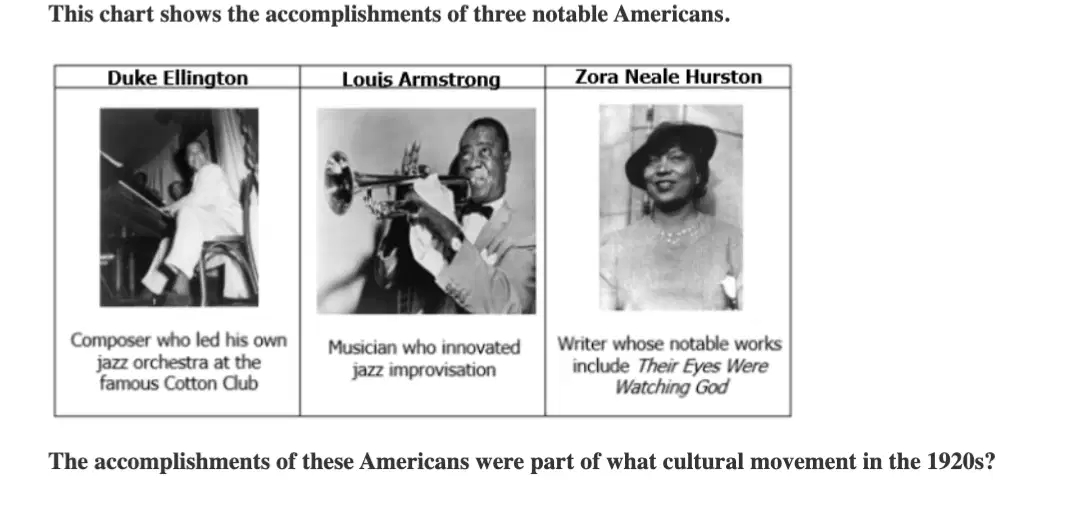
This chart shows the accomplishments of three notable Americans. The accomplishments of these Americans were part of what cultural movement in the 1920s?
Harlem Renaissance
Post-Modernism
Temperance Movement
Transcendentalism
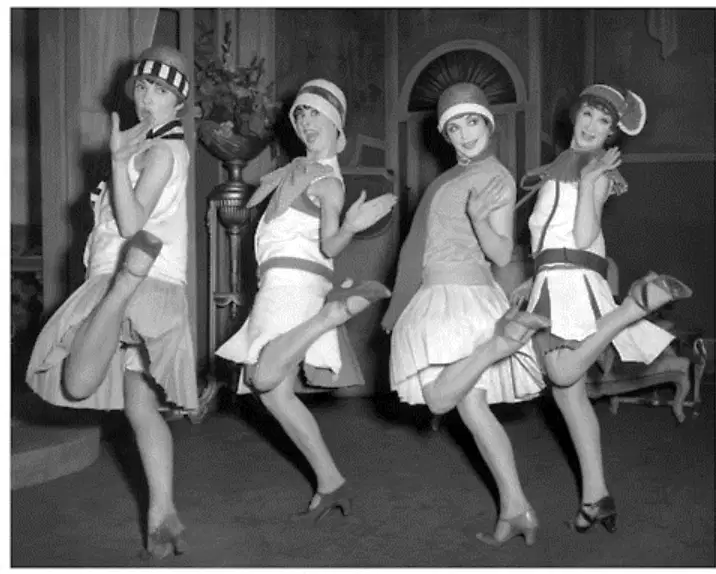
This photograph was taken in the 1920s. The women in this photograph represented what trend in the 1920s?
Fundamental religious viewpoints contributed to fewer opportunities for women.
Women began rejecting more traditional roles and adopting “modern” identities.
New forms of mass media promoted traditional stereotypes of the role of women.
Fewer job opportunities for women created more dependence on men for economic stability.
In the 1920s, which events were evidence of a rise in nativist sentiments in the nation? Select two that apply.
adoption of immigration quotas
popularity of flappers
resurgence of the Ku Klux Klan
rejection of Prohibition
support for women’s suffrage
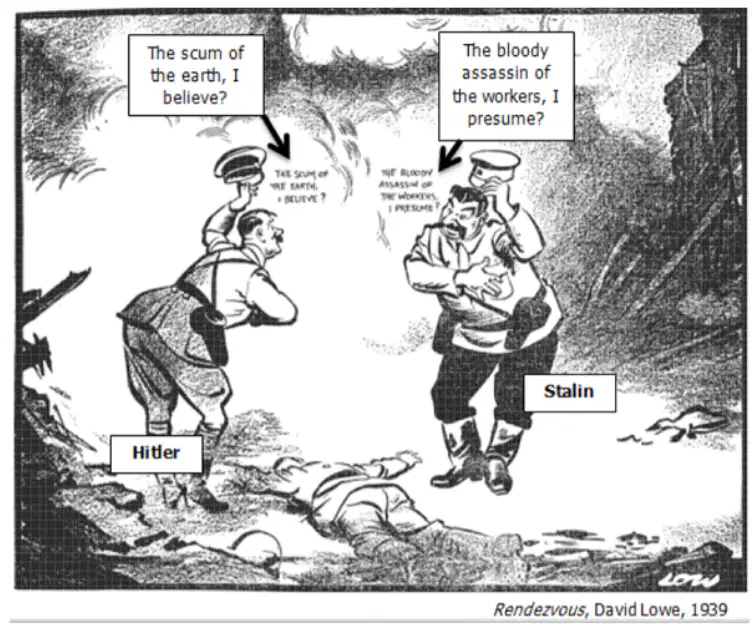
How does this cartoon reflect the relationship between Hitler and Stalin at the beginning of World War II?
The two men are polite but do not seem to like each other, as reflected in the Nazi-Soviet Nonaggression Pact.
The two men are violent towards each other as shown by the repeated assaults on each other early in the war.
The two leaders will destroy anyone in their path, like when Germany invaded Belgium.
The two men will work together to dominate the world.
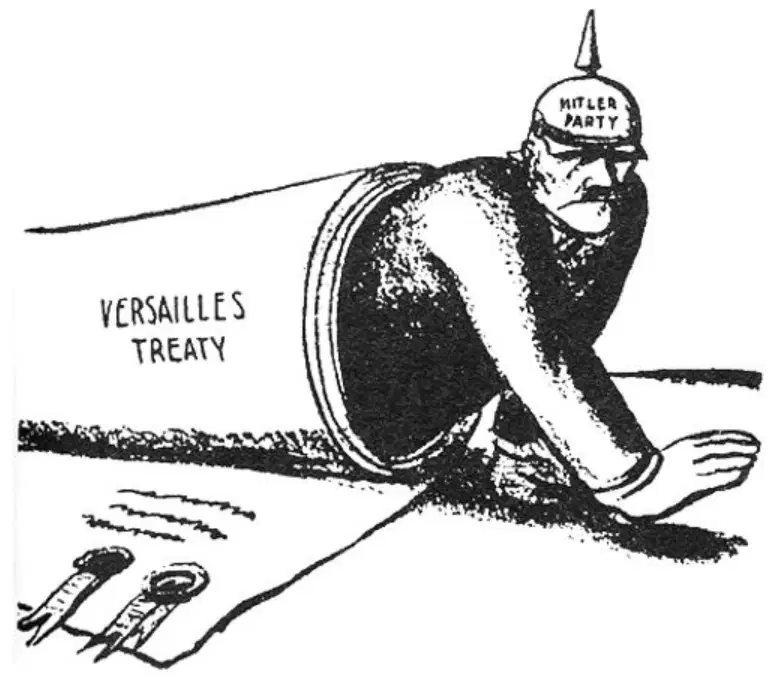
This cartoon was published in the St. Louis Post-Dispatch in 1930. What is the main idea of this cartoon?
The effects of the Treaty of Versailles led to the rise of the Nazi Party.
Adolf Hitler was one of the primary authors of the Treaty of Versailles.
The objective of the Treaty of Versailles was to cause another war.
Members of the Nazi Party supported the Treaty of Versailles.

This political cartoon was published in 1941. What was an effect of the event symbolized in this cartoon?
The Soviet Union became a member of the Allied Powers.
The United States declared war on the Soviet Union.
Germany conquered and took control of the Soviet Union.
The Soviet Union remained neutral throughout World War II.
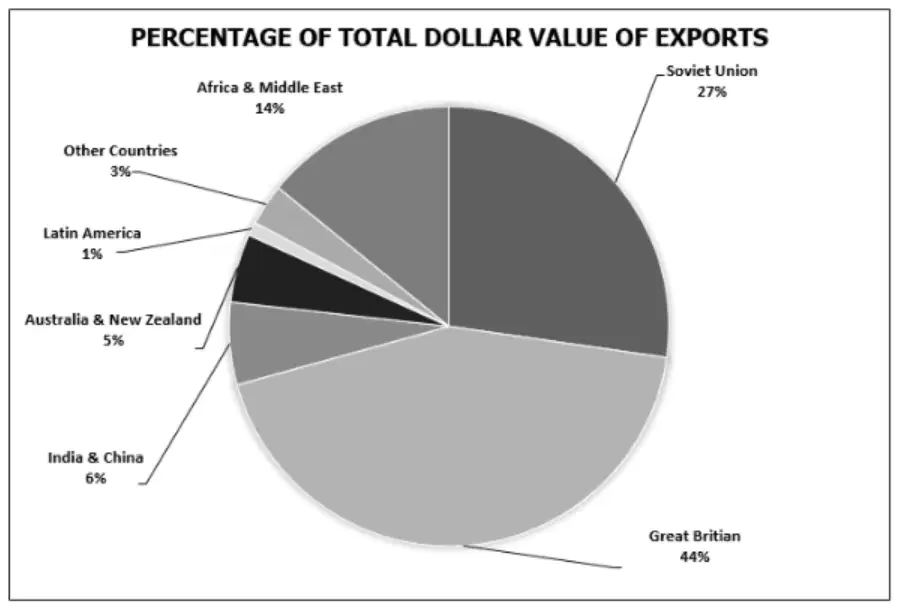
This graph shows the distribution of exports sent as part of the Lend-Lease Act. What does this data reveal about the United States’ early involvement in World War II?
The United States refused to provide aid to any communist country.
Despite claims of neutrality, the United States favored the Allied Powers.
Due to the Depression, the United States isolated itself from the conflict in Europe.
The United States treated all countries equally.
In what document did the Allied Powers declare that freedom was an important goal of World War II?
the Fourteen Points
the Atlantic Charter
the Potsdam Declaration
the Iron Curtain Speech
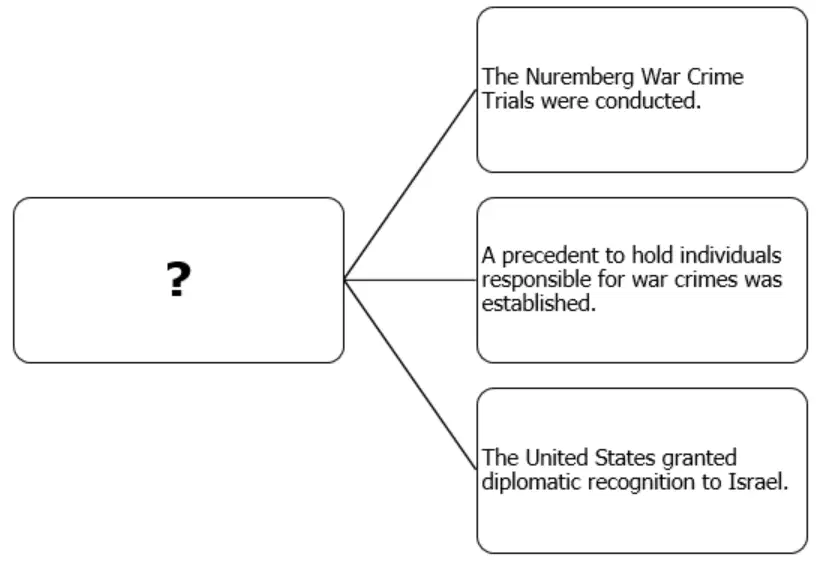
This chart shows several actions that took place after World War II. Which event completes this chart?
Discovery of the Holocaust
Dropping of Atomic Bombs on Japan
Outcome of the Yalta Conference
Division of Germany Among the Allied Powers
The Final Solution program used by Nazi Germany is also referred to by what other name?
Holocaust
Kristallnacht
Nuremberg Laws
Anti-Semitism
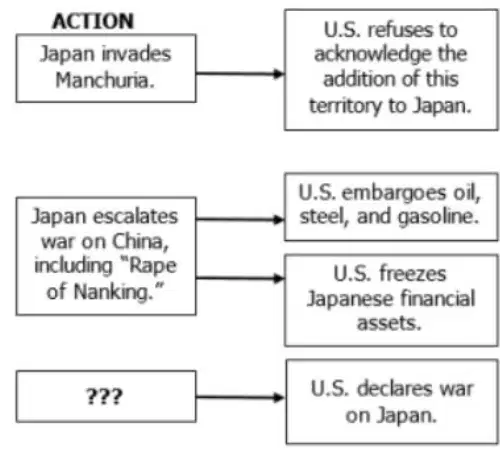
This diagram shows some interactions between Japan and the United States. The diagram’s sequence is: Japan invades Manchuria → U.S. refuses to acknowledge the addition of this territory to Japan; Japan escalates war on China, including “Rape of Nanking.” → U.S. embargoes oil, steel, and gasoline → U.S. freezes Japanese financial assets; ??? → U.S. declares war on Japan. Which event completes this diagram?
Japan invades the Dutch East Indies.
Commodore Perry arrives in Japan.
Japan attacks Pearl Harbor.
Germany creates an alliance with Japan.
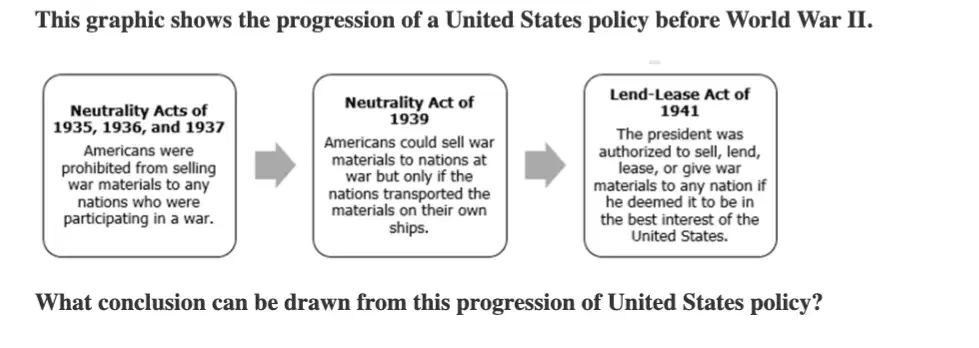
This graphic shows the progression of a United States policy before World War II. The sequence is: Neutrality Acts of 1935, 1936, and 1937 (Americans were prohibited from selling war materials to any nations who were participating in a war) → Neutrality Act of 1939 (Americans could sell war materials to nations at war but only if the nations transported the materials on their own ships) → Lend–Lease Act of 1941 (The president was authorized to sell, lend, lease, or give war materials to any nation if he deemed it to be in the best interest of the United States). What conclusion can be drawn from this progression of United States policy?
The United States was more committed to neutrality as it became clear the Allied Powers were winning the war.
As the war continued, the United States became more supportive of the nations that made up the Allied Powers.
Trading with the Axis Powers was more lucrative for the United States than trading with the Allied Powers.
Prior to the attack on Pearl Harbor, it was unclear whether the United States favored the Allied or Axis Powers.
The United States entered World War II as a result of a direct attack on Pearl Harbor by which nation?
Germany
Italy
Japan
Russia
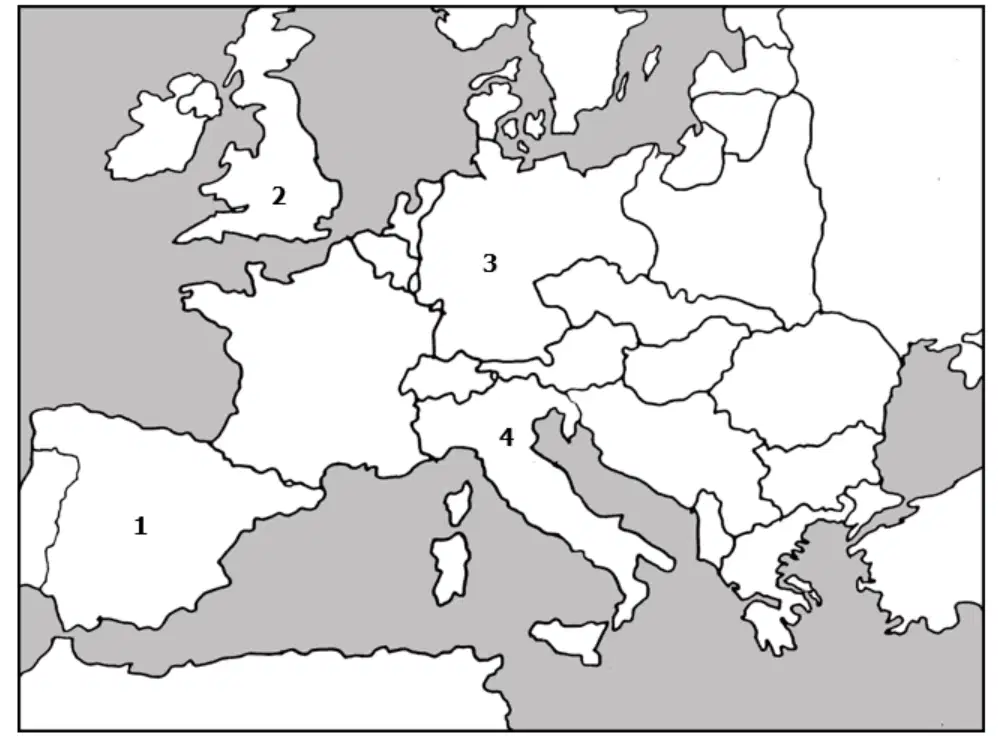
This is a map of Europe during World War II with the numbers 1 (Iberian Peninsula), 2 (British Isles), 3 (central Europe/Germany), and 4 (Italian Peninsula). Which number correctly identifies a nation that was a member of the Allied Powers?
1
2
3
4
Which American was the commander of Allied forces in North Africa, stopping the Germans from reaching needed supply bases in Algeria?
Dwight D. Eisenhower
Douglas MacArthur
George C. Marshall
George S. Patton, Jr.
Which role describes Winston Churchill during World War II?
communist dictator of Russia
prime minister of Great Britain
president of the United States
emperor of Japan
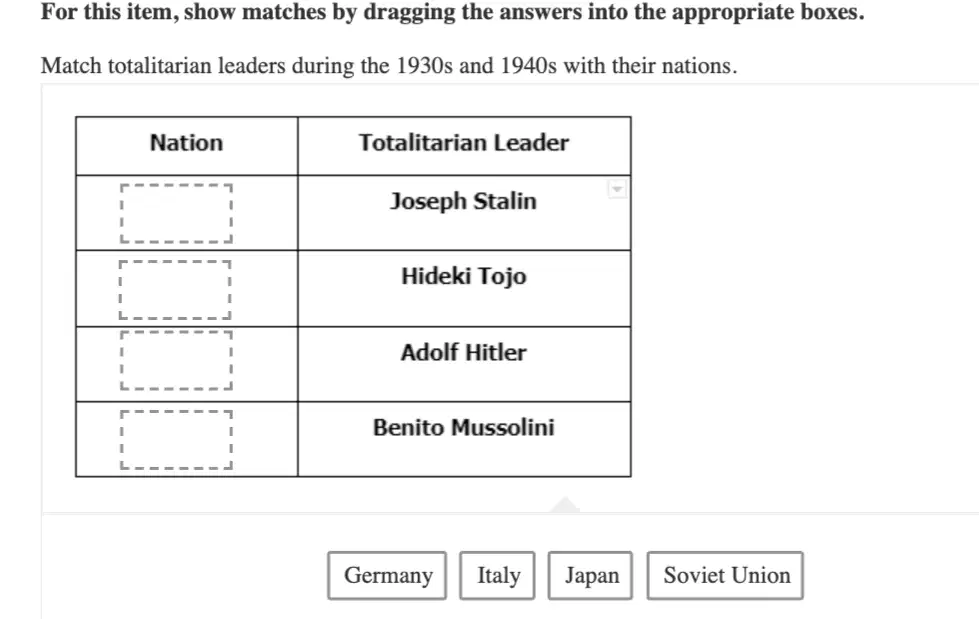
For this item, show matches by dragging the answers into the appropriate boxes. Match totalitarian leaders during the 1930s and 1940s with their nations.
Joseph Stalin
Soviet Union
Hideki Tojo
Japan
Adolf Hitler
Germany
Benito Mussolini
Italy
Why was General Douglas MacArthur a significant leader during World War II?
He used tank warfare to take control of Morocco in the North African Theater.
He negotiated the surrender of Germany to end the war in Europe.
He served as supreme commander of the Allied Forces in the European Theater.
He oversaw the Allied occupation of Japan after the war ended.
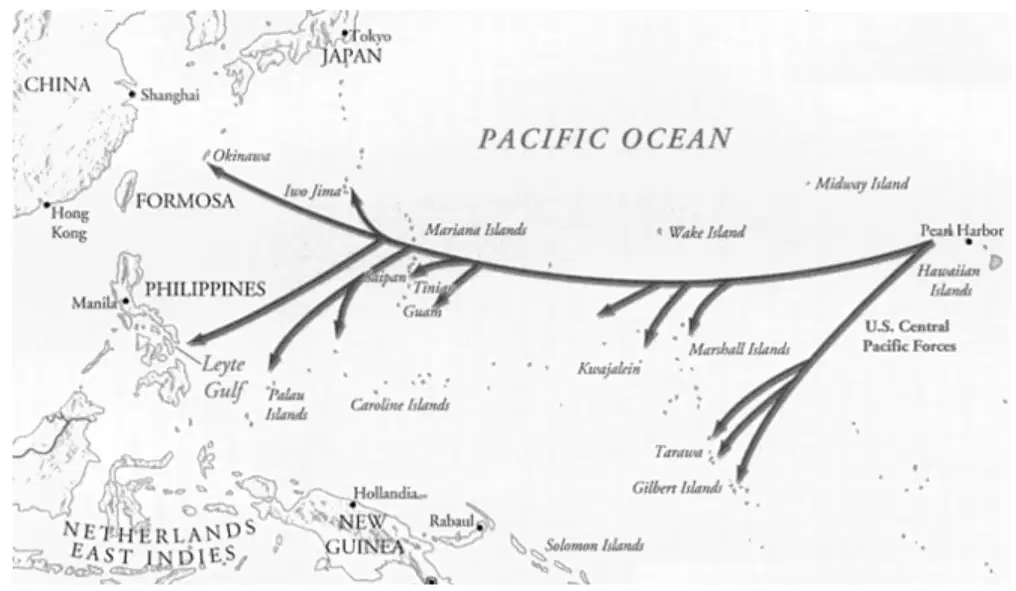
This map shows a strategy used in the Pacific Theater of World War II. What strategy is shown on this map?
attrition
blitzkrieg
island hopping
total war
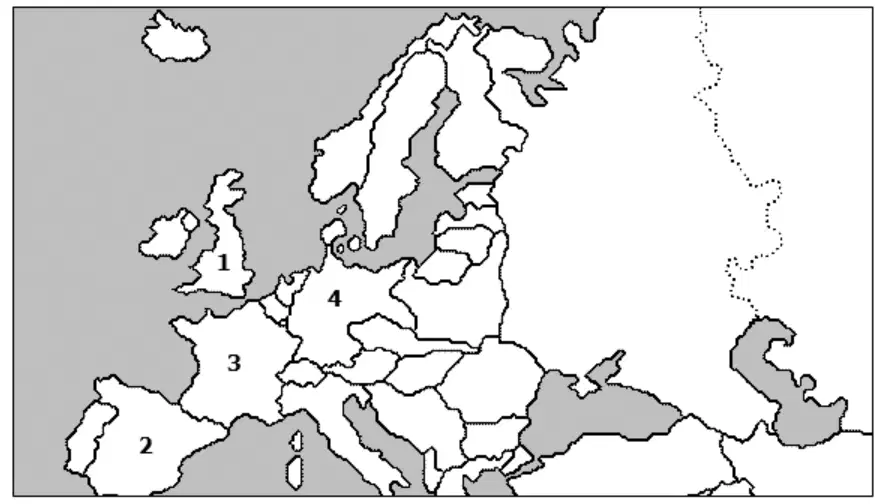
This is a map of Europe before World War II. Which number indicates the country where the D-Day invasion took place?
1
2
3
4
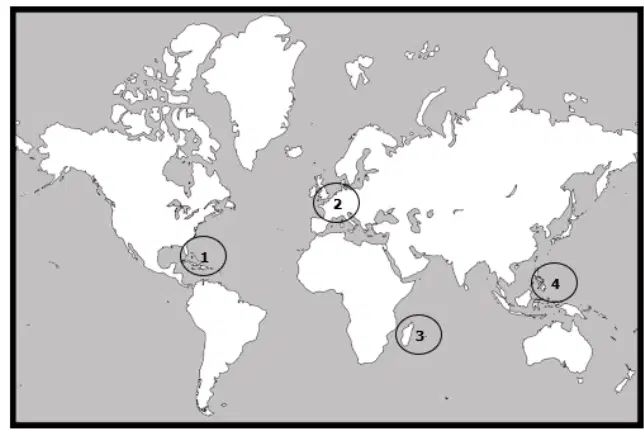
This is a map of the world during World War II. In which numbered location did the United States implement the strategy of island-hopping?
1
2
3
4
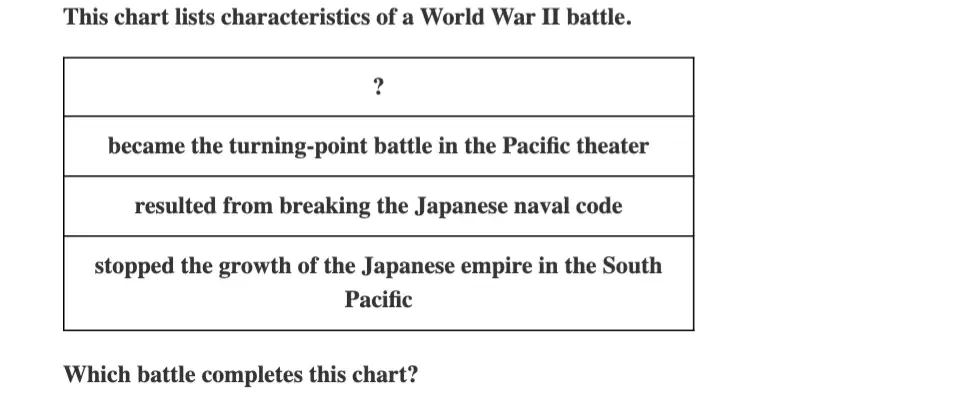
This chart lists characteristics of a World War II battle: became the turning-point battle in the Pacific theater; resulted from breaking the Japanese naval code; stopped the growth of the Japanese empire in the South Pacific. Which battle completes this chart?
Battle of Iwo Jima
Battle of Midway
Battle of Normandy
Battle of Okinawa
How did the success of the Tuskegee Airmen impact the United States after World War II?
It contributed to President Truman’s decision to desegregate the military.
It inspired a program for veterans to receive money to attend college.
It started a nuclear arms race between the United States and the Soviet Union.
It led to the establishment of a permanent program to train pilots for future wars.
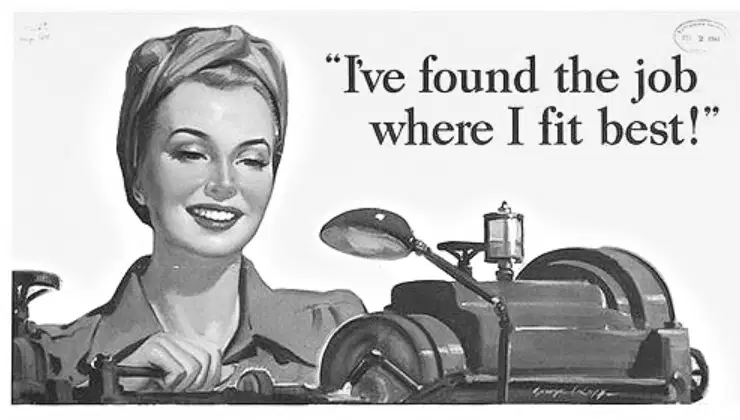
This poster was used during World War II. What statement evaluates the intent of this type of propaganda?
Women were encouraged to join the military in non-combat roles.
Women were required to work a set number of hours a week in war-related jobs.
Women were encouraged to support the war effort by taking jobs traditionally done by men.
Women were urged to volunteer their time as part of their patriotic duty.
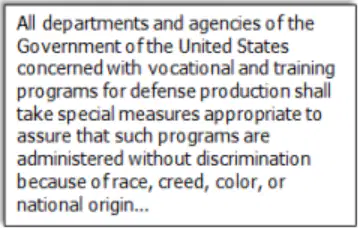
This is an excerpt from Executive Order 8802 issued by President Franklin D. Roosevelt in 1941: "All departments and agencies of the Government of the United States concerned with vocational and training programs for defense production shall take special measures appropriate to assure that such programs are administered without discrimination because of race, creed, color, or national origin." How did this Executive Order impact civil rights?
It ended discrimination in the workplace and instituted the practice of "equal pay for equal work."
It discouraged segregation of public facilities, especially those related to housing and education.
It brought attention to the need for civil rights reform and spurred future actions to promote equality.
It ended segregation of the military and allowed for full participation by African Americans.
This statement could have been made by a historian: "During wartime, the rights of minorities are more limited than those of white citizens." What action from World War II would support this statement?
Large numbers of women went to work in factories producing war goods.
Japanese Americans on the West Coast were forced into internment camps.
Citizens were encouraged to ration food and recycle materials that could be used overseas.
Significant portions of the African American population moved to northern cities.
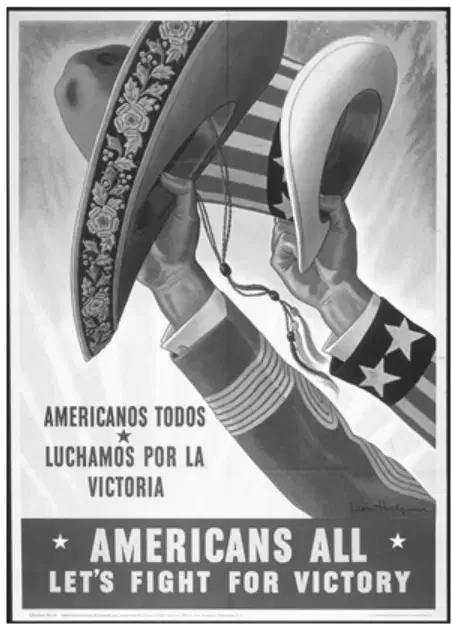
This is a poster published by the United States government during World War II that reads in Spanish and English, "Americanos Todos Luchamos Por La Victoria — Americans All Let’s Fight for Victory," with raised arms holding hats. Which World War II government program was aimed at a similar audience?
the Bracero Program
the Women’s Army Corps
the Double V Campaign
the War Production Board
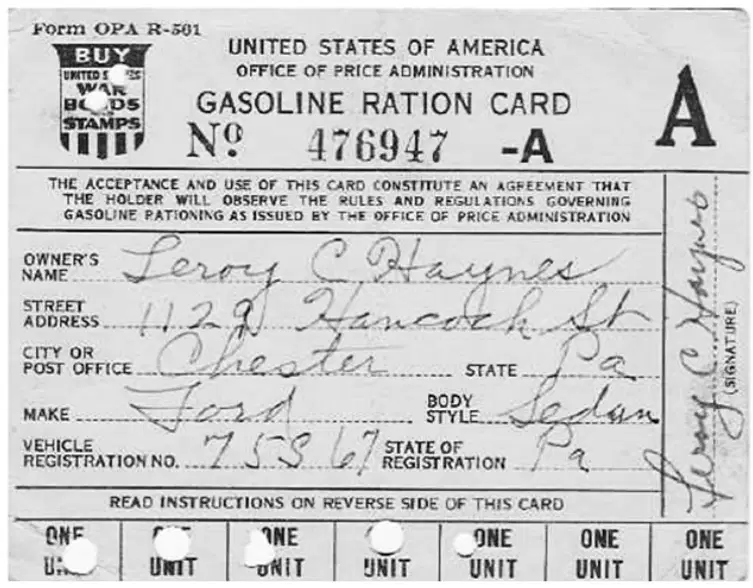
This document was used by many Americans during World War II: an Office of Price Administration Gasoline Ration Card labeled "A." What was the purpose of documents like this one?
to lower gas prices for the average consumer
to conserve resources for the troops fighting overseas
to prevent pollution by limiting the number of cars on the road
to reward citizens who purchased war bonds with free gas

This is an excerpt from a speech given by President Truman on August 6, 1945:
To what event is President Truman referring?
the Battle of Iwo Jima
D-Day
the bombing of Hiroshima
the battle of Midway
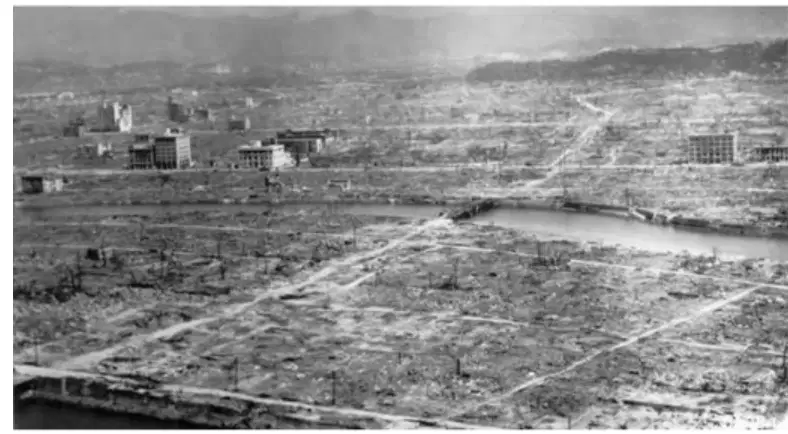
This photo was taken in 1945 and shows a city leveled by a massive explosion with widespread ruins and few standing structures. Which nation suffered the devastation in this image from World War II?
Germany
Japan
the Soviet Union
the United States
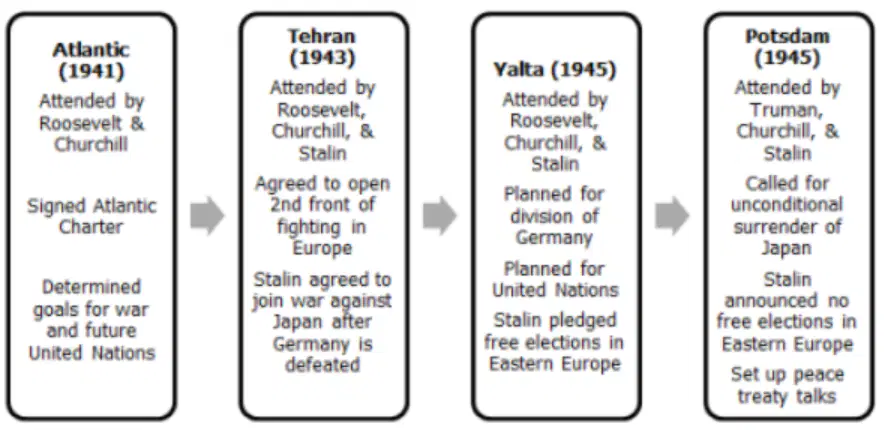
Which world leaders most consistently attended conferences together during World War II?
Roosevelt and Churchill
Roosevelt and Stalin
Truman and Churchill
Stalin and Churchill
Who was the prime minister of England?
Franklin Roosevelt
Winston Churchill
Adolf Hitler
Harry Truman
Who ruled as a dictator in Italy?
Adolf Hitler
Joseph Stalin
Benito Mussolini
The Allies consisted of......
Japan, Germany, and America
America, France, and China
America, Russia and Great Britain
Germany, China, Japan, and Hawaii
When Germany annexed Austria and remilitarized the Rhineland, it was a violation of
The Munich Agreement
The Treaty of Versailles
The Kellogg-Briand Pact
The Nuremberg Laws
Can you identify which country was most negatively affected by the Treaty of Versailles
United States
Germany
England
Italy
What is appeasement?
A hard type of concrete
a policy of giving Hitler what he wanted in order to avoid a conflict
A period of peace after a war
Major fighting in Japan
MASS EVACUATION OF BRITISH TROOPS ACROSS THE ENGLISH CHANNEL IN FRANCE
DUNKIRK
BLITZKRIEG
OPERATION OVERLORD
BATTLE OF BRITAIN
GERMAN TERM FOR "LIGHTNING WAR"
DUNKIRK
BLITZKRIEG
OPERATION OVERLORD
BATTLE OF BRITAIN
The largest water-to-land invasion in history took place when the Allies stormed the beaches at Normandy, France. This was
VE Day
VJ Day
Iwo Jima
D-Day
________________________ was Hitler's mass murder of over 12 million people.
D-Day
The Holocaust
Pearl Harbor
The atomic bomb
______________ was a nuclear weapon dropped on Hiroshima and Nagasaki by the U.S. to end the war.
The Scud missile
Mustard Gas
The atomic bomb
The Big One
One cause of WW1 that involved the nations of Europe being jealous of each other's territories in Africa and Asia.
Imperialism
Nationalism
Alliances
Militarism
All of the following are results of WW1 EXCEPT
winners and losers being satisfied and getting along with one another
newly created countries
loss of life
damage
How did the Treaty of Versailles punish Germany?
divided Germany into four colonies
took away German territory in Spain and Britain
forced Germany to accept blame for the war and to pay reparations
Germany was not punished
The purpose of The League of Nations was to
centralize world power
increase the power of the Allies
be a peacekeeping organization
punish Germany
All of the following were members of the Allied Powers EXCEPT
Austria-Hungary
Russia
USA
France
All European countries joined either the Allied Powers or the Central Powers during the war.
True
False
This term included nationalistic Serbians who planned on and succeeded in killing Franz Ferdinand
Black Hand
Doughboy
Lusitania
The Central Powers won the war largely due to America's help.
True
False
Which country was heavily punished and forced to take the blame for the war?
USA
Italy
Germany
Spain
Which country dropped out of the war early due to a revolution back at home?
USA
France
Italy
Russia
An agreement between nations to unite for a common cause or to help each other out is
Militarism
Alliances
Imperialism
Nationalism
Most propaganda advertisements showed how dangerous the war was
True
False
No Man's Land was the name for
area between 2 enemies' trenches
burial ground
bathroom area
none of the above
The Central Powers (Triple Alliance) did not include
Austria-Hungary
France
Germany
Ottoman Empire
Why was nationalism a cause of the war?
major European nations wanted to be the most powerful
major European nations wanted to live in peace with other countries
major European nations wanted all the countries to have equal power
Why did nations get involved in imperialism?
to improve their governments and politics
to get rid of absolute monarchs
to get natural resources cheaply for their factories
How did the Treaty of Versailles affect the German army?
the German army increased its spending
the German army was forced to decrease its amount of soldiers
the German army was granted more military power
Only the Central Powers (Triple Alliance) used trenches
True
False
What was the purpose of propaganda during the war?
to intimidate the enemy
to start the war
to end the war
to create emotion and influence people to help out in some way
The United States was in the war since 1914
True
False

