
 Worksheets
TYPES OF FORCES_Physics@LBHS_Singh
Total questions: 70
Worksheet time: 1hrs 10mins

A force that resists motion between 2 surfaces that are pressed together.
Tension Force
Friction Force
Magnetic Force

The force that is transmitted through a string, rope, cable or wire when it is pulled tight by forces acting from opposite ends.
Buoyancy Force
Air Resistance
Tension Force

The force related to an object's or substance's ability to stretch or deform.
Elastic Force
Air Resistance
Spring Force

A type of fictional force that acts upon objects as they travel through the air.
Normal Force
Applied Force
Wind Resistance

An upward force exerted by a fluid that opposes the mass of an immersed object.
Tension Force
Buoyancy Force
Normal Force
A force that is applied to an object by a person or another object.
Spring Force
Normal Force
Applied Force

The support force exerted upon an object that is in contact with another stable object.
Gravity
Electrical Force
Normal Force

A force exerted by a compressed or stretched spring upon any object that is attached to it.
Spring Force
Tension Force
Elastic Force

The force of attraction between two masses.
Gravity Force
Magnetic Force
Normal Force

What statement is true based on the image?
Scenario A has the weakest gravitational pull
the smaller object has more mass, so it has a stronger gravitational pull on the larger object
Although the objects are equal in mass in Scenario C, it has the weakest gravitational pull
Gravity isn't illustrated in any scenario
The amount of gravitational force between objects depends on the _______ between them and the ______ of each.
gravity,mass
distance,mass
weight,gravity
distance,gravity
What is the unit for Mass?
m/s
kg
Newton
pounds
What is the unit for Force?
m/s
kg
Newton
m/s/s
What force slows down objects until they eventually stop? (Think about PHET Simulation)
Applied Force
Force of Gravity
Friction Force
Normal Force
Which force is an at a distance force?
Force of Gravity
Friction Force
Applied Force
Normal Force
Which forces would be considered a contact force? (2 answers)
Force of Gravity
Friction Force
Applied Force
At a distance force
What is an at a distance force?
a force that can push an object large distances
a force that requires two objects to physically touch
a force that does not require physical contact
a force that requires two or more objects to touch

What type of force is this?
pull
friction
magnet

What type of force is this?
magnet
gravity
friction

This force is ___________________.
balanced
unbalanced

These forces are _____________________.
balanced
unbalanced

These forces are ________________.
balanced
unbalanced

What is the magnitude and direction of the force in the free body diagram shown?
5 N down
0 N, no change in movement
15 N up
15 N down

What is the magnitude and direction of the force in the free body diagram shown?
35 N right
17 N right
11 N right
5 N right

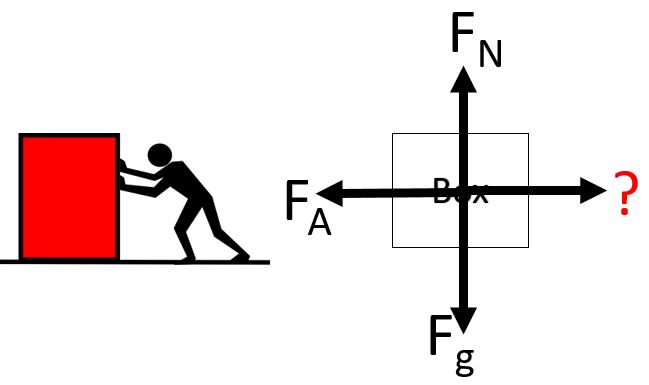
What is the magnitude and direction of the force in the free body diagram shown?
20 N, no change in motion
20 N right
20 N left
0 N , no change in motion

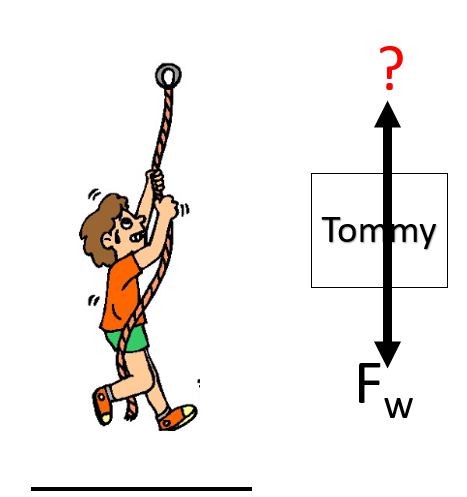


The force that is transmitted through a string, rope, cable or wire when it is pulled tight.
Spring Force
Tension Force
Elastic Force

What picture shows a normal force?


What picture shows the force of gravity?


What picture is an example of friction?


What force is shown by the black arrow in the picture?
magnetic
friction
gravity
applied
as the mass of an object increases, the pull of gravity...
Increases
Decreases
Stays the same
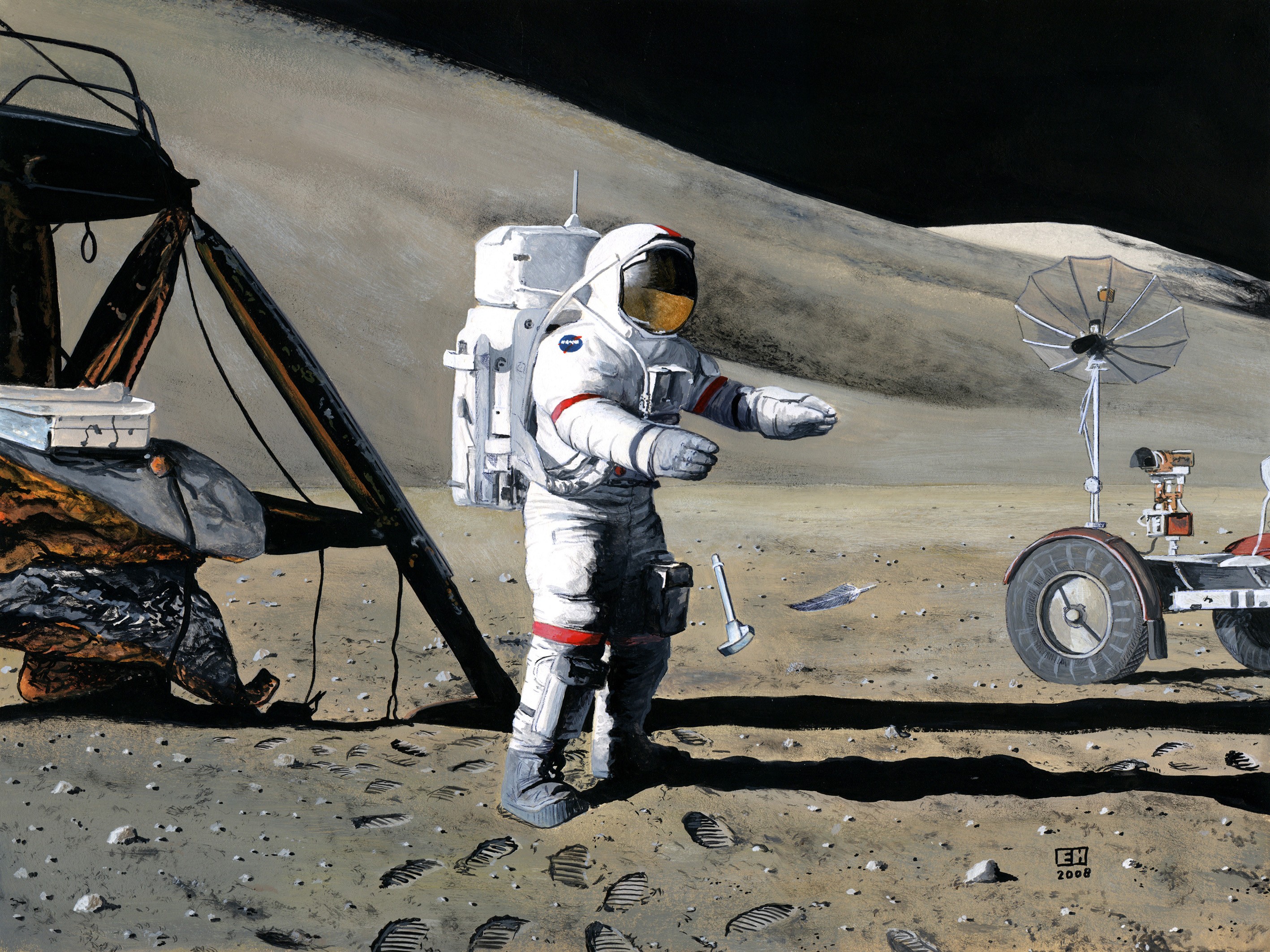
If a feather and a hammer are dropped at the same time on the moon, where there is no atmosphere, which one will hit the ground first?
Neither, there is no gravity on the moon.
hammer because it has more mass
feather because it has less mass
both will hit at the same time, there is no wind resistance
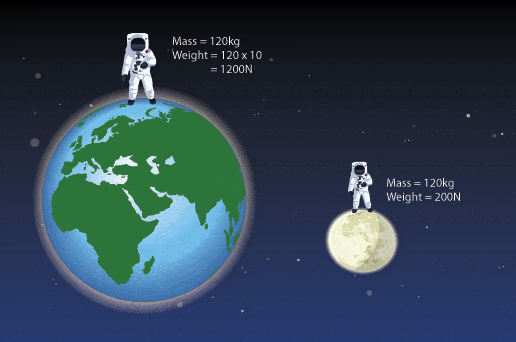
Earth's gravity, 9.8 m/s2, is considered a/an...
force
weight
acceleration
mass
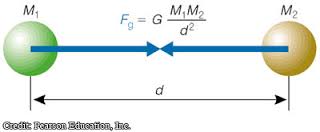
The gravitational force exerted by an object depends on its
volume
mass
weight
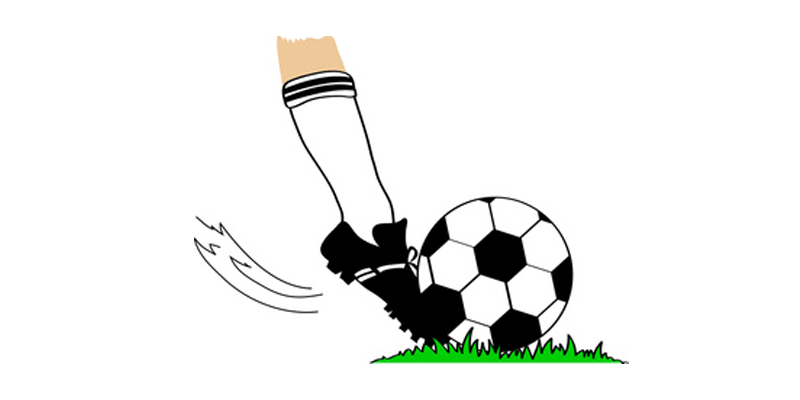
An object with more mass will exert greater gravitational force than an object with lesser mass.
True
False
As a space ship of constant mass moves farther away from Earth, the strength of the gravitational interaction between the Earth and the space craft
stays the same.
increases.
there is not enough information to answer.
decreases
On which celestial object (outer space) would your mass be the greatest?
Earth
Jupiter
Sun
Your mass doesn't change on different celestial objects
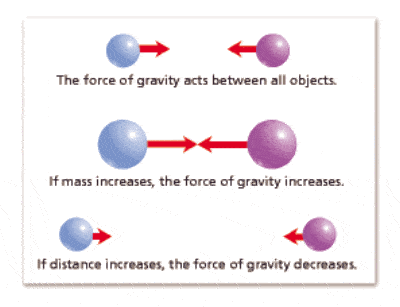
Which BEST describes the direction that gravity pulls objects?
away from the sun
away from Earth
towards the center of the Earth
to the floor
When NASA scientists send a man into outer space in a rocket, what force must the rocket overcome as it leaves the Earth's surface?
weight
mass
gravity
density
Mass varies depending on where the object is located.
True
False
A planet is discovered that has twice the mass of Earth but the same gravitational acceleration. If you weigh 700 N on Earth, on the new planet you would weigh:
350 N
700 N
1,400 N
2,800 N
An object’s weight is ____ its mass.
Equal to
Less than
Proportional to
Not related to

Which of the following data would support the claim that the gravitational force between objects depends on mass?
An objects weight can change depending where it is on Earth.
The further a planet is away from the sun, the smaller the gravitational force.
Gravitational force is stronger on more massive planets.
A rocket can escape Earths gravity by travelling at high speed.


Calculate the torque produced by 75- N perpendicular force at the end of a 0.20 m long wrench.
15 Nm
1.5 Nm
15.0 Nm
16 Nm

This picture includes an alternate symbol for torque. Which of the following symbols represents torque?


The SI unit of torque is ---
N m
m/s
N
J
Torque has both ____ and ____.
magnitude and direction
velocity and acceleration
north and south poles

The diagram shows which type of equilibrium?
static
dynamic

