
 Worksheets
cold water worksheet 3
Total questions: 24
Worksheet time: 12mins
According to the Water Regulations, a drain off valve must be installed where? Select all that apply.
At the lowest point of each cold water distribution pipe run
On the rising main immediately after the water meter
On the cold feed pipe to the storage cistern near its base
On every branch supplying a single appliance above first floor
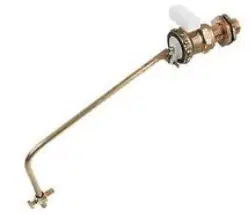
What is this item shown: a brass body with an angled lever arm and float connection used to control the inlet to a cistern?
Float operated (ball) valve
Drain cock
Gate valve
Stop tap
The cold feed pipe from the cold water storage cistern is positioned 25 mm above the cold distribution. Why is this and what do both pipes supply?
To prevent cross-flow between circuits; the cold feed supplies the hot water cylinder, and the cold distribution supplies cold outlets
To reduce noise; the cold feed supplies toilets only, and the cold distribution supplies baths only
To increase pressure; the cold feed supplies showers, and the cold distribution supplies sinks
To simplify maintenance; the cold feed supplies exterior taps, and the cold distribution supplies interior taps
Why must plumbers use WRAS approved fittings?
They comply with Water Regulations and are certified safe for potable water
They are the cheapest fittings available
They are designed only for high-temperature systems
They are required only on industrial installations
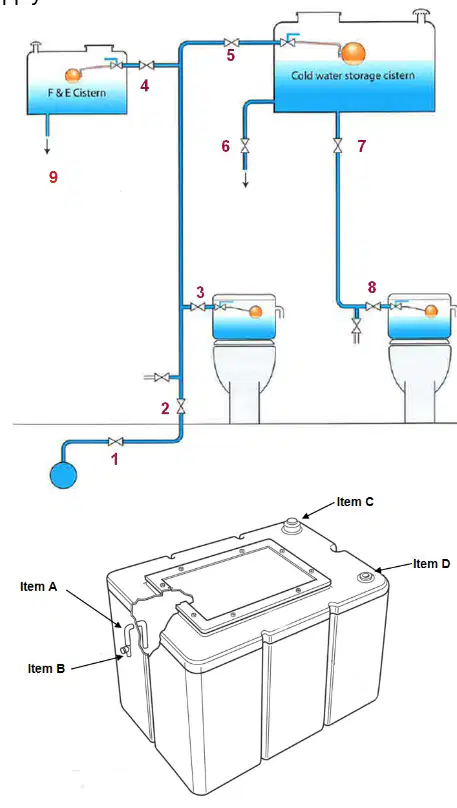
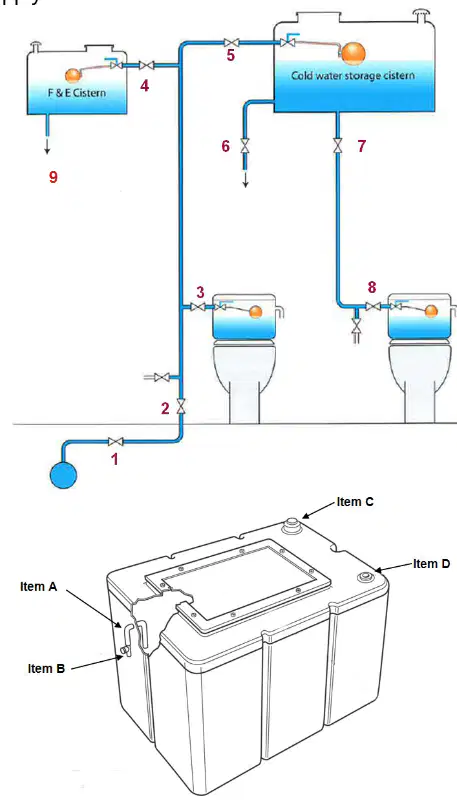
Identify the type of valve at label 1 on the diagram of two WC cisterns fed from a cold water storage cistern and an F & E cistern. What valve is fitted at the lowest point of the system on the blue pipe?
Drain off valve
Gate valve
Double check valve
Service (isolation) valve
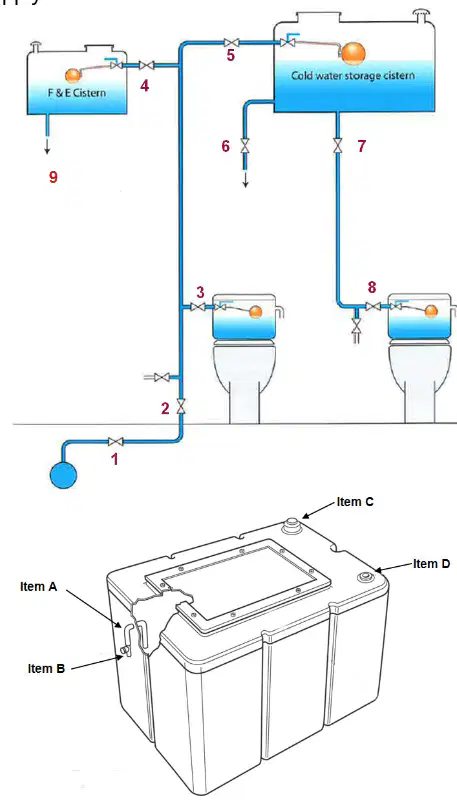
Identify the type of valve at label 2 on the same diagram. What valve is fitted on the branch supplying the first WC?
Service (isolation) valve
Gate valve
Drain off valve
Float operated valve
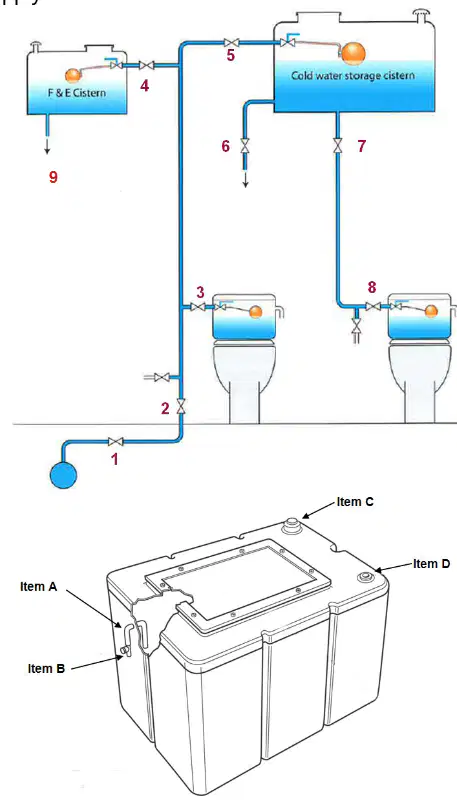
Identify the type of valve at label 3 on the diagram. What valve is connected directly before the WC cistern inlet?
Service (isolation) valve
Double check valve
Gate valve
Drain off valve
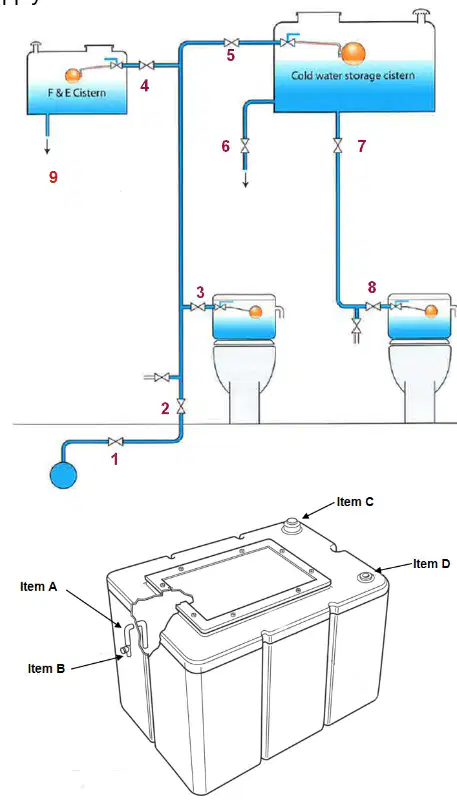
Identify the type of valve at label 4 on the diagram. What valve controls flow on the feed from the F & E cistern?
Gate valve (fullway)
Stop valve
Double check valve
Drain off valve
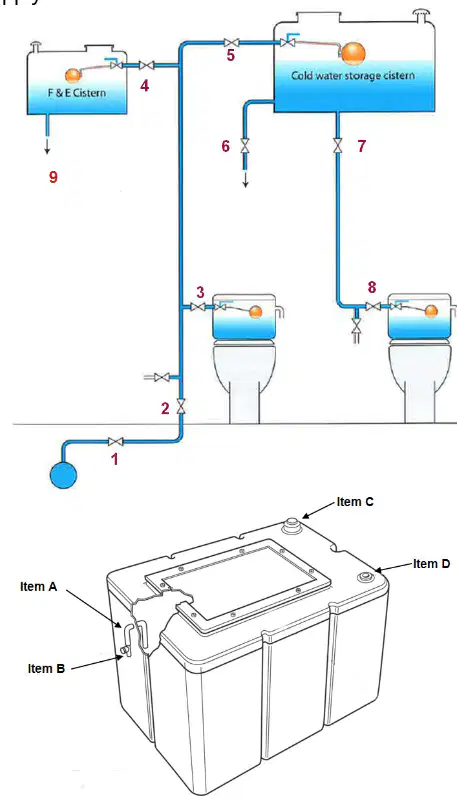
Identify the type of valve at label 5 on the diagram. What valve is on the inlet to the cold water storage cistern?
Float operated (ball) valve
Service (isolation) valve
Gate valve
Double check valve
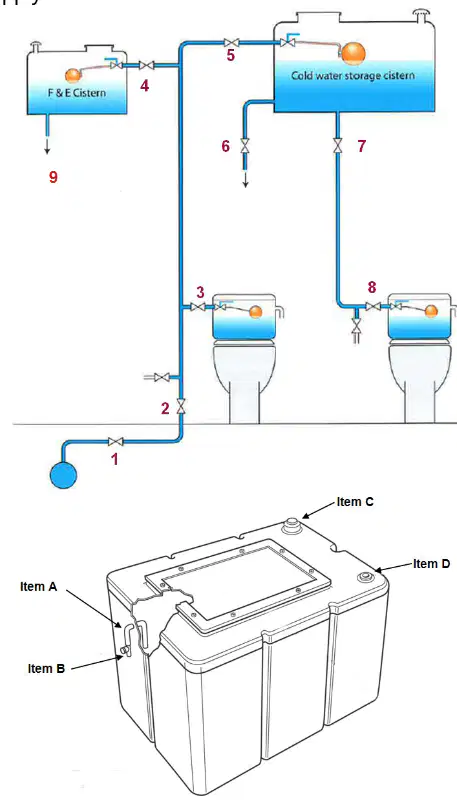
Identify the type of valve at label 6 on the diagram. What valve is installed on the downfeed serving hot water cylinder cold feed?
Gate valve
Service (isolation) valve
Drain off valve
Double check valve
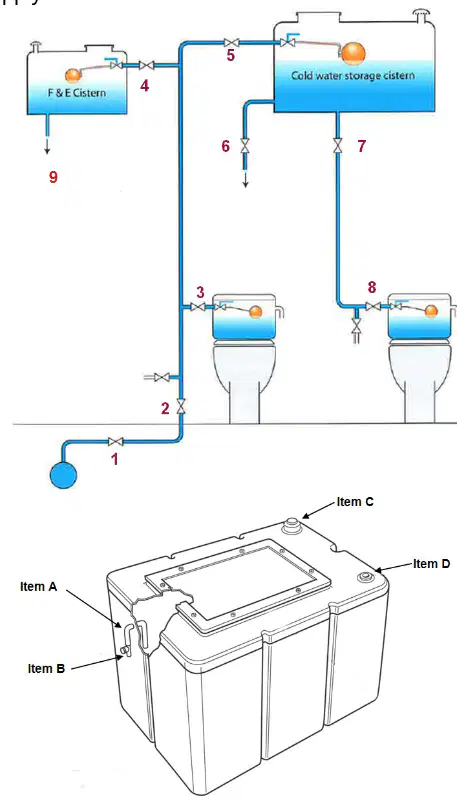
Identify the type of valve at label 7 on the diagram. What valve is fitted on the cold distribution main near the storage cistern?
Stop valve
Gate valve
Service (isolation) valve
Double check valve
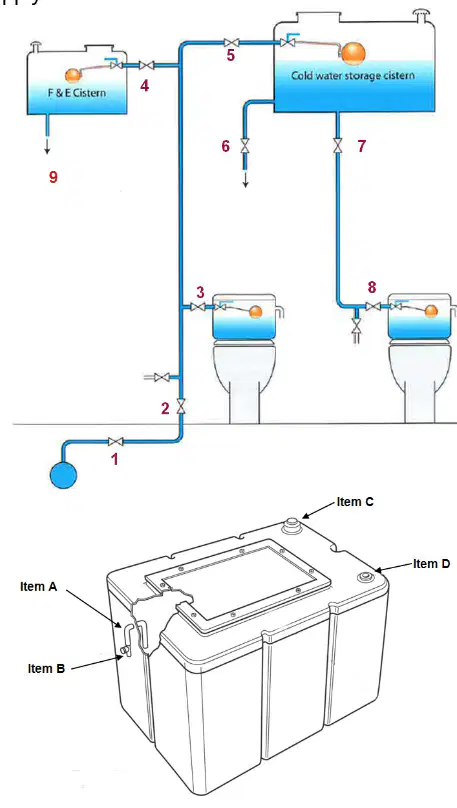
Identify the type of valve at label 8 on the diagram. What valve protects against reverse flow on the branch to the second WC?
Double check valve
Gate valve
Stop valve
Drain off valve
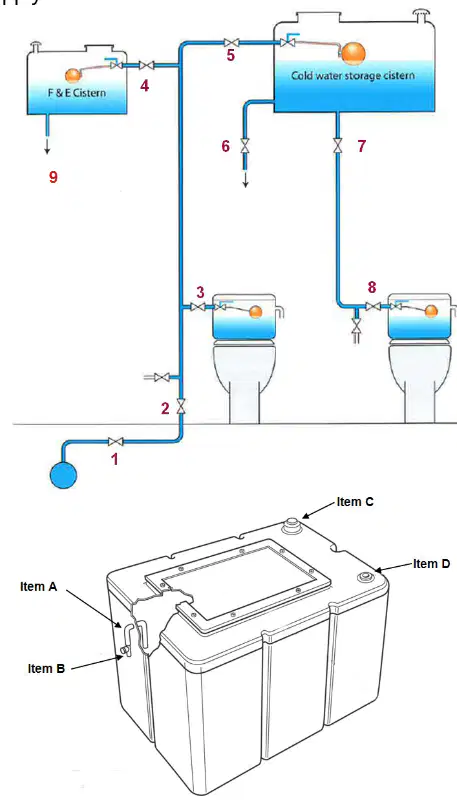
Identify the type of valve at label 9 on the diagram. What valve isolates the cold feed to the hot water cylinder?
Gate valve
Service (isolation) valve
Stop valve
Drain off valve
Would you use a stop valve, or a fullway gate valve, on a low pressure system? Why?
Fullway gate valve, because it offers minimal flow resistance at low pressure
Stop valve, because it increases friction losses
Either, because valve selection does not affect flow at low pressure
Stop valve, because it must always be used before any cistern
On a bath, you have the choice of a bi-flow mixer tap or mixer tap. Which one has the possibility of back flow problems and why?
Single mixer tap, because a common mixing chamber can allow one supply to push into the other under unequal pressures
Bi-flow mixer tap, because separate channels prevent any mixing before the outlet
Bi-flow mixer tap, because it requires double check valves
Single mixer tap, because it has two separate spouts
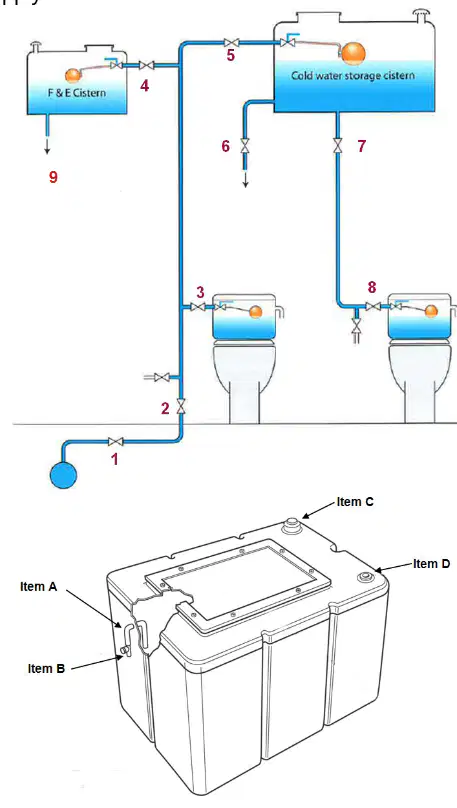
Name the item labelled A on the cold water storage cistern (CWSC) shown. What is the component identified as A?
Lid/cover
Float operated valve
Overflow (warning) pipe connection
Cold distribution outlet
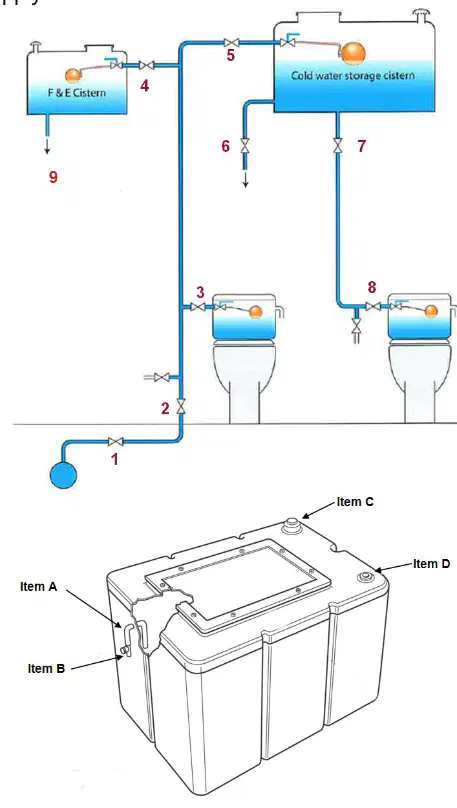
Name the item labelled B on the cold water storage cistern (CWSC) shown. What is the component identified as B?
Overflow (warning) pipe connection
Float operated valve
Lid/cover
Cold distribution outlet
Name the item labelled C on the cold water storage cistern (CWSC) shown. What is the component identified as C?
Float operated valve
Overflow (warning) pipe connection
Lid/cover
Cold feed to hot water cylinder connection
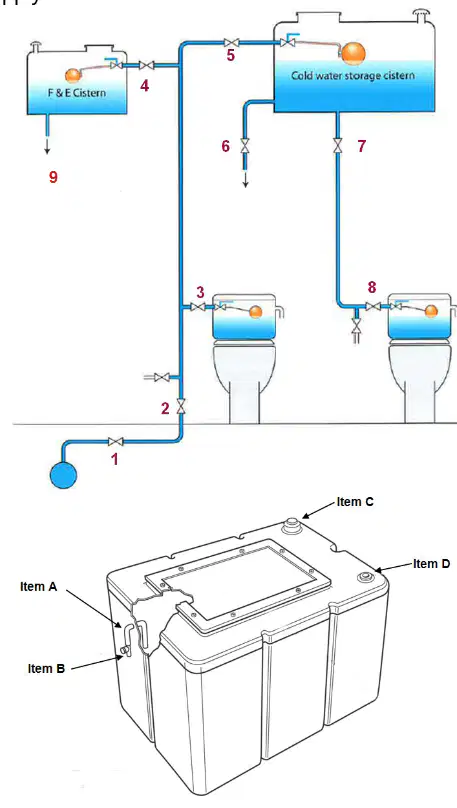
Name the item labelled D on the cold water storage cistern (CWSC) shown. What is the component identified as D?
Overflow (warning) pipe connection
Cold distribution outlet
Float operated valve
Lid/cover
What type of jointing material must not be used on a plastic cold water storage cistern?
Solvent-based mastic or putty that can attack plastic
Neutral-cure silicone sealant
PTFE tape with mechanical joints
Rubber washers supplied with the cistern fittings
What is the definition of a float operated valve?
A valve that uses a buoyant float to open and close the inlet automatically to maintain a set water level
A valve opened manually by a lever to discharge water
A valve that prevents backflow by spring-loaded check discs
A pressure-reducing valve that lowers incoming mains pressure
What float operated valve cannot maintain the required AG air gap?
Equilibrium float operated valve
Portsmouth pattern lever valve
Diaphragm-type float valve
High-pressure plastic-bodied float valve
Select the considerations that have to be made when installing a cold water cistern. Choose all that apply.
Location and support capable of carrying the full tank weight when filled
Adequate capacity for demand and future maintenance access
Correct type and setting of float operated valve to provide the required air gap
Covered lid and screened overflow (warning) pipe termination to the exterior
Insulation and frost protection of cistern and pipework
Select the additional considerations that have to be made when installing a cold water cistern. Choose all that apply.
Isolation and drain-off arrangements
Material suitability and WRAS compliance
Properly routed cold feed and distribution connections
Prevention of contamination from light or vermin
Provision for overflow visibility or warning

