
 Worksheets
HST - Specialty Exams - Part 1
Total questions: 45
Worksheet time: 23mins

In a scratch test for allergies, which tool is used to apply extracts of suspected allergens to the skin, typically on the arm or back?
Syringe
Lancet
Cotton swab
Adhesive patch
Which step is always included in a scratch test to ensure validity of the results?
Use of a positive control containing histamine
Application of a negative control with no allergen
Measurement of reaction after 24 hours
Intramuscular injection of dilute allergen
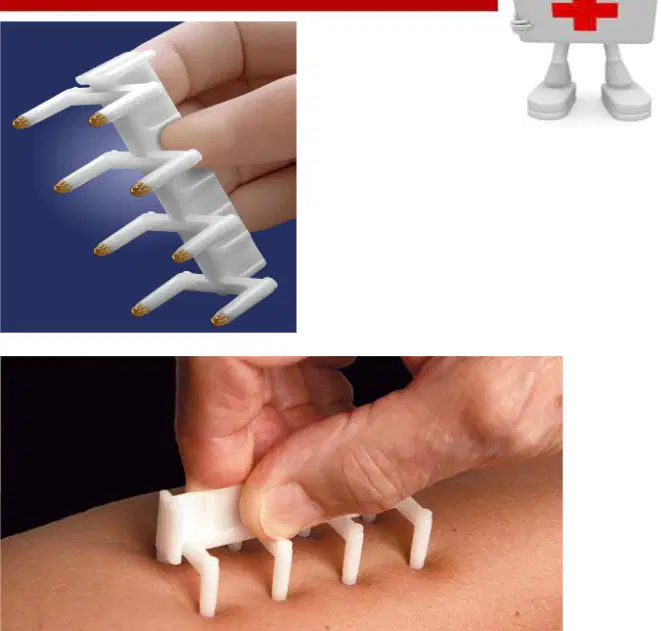
During a scratch test, why is the skin intentionally scratched?
To reduce contamination risk
To allow penetration of allergen extracts
To create a uniform testing surface
To delay the immune response
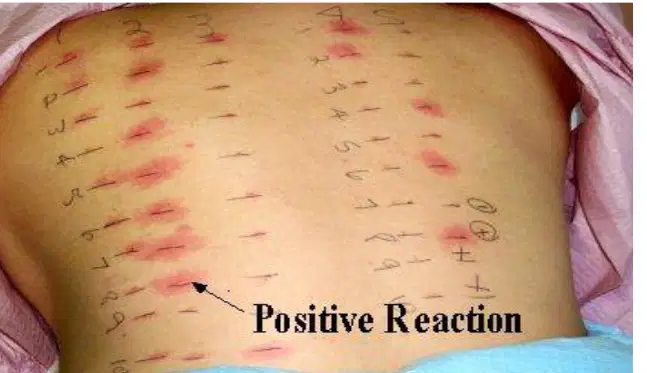
Which statement best describes the intradermal test procedure for allergies?
Allergen extracts are rubbed onto intact skin of the forearm
Dilute allergen solutions are injected into the skin of the forearm or back
Patches soaked with allergen are taped to the thigh
A lancet is used to scratch the epidermis on the hand
Compared with the scratch test, the intradermal test is characterized by which property?
Lower sensitivity and longer reaction time
Higher sensitivity and reaction time of 15–30 minutes
Equal sensitivity and no visible skin reaction
Requires cellophane covering to read results
A clinician performing an intradermal test expects to read initial results within what time frame?
Immediately after injection
5–10 minutes
15–30 minutes
24–48 hours
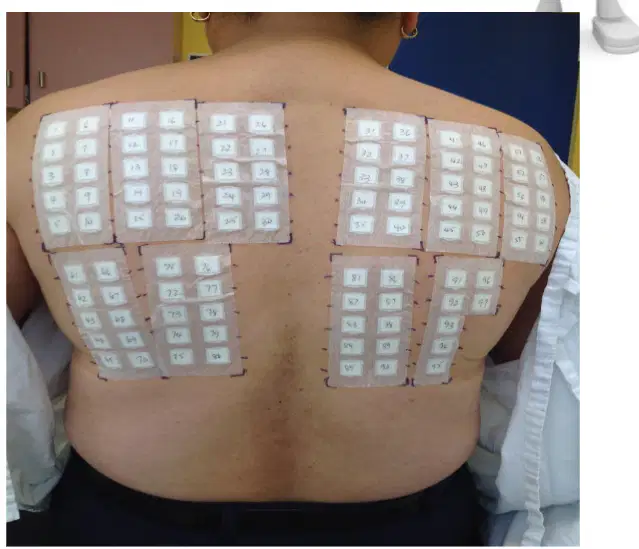
Which allergy test involves placing a patch on the skin and using a dropper to soak the patch with allergen, then covering it with cellophane?
Scratch test
Intradermal test
Patch test
Serum IgE test
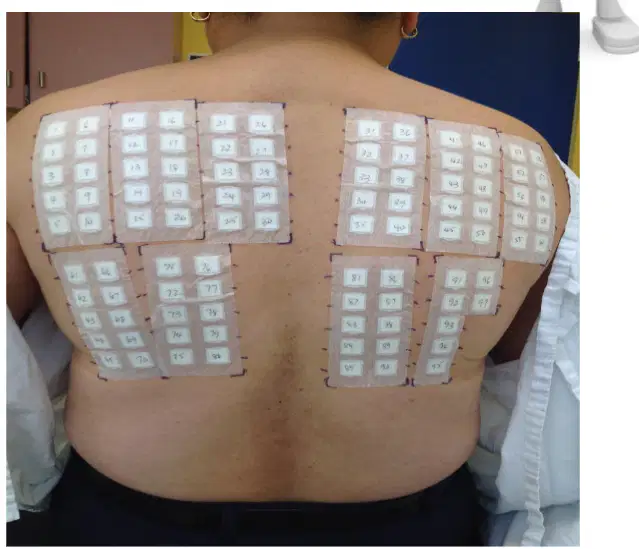
In patch testing, what is the purpose of the cellophane covering mentioned in the procedure?
To deliver the allergen via injection
To hold the patch in place and maintain contact with the skin
To sterilize the application area
To mark positive reactions with numbers
Which pair correctly matches the test with its typical application site as described?
Scratch test—arm or back
Intradermal test—forearm or back
Patch test—scalp or shin
Scratch test—sole of foot
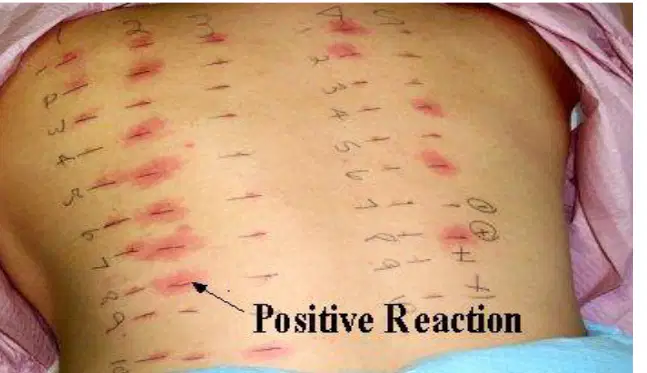
Which statements about test sensitivity and controls are accurate based on the procedures described? Select all that apply.
Intradermal testing is more sensitive than scratch testing
Scratch testing requires a negative control with no allergen
Patch testing is the least sensitive and therefore omits controls
Intradermal testing uses positive controls only
A clinician orders a Radioallergosorbent Test (RAST) to investigate a patient’s hay fever. What does this test primarily measure?
Blood levels of antibodies directed at specific allergens
Skin reactivity to multiple allergen pricks
Airway resistance during exposure to allergens
Urine metabolites produced after allergen exposure
Which procedure is required to perform a Radioallergosorbent Test (RAST)?
A blood draw to obtain a sample
A saliva swab collected after fasting
An intradermal injection followed by observation
A 24-hour urine collection
Select all statements that accurately describe the Radioallergosorbent Test (RAST).
It measures antibody levels in blood to specific allergens.
It requires obtaining a blood sample.
It diagnoses allergies solely by observing skin wheals.
It evaluates antibodies present in urine rather than blood.
In a dermatology setting, which task is a typical responsibility of a medical assistant during minor procedures?
Interpreting biopsy pathology reports
Administering general anesthesia
Assisting in obtaining skin biopsies
Performing independent surgical excisions
Select all actions that align with sterile technique when assisting with wound cultures and minor dermatologic procedures.
Maintaining a sterile field during specimen collection
Using non-sterile gloves to speed up sampling
Minimizing contamination of instruments and dressings
Allowing dressings to touch non-sterile surfaces to improve airflow

Refer to the wound-care photo: a gloved clinician applies a dressing to a patient's forearm wound. What is the medical assistant’s priority during this step?
Ensure sterile handling of dressings and instruments
Document the patient’s insurance information
Interpret the wound culture results immediately
Decide the medication to prescribe
Which item is specifically used to obtain a cylindrical sample of skin for biopsy?
Dermal punch biopsy
Gauze
Incision and drainage tray
Specimen collection container
Which tool is most appropriate for carefully cutting superficial skin lesions during minor dermatologic surgery?
Dermal cutter
Gauze pad
Magnifying lamp
Incision and drainage tray
During a dermatology exam, which tool combination is routinely used to closely inspect the entire skin surface under adequate illumination?
Magnifying lens with bright light
Stethoscope with ambient room light
Otoscope with dim light
Reflex hammer with natural daylight
Which action is recommended for the medical assistant to maintain patient comfort and privacy during a full skin examination?
Drape the patient as much as possible
Keep all clothing removed throughout the exam
Avoid using any lighting to reduce exposure
Position the patient only standing upright
Select all statements that accurately describe the Wood’s lamp examination.
It is a simple test used on the skin, scalp, and hair
It helps diagnose fungal, bacterial, and parasitic infections
It relies on long-wave ultraviolet (UV) light to reveal color changes or fluorescence
It primarily measures skin temperature using infrared light
During a general neurological examination, which aspect is specifically assessed to evaluate the patient’s ability to feel and interpret stimuli such as touch or temperature?
Motor response
Sensory response
Speech patterns
Muscle tone
Which set best represents common supplies used to assess neurologic function in a general exam?
Lancet, glucometer
Otoscope, tuning fork, cotton balls
Surgical scalpel, suture kit, sterile drapes
EKG leads, defibrillator, nasal cannula
Which item is most appropriate for testing deep tendon reflexes during a general neurological assessment?
Percussion hammer
Tongue depressor
Penlight
Ophthalmoscope
Which test is primarily used to record the electrical activity of the brain?
Electroencephalogram (EEG)
Electromyography (EMG)
Echocardiogram
Spirometry
Select all clinical situations where an EEG is commonly used according to the material.
Diagnosing and monitoring epilepsy
Evaluating sleep disorders
Assessing brain injuries
Measuring skeletal muscle nerve conduction
According to the instructional text, what role can a medical assistant (MA) play in EEG procedures?
Interpret EEG waveforms independently
Assist with electrode placement, often under an EEG technician
Administer sedative medications during EEG
Diagnose epilepsy based on EEG readings
Which statement best describes the primary purpose of EMG?
It records nerve impulses going to skeletal muscle
It measures brain waves during sleep
It images muscles using ultrasound
It records heart electrical activity
Which conditions are specifically mentioned as being assessed with EMG? Select all that apply.
Carpal tunnel syndrome
Muscular dystrophy
Epilepsy
Sleep apnea
Which pairing correctly matches the test to what it records?
EEG—nerve impulses in skeletal muscle; EMG—electrical activity of the brain
EEG—electrical activity of the brain; EMG—nerve impulses going to skeletal muscle
EEG—cardiac electrical signals; EMG—respiratory airflow
EEG—ultrasound images of the brain; EMG—blood pressure changes
A clinician wants to monitor a patient after a traumatic brain injury for abnormal brain activity and sleep disturbances. Based on the material, which procedure is indicated?
EMG, because it evaluates skeletal muscle innervation
EEG, because it records electrical activity of the brain and is used for brain injuries and sleep disorders
Spirometry, because it assesses pulmonary function affecting sleep
CT scan, because it shows structural changes but not electrical activity
Which statement best describes the primary role of a pulmonologist?
Perform surgeries to repair cardiac valves
Conduct tests to assess respiratory function and diagnose pulmonary disease
Manage endocrine disorders through hormone therapy
Provide nutritional counseling for weight management
Which test is commonly included among Pulmonary Function Tests (PFTs)?
Electrocardiography
Spirometry
Renal ultrasound
Blood culture
Select all devices listed as common tools for performing Pulmonary Function Tests (PFTs).
Spirometers
Peak flow meters
Pulse oximeters
Defibrillators
Which components are found in all spirometers?
A mouthpiece and tubing connected to a recording device
A stethoscope and sphygmomanometer
A nebulizer chamber and oxygen tank
An ECG lead set and printer only
Which patient use most commonly justifies having a peak flow meter at home?
Monitoring daily respiratory function in asthma
Checking blood pressure in hypertension
Measuring blood glucose in diabetes
Tracking body temperature during infection
What parameter does a peak flow meter measure during respiratory assessment?
Average tidal volume over one minute
Fastest rate of exhalation after a maximum breath
Total lung capacity during inhalation
Oxygen saturation at rest
Pulse oximeters are best described as devices that measure which clinical value?
Peak expiratory flow
End-tidal carbon dioxide
Oxygen saturation
Respiratory rate
Which statement correctly characterizes a pulse oximeter’s placement and invasiveness?
It requires arterial puncture and is placed on the wrist
It is noninvasive and clipped to sites like the fingertip or earlobe
It is surgically implanted under the skin of the chest
It is invasive and inserted into the nostril
Orthopedics primarily focuses on disorders of which body system?
Cardiovascular system
Musculoskeletal system
Respiratory system
Endocrine system
Which structures are included in the musculoskeletal system as defined in orthopedics? Select all that apply.
Muscles
Bones
Joints
Ligaments and tendons
Alveoli
Which task reflects the medical assistant’s role in patient interaction within orthopedics?
Interpreting radiographs independently
Educating patients about conditions and treatment options
Performing arthroscopic surgery
Diagnosing fractures without provider input
What is the primary function of a goniometer in orthopedic practice?
Measure bone density
Evaluate range of motion of a joint
Visualize internal joint structures
Assess tendon strength
Arthroscopy is best described as a procedure that involves which characteristic?
Open surgery with large incisions
Minimally invasive visualization and treatment inside a joint
Noninvasive external imaging
Pharmacologic injection without visualization
Which benefits align with minimally invasive arthroscopy compared with open procedures? Select all that apply.
Smaller incisions
Direct visualization inside the joint
Elimination of anesthesia
Potential for diagnostic and therapeutic use

